Your customers are talking about you right now. They’re sharing opinions on social media. They’re leaving reviews on Google. They’re discussing your brand in Reddit threads. The question isn’t whether these conversations are happening.
The question is: are you listening?
The brands that thrived in 2025 aren’t the ones with the biggest marketing budgets. They’re the ones that pay attention. They listen when customers complain. They notice when people praise them. They adapt when feedback points them in a new direction.
Brand building by listening to users is modern marketing. Instead of shouting messages at people, you’re actually hearing what they need.
When you do this, you’re not trying to convince people to buy. You’re using attraction psychology by showing them you care. That makes them loyal. It makes them want to buy more than any discount.
In this article, you’ll learn how to turn customer conversations into brand loyalty. We’ll explore the tools that make listening scalable. We’ll cover the methods that work across channels. And we’ll reveal the mistakes that waste your time. You’ll discover how to build a brand people trust because you actually hear them.
Highlights
- Brand building by listening to users creates deeper customer relationships and drives loyalty.
- Social listening tools monitor conversations across platforms in real-time. They give you actionable and instant customer insights.
- Customer feedback directly influences retention rates. Companies using listening strategies see higher retention.
- A complete listening strategy combines social media monitoring, direct feedback, and review analysis.
- The brands that listen most closely respond more quickly to customer concerns than their competitors.
What is brand building by listening to users?
Brand building by listening to users means paying attention to what customers say. That means using their feedback to improve and create a strong brand image. You’re not waiting for people to fill out surveys. You look for what they already say wherever they gather online.
This differs from traditional brand marketing. Old-school marketing pushes messages outward. Listening-based brand building acts on insights. You discover how customers perceive you. Then you align your brand with those realities.
Every touchpoint generates feedback. Someone tweets about your shipping speed. Another person posts a photo of your product. All of this shapes your brand.
When you listen to what users say about your brand across channels, you gain insights. Use these to develop your content marketing strategy, from the topics you cover to the tone you use.
In 2025, this new type of marketing is essential. AI-powered search pulls from brand mentions across the web. Zero-click searches mean people judge your brand before visiting your site. Reviews have a great influence on buying decisions.
This is especially critical for SaaS content marketing strategies. Here, user pain points relate to features or experiences in your SaaS. Fixing or handling these can have a direct impact on conversion rates.
Why listening to your users matters for brand building
Three reasons explain why listening transforms brands.
It builds customer loyalty
Listening creates emotional connections that go beyond transactions. When customers feel heard, they become loyal fans. They defend you online. They recommend you without being asked.
People can tell when a brand cares. Real listening shows up in how quickly you respond. It shows when you implement suggestions.
Salesforce’s 2024 report proves this. 43% of customers leave a brand over poor service. And listening is at the heart of excellent service. When customers feel heard, they tend to stay.
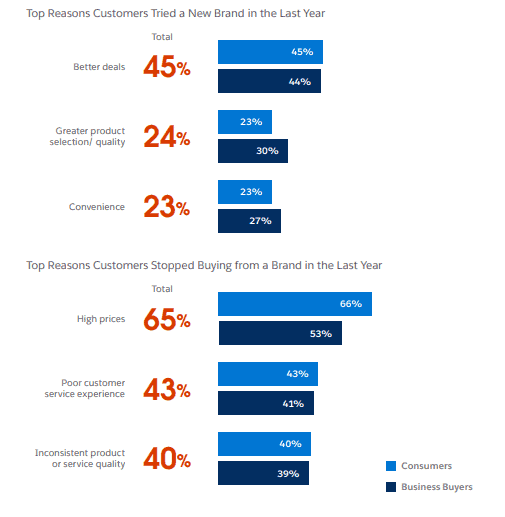
This means that companies that listen see customers stay longer and spend more. The difference shows up in lifetime value calculations. A customer who feels heard is worth significantly more.
Most marketers think of social media when you talk to them about brand building. However, email marketing is the most effective channel for nurturing relationships. Building customer loyalty with personalized email newsletters keeps the conversation going. It turns one-time buyers into brand advocates who return again and again.
It improves your products and services
Direct signals, such as complaints, reveal what’s broken or missing. These aren’t noise. They’re a roadmap to product improvements customers will actually use.
When dozens of people ask for the same thing, you’ve found a market need. When negative reviews mention identical pain points, you’ve identified friction to eliminate.
One of the fastest ways to improve is to get feedback from your users with surveys and feedback forms. These tools let you ask specific questions about features, pain points, and desired improvements.
Customer satisfaction scores improve when you act on your findings. People notice when their suggestions become reality. They feel ownership of the product.
This feedback loop doesn’t just improve retention, though. It also strengthens your customer acquisition efforts. Happy customers become your best advocates. They refer others and leave positive reviews that attract new users.
It strengthens your brand identity
Customer perceptions shape your brand voice, whether you want them to or not. The gap between how you see your brand and how customers see it can be significant. Listening closes that gap.
The words customers use matter more than what you say. Let’s say customers call you “inconsistent” when you’re trying to be “innovative”. This indicates you need to change something.
To build a strong brand identity, first learn how your audience sees you.. The words they use provide clues. So do the problems they mention and the emotions they express.
Feedback reveals these gaps. You discover which promises land and which fall flat. You learn which competitors customers compare you against.
This is why your brand strategy should be based on actual user language, not assumptions. Brand identity begins from the very start, including what you say and how you say it.
For example, say you write a post on how to search domain names, and use an affiliate link. The target site’s language targets hardcore, 24/7 working, entrepreneurial men. But your audience is 35-50-year-old empathic and soulful women. That’s a huge mismatch, and your customers might feel insulted.
How to listen to your users effectively
Three channels deliver the most valuable insights.
Use social listening tools
Social listening means tracking what people say about your brand across social platforms. This goes beyond monitoring your own accounts. You’re watching for mentions everywhere.
These tools can scan Facebook, Instagram, LinkedIn, TikTok, and X/Twitter for relevant keywords. You track your brand name, product names, competitor names, and industry terminology. When someone mentions you, your dashboard pings you.
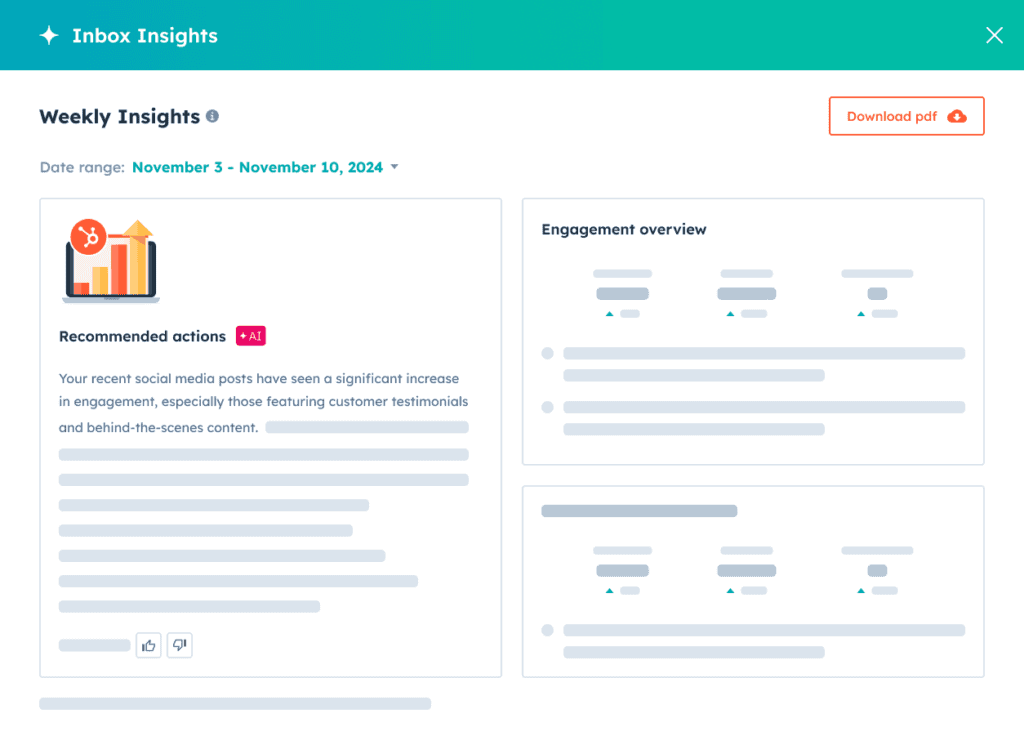
Real-time monitoring gives you immediate awareness. Someone tweets a complaint at 2 AM. You see it that morning and respond fast.
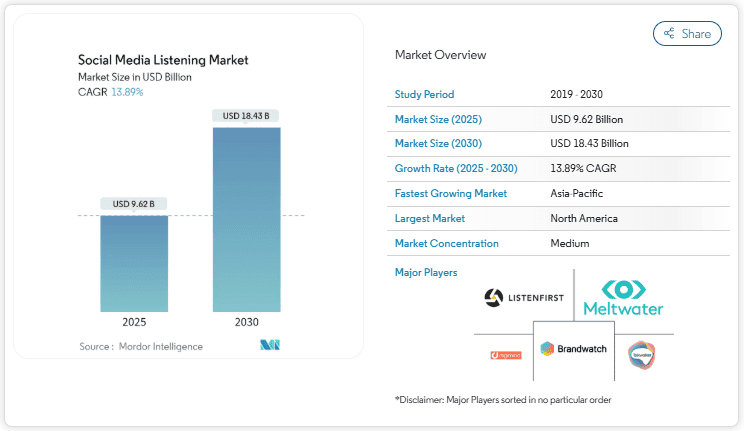
According to Mordor Intelligence research, the social listening market is expected to grow by billions by 2030. That’s why brands that want to grow now treat it as a must-have.
Sentiment analysis adds a layer. It tags mentions as positive, negative, or neutral. This allows you to spot problems early and find advocates. This way, you spot brewing problems before they explode. You can also identify brand advocates or influencers worth engaging.
Beyond brand monitoring, social listening also supports social media for SEO rankings. You can leverage the things your target audience praises to attract more high-quality traffic.
Collect direct customer feedback
Social listening catches what people say publicly. Direct feedback channels capture what they’ll only share privately. Both matter.
Here are some direct channels you should be capturing:
- NPS scores to see how likely customers are to recommend you.
- Email outreach feedback with leads who reply with a polite no.
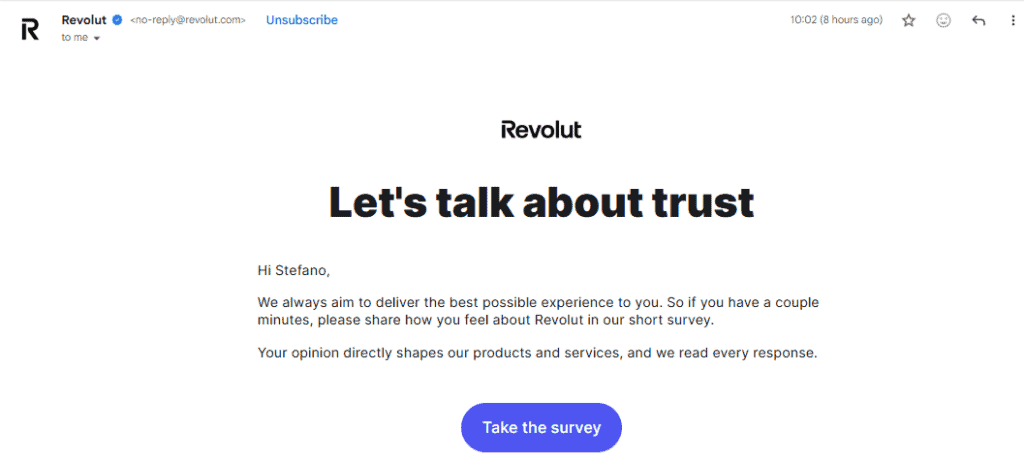
- Post-support and post-purchase feedback emails.
- Email marketing that focuses on getting replies.
- Surveys and polls that ask specific questions.
- User interviews and focus groups.
Screenshot taken by the author
Direct feedback also helps you measure the ROI of content marketing. You can trace which content pieces drive the most valuable conversations and customer actions.
Additionally, one-to-one feedback (such as emails) can also trigger another advantage. The right questions can motivate customers to use the product or service they bought. The more they use them, the more likely they are to make a repeat purchase and become a loyal customer.
Monitor online reviews and ratings
Review sites act like permanent feedback hubs. People check them before buying. They trust other customers more than your marketing.
Google and Yelp work for local businesses. Trustpilot covers e-commerce. G2 and Capterra dominate the B2B software market. You need to track the ones relevant to your brand.
Tracking online ratings across platforms reveals patterns. If customers consistently mention slow shipping, that’s a clear indicator of an actionable issue. If everyone praises your customer service, that’s a brand strength to emphasize.
Responding matters as much as monitoring. Replying to positive comments and reviews encourages others to do the same. Addressing negative reviews publicly shows you care. The response itself becomes part of your brand identity.
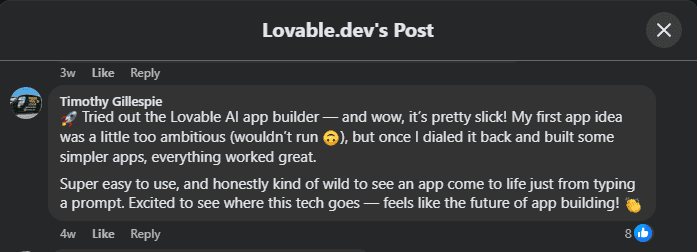
Don’t stop at review sites. Ask customers to paste their positive comments under your ads. Viewers see real proof, which lifts clicks and sales. This also helps your ads show up organically for free, especially if your customers tag their friends or share the ad.
Screenshot provided by the author
Building your social listening strategy
Let’s look at how you can build your brand by turning random listening into actionable insights.
Define your goals and keywords
Start with clear objectives. Brand monitoring tracks mentions and sentiment. Competitive analysis compares you to rivals. Customer care identifies support needs, while crisis management catches problems early.
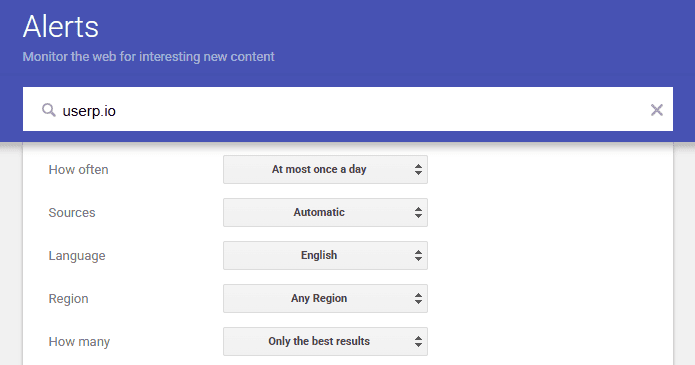
The first step is to select the keywords you want to watch. Your brand name and product names are good starting points. Add common misspellings, include competitor mentions, and trending topics.
Set alerts for spikes and negative clusters so you can respond fast.
Screenshot provided by the author
Choose the right channels and platforms
Not every social media channel deserves equal attention. Go where your audience spends time.
Facebook reaches a broad demographic, while Instagram is better suited for niche audiences, such as those in the fitness industry. LinkedIn dominates B2B conversations, while TikTok captures the attention of Gen Z.
X is for fast performers, while Reddit and Quora host detailed discussions.
For business-to-business companies, choosing the right B2B marketing channels is necessary. Decision-makers often research on LinkedIn and industry-specific forums. They rarely use consumer-focused social media channels.
Set up monitoring and analytics
Systems make listening manageable at scale. Choose platforms that integrate with your existing systems.
Metrics to measure include share of voice, sentiment scores, mention volume, and reach.
According to Influencer Marketing Hub research, 62% of marketers see social media listening as a core data source. The aim is the same: turn conversations into actions.
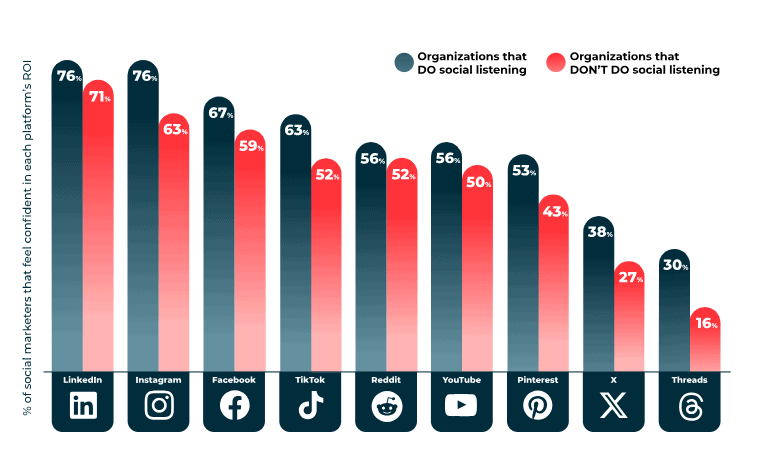
Don’t skimp on this. Companies that use social listening trust more in the ROI from each platform than those that don’t:
Turning customer insights into action
Here are three simple steps you can take today. Use these to turn competitor and customer insights into brand growth.
Analyze trends and patterns
Topic analysis reveals what customers talk about most. Machine learning tools can group similar conversations, helping you spot recurring themes.
Identifying recurring complaints helps you pinpoint areas for focus. If the same issue appears in reviews and social mentions, that’s priority one. Spotting positive trends reveals what’s working.
Trend analysis can lift every part of your brand. For example, finding the “voice of the customer” captures the exact language used by customers. Use the language to guide your SEO and content marketing.
Use these patterns for your ads and sales funnels as well. Matching your audience’s language can increase the ROI of your ads and sales funnels. This makes scaling a lot easier.
Share insights across your organization
Customer insights help every department. The product team can use these insights to enhance the product. For marketing, it means increasing ROI on every ad and content campaign. And customer service teams can pre-handle objections or resolve issues quickly.
Creating actionable reports by connecting learnings to business objectives.
Show how feedback links to revenue and retention with metrics like customer lifetime value. Share these insights in a dashboard with teams across your organization. When everyone understands what customers care about, better decisions happen naturally.
Implement changes based on feedback
The most crucial part of brand building by listening to users is implementing changes.
But not every suggestion deserves implementation. High-impact, low-effort changes come first. Problems affecting many customers trump niche requests.
Testing changes prevents over-correction. Roll out fixes to small groups first. Measure whether changes improve satisfaction.
Communicating back to customers about the changes you’ve made closes the feedback loop. Announce improvements publicly and credit customers who suggested them. This encourages more feedback and validates your listening efforts.

Build a brand worthy of customer loyalty
Brand building by listening to users transforms one-way marketing into two-way conversations. Instead of hoping your messaging works, you’re discovering what customers actually care about.
The difference shows up in every metric that matters. Customers stay longer. They spend more. They recommend you to others. This way, customer insight becomes a competitive edge.
Brands that listen don’t just survive. They thrive because they know what customers really want.
Ready to build a stronger brand by truly understanding your audience? At uSERP, we help businesses develop data-driven strategies. Our approach to SEO and link building starts with understanding what your audience cares about. Let’s talk about how listening to your users can fuel your organic growth. Book your intro call today.