I’ve seen hundreds of marketing campaigns launch. The ones that win, the ones that scale, aren’t based on “gut feelings.” They’re built on a rock-solid foundation of data.
We’re heading into 2026, and data-driven marketing is the new normal—the foundation for your entire marketing playbook. This post isn’t just about what data-driven marketing is.
I’m going to show you the marketing strategies, insights, and examples you need to build a data-driven engine that improves your customer experience and your bottom line.
Highlights
- Data-driven marketing isn’t just “what happened.” It’s about prescriptive analytics—using data to decide “what should we do next.”
- Personalization isn’t just a nice-to-have; it’s a revenue driver. We’ll examine McKinsey data that shows how it boosts sales and margins.
- We’ll cover Google’s U-turn on its plan to kill third-party cookies and why it makes your data strategy even more critical for 2026.
- The real winner in the data wars is first-party data. This is your most valuable, unassailable marketing asset.
- We’ll explore how Generative AI is shifting marketing analytics from a reporting tool to a strategic partner.
What is data-driven marketing (and what is it not)?
Data-driven marketing is the process of using high-quality customer data to gain actionable insights and make informed decisions at every stage of the customer journey.
The data-driven approach touches everything from content creation and audience segmentation to customer acquisition strategies, sales funnel optimization, and customer retention.
Being data-driven isn’t just about having a Google Analytics dashboard or sending a monthly website traffic report; it’s about leveraging data to inform decisions and drive results.
In essence, it’s the move from “what we think works” to “what we know works.“
Moving beyond descriptive reports to prescriptive analytics
To understand data-driven marketing, it is essential to comprehend the four levels of analytics. Most marketers, frankly, get stuck at level one.

(Image provided by author)
- Descriptive analytics: This is the “what happened?” It’s your standard report (for example, “Our website traffic dropped 10% last month.”).
- Diagnostic analytics: Diagnostics is about answering the question, “Why did it happen?” It’s where you dig deeper (for example, “Traffic dropped 10% because our referral traffic from one specific partner dried up completely.”).
- Predictive analytics: Here, you want to know “what will happen next?” You use machine learning and predictive models to predict future outcomes based on historical data (for example, “Based on current churn trends and rising acquisition costs, our conversion rates will likely dip 5% next quarter, even if traffic recovers.”).
- Prescriptive analytics: This answers the “what should we do about it?” question, which is the end goal of data-driven marketing (for example, “Our predictive analytics model suggests we focus on customer retention for this at-risk cohort. We should launch a targeted content marketing campaign for them instead of spending more on top-of-funnel acquisition.”).
That final step—prescriptive—is the core of modern digital marketing. You’re using data to anticipate consumer behavior and make proactive decisions, rather than just reacting to last month’s numbers. Building the analytical foundation to reach this stage often starts with mastering reporting and visualization skills through tools like Power BI or structured learning, such as a Power BI course.
Why data-driven marketing is the key to a truly positive customer experience
I often hear people say data feels “cold” or “robotic.” I see it as the exact opposite.
Data is the key to empathy and personalization at scale.
You can’t have a personal conversation with 100,000 customers, but your data can. It’s how we deliver customer experiences that feel personal and relevant.
Why does this matter?
Because, by 2026, customers will no longer just appreciate personalization; they will expect it.
A foundational study from McKinsey a few years ago found that 71% of consumers expect companies to deliver personalized interactions. Companies listened, and today, Salesforce research suggests that 73% of customers feel that companies do treat them like individuals, a huge jump from 39% in 2023. If you’re not giving personalized experiences now, you’re already behind.
The best part is that personalization drives business results. Pushing targeted personalized promotions can increase sales by 1–2% and margins by 1–3% (source: McKinsey). That’s a double win that directly boosts profitability. This might seem small, but remember, it’s the proven revenue boost from one optimized personalization strategy. Imagine what deploying personalization across all touchpoints could do for your marketing.
This is why McKinsey updated its 4D strategy for personalization to include a fifth dimension: cross-channel performance metrics.
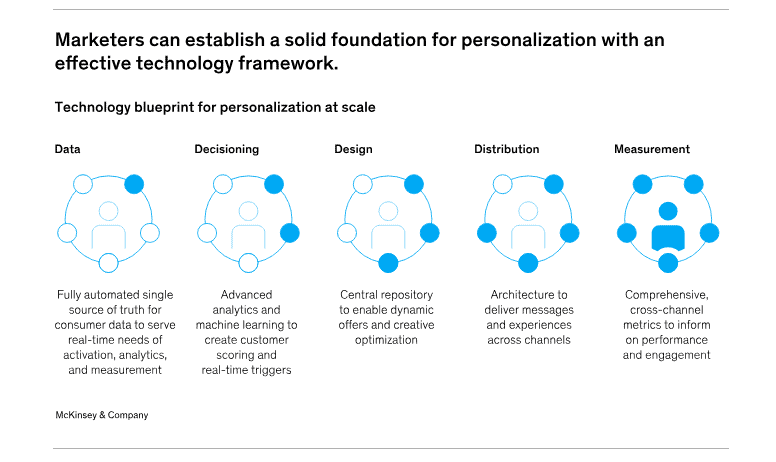
This evolution underscores the crucial need for more data-driven insights to inform our marketing strategies.
The core data-driven marketing strategies for your 2026 plan
Okay, so we’re sold on the “why.” Now for the “how.”
These are the three core strategies my team and I focus on when building a data-driven engine. This isn’t theory; this is the action plan.
Strategy 1: Build a 360-degree view of the customer journey
The single biggest barrier to good data-driven marketing is data silos. This is when data from your content marketing team, sales data, customer service data, and data from other departments is fragmented, residing in separate, unconnected systems.
Data silos fragment your users’ customer journey. A data-driven approach maps all these customer interactions together.
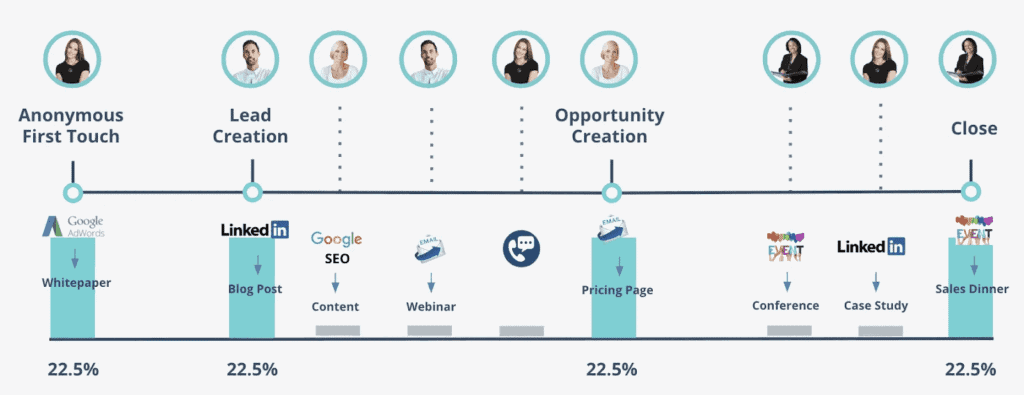
Building a 360-degree view of all touchpoints and interactions throughout your customer journey, and consolidating every metric in a centralized repository, is the key to enabling data-driven marketing.
Unified, omnichannel marketing is critical to achieve this goal.
A truly unified marketing team can track an interaction from a blog post all the way to a high-value conversion. This principle extends to every channel, even emerging ones like WhatsApp marketing, to ensure a seamless customer experience.
A well-implemented system connects conversations on WhatsApp directly to customer profiles, behavioral data, and lifecycle stages, allowing teams to track, personalize, and optimize interactions with the same rigor as any other core marketing channel through a WhatsApp CRM.
Strategy 2: Master hyper-personalization and customer segmentation
We have to move past “millennials in New York.” That’s demographic data.
Real power comes from behavioral customer segmentation for a hyper-personalized user experience. This means grouping users based on customer behavior, not just demographics. For example, you can segment users who have:
- Visited your pricing page more than once
- Read three articles on the same topic
- But never signed up for a trial
This granularity opens up powerful website personalization tactics. For example:
- A SaaS company could use this data for B2B website personalization, like showing different case studies on its homepage based on incoming IP and user industry matching
- For e-commerce, it means personalized product recommendations powered by machine learning that we all know: “You may also like X”
Strategy 3: Optimize the entire sales funnel with data
This is where we, as marketers, connect our digital marketing efforts directly to revenue. Data-driven funnel optimization isn’t just about the top of the sales funnel; it’s about the entire path.
- Top of Funnel (TOFU): Use marketing analytics to double down on the channels that bring in high-intent users, not just volume. Where do your best-fit customers actually come from?
- Middle of Funnel (MOFU): This is all about A/B testing. Systematically test your landing pages, your headlines, your CTAs, and your email campaigns to find the perfect message that moves a lead to a demo.
- Bottom of Funnel (BOFU): Analyze your attribution data. A good attribution modeling system shows you which content marketing pieces are closing deals, not just starting them. This is how you prove your ROI and get more budget.
Taming the beast: Your action plan for data management
This all sounds great, right? But I know what you’re thinking. The data itself is the single biggest challenge.
It’s messy. It’s trapped. It’s overwhelming.
Here’s the positive, practical path forward for your data management plan.
Defeating data silos to unify your customer data
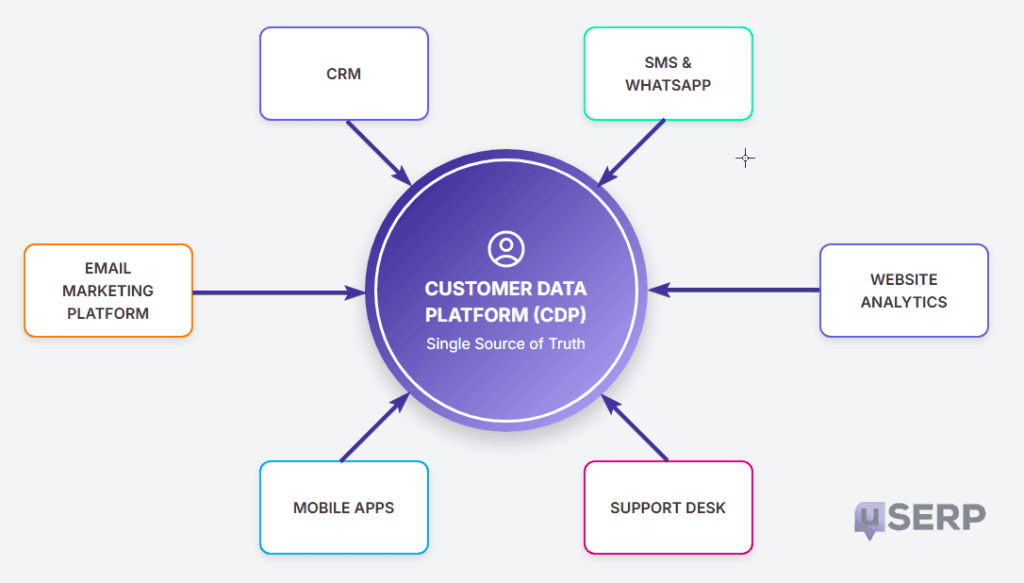
I mentioned data silos before, and this is how you fix them. You need to create a single source of truth for your customer data.
A customer relationship management (CRM) tool is a great start. However, for many companies, especially as they scale, a Customer Data Platform (CDP) is the real solution.
(Image provided by author)
A CDP is designed to collect data from all your disparate sources (your website platform analytics, your app, your CRM, and your support desk) and consolidate it into unified user profiles.
It provides a single source of truth that breaks down data silos, empowering your data-driven marketing with the full data set.
The 2026 “cookieless” U-turn: What really happened and what it means
Now for the elephant in the room. For years, we all relied on third-party cookies for detailed user data. It’s what fed our data-backed strategies. But Google announced it would deprecate third-party cookies. Preparation for the “cookiepocalypse” was on.
Then, Google changed course.
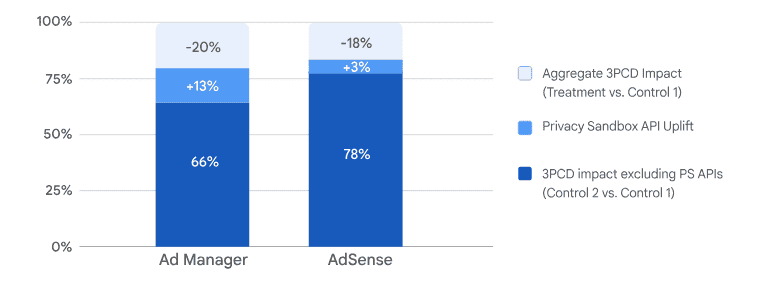
They did a test run in 2024 to assess the impact of third-party cookie deprecation (3PCD), and the results published in July 2024 weren’t promising (source: Google):
- 3PCD resulted in a total loss of 21–33% revenue for publishers
- Privacy Sandbox APIs only recovered 3–13% of those losses
- Publishers are still losing 18–20% of ad revenue to 3PCD
What happened next came as no surprise:
- Massive industry pushback
- Regulators got involved
- Google backtracked
Anthony Chanvez, VP of Privacy Sandbox, drove the final nail in the coffin last October. He all but said that Privacy Sandbox would be dismantled.

Instead of deprecating third-party cookies as planned, they’re rolling out a new user-choice model in Chrome.
Leveraging first-party data as your most valuable asset
So, cookies are back? Not exactly.
This U-turn doesn’t mean we go back to the old ways. Safari and Firefox already block third-party cookies by default. Moreover, Google’s new model is built on “user choice,” which means marketers must earn the right to track users to gather data.
This makes your brand data collection—your first-party data—more valuable than ever.
First-party data is the information you collect directly from your audience with their consent. This includes:
- Insights from direct customer interactions
- Data from your loyalty programs
- Your email list
It’s data you own, it’s accurate, and it’s protected from a rival’s competitive marketing efforts.
So overall, the best strategy moving forward is to act as if you didn’t have access to third-party data. You must strengthen your first-party data collection by earning user trust. To do that, you must:
- Comply with privacy laws like the General Data Protection Regulation (GDPR) and the California Consumer Privacy Act (CCPA)
- Limiting data collection only to the data you actually need for your campaigns
- Being upfront about how you collect and use that data
Don’t forget about the competition
While you nurture your own data, you should be using public data to analyze your competitors:
- Analyze their social media engagement to see which topics are resonating with their audience
- Use tools to see what their website traffic patterns look like
Once you have all that competitor data, performing a SWOT analysis (Strengths, Weaknesses, Opportunities, and Threats) is a classic way to get value from it.
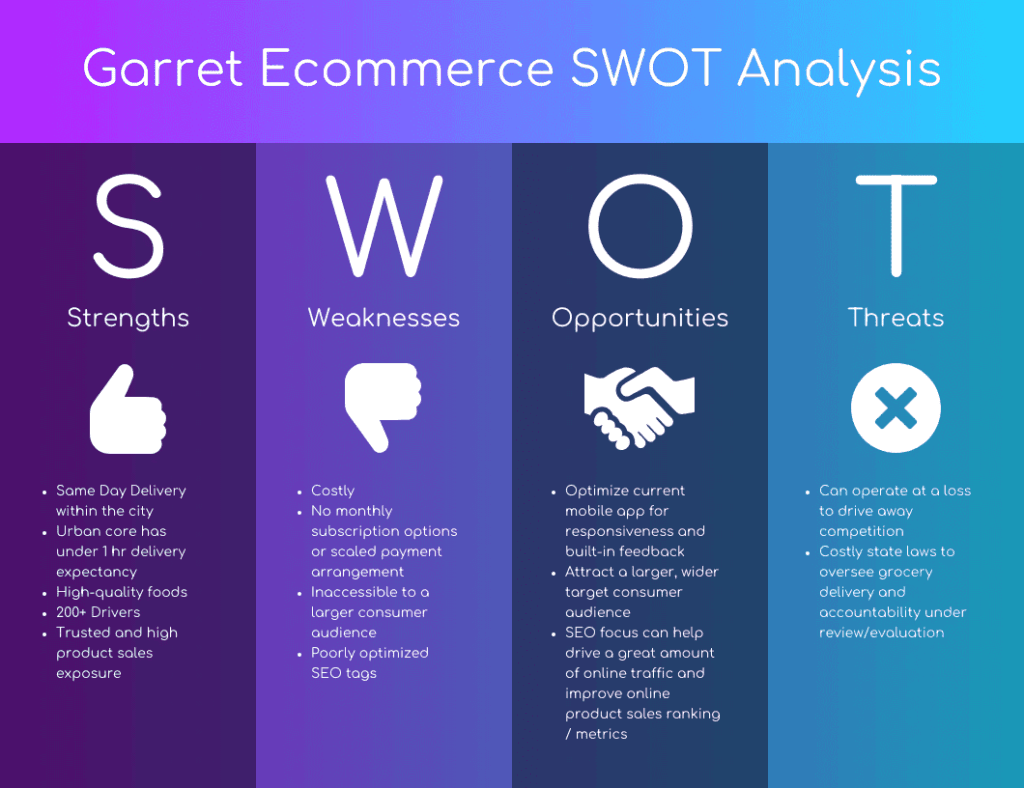
This is an ideal spot to use a SWOT template. Use data to visualize where you have opportunities that your competition is completely missing.
Examples of data-driven marketing in action
Let’s make these strategies concrete with a few positive examples.
Example 1: Perfected omnichannel optimization for a SaaS company
Imagine you’re a marketer at a top SaaS company. Their omnichannel optimization strategy is a perfect real-world example of data in action.
Here’s how it plays out:
- Channel 1: A potential customer reads a blog post on your site about an advanced product feature.
- Channel 2: Days later, they see a post on your LinkedIn for an upcoming webinar about that feature and sign up.
A non-data-driven company would treat these as two separate, disconnected events. But a data-driven one knows this is a critical moment.
The customer data from your blog and your webinar platform are integrated (via your CDP or CRM). The system now sees one user, not two, and flags them as high-intent on a specific topic.
So, instead of receiving the generic “Welcome” sequence, this user gets a hyper-relevant follow-up email campaign, perhaps offering a case study that’s precisely aligned with the webinar topic. That’s omnichannel optimization in practice.
Research from 2024 confirms that customers who interact across multiple channels this way show a higher tendency to become loyal customers (source: IJEFE).
Example 2: The local business blending online and offline data
This isn’t just for big data tech giants. A local restaurant wants to build its email list. They place small, simple calls-to-action on tables and receipts.
By generating QR codes that lead to a “Join our VIP club” landing page, they do something brilliant. They link an offline customer to their online user profiles. Now, they can send targeted email campaigns about specials that they know the customer will actually care about, boosting repeat visits.
The future: Agentic AI in marketing analytics
Artificial intelligence (AI) is taking a massive leap. For years, machine learning has been great for customer segmentation, and generative AI has gotten good at writing report summaries. AI search is now so important that traditional SEO has expanded to include AI visibility frameworks and strategies.
The future, however, is agentic AI. This is a profound shift.
We’re moving beyond AI as a simple “coach” that gives you prescriptive analytics. We’re entering the era of the AI “agent” that can act on those analytics for you.
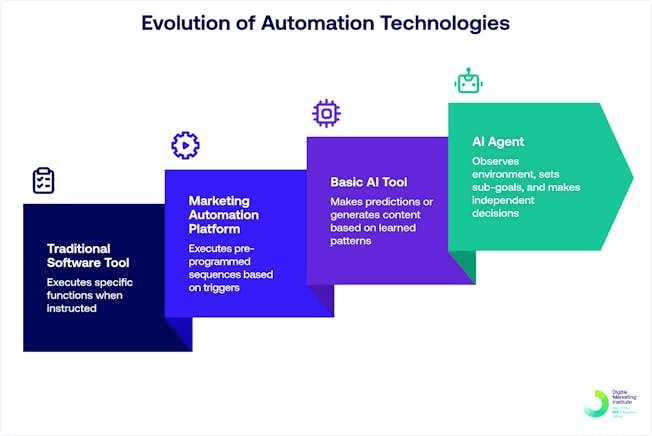
Soon, you won’t just get a report from your AI tools analyzing your Google Data Studio or Power BI dashboard. AI agents will:
- Analyze your data
- Identify drops in conversion rates or changes in other metrics for a specific ad segment
- Generate creative variations to test
- Automatically run the A/B tests for you
And they’ll be able to do this all autonomously, letting you focus on creating solutions for your clients instead of finding clients for your solutions.
Stop guessing, start growing
The shift to data-driven marketing is the single most powerful change you can make for your brand awareness, customer engagement, and, ultimately, your revenue. The tools are here. The data is waiting.
It’s time to stop guessing and start growing.
But having the right data-driven content marketing strategy is only half the battle. You need to get that content in front of the right people and build the authority that tells Google (and your customers) you’re the leader.
If you’re ready to make SEO your primary growth engine, let’s talk about how uSERP can help you get the traffic you need to fuel your data-driven marketing machine.