You updated your title tags. You rewrote the content. You even tweaked the meta descriptions. But did any of it actually work?
Most businesses rely on gut feeling. They make SEO changes and hope for better rankings. That’s just guessing. And in today’s market, guessing gets expensive.
What is A/B testing in seo? It’s a way to validate decisions before you roll them out everywhere. Instead of hoping, you test changes on a small group of pages. Then, you measure the real impact on organic traffic and conversions.
This guide breaks down how to set up A/B tests for SEO. We’ll cover what to test, how to avoid tanking your rankings, and how to make data-driven decisions that actually improve performance.
Highlights
- What is a/b testing in seo: A data-driven method to validate SEO changes before site-wide rollout.
- SEO split testing can increase organic traffic when done correctly.
- Test title tags, meta descriptions, content structure, and technical elements systematically.
- Proper testing avoids Google penalties and reduces the risk of traffic drops.
- Statistical significance requires a minimum test duration of 4-6 weeks for reliable results.
What is A/B testing in SEO?
A/B testing in SEO, or SEO split-testing, is simple in concept. You make changes to a specific group of pages while leaving another group alone. Then, you compare how Google treats them.
You divide similar pages into two buckets: a control group and a variant. The control group stays the same, while the variant group gets your changes. After a few weeks, you look at the data.
Did the variant group get more organic traffic? Did rankings improve? If yes, you have a winner, and this variant becomes your new control.
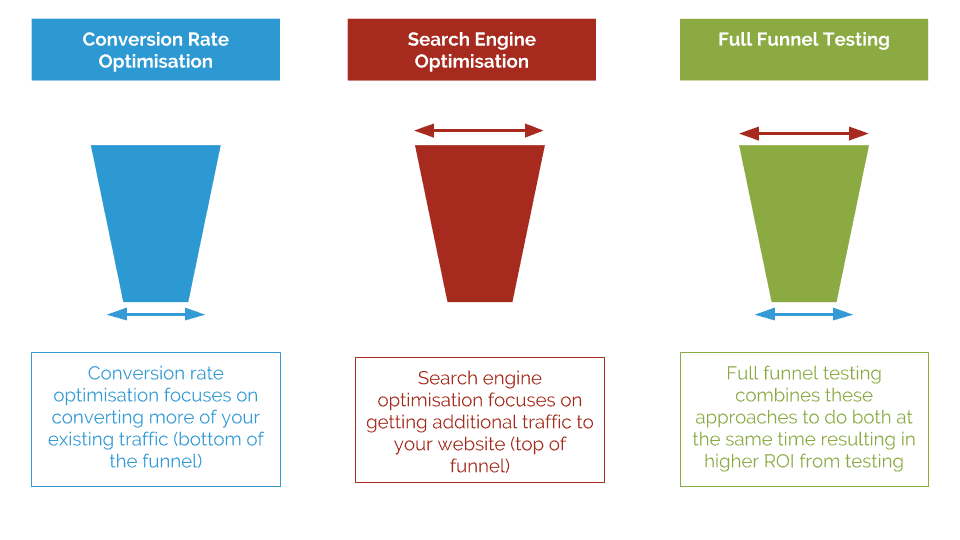
This testing strategy differs from traditional conversion rate optimization (CRO). CRO tests split users between two versions of one page. SEO testing needs groups of pages because search engines take time to crawl updates.
SEO tests measure Google’s response, not just visitor behavior. You look at organic sessions and SERP positions. You can’t do the same with just CRO. That’s why SEO optimization and CRO work best together.
Why A/B testing matters for SEO performance
Making site-wide changes without testing is risky. You could accidentally tank your traffic or waste months on updates that don’t move the needle.
A/B testing reduces that risk by validating changes on a small segment first. You prove the value with hard numbers before committing resources.
While your competitors guess, you know precisely what drives results. It moves your strategy from “I think” to “I know.” According to Mastercard’s 2024 State of Business Experimentation report, nearly half of all business initiatives fail to prove their initial hypothesis. This proves the value of testing variations rather than assuming every change will be a winner.
Testing also helps you adapt to Google’s updates. When algorithms change, you can quickly test new strategies. You make informed decisions based on your own data, not general advice.
How SEO A/B testing differs from traditional A/B testing
Traditional A/B testing splits website visitors. Half see page A, half see page B. You measure conversion rates quickly. This works great for layouts, button colors, and changes in sales copy.
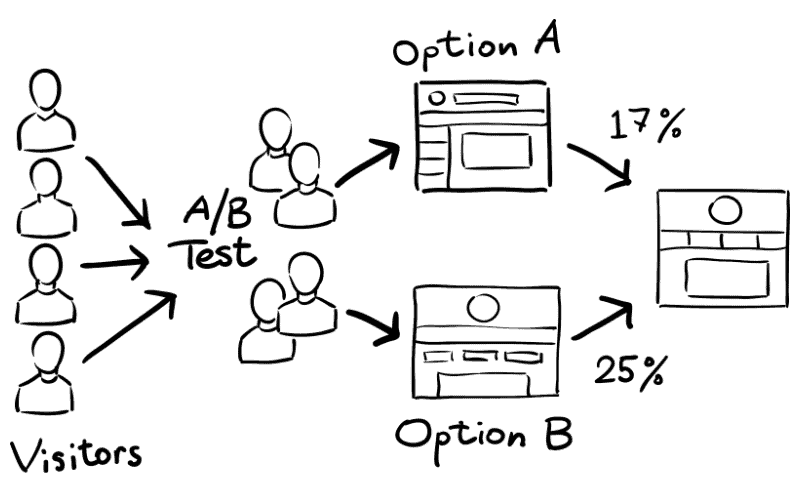
SEO split testing is different. You can’t just split users because Googlebot needs to see a consistent page. Instead, you split pages into groups.
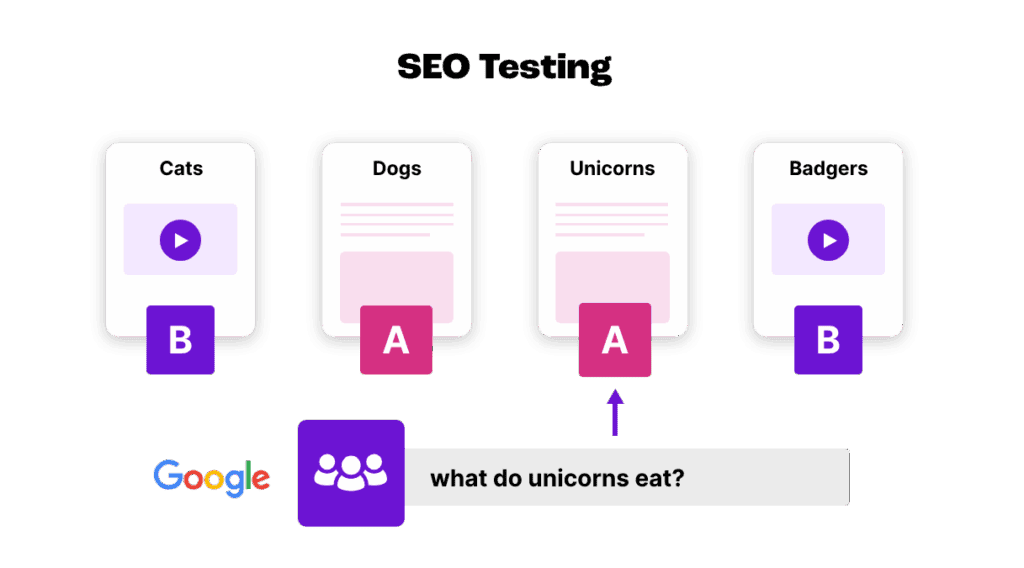
Plus, Google needs time to process changes. That means SEO tests run longer, usually 4-6 weeks.
The metrics differ, too. Traditional tests watch user behavior. SEO tests track organic traffic and search results. You want to know how the search engine reacts.
A common factor between both testing methods is page speed. It matters for both, as slow pages hurt user experience and rankings. Tools like WP Rocket help improve Core Web Vitals so your baseline performance is solid before you start.
Both methods have their place. One optimizes for conversions, the other for visibility. Innovative companies use both to ensure pages rank well and convert traffic.
Key elements you can A/B test for SEO
You should focus on elements that change how Google understands your pages or how users see them in the results. Small tweaks here can lead to big wins.
Title tags and meta descriptions
Title tags act as the primary headline for your search result. They impact your click-through rates and how Google sees your topic relevance.
You can test putting keywords first versus putting your brand name first. You can test adding brackets like “[Review]” or “[2025 Guide]” to the end of the title. Even changing the separator from a pipe (|) to a dash (-) can impact how the title displays.
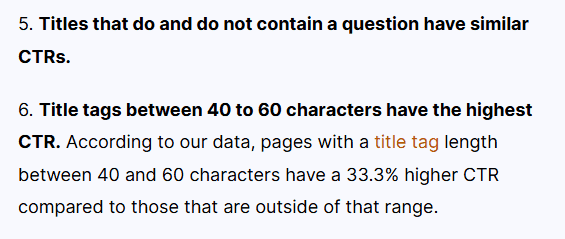
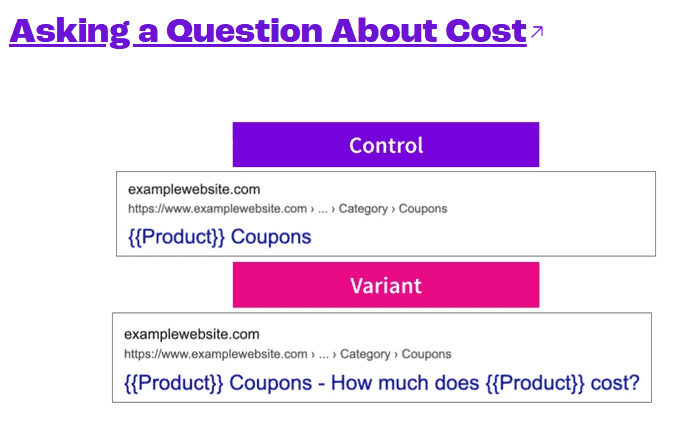
However, adding more keywords in title tags will likely not improve your rankings. Research by SearchPilot tested this and found that this lowered conversions because the extra keywords created more confusion. Other tests, like title tags with dynamic prices, age ranges, and asking questions about costs, increased clicks and organic traffic.
Meta descriptions also drive CTR. While they do not directly impact rankings, they act as your ad copy. Test questions versus benefit statements, then see which gets more people to click in the SERPs.
Content structure and formatting
Structure helps Google crawl your site and understand context. Test your H1 headers or paragraph length. Does longer, comprehensive content actually rank better for your specific niche, or does concise content win?
Test readability and tone in your content. Does a more conversational tone with grade 6-8 readability result in answer engine optimization, getting mentions before the first search result?
You can also look at internal linking patterns. Test if adding more links to priority pages lifts their rank. You might find that moving content above the fold helps performance.
URL structure and technical elements
URL structure changes are risky but can be powerful. Test if shorter URLs perform better than long, nested ones.
If you’re still using ID-based URLs (ex, website.com/1234), test switching to descriptive URLs (ex, website.com/gemini-vs-claude). This is highly likely to increase conversions and should be part of your technical SEO playbook.
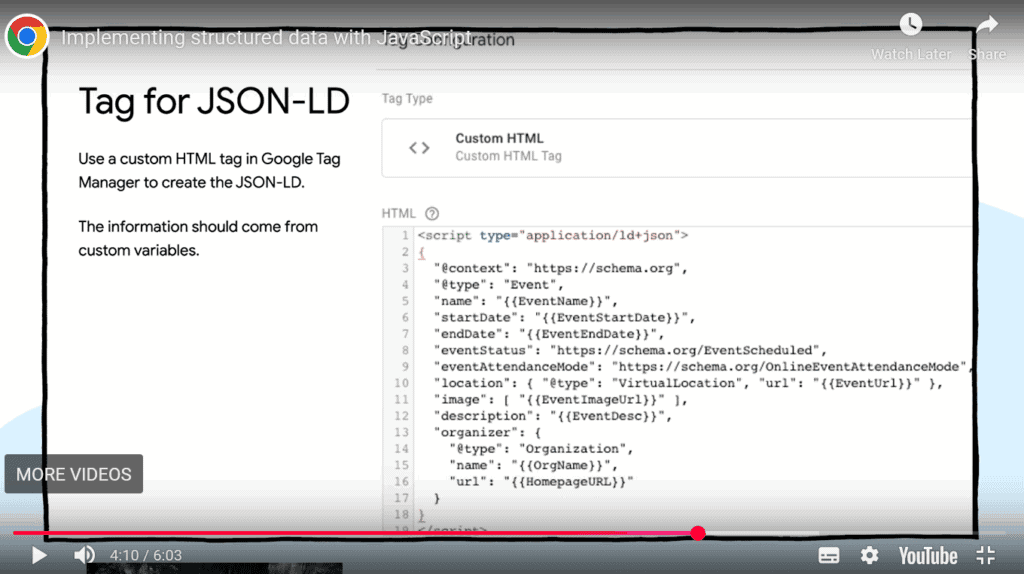
Don’t forget schema markup and load times, as they’re prime targets for experimentation. A “Review” schema could increase CTR, or a “FAQ” schema might help you dominate more real estate in the search results.
How to set up an SEO A/B test
By now, you know that you can’t just change things randomly. Otherwise, you won’t know what actually works. Here’s a step-by-step process that helps you go from “what is A/B testing in SEO” to “how do I use it to improve my search traffic consistently?”
Step 1: Identify pages to test
Find groups of similar pages. Product pages, programmatic landing pages, or blog categories work best. They need similar content templates and traffic levels.
You need a solid sample size: about 50–100 pages per group is a good rule. Before testing, make sure both groups have similar past performance. If one is already growing faster, your results won’t be reliable.
Step 2: Form your hypothesis
Know exactly what you are testing and why. Write it down and be specific, as vague goals lead to ambiguous results. You need clear metrics to define success.
Step 3: Split into control and variant groups
Divide your pages randomly but evenly. This is often called “bucketing.” Make sure both buckets have similar user engagement metrics and ranking history.
Also, consider user experience. You can try personalizing websites based on behavior for other experiments, but for SEO, keep the page content static for the crawler.
Step 4: Make your changes
Apply updates to the variant group only. Keep the changes consistent across all those pages.
Don’t forget to document when the changes went live. This is vital when SEO and content marketing teams analyze the data later. You need to know exactly when the “pre-test” period ended and the “test” period began.
Step 5: Monitor and measure
Watch your organic traffic, click-through rates, and keyword rankings. Use Google Search Console to track organic sessions and bounce rates.
Don’t forget about the most important metric: revenue. If traffic and click-through rates rise, but you get lower quality leads and shrink your lifetime value, that’s a bad variant.
Here, you’re looking for the “breakout.” This is when the variant group starts performing significantly better (or worse) than the control group.
But you need statistical significance to be sure. Usually, this takes 4-6 weeks, though it can take longer if your website doesn’t get much traffic. Do not stop early just because you see a green arrow.
Learn advanced SEO analytics techniques to interpret numbers correctly.
Tools for SEO A/B testing
The right tools make SEO A/B testing easier. They automate the heavy lifting, ensure randomization, and keep your data clean.
Specialized SEO testing platforms
Tools like SplitSignal and SearchPilot handle server-side testing automatically. They do this by using proxies or edge services.
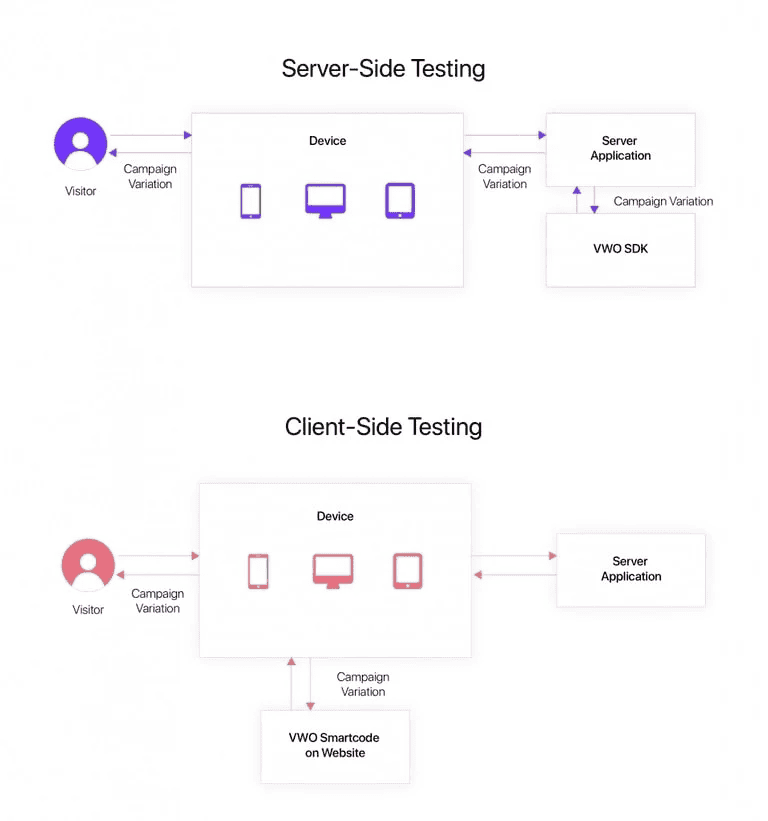
A huge advantage of using such tools is that you do not have to bug your developers for every small title tag change. They track the metrics and tell you when you reach statistical significance.

Analytics and tracking tools
Treat Google Analytics and Search Console as your baseline. Search Console shows you CTR and position changes, while Google Analytics tracks sessions, conversions, and engagement.
Start by creating custom segments or regex filters for your groups. This lets you compare performance side-by-side easily within the dashboards you already use.
Supporting SEO tools
Use tools like Ahrefs or Semrush to watch the broader market. Track your ranking changes for target keywords over time to see if the movements correlate with your test dates.
If you’re not familiar with these platforms, look at Ahrefs SEO tools for beginners. Use these to monitor keyword and ranking data throughout your test and spot external factors that might influence the results.
Best practices for SEO A/B testing
Follow these rules to get reliable data and keep Google happy. If you break these, you risk penalties or end up with useless data and wasted test time.
Avoid cloaking and Google penalties
Never show Googlebot different content from users. That is cloaking, which violates Google’s spam policies and testing practices.
To avoid cloaking, use server-side testing or client-side injection that renders both the bot and human users fully. Google’s own documentation emphasizes that testing is allowed, provided you do not manipulate the bot.
Run tests long enough for significance
SEO tests take weeks, not days. Crawlers need time to find changes, index them, and adjust rankings.
Watch out for seasonality. Don’t run a test during a holiday spike unless that is your specific goal. Black Friday test results won’t apply to a random Friday in March.
Plus, a 20% bump in week one might just be noise or a “freshness” boost.
So wait for statistical significance. You usually need 95% confidence before you call a winner. This protects you from false positives or fake wins caused by chance.
Test one variable at a time
Keep it focused. Run one clear test. Analyze it. Then move to the next idea. A scattershot approach just wastes traffic. If you need to validate messaging, run dedicated brand testing separately from your SEO experiments.
Account for external factors
Google algorithm updates happen constantly. If a core update hits mid-test, your data is noisy and likely useless. You won’t know whether the traffic drop was due to your new title tag or to an algorithm update.
Monitor competitor moves too. If they launch a huge campaign, it might skew your search engine rankings regardless of your test.
Consider all devices
Users act differently on phones. Mobile intent is often more urgent and less research-heavy. People are on the move or checking something quickly while cooking dinner.
So segment your data, because a change might boost mobile traffic but hurt desktop.
Don’t over-optimize for short-term wins
Think long-term. Drastic brand changes could spike traffic, but they make your branding inconsistent. Even creative elements like a bubble font on a landing page should still fit your overall style guidelines.
Correlate traffic or ranking changes with conversions. If a test shows you more organic traffic, but higher bounce rates, that’s a sign that there’s a mismatch between what shows in the SERP and what the new visitors are expecting to see.
Finally, don’t stop link building as it can help stabilize your results. Good link building strategies support your split tests by adding authority to your pages, minimizing ranking drops during testing.
Conclusion
So, what is a/b testing in seo? It transforms SEO from an art into a science. You test changes on small groups to lower risk and prove ROI before you commit.
Run tests long enough to be sure. Focus on big levers like title tags, content structure, and intent matching. And always play by Google’s rules to avoid penalties.
Ready to scale your performance? At uSERP, we combine data-driven A/B testing strategies with high-quality link building to drive sustainable growth. Book a free consultation today to see how we can help you achieve measurable results.