




Man, 2025 was a year of constant change. 😅 And 2026 is going to get even wilder. But you know what’s great about SEO? The fundamentals pretty much stay the same.
What changes is how you apply them across modern digital marketing efforts, especially as AI tools reshape how content is created, distributed, and discovered.
Search engines still reward content that’s clear and based on real expertise. What’s different now is the bar. AI overviews, zero-click results, and tougher competition mean you can’t rely on surface-level content or recycled tactics.
In 2026, SEO rewards brands that go deeper. You win by understanding search intent better than anyone else and aligning with how natural language processing shapes the way search engines rank content today.
You win by structuring content so it’s easy to scan, easy to trust, and easy to pull into AI summaries. You win by building pages that deserve to rank, not pages designed to trick an algorithm.
The playbook hasn’t changed. Execution has.
Let’s take a look at the top B2B content marketing trends you need to add to your strategy for 2026 if you want to keep winning. 👇
Highlights
- Original research drives backlinks and authority: Publishing branded research like benchmark studies, trend reports, and customer surveys generates significant backlinks and establishes thought leadership. uSERP’s State of Backlinks report attracted 12,000 backlinks from 2,300 linking websites, with 90% being do-follow links that boosted domain authority.
- Micro-intent queries outperform broad keywords for AI citations: Brands targeting specific, long-tail queries (e.g., “project timeline templates for software development”) get cited approximately 5x more often in AI responses than those targeting evergreen terms, according to uSERP’s analysis of 200+ client queries.
- Structure content for LLM citations: To increase AI citation likelihood, use clear H1-H4 headings, bullet points, tables, schema markup (FAQ, HowTo, Article), highlights sections with quick summaries, named source attribution, and answers to “what” and “why” questions at the top of articles.
- Free interactive tools drive engagement and conversions: Ungated calculators, diagnostic quizzes, fillable templates, and trackers attract shares and backlinks while funneling users toward conversions—removing forms and download barriers maximizes accessibility and search visibility.
- Decision-support content beats generic blog posts: B2B buyers in 2026 respond to in-depth comparison guides, product-led content (whitepapers, case studies, feature-focused guides), and cornerstone assets that reduce buyer uncertainty across consulting, implementation, risk assessment, and product validation stages.
B2B content marketing trends: Conduct and publish market research
Prove industry knowledge with branded research that surfaces original industry insights and positions your brand through thought leadership – think reports, white papers, the kind of content people actually save and share.
Stick to a topic that serves your target audience and relates to a service or product you offer. You’ll provide value, and in return, you’ll attract engagement.
This is also a great way to get tons of backlinks. Brands will link to your research when writing B2B content, and your site will get rewarded with a higher authority score. AKA more clout.
This is a strong E-E-A-T signal you don’t want to miss out on.
As far as what to create?
Here are some ideas:
- Competitive landscape analyses
- Proprietary scoring frameworks
- State-of-the-industry analyses
- Trend forecasting reports
- Benchmark studies
- Customer surveys
- Annual reports
Each of these can help establish authority, provide actionable insights, and attract backlinks while strengthening your thought leadership positioning.
For example, a B2B ecommerce platform could report on current online shopping trends and cart abandonment rates. And CRM tools could gather insights on customer challenges and which retention strategies work best.
You can also build content partnerships with complementary B2B vendors, and co-create:
- Cross-platform playbooks
- Integration guides
- Joint research
This increases visibility and reinforces your role as an expert in your field.
We actually did this with our State of Backlinks for SEO report, and it went viral. 👇
We partnered with tons of SEOs and link builders to get real insights about what strategies move the needle. The survey covered everything from link quality vs. quantity to the tactics professionals swear by.
As a result, we got a ton of engagement from the SEO community. All from one comprehensive report.
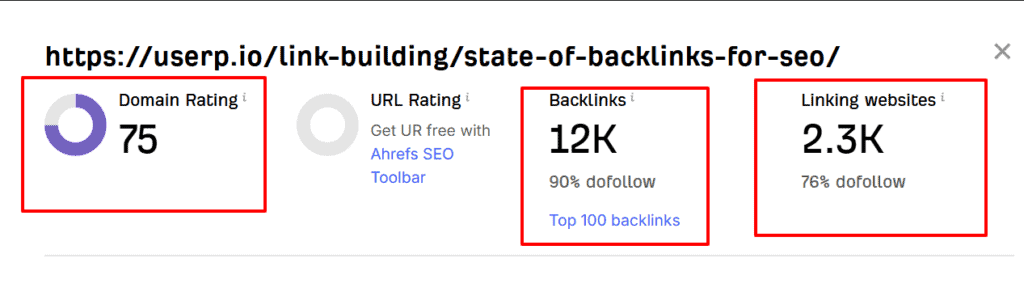
The report attracted 12,000 backlinks. And 90% of those are do-follow, so most of that link equity directly boosts our domain authority and search rankings. It also attracted 2,300 linking websites!
And peek at our *very* healthy 75 Domain Rating. 🤩 This report definitely gave it a boost.
We also left this report ungated to encourage more engagement and conversions. So consider doing that as well. Visitors can access it freely (no email or download required), so nothing stands in their way.
This also makes it easier for Google to crawl and index, since there’s no form or barrier blocking access. That helps the page rank and attract organic traffic faster.
Publish in-depth comparison guides for evolving B2B content marketing trends
Make it easier for decision-makers to choose a product or service.
Buyers hate guessing which solution is right for them. They want clear, side-by-side comparisons that break down features, pricing, and outcomes. That’s when comparison guides are helpful.
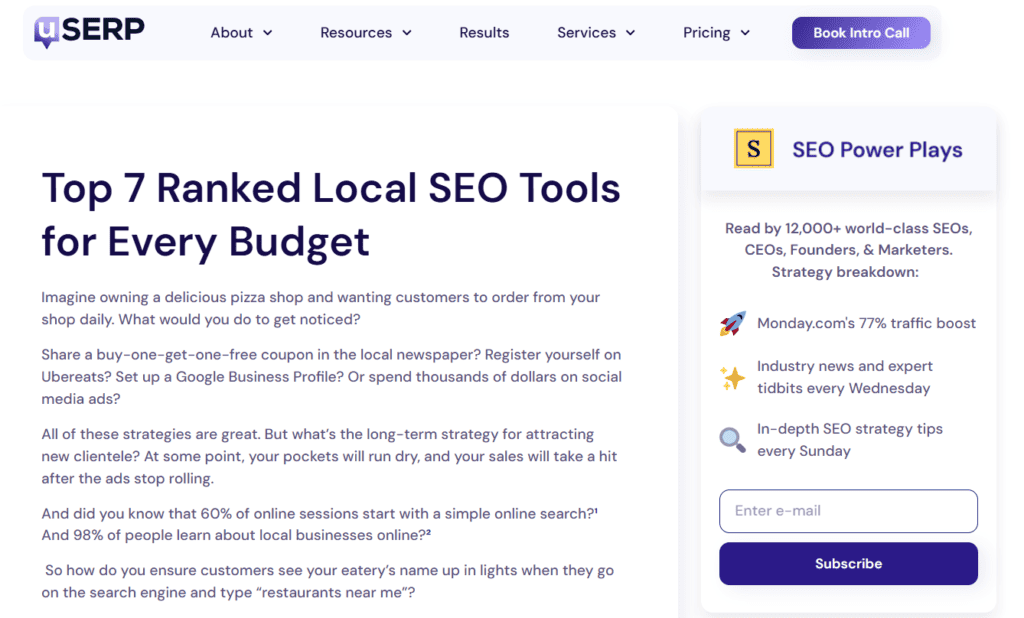
Unlike generic listicles, in-depth comparisons give real, actionable value.
For example, an email marketing tool might create a guide comparing automation features across the top platforms. And a project management SaaS might break down workflow capabilities, integrations, and pricing tiers.
The key is to write comparisons that are thorough and unbiased. Use bulleted lists, visuals, and real-world examples so readers can understand the differences without feeling overwhelmed.
Be honest about the pros AND the cons. Yes, even when describing your own solution. Users can smell pure marketing speak. But most importantly, honesty is how you build trust and engagement.
(Plus, do you really want conversions from audiences that don’t truly align with your solution? They’ll just churn anyway.)
*Pro-Tip: Try to stick to the same formatting when describing each option so it’s easier for readers to scan.
When done right, these guides get shared, linked to, and bookmarked. This can make them fantastic evergreen content assets for your site.
Want inspo?
Here are some comparison guides we’ve written:
Structure your content for LLM citations
Factor in AI visibility when structuring your content assets.
(Screenshot by Ioana)
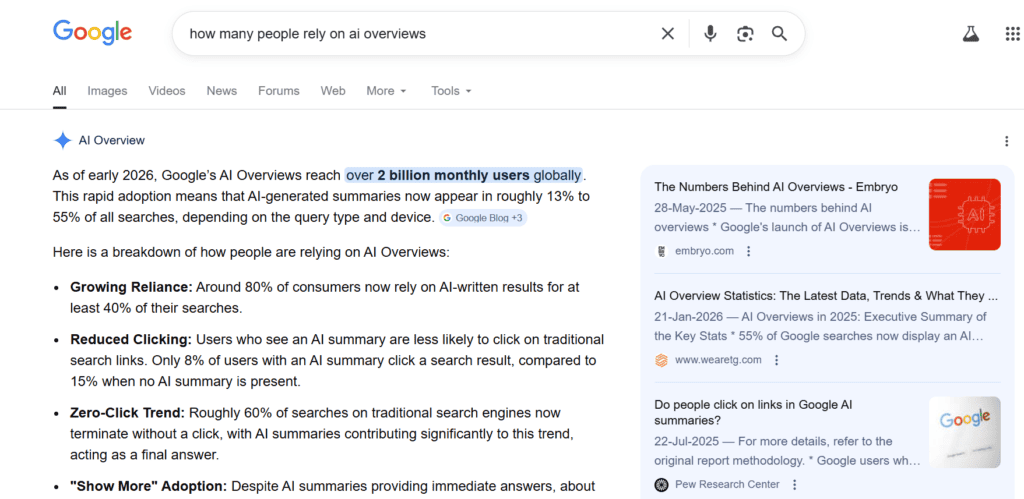
This one’s huge. Search engines, AI assistants, and community platforms are increasingly giving answers without sending users to your site. If your content isn’t structured for citations, you could miss out on a ton of visibility.
To optimize for LLMs (large language models), make your expertise easy to reference.
For example, include a highlights section with quick summaries from your content. (See ours above.) You can also include short sections at the top of your pieces that give readers the “what” and the “why” behind their search. It’s giving SEO 2020 … told you the fundamentals are the same! 😂
For instance: “What is a project timeline?” and “Why is a project timeline important?” AI can easily scan these and cite them in overviews and chat answers.
Another simple way to encourage LLM citations is by targeting micro-intent queries. These are longer, more specific search questions that typically have lower competition. (So it’s easier for your content to get discovered and referenced.)
As SEO expert Jeremy Moser says, “Generic keyword targeting is dying while micro-intent queries are exploding.”
uSERP analyzed 200+ client queries and found that brands targeting micro-intent terms were cited ~5x more often in AI responses than those targeting evergreen terms.
So instead of targeting “project management,” you might target:
- “Project timeline templates for software development”
- “Best practices for updating a project timeline”
- “How to create a project timeline in Asana.”
*Pro-Tip: You can surface these by searching in Reddit, Quora, and Perplexity:
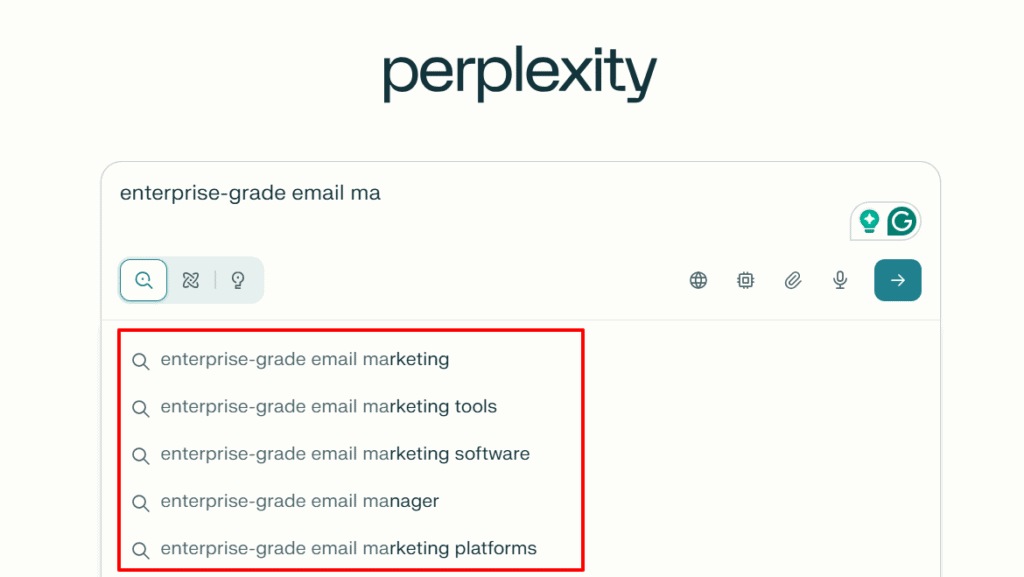
(Screenshot by Ioana)
Here are some more things to focus on to encourage AI citations:
- Reddit and Quora discussions: Join community discussions where your buyers ask the specific questions you’re targeting. Offer valuable advice, actionable tips, and insights. Show up consistently, and over time, your contributions will become trusted references.
- Structured answers: Use proper H1-H4 headings, bullet points, and tables to make content scannable and machine-readable. Add schema markup, such as FAQ, HowTo, or Article, to help search engines and AI understand your content even better.
- Named source references: Make sure your company, product, or research is clearly attributed. AI loves named sources. (Be consistent with this! Especially with your author bios.)
- Platform-native assets: Include branded assets, like infographics, charts, and downloadable PDFs, on your website and in your blog posts.
- Entity authority: Include facts, recent stats, and authoritative sources to reinforce that your content is trustworthy.
Basically, create content that teaches and is easy to reference. Do that, and your site becomes a go-to reference for AI assistants and search engines.
Create free interactive tools that are easily accessible
Interactive content like tools is a win-win. They give your target audience something useful right now and keep them coming back to your site. Plus, they’re highly shareable and link-worthy.
Set these up right, and you can funnel visitors directly into conversions.
For example, you could create:
- Diagnostic quizzes: Publish quizzes that help users identify gaps, challenges, or opportunities in their processes. Offer them a free trial or demo after so they can take one more step toward converting.
- Fillable templates: Let visitors fill in a pre-made template on-screen. For example, a project workflow template, marketing campaign calendar, or content style guide.
- Trackers: Give users project, social media performance, or budget trackers.
- Calculators: Offer financial calculators, KPI trackers, or ROI estimators.
The key is accessibility.
Make these tools free and easy to use — no forms or hidden downloads. The easier it is for your audience to engage, the more likely your tool will get shared and linked to.
Here’s a personal loan calculator that SoFi published:
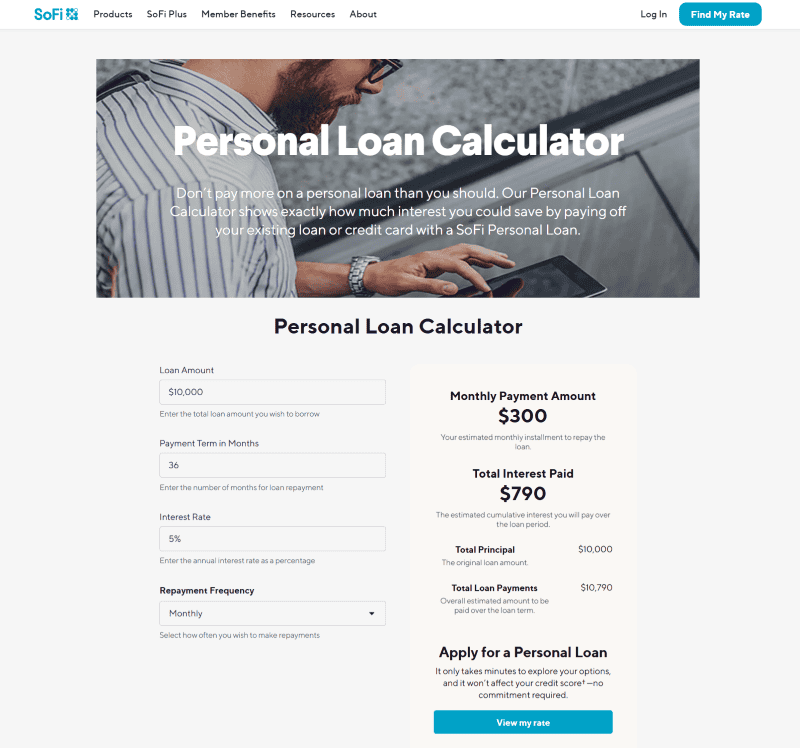
Users can access it instantly and fill it in to generate a monthly loan payment amount and a “total interest rate paid” amount. They’ll know if the loan fits their budget before they apply. And guess who offers personal loans? SoFi … 😏
Interactive tools are also authority builders. They show that you understand your audience’s problems and give them solutions they can use.
Speaking of which …
Publish product-led content guides
Continue to give your target audience more ways to see your solution as the answer to their problems.
Activation stays flat unless your content is built around the actual product and the person who can buy it. You can do this with product-led content. Or “product marketing.”
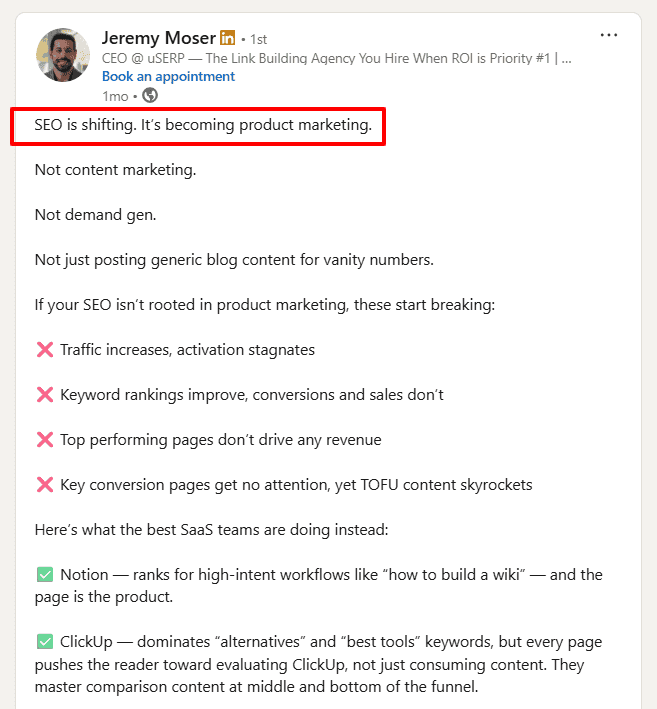
When creating product-led content, aim it at one person: The buyer who’s ready to take action. Or the person who can influence the decision-maker.
You want:
- To put your product in front of the right person the moment they’re searching for it.
- Product and content teams are building the content assets together.
- Feature-led use cases that sell.
Whitepapers, for instance, are a great example of product-led content.
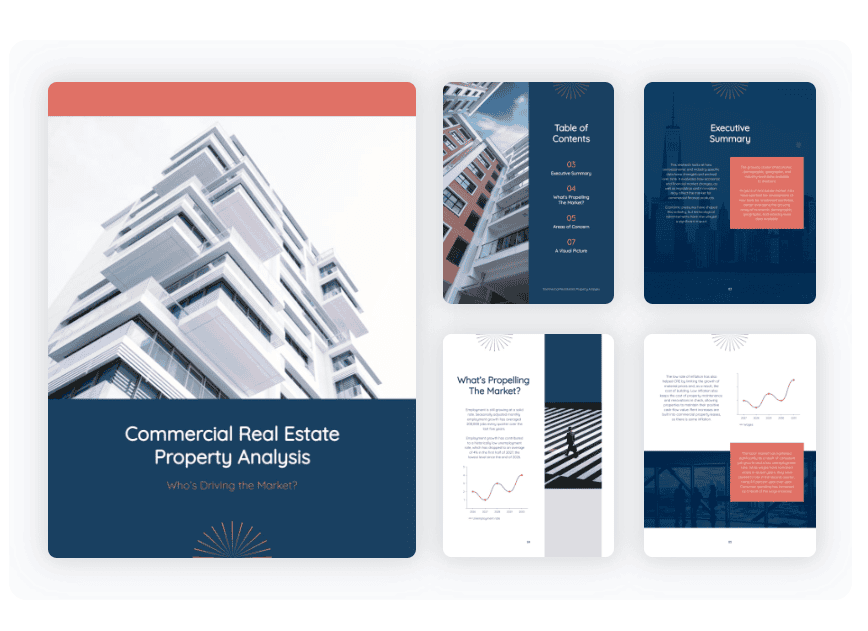
These are in-depth reports that explain a specific problem and solution, backed by data and expertise. They’re often tied to a company’s product or perspective, which makes them a great asset for educating and influencing B2B buyers.
You might create a whitepaper on: “Optimizing Team Productivity in Remote Work.” And show how your workflows and tools impact efficiency.
Or: “Reducing Customer Churn Through Data-Driven Insights.” And highlight strategies your software supports.
Case studies are also fantastic. Use these to highlight how real customers achieved results using your product or solution. Be sure to include: The customer’s problem or challenge, what you did to help them solve it, and the end result. (Include screenshots and specific data to prove your success.)
Feature-focused guides are also valuable. Walk users through a specific feature or workflow. Show practical value and how it addresses their needs.
To ensure these are published consistently, use a content calendar to plan and schedule them. Make sure to track your click-throughs and conversions to see which assets help you convert more users. Continue to update these cornerstone pieces to keep them fresh and valuable.
Once you have a growing set of whitepapers, case studies, and guides, it also helps to keep them in one place. A WordPress plugin like Document Library Pro lets you list them in a searchable, filterable table, so buyers can find the right resource in seconds.
Let’s look at more examples below.👇
Publish a cornerstone content piece for key B2B decision-makers
Speaking of cornerstone pieces, for a B2B target audience, content needs to act like a trusted advisor at every stage.
Here are some really good examples:
Consulting pieces to guide decisions and strategy:
- Executive briefs or POVs
- Best practices playbooks
- How-to strategy guides
- Industry trend reports
Implementation support to help put ideas into action:
- Step-by-step tutorials or walkthroughs that leverage visual storytelling.
- Video marketing assets like demos showing processes in action
- Templates and checklists
- Onboarding guides
- Integration guides
Risk assessment to help your target audience make safer, more confident decisions:
- Comparison content showing pros/cons of approaches
- Compliance and security checklists
- Case studies with lessons learned
- Risk analysis or ROI calculators
- Competitive trade-off sheets
Product validation to prove your solution works:
- Demo videos or interactive product tours
- Analyst reviews or testimonials
- Customer success stories
- ROI or impact reports
Wrap up
In 2026, B2B marketing needs to focus on expert, buyer-focused content that goes deeper.
Publish research, comparison guides, and product-led assets. Structure content for AI, reduce buyer uncertainty, and guide decisions.
Do this consistently, and your marketing efforts will boost engagement and conversions.
Ready to turn these trends into results? Let’s build a content strategy that converts for your B2B brand. Book a free call now.
FAQs
What are the biggest B2B content marketing trends for 2026?
Decision-support content is the top trend. Think first-party data strategies, zero-click content, and formats that help buyers make choices.
Why is first-party data important in B2B content marketing?
Third-party cookies are fading. So your own data is key for personalizing experiences, tracking engagement, and understanding what really works.
What types of content perform best in B2B marketing?
Anything that reduces buyer uncertainty. (ROI calculators, integration guides, benchmarks, and case studies backed by real experts beat generic blog posts.)
How should B2B marketers measure content effectiveness in 2026?
Look at behavior-driven metrics and use account-based marketing principles.
For example: Account engagement, meetings booked, how fast opportunities move, and the revenue your content influences. In other words, consider the full sales funnel — and how your content leads prospects into it.
Is video content still effective for B2B content marketing?
Absolutely. Short, role-focused videos with clear calls to action work best. Especially when they match where the buyer is in their journey.
How important is content personalization in B2B marketing?
It’s essential. Content should speak directly to the buyer’s role, needs, and stage in the decision process.
What are common pitfalls in B2B content marketing today?
Chasing vanity metrics or producing generic content without real expertise are common B2B marketing pitfalls.