




Reaching audiences is becoming increasingly difficult. The culprit? Changes to the way consumers research and discover solutions.
Sure, there are many content marketing strategies to help your business overcome these challenges. You could scale your content to enhance reach. Optimize existing resources for AI search. Or you might choose to build a stronger brand presence across multiple platforms.
Nevertheless, none of these tactics can guarantee sustainable business growth. Instead, to genuinely scale your business and boost customer acquisition, try a different approach.
Product-led content is an excellent alternative to traditional content marketing because it focuses entirely on the value your business can deliver.
In this guide, we’ll cover strategies for turning product-led content into a growth engine. We’ll also look at real examples you can use as inspiration for your own strategy.
Highlights
- Product-led content connects educational content directly to the value your product delivers.
- PLC works best when it helps readers solve a problem before asking them to convert.
- Strong product-led content can support awareness, consideration, conversion, and retention.
- Interactive tools, templates, benchmarks, demos, and proprietary data can all function as product-led assets.
- To measure PLC performance, track activation, time-to-first-value, freemium-to-paid conversion rates, and citations.
What is product-led content?
First things first. What is product-led content (PLC)?
At its core, this strategy involves using your product as the protagonist in your marketing. This means that you’re not just mentioning or writing about your solutions. Instead, this digital content marketing approach involves treating your offer as the key to resolving your target audience’s pain points.
In PLC, your insights don’t come from your brand’s or content marketing team’s experience. Rather, they’re grounded in your solutions.
Admittedly, this strategy does have some touchpoints with traditional product blogs.
For example, a traditional piece of product-centric content would address a customer pain point. Then, it would connect that pain point to the brand’s solution, describing how it could address the reader’s needs.
However, true product-led content is more about using your brand’s solutions to directly empower consumers to resolve their pain points.
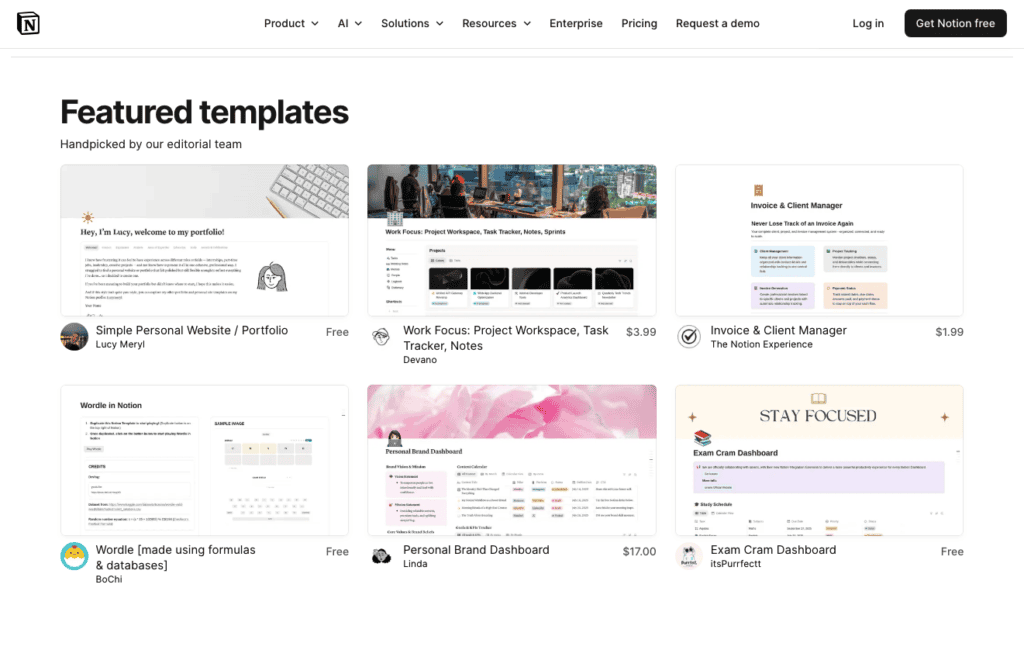
Source: notion.com
This type of resource can include how-to guides, templates, case studies, or interactive tools — such as the assets on the Notion Templates page above. Basically, PLC posts include anything that positions your solutions as valuable data or tools. It needs to be instantly accessible to any potential prospect consuming your brand’s content.
Why is product-led content essential for growth?
Even though it’s exceptionally effective as a conversion engine, product-led content is far more difficult to produce than more traditional formats. So, why is it essential for growth?
The reason lies in the way consumers approach buying journeys in 2026. According to Ahrefs research, AI Overviews can reduce organic click-through rates by 58%, making it harder for brands to rely on traditional search visibility alone. What does this mean for businesses investing in content to attract and qualify leads? It reveals a significant problem, especially for brands that rely on search to attract potential prospects.
But SERPs are not the only place where AI is disrupting the typical customer journey.
As generic educational content becomes easier for AI tools to summarize, brands need assets that cannot be separated from their product experience, proprietary data, or customer outcomes.
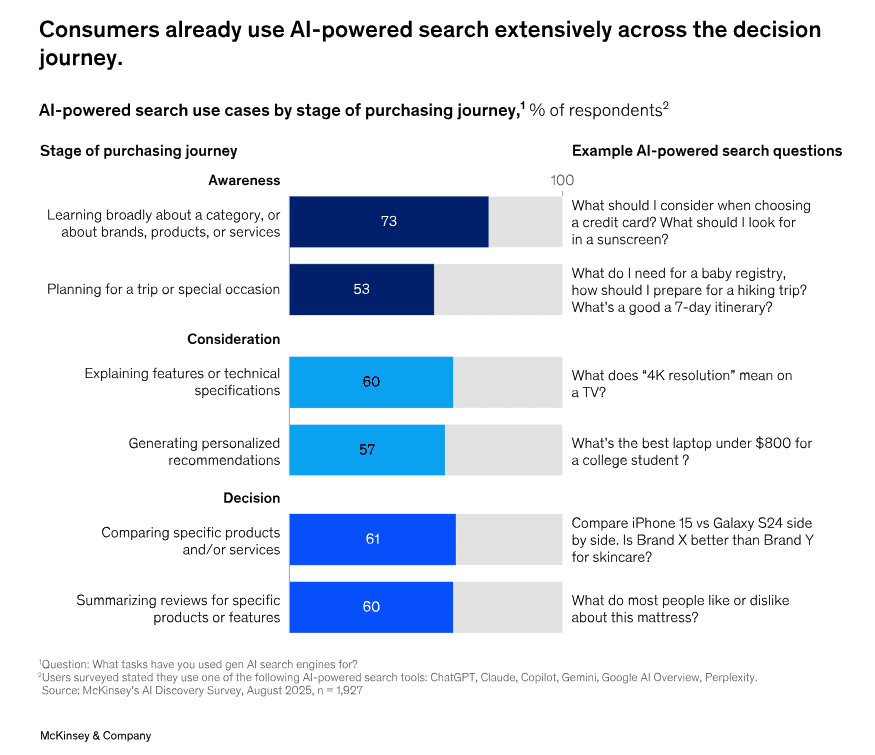
Consumer behavior data shows that shoppers now use AI at every stage of the sales cycle. According to McKinsey’s research, 73% of people are turning to LLMs for product discovery. Furthermore, around 60% are doing so during the evaluation and purchase stages of the sales funnel.
Source: mckinsey.com
With this in mind, brands need to develop content marketing strategies that are resistant to the disruptive power of AI. And product-led marketing might be the solution.
Because it inherently relies on your offer to attract user attention and guide prospects toward reaching their goals, PLC is practically impossible to recreate by anyone other than you.
In other words, product-led content turns what you know into a way to grow — even when reaching new customers is getting harder.
The stages of product-led content marketing
Just like any other form of content marketing, PLC follows the typical stages of the sales funnel.
Awareness stage: attracting your ideal customers’ attention
One of the most important tasks within any content marketing strategy is attracting your ideal customers’ attention to your offer. And the most effective method to do so is to address and answer your prospects’ questions.
By targeting awareness-stage keywords, you can ensure your content reaches the right people — whether through search or channels like YouTube.
But how do you accomplish this goal with PLC?
One of the best ways to build awareness is not just to find opportunities to present information to your audience. Instead, focus on queries where prospects want to achieve an outcome, which your product can provide.
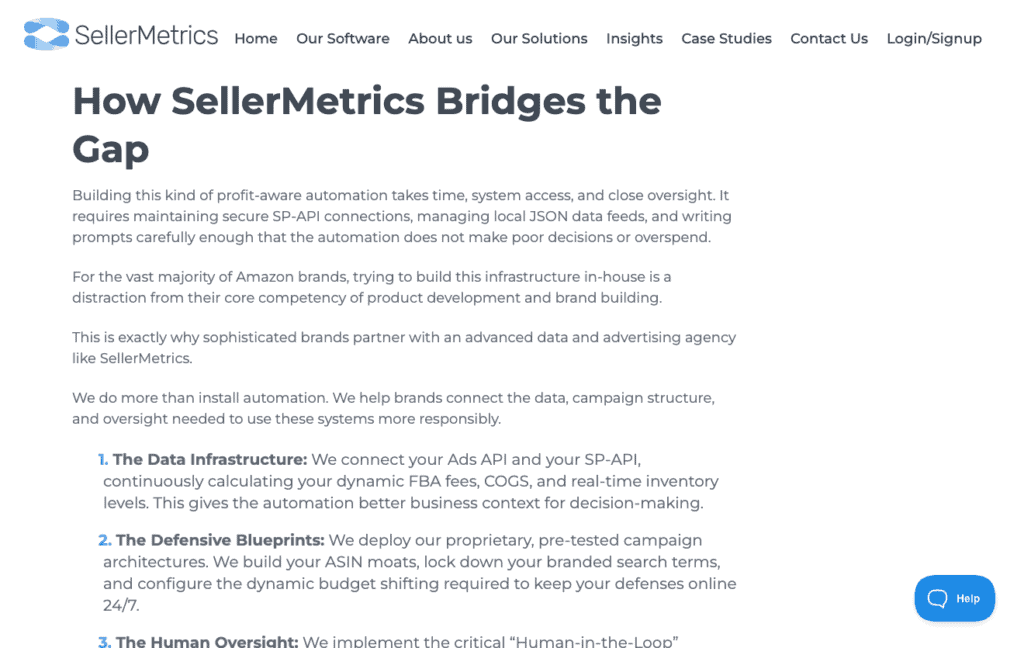
The article “Defending Your Digital Shelf Against AI Bidding Bots” from SellerMetrics, a PPC agency for Amazon sellers, is a perfect example of this approach in action.
Source: sellermetrics.app
This resource isn’t just an introductory guide to Amazon ads optimization. It’s an in-depth playbook for sellers looking to prevent competitor AI attacks. It also shows how SellerMetrics can help, with clear CTAs that invite readers to try it for themselves.
Consideration stage: engaging prospects and encouraging them to experience your solution for free
Although building awareness is sufficient for attracting some leads into your funnel, it might not be enough to drive real growth. That’s especially true for businesses operating in highly competitive or technical industries.
In these cases, it’s crucial to engage prospects by encouraging them to experience your solution. Ideally, there would be zero risk involved.
Product-led content slots seamlessly into this type of activity because, at its core, its very point is to prove customer value to leads considering your offer.
Think free tools, calculators, templates, or interactive demos that help your prospects solve a real problem — and get a feel for what you offer in the process.
For example, Engain offers a Free Reddit Opportunity Report to all web visitors who want to explore the opportunities they could unlock with Reddit marketing.

Source: engain.io
What stands out about this instance of PLC is its convenience. The copy clearly states that the entire process takes less than 30 seconds. The microcopy reminds prospects that they don’t have to provide credit card information to receive the promised value. And the description effectively sets user expectations about what they will receive from the process — a detailed list of potential Reddit threads that the agency could use to generate valuable traffic.
Of course, PLC content doesn’t necessarily have to involve interactive tools or product demos. It can just as easily consist of gated content, provided that the resource contains proprietary information or research that’s valuable to the target audience’s needs.
The Trust Funds Packet on Mesothelioma.net is a great example of this type of product-led marketing, providing leads with in-depth information on actions they can take to solve their pain points.

Source: mesothelioma.net
Conversion stage: making purchases a natural next step within the buyer’s journey
Once you’ve attracted and engaged your target audience, it’s time to start turning PLC into a growth engine. The only way to do this is to use your product-led content to guide prospects toward a conversion decision.
At this stage, you need to show your audience that becoming a customer is the best way to get what they’re looking for.
The key to doing this right, however, is not to rely on traditional calls to action. Instead, employ soft-selling techniques that focus on your product’s unique benefits.
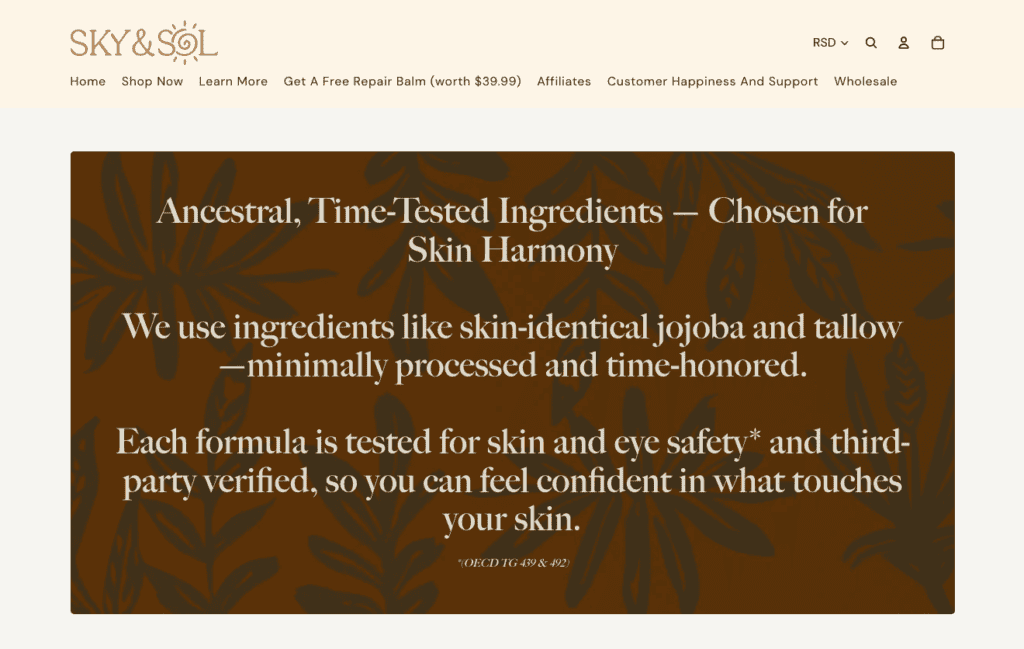
For example, Sky & Sol does this beautifully on its Ingredients page. This ecommerce brand understands that it can’t provide prospects with first-hand product experiences online. However, it can do the next best thing with product-led content.
Source: skyandsol.co
A closer look at the resource in question shows ample detail about the ingredients and safety of the brand’s solutions. Sky & Sol gives visitors a clear look at what the brand stands for and exactly what goes into its products. That transparency does the heavy lifting — by the time someone’s read it, buying is the natural next step.
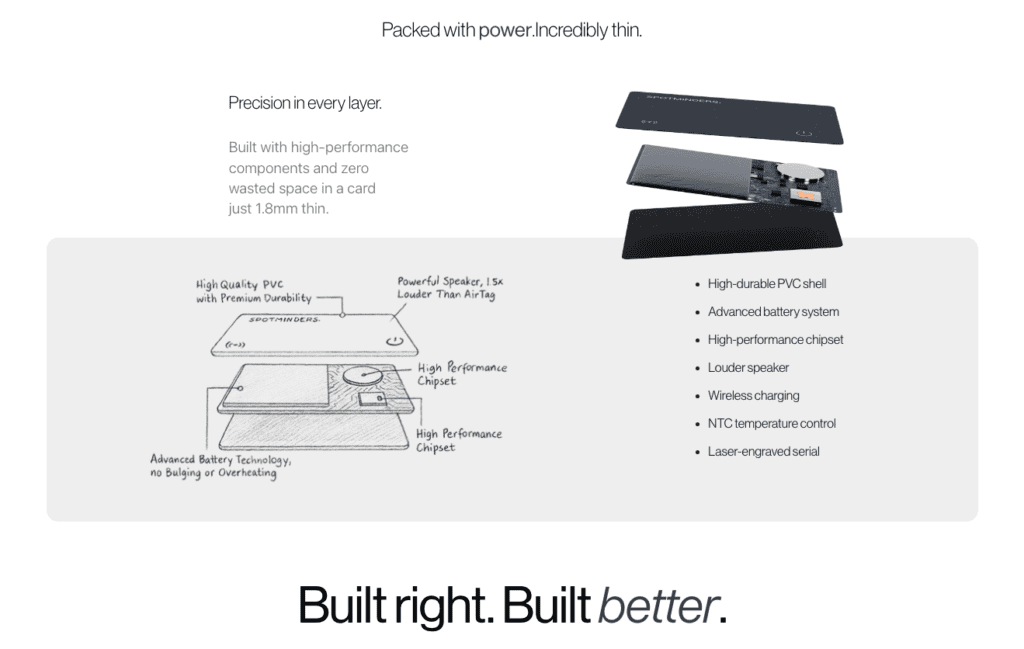
Spotminders adopts a similar approach, but with a far more pronounced emphasis on tech and innovation. This brand uses product-led content to support the conversion stage by reminding prospects of the pain points its solution removes.
By framing each product feature as an answer to a specific user need, Spotminders creates a setting that converts interest into purchase intent (then supports it with attractive special offers on its product pages).
Source: spotminders.com
Retention stage: earning customer loyalty and using UGC for expansion
The last step of turning product-led marketing into a growth engine relies on understanding that the sales cycle doesn’t end at a conversion. Instead, genuine business success requires next-level customer retention and loyalty.
But how can you use PLC to facilitate expansion?
The truth is, this content format is perfectly suited for building further brand and product awareness — especially if you integrate user-generated content into your digital marketing tactics.
Gozney does it beautifully on Instagram, where it regularly posts in-depth recipes created by content creators using its product. These Reels expertly generate interest among new leads. Additionally, they provide existing customers with ideas for using their pizza oven. Moreover, they allow them to extract maximum value from their purchases.

Source: instagram.com
How to turn product-led content into a growth engine
Now you have a better understanding of product-led content. But what practical steps do you need to take to turn your resources into a growth engine?
Well, there are a few effective methods you can adopt to ensure PLC facilitates your brand’s expansion.
Identify aspects of your product that you can use as assets
Product-led content centers on the value your business provides to customers. So, begin the production process by identifying the exact, unique thing you can bring to the table.
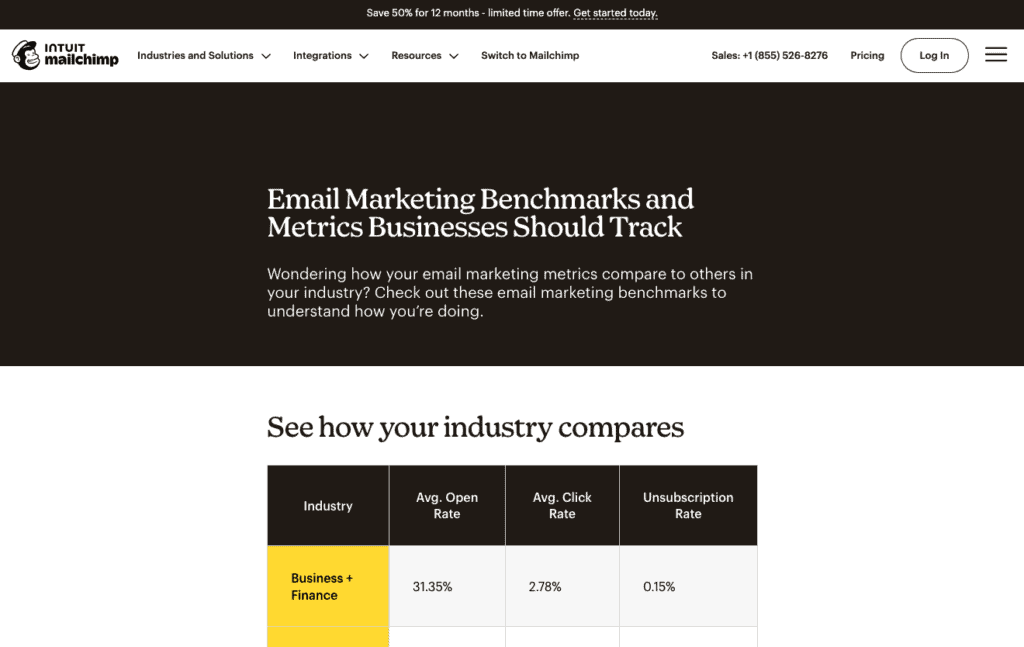
Insights and proprietary information can be an excellent asset for business growth. For example, Mailchimp’s Email Marketing Benchmarks are a great instance of how proprietary data can attract new prospects and begin to draw them into your sales funnel.
Source: mailchimp.com
Integrate conversion mechanisms into existing content
PLC doesn’t simply guide prospects toward a conversion. It makes conversions a natural next step within their customer journeys.
So, to facilitate business growth with product-led content, explore opportunities to allow web visitors to instantly access the value you advertise.
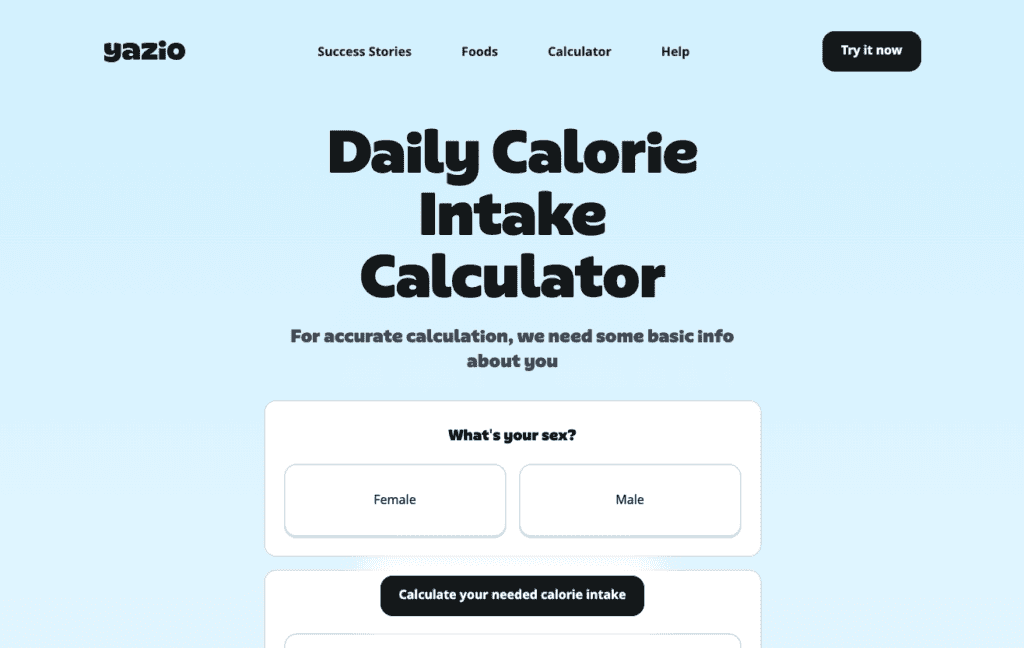
An excellent example would be Yazio’s Daily Calorie Calculator. The asset allows prospects to easily access the information they need. But it also creates a natural progression from an initial interaction toward a conversion. It seamlessly encourages potential customers to download the app — all without making the process seem like they have to take any specific action.
Source: yazio.com
Build systems for content-driven expansion
The best type of business growth is the kind that comes to you organically. After all, consumer behavior research clearly shows that people trust their peers for product recommendations.
But remember. You don’t have to wait for your existing customers to mention your products to benefit from social proof. By integrating systems for content-driven expansion into your solutions, you can make the entire awareness-building process happen seamlessly.
For example, think of Typeform. This business provides customers with a free version of its powerful survey-building tool. But it also includes a watermark within each final product. This organically transforms any instance of user-created content into social proof, as you can see in the Customized Skincare Quiz from Apoterra below.
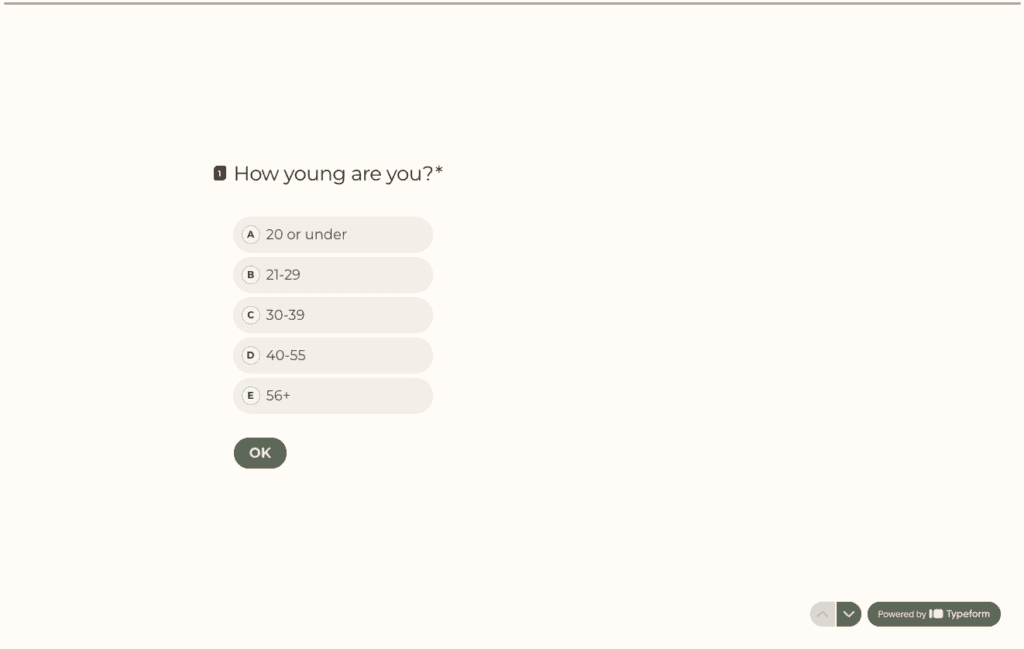
Source: apoterraskincare.typeform.com
Measure effectiveness
Last but not least, the only way to verify the growth-driving potential of any content marketing strategy is to track its effectiveness.
So, if you want to turn product-led content into a growth engine, you need to verify that your activities are yielding your desired results.
Track traditional content marketing metrics. But also pay attention to PLC-specific KPIs. These can include:
- Time-to-first-value. Does product-led content cause leads to convert faster than those who discover your solutions through different channels? Track time-to-first-value to verify PLC effectiveness.
- Freemium-to-paid conversion rates by content cohort. Do specific PLC resources drive higher paid conversions? If they do, that’s a great indicator that your approach is working.
- Citations. Is your original research being cited by relevant sources? More citations indicate higher industry authority, which automatically drives awareness, reach, and growth.
- Content-to-product activation rates. This KPI represents the number of readers who become customers within a pre-determined time frame.
Use these numbers to decide what deserves more push — more distribution, a stronger CTA, or deeper product integration. A page getting solid traffic but no activation probably needs a clearer next step. A resource with less traffic but strong paid conversions deserves more promotion. That’s how product-led content stops being a one-off and starts compounding.
Final thoughts
Product-led content is not an easy format to integrate into your existing digital marketing strategy.
For starters, producing these resources requires much higher investment than any typical blog or social media post. Furthermore, creating assets that convert can involve some trial and error.
Nevertheless, incorporating this strategy into your brand’s online presence offers clear benefits. Not just in terms of growth potential but also in risk management. That’s particularly the case in industries where AI search is disrupting organic website traffic.
So, don’t hesitate to try your hand at PLC. The tips from this article can serve as a good starting point. Then, you can track performance and ROI and make any necessary adjustments to maximize returns.Need additional help with improving your brand’s visibility? uSERP is an expert-led link-building agency experienced in building authority. Get in touch regarding your SEO and GEO requirements, and we’ll be happy to craft a custom proposal to help you reach your goals.