Passive income is rarely passive at the start.
Most ideas ask for one of three things first: time, money, or a monetizable skill. That is why beginners get stuck. They pick something that sounds easy, only to realize it requires a bigger budget or more weekly effort than expected.
This guide breaks down 12 passive income ideas beginners can start with and what each one really involves. You’ll see:
- Which is easier to manage once they are up and running
- Which takes longer to pay off
- Which options are low-cost
That way, you can compare your options fast and choose one you can actually maintain.
Highlights
- Most beginner-friendly passive income options still need time, money, or a skill before they can run with less day-to-day effort.
- Print-on-demand stands out as one of the easiest ways to start because you can test products without buying inventory upfront.
- Content-based models like ebooks, digital products, blogs, and YouTube can continue earning after the initial work is done, making them easier to scale over time.
- Asset-based options such as rentals, vending machines, and real estate can generate recurring income, but they usually require more capital and more upkeep.
- The best passive income idea is not the one with the biggest promise. It is the one that fits your budget, your skills, and the amount of effort you can sustain.
What makes a good passive income stream?
A good passive income stream does four things well.
- It is realistic to start: If an idea needs a large upfront budget or a legal setup you do not yet understand, it is probably not a beginner-friendly option.
- It has a straight path to revenue: You should be able to answer a basic question fast: who pays, for what, and how often? If that is fuzzy, the idea is still a concept.
- It does not need constant input to keep earning: Some work at the start is normal. But after setup, the system should keep running. It could be through content, products, assets, or investments that can keep producing value without daily effort.
- It has a low downside: The median monthly side hustle income is $200. That is a useful reality check. Beginners do better with ideas that are affordable to test and easy to pause. If it’s also simple to improve over time, instead of ideas that need a big bet upfront, that’s your sign.
That is the filter used in this list. The best option is not the one with the biggest upside on paper. You need one that you can start and keep going long enough to see returns.
Top passive income ideas for beginners
A passive income idea only works if you can get it off the ground. So this list starts with options that are easier to test without a large upfront bet. Then moves on to models that need more capital, more lead time, or both.
1. Start a print-on-demand store
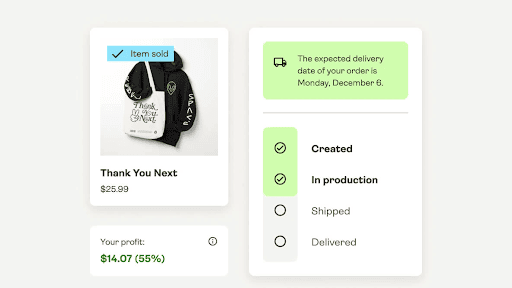
Print-on-demand is one of the lowest-cost ways to start selling online because you do not buy inventory up front. You create a design, add it to products, and list those products in your store. Then, the supplier prints and ships each order after a sale.
There are platforms like Printify, Printful, and Podbase to start with. Podbase is especially useful for sellers who want to build a more focused Print-On-Demand (PoD) store around custom tech accessories and wall art, while still keeping the process low-risk because they do not need to buy inventory or manage fulfillment themselves.
The former’s free plan starts at $0/month and includes up to 5 stores. It keeps testing costs low. Printful also lets you start with no upfront costs, making it a strong option for beginners.
You can sell T-shirts, mugs, tote bags, posters, phone cases, and other custom clothing or gift items. The POD platforms will help you:
- Handle fulfillment after checkout
- Route orders to print partners
- Connect with store platforms
- Generate mockups
- Sync products
That removes most of the obstacles for beginners. Your job is to pick a niche, make products people want, and drive traffic to the store.
2. Sell ebooks
Ebooks are a low-cost passive income option because you can create them once and sell them many times without inventory, packing, or shipping. They work best when you already know a topic well and can solve a particular gap or problem in a short, useful format.
A beginner-friendly ebook can be a how-to guide, a workbook, a meal plan, a niche handbook, a checklist bundle, or a short industry explainer. If you already have blog content, this gets easier. You can also turn older posts into an ebook when the topic is deep enough to be packaged as a single resource.
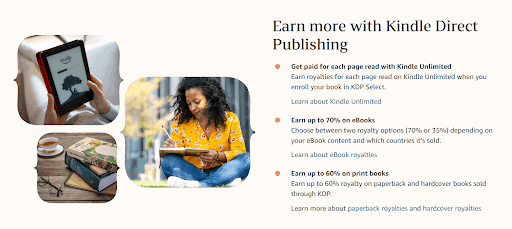
On marketplaces like Amazon KDP, you can self-publish ebooks and offer royalty options of 35% or 70%.
3. Sell digital products
When you want low overhead and better margins than physical goods, digital products are a great fit and any basic earnings analysis will confirm it. You make the product once, then sell it over and over again without printing, packing, or shipping.
This category is broader than ebooks. You can sell templates, spreadsheets, printables, swipe files, planners, checklists, design assets, lesson packs, or mini toolkits, all of which hold up well under an earnings analysis thanks to near-zero fulfillment costs.
Even simple lead magnets, like guides and audio files, can become paid resources when you package them well.
4. Try affiliate marketing
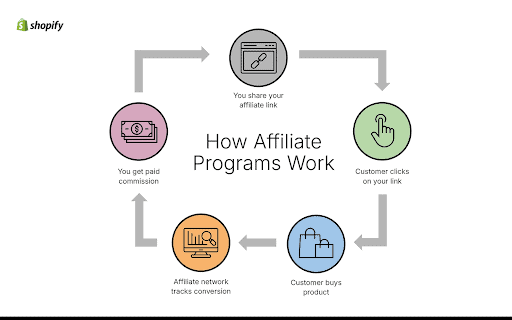
In affiliate marketing, you do not create a product or hold inventory. As a trading affiliate, you recommend a trading platform, prop firm, or other financial service through a blog post, email, video, or social post. Then, you can get a commission every time someone buys through your link.
It’s that low barrier to entry that appeals to many beginners. Brands have invested around $12 billion in creator partnerships in 2025. So there’s a lot of money flowing into this channel.
You can earn from product reviews, comparison posts, tutorials, resource pages, and niche newsletters. If you are building content around affiliate offers, you don’t have to create new material every time. You can help more people find it by implementing effective content distribution strategies.
5. Start a YouTube channel
A YouTube channel takes longer to pay off than ebooks or templates. But you can still earn from videos you made months ago. Your revenue can come from ads, affiliate links, sponsorships, memberships, and product sales.
Tracking what each of those streams contributes monthly helps you build an accurate picture of how YouTube fits into your broader annual income as the channel grows.
If you’re a beginner to content creation on YouTube, you need to meet the YouTube Partner Program’s monetization criteria. In eligible regions, creators can apply to become a partner once they:
- Hit either 3,000 public watch hours in 12 months or 3 million valid YouTube Shorts views in 90 days
- Upload 3 public videos in 90 days
- Get 500 subscribers
All you need are searchable video ideas and enough patience to build a library to get started.
6. Start a blog
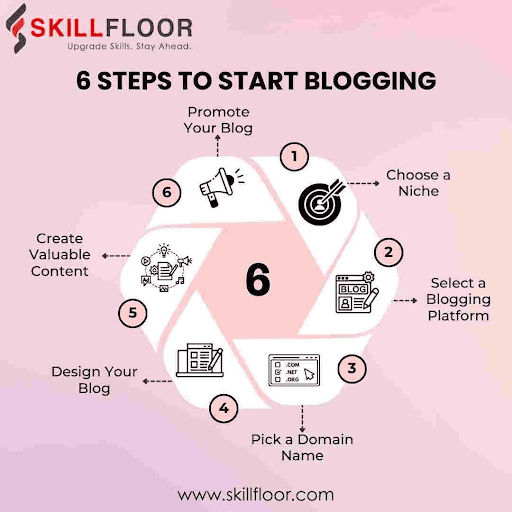
Blog posts were among the top five highest-ROI content formats for marketers in 2025. With a blog, you can publish useful content around a niche, let that content rank or get shared, and earn from ads, affiliate links, sponsors, or your own products.
Find topics people search for and build blog content around them. Drive traffic to your site with tools for keyword research platforms, analytics, and email capture. Then, once your posts are live, conduct regular content audits to update old articles.
7. Sell photography or art online
Do you create visuals that people may want to download, license, frame, or wear? Then, selling them to a stock photography website is a great passive-income option. You can sell art prints, posters, wall art, and themed collections through marketplaces like Etsy or through your own store.
It can also work well with print-on-demand shops. You can turn your high-quality photo, pattern, or illustration into posters, canvas prints, phone cases, tote bags, or apparel. Customers interested in ordering custom movie posters may also be looking for original artwork that can be adapted to their preferred style or theme.
Good visuals help content perform better across channels. So, it helps to understand how visual content boosts engagement. That gives you more than one way to earn from the same piece of work.
8. Launch an online course
Some skills are hard to sell as a one-off download but easy to package as a digital course. That is usually a sign that you are dealing with a teaching product rather than just social media content creation.
For example, some online course ideas are interview prep, Excel workflows, app development, beginner design lessons, language practice, budgeting systems, and client onboarding. They are all easier to package than broad topics.
There are online course marketplaces like Teachable and Kajabi that handle lesson structure, video hosting, checkout, and student access. So you do not need to build the full system yourself.
9. Rent out your home or car
Rentals can bring in recurring income, but they are less passive than the earlier ideas on this list. You need an asset first, and you need to keep it guest-ready, insured, and available.
With Airbnb or Booking.com, listing setup, pricing, calendars, house rules, photos, and guest communication are all easy. If you want to rent out a car, platforms like Turo have their own host guides, listing tools, and requirements for vehicles and drivers.
It also helps to understand business directories and local SEO to know how people find nearby options when they are ready to book.
10. Run a vending machine business
Vending machines are not completely passive. You buy or lease the machine, place it somewhere with steady foot traffic, and stock it. And then, you can collect the margin on each sale.
It isn’t hands-off. But once the machine is in a good location, the work becomes routine. A snack machine in an office, gym, apartment building, or laundromat is a cost-effective way to start.
Basic customer research is important here. It’s because you need to test fit through product mix, location, and buyer habits before you place anything.
11. Invest in real estate
Real estate can produce passive income if you already own a property that can yield monthly rent and long-term value growth. Otherwise, this is not fully hands-off.
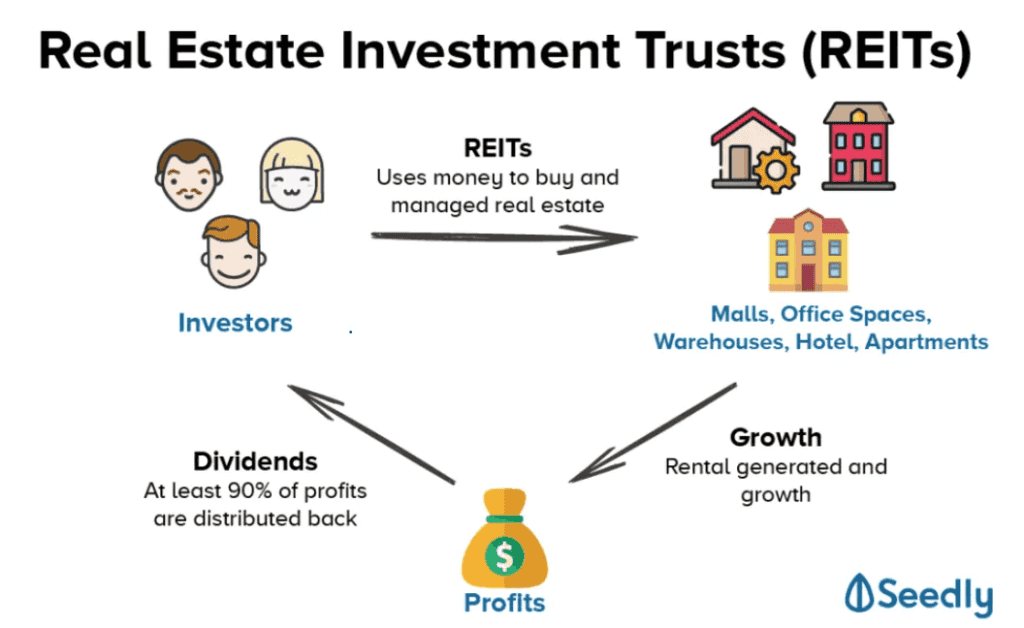
If you want the most passive version, consider Real Estate Investment Trusts (REITs). They let people invest in income-producing real estate without buying or managing a building themselves. That makes it easier to access than a rental property, especially for beginners.
12. Invest in index funds and ETFs
This is the most passive option on the list, but it works differently from the others. An index fund is designed to track a market index, such as the S&P 500. An exchange-traded fund (ETF) can do the same thing, but it trades on an exchange like a stock.
Instead of buying shares in one company, you buy into a fund that holds a mix of investments. That mix can include hundreds or even thousands of stocks or bonds.
The goal is to spread your money across a wider basket and let it grow over time.
How to pick the right passive income idea for you
So, now you know passive income is not a single model. Some ideas are affordable to start but slow to grow. Others can earn more, but only if you bring money, assets, or a skill people will pay for.
Use this checklist to choose based on what you already have.
- If your budget is low, consider print-on-demand, ebooks, digital products, affiliate marketing, blogging, or YouTube. These are easier to test without risking much money.
- If you already have a skill people ask you about, Online courses, ebooks, and digital products make more sense. You already have the raw material. You just need to package it well.
- If you create visual work, photography, or art, sales can give you more than one path to earn. You can use the same work to sell as downloads or print-on-demand products.
- If you already own something, renting out assets is worth considering. They may not be hands-off. But they’ll convert an asset you already have into income.
- If you have capital and patience, Index funds, ETFs, vending machines, and real estate are better fits. But these are also slower and harder to test.
Conclusion
People often attribute passive income to easy money. But the best model is to build something once and improve it as needed. That way, it earns beyond the hours you put in.
That could be a product, a piece of content, an investment, or an asset you already own. So, choose a model that fits your resources now. It’s always better to start small, learn how the model works, and improve from real results.
Because a simple income stream you maintain well will, at any time, beat an ambitious one you abandon halfway.