





Running a busy content creation department is often hectic. You have content writers waiting for briefs that never come. Your marketing teams keep asking for status updates. Meanwhile, social media posts that should be live are still sitting in a draft folder.
When every task feels like a fire, your team spends more time reacting than creating.
This stress is the main sign of content chaos. It happens because there is no clear system for how work gets done. Successful brands fix this by focusing on content marketing operations. Without a solid content system, even a great content strategy will eventually fail.
Building a professional base for your content operations helps you move from being reactive to being proactive. You stop wasting hours on boring manual tasks. Instead, you focus on your primary content goals.
Plus, according to the CMI 2026 B2B Content & Marketing Trends, 95% of B2B marketers now use AI-powered apps to speed up their work. This shows that a modern content technology stack is now the heart of marketing.
Yet, tools alone cannot fix a broken process. You need a simple plan to make that technology serve your brand. This guide gives you nine tips to build an efficient content supply chain.
Highlights
- Content marketing operations is the system of people, tools, and processes that turns ideas into published content — and without it, even a strong content strategy will eventually collapse into missed deadlines, duplicated work, inconsistent brand voice, and a team stuck in reactive mode rather than creating.
- The nine tips for smoother content operations are: defining clear roles and ownership, mapping the end-to-end content workflow, maintaining a shared editorial calendar, establishing documented quality standards, building a structured distribution checklist, creating fast feedback and approval loops, integrating tools and automation, tracking performance data monthly, and fostering cross-functional collaboration between content, sales, and product teams.
- AI and automation are now central to competitive content operations — 95% of B2B marketers use AI-powered tools to accelerate their work, and marketers using generative AI report saving between one and 14 hours per week, making a connected, automated content technology stack a business necessity rather than a nice-to-have.
- Slow approval cycles and unclear roles are the two most common operational bottlenecks — setting firm feedback deadlines (such as a 48-hour review window), assigning explicit ownership at every workflow stage, and using inline commenting tools are the fastest ways to restore content velocity without adding headcount.
- Performance measurement and cross-functional collaboration are what keep content operations compounding over time — monthly analytics reviews identify which assets to refresh or double down on, while regular input from sales teams surfaces the real customer questions that make content more useful, more targeted, and more likely to support revenue.
What are content marketing operations?
Content marketing operations refer to the framework that supports all your creative work. Your content strategy tells you what to say. Operations tell you how to say it. It is the mix of people, software, and steps that turn a raw idea into a finished product.
This process manages every blog post from the first brainstorm to the final share. It involves making your content technology stack easy to use. Without these systems, content teams often face missed deadlines and poor content quality.
A healthy operation keeps the content supply chain moving fast. It makes sure every idea stays in a secure content repository instead of getting lost in emails. This is vital because manual work drains your energy.
Fixing these broken paths allows your team to see the real content marketing benefits that come from a steady workflow. Once your systems are ready, you can stop managing messy spreadsheets and start focusing on big ideas.
Why content marketing operations matter
Ignoring your content operations puts your team on a fast path to burnout. When steps are not clear, content writers waste time guessing what to do next. They may not know who should approve their work. This lack of clarity creates a messy environment that can impact your brand story and confuse your customers.
Standardizing these processes is the only way to scale without losing your mind. When you have a clear structure, you can easily plug in new tools that save time.
For instance, the HubSpot State of Marketing report found that marketers using generative AI save between one and 14 hours a week.

A smooth content lifecycle makes sure the right content format reaches the user at the perfect time. When your operations are lean, your brand governance stays strong. This protects your reputation while you grow into new markets. You can only win those leads if you truly understand your target audience and their needs.
Tips to improve your content marketing operations
Here are nine tips you should start using for smooth sailing marketing operations.
Tip 1: Define clear roles and responsibilities
Role clarity is the best way to stop content chaos. If everyone is responsible for everything, nothing gets done well.
You must identify exactly who owns each part of the content production process. This stops people from doing the same work twice.
Start by writing down the specific jobs in your content creation department. You do not need a large staff to do this. Even a tiny team needs boundaries. A typical operational structure includes:
- A content operations manager to watch the content marketing platform
- Content designers who make high-quality visual content
- Content strategists who plan the content vision strategy
- Content writers who write the actual drafts
Everyone should know who has the final say on brand compliance. This stops the confusion that leads to project delays. When roles are clear, your team can master their specific skills. This leads to a better content marketing strategy that delivers steady results.
Tip 2: Map your content workflow
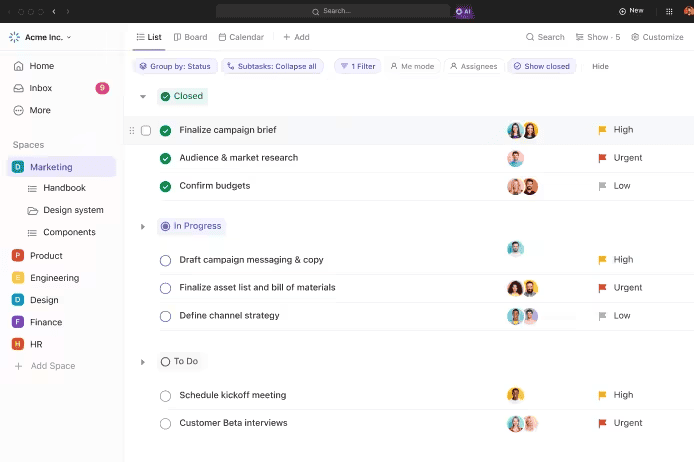
A visual map of your content workflows shows where you are losing speed. You need to see how a blog post moves from a concept to a live link. Without this view, you will miss the small hurdles that drain your team.
Most efficient workflows follow a simple path, such as:
- Content curation and research to check the idea
- Creating a brief during the content creation phase
- Writing the draft and making visual content
- Editorial review to check the brand voice
- Technical checks and content distribution
Mapping your flow helps you find bottlenecks early. It allows you to plan for busy times or new product launches. Though it takes work to set up, a clear map saves your team hours of frustration every single week.
You can easily do this with project management (PM) tools like ClickUp:

Here’s an example of how to set up your content marketing workflow:
Tip 3: Create content calendars and editorial plans
An editorial calendar is the command center for your content management. It stops your team from reacting to random requests. By using a shared content system, every person can see what is in the pipeline. This keeps the team aligned on the same goals.
Your calendar should live in a shared space like Google Drive or a PM tool. It needs to track more than just dates. It should show the content format and the person in charge. You also want to list the specific content goals for each asset.
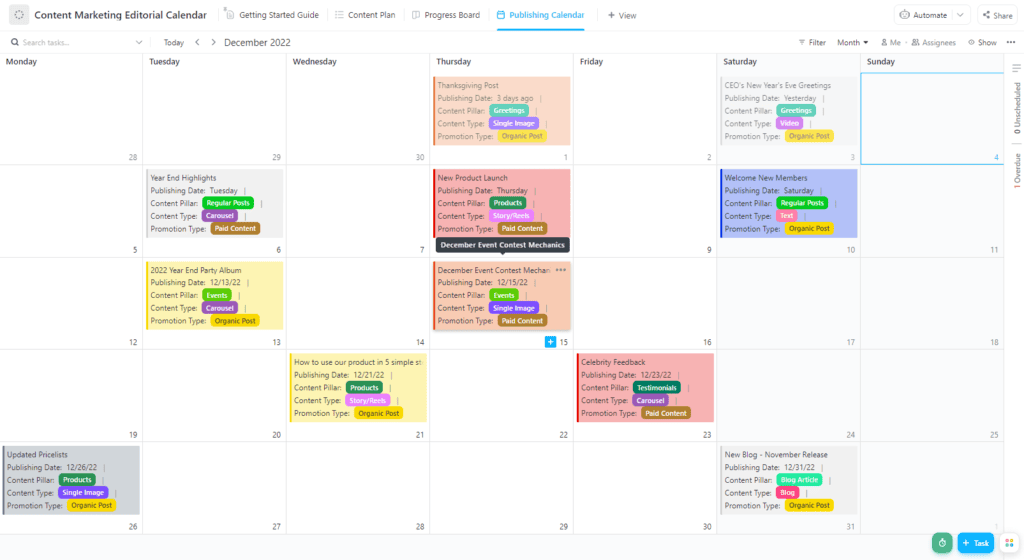
A good plan ensures your marketing team stays consistent. It also makes it easier to align your work withSEO and content marketing goals. You can use this space to manage guest posts and social media posts at the same time.
Tip 4: Establish content quality standards
Quality often drops when you try to scale content production too fast. To stop this, you must set clear standards for every blog post you publish. These rules protect your brand voice and keep your work looking professional.
Document these rules in a simple guide. It should cover visual content and writing standards. Include your tone and content optimization steps. Investing in thoughtful content design — the way information is structured, formatted, and presented visually — is just as important as the words themselves. This should be part of your quality standards from the start. Clear rules help your content designers and writers stay on the same page as you grow.
Here’s an example from our content guidelines:
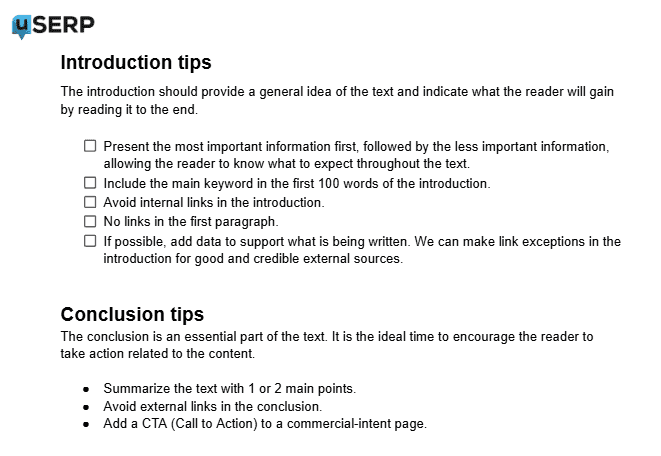
Screenshot taken by the author
As you test content marketing tactics, don’t forget to add the winning ones to your guidelines or checklist to get the best results for all content pieces.
Tip 5: Streamline content distribution
The work is not over once you hit the publish button. You need a plan for content distribution to make sure people actually see your work. A full content lifecycle must include promotion steps across many different channels.
This usually means creating creative content marketing pieces that adapt to each platform.
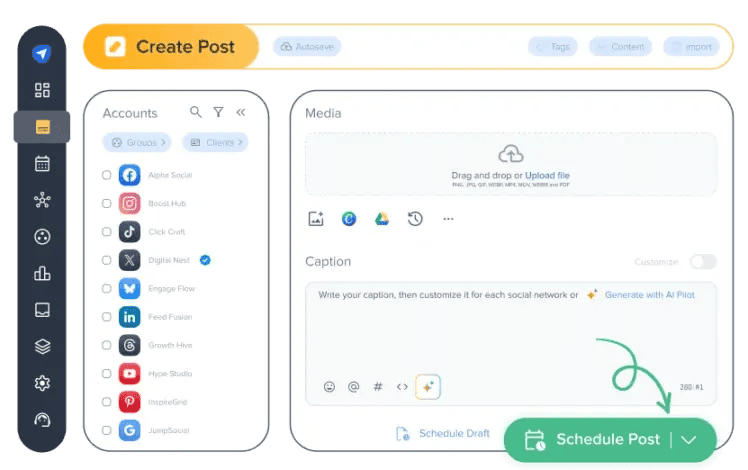
Create a checklist for every piece you make. This might start with social media posts and a newsletter. You can then try content curation on sites like LinkedIn. Strategic outreach to partners can also help your work reach a much larger audience.
Using social media marketing scheduling software can help you save time. You can schedule your updates weeks in advance to stay consistent. Don’t forget to set ample deadlines in your content calendar. This makes distribution a habit for your team, while adding buffer time in case the unexpected happens.
Tip 6: Build feedback and approval loops
Slow review cycles are the biggest cause of delays. If a draft sits in an inbox for days, your whole schedule will slip. You need a fast and clear way to get feedback and move to the next stage of the project.
You should define who has approval power and set firm deadlines. For example, you might say that all feedback must be given within 48 hours.
Using content delivery tools with inline comments can make this much faster for everyone involved.
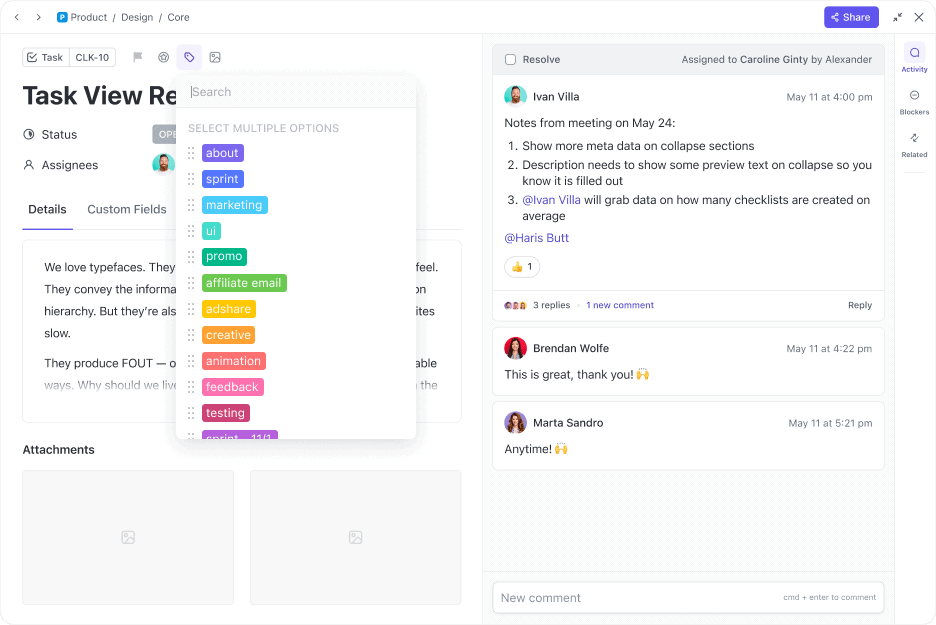
Fast loops keep your content velocity high. Nobody likes waiting weeks for feedback. By making approval easy, you let your content writers stay focused on their next piece. It also ensures that technical SEO checks happen before the piece goes live.
Tip 7: Integrate tools and automation
Manual work is a huge barrier to growth. You need a modern content technology stack where your tools are all connected. This creates a content ecosystem that handles the boring work for you so you can focus on strategy.
Automation can handle routine tasks like moving files or sending team alerts. For example, you could automatically assign content for review when your team changes the status:
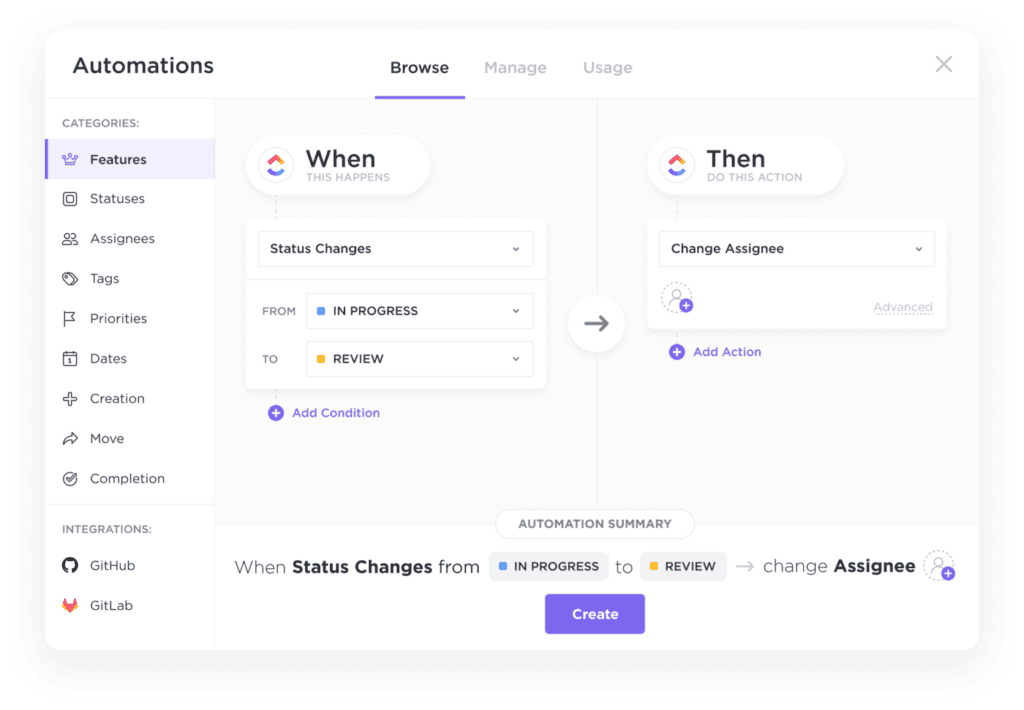
Automation helps raise flags without switching between applications, potentially missing valuable time and effort. For example, you can integrate reports from Google Analytics into your PM dashboards and set automation rules to notify team leaders if there are any drastic changes to their KPIs.
You can also use automation and AI to generate content drafts faster. In 2026, you can make video content without a huge budget. You can use AI to turn blog posts into podcasts or extract enticing bullet points for social media.
The same idea applies to the smaller tasks that often slow content teams down, like reshaping drafts for different channels, organizing ideas before production, or pulling useful takeaways from existing assets. When used with a clear workflow, AI-powered tools can help reduce those repetitive steps without taking control away from your team.
When your stack is connected, data flows smoothly between teams. You stop losing files and start seeing the big picture. Though it takes time to set up, automation is the only way to scale your work effectively.
Tip 8: Measure performance and iterate
You must track your data closely to improve your content optimization. Use your analytics tools to find which content assets your target audience likes the most. This data tells you exactly where to spend your time in the future.

Screenshot taken by the author
Set a schedule to check your metrics every month. Look for trends in organic traffic and social shares. If your social media posts are not doing well, use that data to change your approach. You may find that older posts need a content refresh to gain more views.
To win at this, you must apply advanced SEO analytics techniques to your performance data. This level of insight is how you apply winning strategies that beat the competition. Data takes the guesswork out of your long-term plans.
Reliable data helps you stay aligned with your content marketing goals. It shows you exactly what your audience wants to read. However, you must be willing to change your plan if the data says users want something else.
Tip 9: Foster cross-functional collaboration
Your content marketing operations should connect every department. Your marketing teams should talk to sales and product experts every week. This collaboration helps you gather the content intelligence needed to make more valuable work.
Sales teams know the exact problems your customers face every day. You can use their info to create a blog post that answers common questions. Storing these ideas in a shared space like Google Docs makes it easy for everyone to help.
When teams work together, your brand story becomes much more consistent. It ensures that your content creation directly helps the sales team close more deals. This also makes brand management easier because every worker understands the core message.
To stay ahead, you should refine your B2B content marketing strategies based on this internal feedback. Collaboration stops silos from forming and ensures that your best ideas are shared across the company.
Conclusion
Optimizing your content marketing operations is the best way to grow your brand. While it takes work to set up, the return on productivity is immediate. You will have much less content chaos and a more motivated team.
Start by trying one or two of these tips to see how they help your flow. Build a content system that is made for your team’s specific needs. As you grow, continue to iterate on your processes to keep your momentum.
Ready to scale your operations? uSERP helps B2B brands build content programs that drive rankings and revenue. Learn more about how we can help your brand grow.