




Lots of SaaS founders hit the same wall. Your product is good, but your messaging blends into the noise.
You’ve tried new features, new pricing, maybe even new channels. No matter what you do, growth still feels harder than it should be.
The missing piece?
Clear, confident brand positioning defines your unique value proposition and tells the market exactly why you matter.
Let’s explore the ways top SaaS firms carve out unforgettable positions in their markets. 👇
Highlights
- Brand positioning is strategic, not visual: Brand positioning is the strategic place a SaaS company occupies in the market and customer’s mind—shaped by target audience clarity, competitive framing, customer needs, and market context. It’s distinct from branding (logos, colors, fonts), which is the visual expression of that strategic choice.
- Poor positioning is a widespread SaaS problem: According to ProductLed’s 2025 State of B2B SaaS Report, 40.2% of SaaS companies struggle to position themselves as the go-to solution in their space. Gripped’s 2025 Big SaaS Marketing Survey found top-performing SaaS companies have sharper ICP understanding, while underperformers overspend on paid acquisition and underinvest in brand.
- Six core SaaS positioning frameworks exist: SaaS brands can choose from competitive positioning (vs. a competitor or outdated approach), niche/vertical positioning (underserved segment), differentiation-based (unique value), convenience-based (fastest/simplest), quality-based (most reliable/premium), or pricing-based (affordable/transparent). Picking the wrong framework collapses messaging.
- Positioning shapes product experience, not just messaging: Strong positioning directs which features get built, what onboarding must prove immediately, which UI elements need to shine, and where to remove friction. A “fastest way to X” promise is destroyed by slow onboarding; a “simple” promise is destroyed by cluttered UI.
- Top SaaS brands prove each framework works in practice: Slack uses competitive positioning as the “email killer,” Toast dominates restaurants through vertical positioning, Figma differentiates with real-time browser-based collaboration, Canva wins on convenience with “design for everyone,” Superhuman commands premium pricing through quality positioning, and Akaunting leads with free open-source accounting as pricing-based positioning.
What is brand positioning (and what it isn’t)?
To start, don’t get confused. Brand positioning is not branding.
It’s not choosing a brand name, designing your logo, picking your color palette, or using a certain font.
- Brand positioning is the strategic place you occupy in the market and in your customer’s mind, shaped by your brand strategy and core messaging.
- Branding is the visual and tonal way you express that choice. (Think visual content marketing, brand name, messaging hierarchy, and tone.)
Many SaaS companies also spend time exploring different logo design ideas to make sure their visual identity supports the positioning they want customers to remember.
Let’s explore this definition further.
The true definition of brand positioning
So what is market positioning if it’s not your fonts and logos?
It’s a mix of your:
- Target audience clarity.
- Competitive framing.
- Customer needs.
- Market context.
These things shape how people understand your product before they ever try it.
Strong positioning answers questions like:
- Why choose us instead of every other B2B SaaS tool?
- What product category are we in?
- What problem do we solve?
- Who is this product for?
Your value proposition, unique attributes, ideal customer profile (ICP), and market segments all feed into this decision. And yes, you need both a brand positioning statement and a product positioning statement.
- A brand position statement defines your place in the world.
- A product positioning statement defines how each feature or module supports that promise.
Most SaaS companies blur these together. Visual work like logo design should express that positioning, not stand in for it. But the result is vague, “everything for everyone” messaging. This crushes conversion rates since nobody’s sure whether the product is completely relevant to them.
And that’s the heart of positioning.
It’s a single, consistent promise that guides your brand at the macro level and your product at the micro level. This helps every message and feature pull in the same direction.
Why brand positioning is so important for SaaS
Positioning isn’t just a messaging exercise – it’s how you make decisions. It shapes which features get built, which audiences you go after, and which opportunities you let pass.
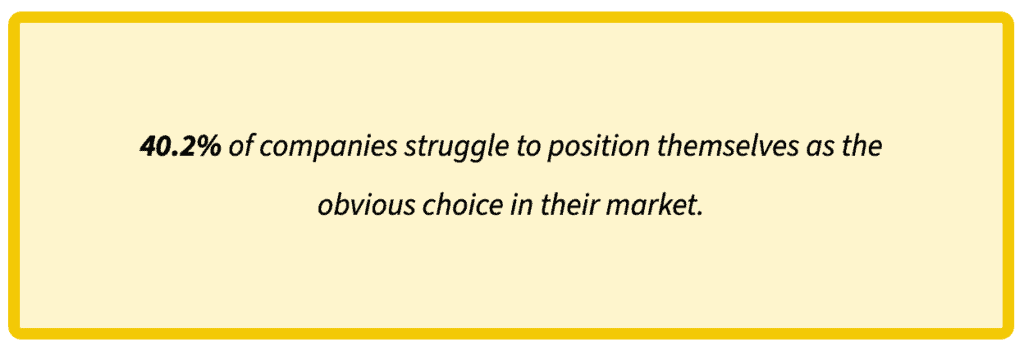
According to ProductLed’s 2025 State of B2B SaaS Report, 40.2% of SaaS companies find it tough to position themselves as the go-to solution in their space.
This is because they don’t know who they serve, why they matter, and where they compete in the competitive landscape.
And Gripped’s 2025 Big SaaS Marketing Survey confirms this. The report shows two important things:
- Top-performing SaaS companies have a sharper understanding of their ICP.
- Underperforming companies overspend on paid acquisition and underinvest in brand.
TL;DR: SaaS winners know their audience, purpose, and competition.
So before running to a business name generator or logo maker, get to know your people. Host calls with real prospects and customer service reps to uncover their pain points. Run a market analysis to see who’s buying and what competitors are nailing. And look for gaps only your tool can fill to strengthen your go-to-market strategy.
How positioning affects product experience
Here’s the important part founders often miss: Your product experience is part of your positioning.
When you know who your product is for and the value it brings them, you can create products that serve them directly.
A strong position tells your development team:
- What in-app messages should reinforce, so every nudge reflects the value proposition.
- What user onboarding must prove immediately, to turn your headline into an experience.
- Which moments in the product matter most and should deliver value fastest.
- Which UI elements need to shine because they support your core promise?
- Where to remove friction and where friction signals meaningful intent.
Think about it like this …
- If your value proposition is “fastest way to X” ➜ slow onboarding kills your positioning.
- If your value proposition is “simple” ➜ a cluttered UI destroys trust.
Positioning helps you reach your audience by defining the user experience they need. Teams that consistently refine their positioning and outreach strategy often invest in modern B2B SaaS sales training to improve messaging alignment, product understanding, and conversion consistency across the sales cycle.
The different types of SaaS positioning
There are several positioning strategies that SaaS brands use within their broader SaaS GTM strategy. The one that’s right for you depends on the product you offer and the audience you intend to target.
Here are the six main positioning frameworks:
- Competitive positioning: Are you positioning against a competitor or an outdated approach? Check out our HubSpot vs WordPress piece for inspo on this type of SaaS positioning.
- Niche (vertical) positioning: Do you focus on an underserved segment with specific goals?
- Differentiation-based positioning: Is your product valuable in a way no one else’s is?
- Convenience-based positioning: Do you focus on being the fastest, simplest, or easiest?
- Quality-based positioning: Are you the most reliable or enterprise-ready?
- Pricing-based positioning: Are you affordable? Premium? Transparent?
Pick the wrong one and your messaging collapses. Pick the right one and suddenly the market “gets” you. Plus, it’s so much easier to plan your editorial calendar when you have a specific direction for each content piece.
Let’s dive into some real-world examples to show how top-performing saas brands put this into action.
6 SaaS brands that nail their positioning (and what you can learn from them)
It’s easy to talk about positioning in theory. But let’s see what great positioning looks like in the wild.
These well-known SaaS brands show how different positioning strategies work, and how each one shapes their product, messaging, and market perception. 👇
1. Competitive positioning: Slack
Slack is a team messaging and collaboration tool. But when it launched, most companies thought their existing email systems were “good enough” to handle their communications.
To convince people otherwise, Slack had to challenge the status quo itself.
To do this, Slack used competitive positioning from day one. It framed itself as the modern alternative to overloaded inboxes and chaotic internal threads.
And it reflected this concept with strong wording in its initial messaging, leaning hard into the “email killer” narrative.
Look at founder interviews and articles from the early days of company formation. They highlighted that email was inefficient and presented Slack as a superior way to communicate within teams.
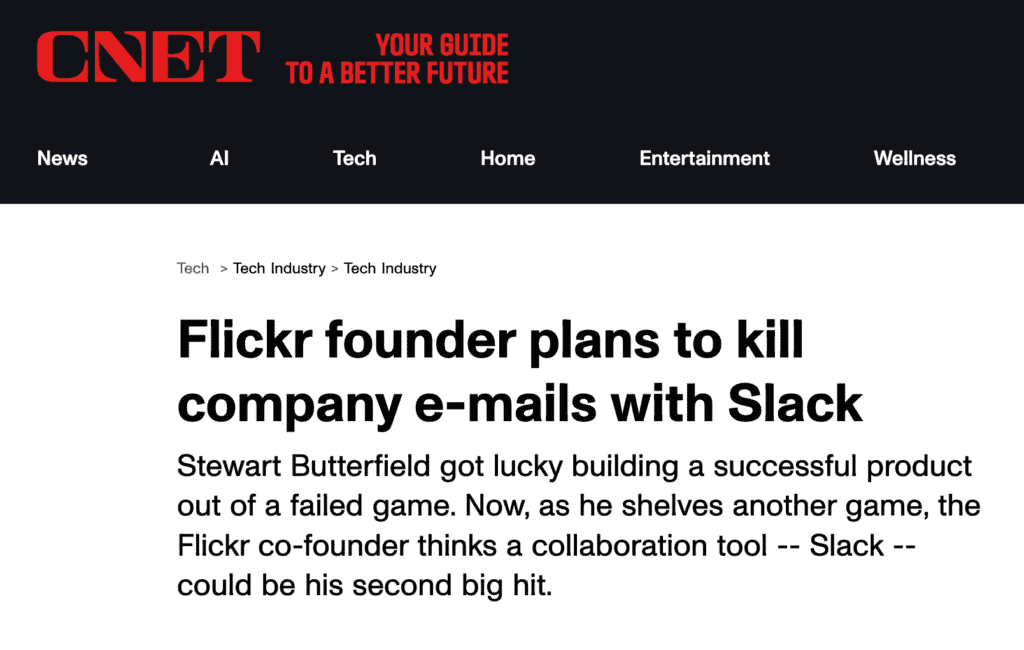
While teams are now more familiar with communication apps, Slack still stands ahead of the crowd.And it still uses the email killer concept to shape its SaaS marketing strategy and blog posts.
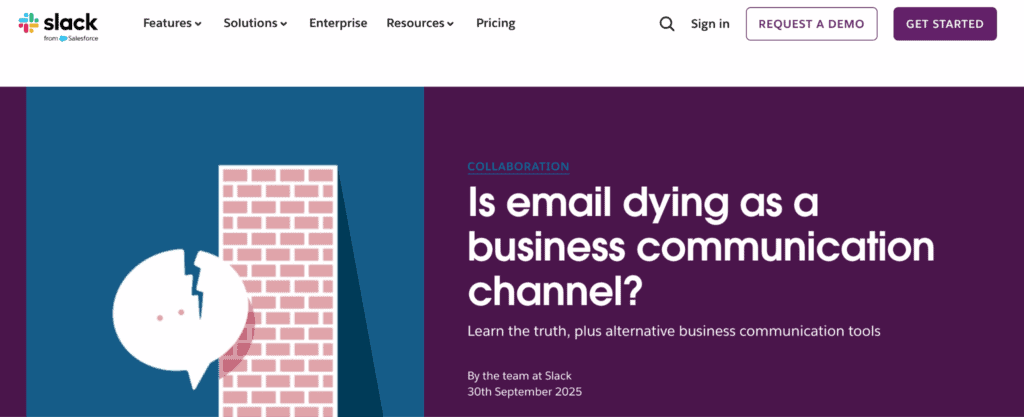
This works because Slack’s competitive position is correct. It is a better way to collaborate than email, with Slack pricing structured to align with the value it delivers to teams of all sizes. It’s still streaks ahead of other communication apps now emerging in its field.
2. Niche (vertical) positioning: Toast
Toast is a point-of-sale and operations platform specifically for restaurants. And while many POS systems serve every type of business, Toast focuses on completely owning one vertical.
Toast uses niche (vertical) positioning, designing its entire product around real restaurant workflows. It offers features like kitchen display systems, tip pooling, table rotation, and payment processing.
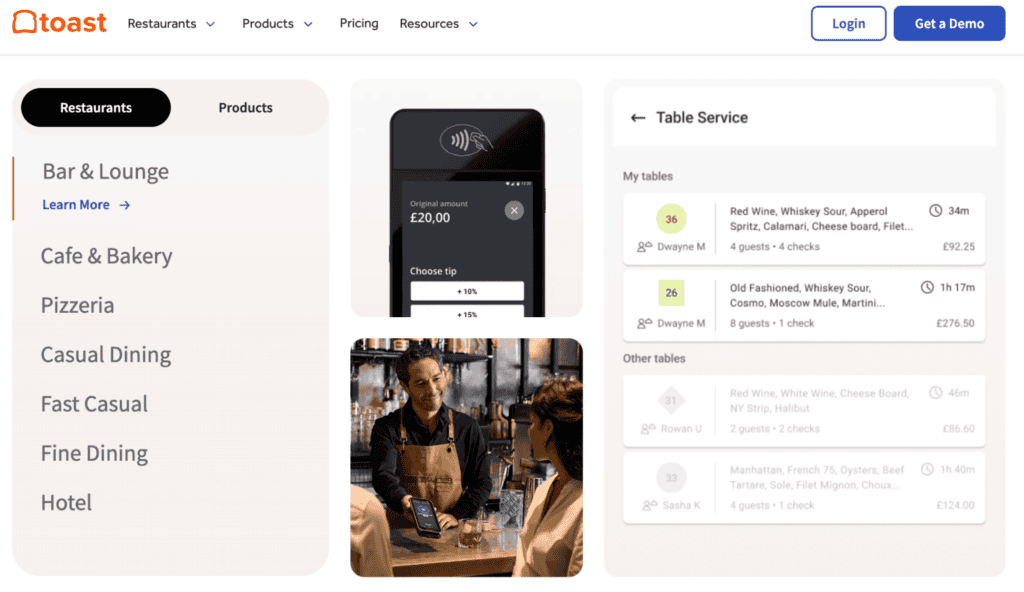
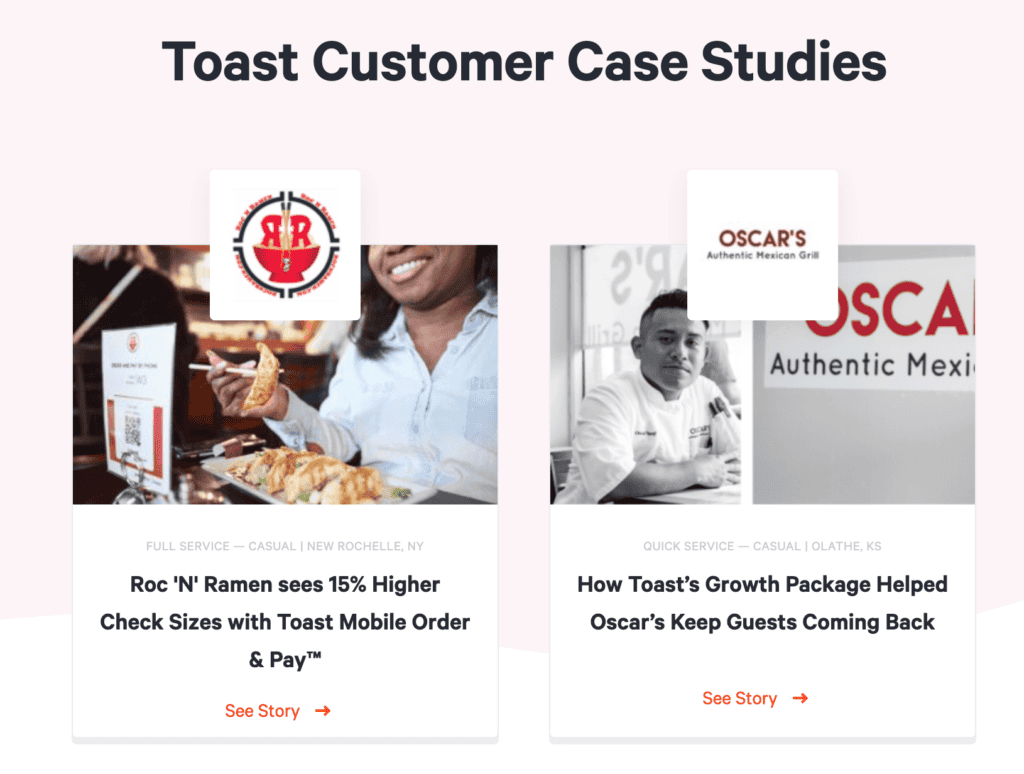
Beyond its streamlined workflows, Toast’s messaging supports its niche positioning. You can see this in its case studies, which only feature restaurant brands.
On top of this, its events and community programs cater exclusively to operators in the food service industry.
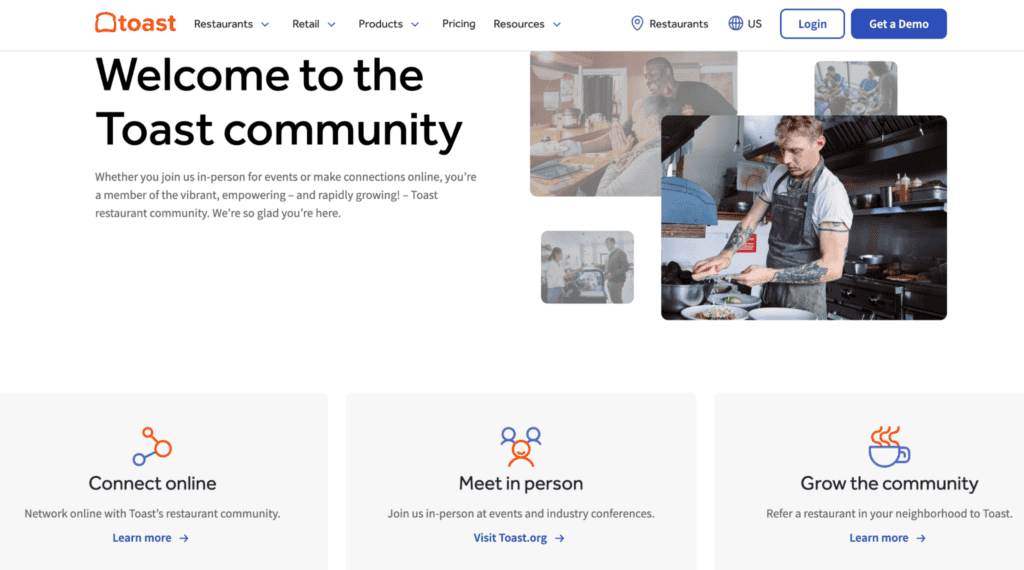
In doing this, Toast dominates the POS market for the restaurant sector.
3. Differentiation-based positioning: Figma
Figma is a browser-based collaborative design platform. But it doesn’t need to compete with legacy desktop tools like Sketch or Adobe XD.
This is because Figma uses differentiation-based positioning to introduce something fundamentally new. It offers real-time, multiplayer design in the browser.
Its core differentiator — live collaborative editing — is visible the moment you open the interface. (Think multiplayer cursors, shared comments, and in-file chat.)
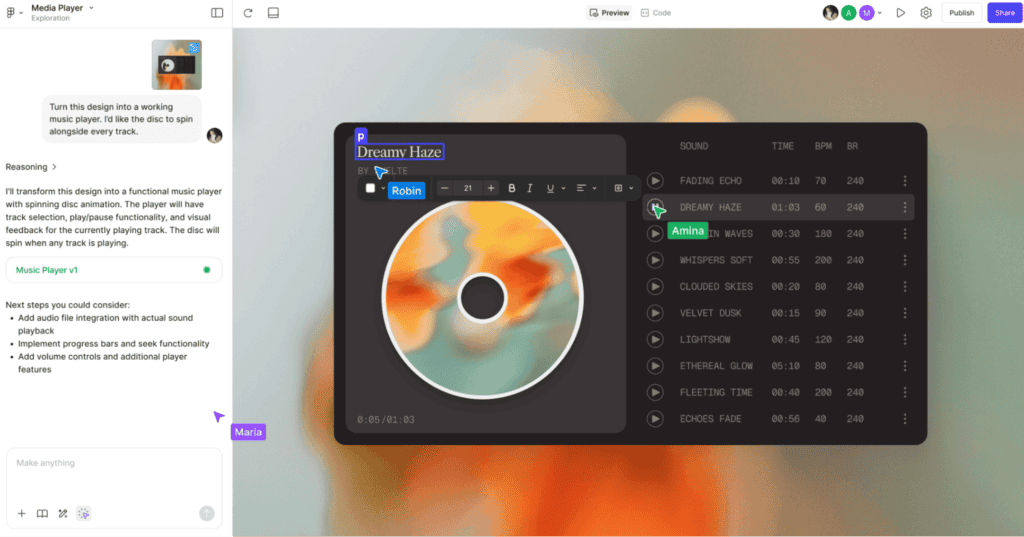
Even its strapline, “Figma: The Collaborative Interface Design Tool,” reinforces this stance.
Figma extends this positioning through Figma for Education. This initiative offers free tools and runs collaboration workshops at design schools and universities.

On the surface, this teaches the next generation how to ideate and create together.
Beneath this is a clear message: You need design tools with intuitive collaborative features. In other words, you need Figma.
4. Convenience-based positioning: Canva
Canva is an online graphic design platform. But it’s unlike traditional design tools that assume users have technical skills.
Instead, Canva uses convenience-based positioning to frame itself as the fastest, simplest way for anyone to design anything.
Let’s start with its strapline: “Canva: Visual Suite for Everyone.” This highlights its promise (design for everyone).
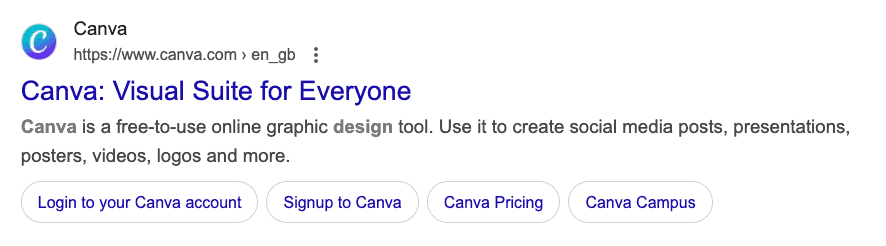
Canva Strapline on Google SERP
Its features support this too. It offers simplistic drag-and-drop tools and massive template libraries.
You can also see Canva position itself for convenience within its marketing.

Its marketing campaigns lean into everyday language and real-life use cases — showing non-designers how to create influencer Reels, birthday cards, corporate slides, and more.
In short, Canva wins because it removes the effort, the learning curve, and the intimidation. It makes good design feel effortless for everyone.
5. Quality-based positioning: Superhuman
Superhuman is a premium email client for professionals who care about speed and polish. Because of this, it doesn’t bother competing with conventional email clients on features. Superhuman uses quality-based positioning to present itself as the fastest, most refined email experience available.
You can see this in its tagline: “The most productive email app ever made.” And in its bold claims, like: Saving teams “15 million hours every year.”
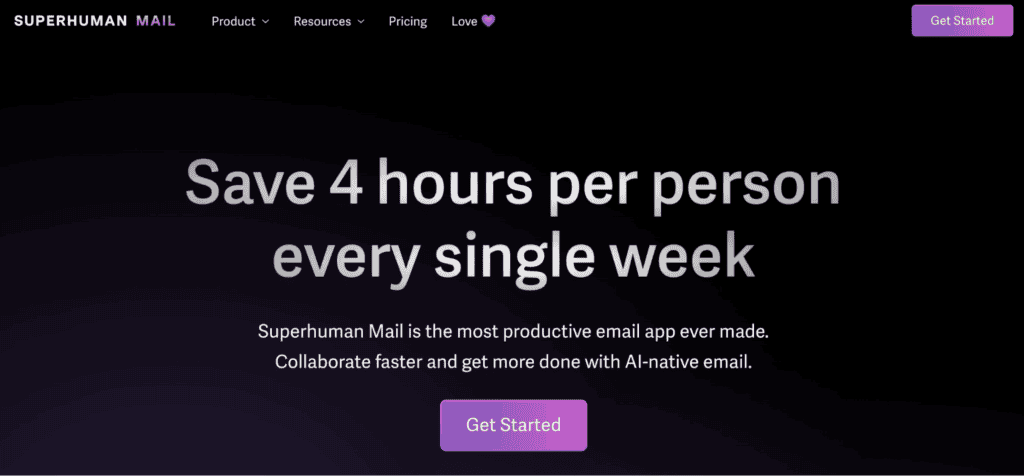
But it’s not marketing spiel. Superhuman bakes quality into the experience.
For example, new users get a 30-minute 1:1 onboarding call to coach them on cutting email time.
Even its premium pricing strategy signals performance.
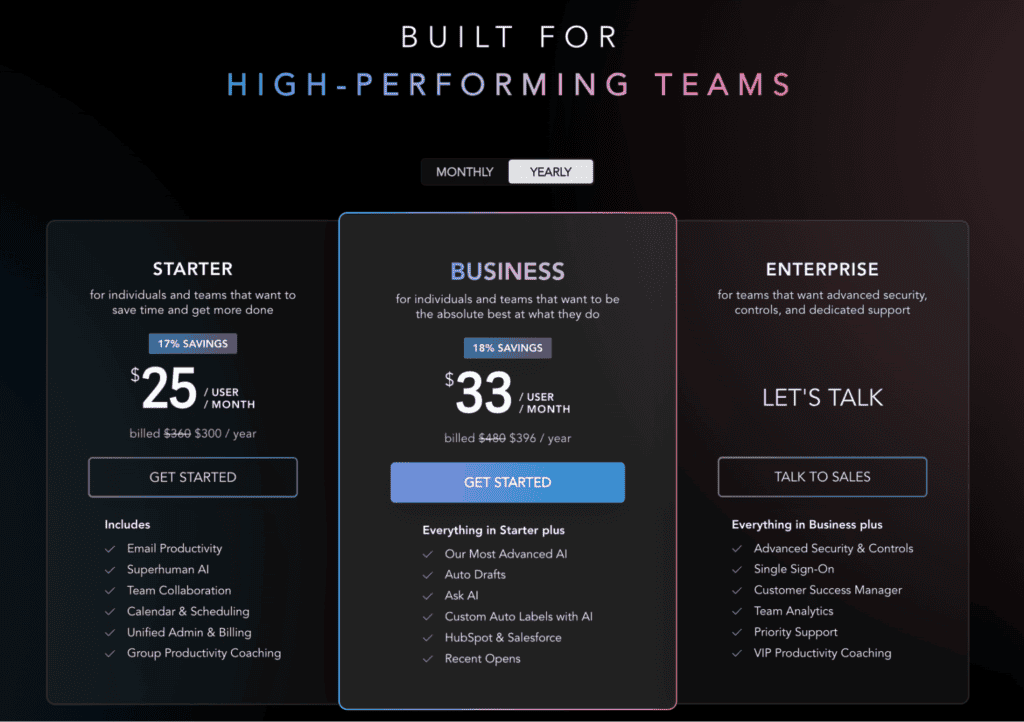
By upping the price, Superhuman positions itself as a high-end, high-quality alternative to standard email tools.
6. Pricing-based positioning: Akaunting
Akaunting is free, open-source accounting software for small businesses. And its entire story hinges on pricing-based positioning.
Unlike other accounting tools, Akaunting doesn’t charge monthly fees. It makes this clear from the get-go with its homepage headline, which calls it “Free Accounting Software.”
This initial declaration makes cost savings the core of its brand.
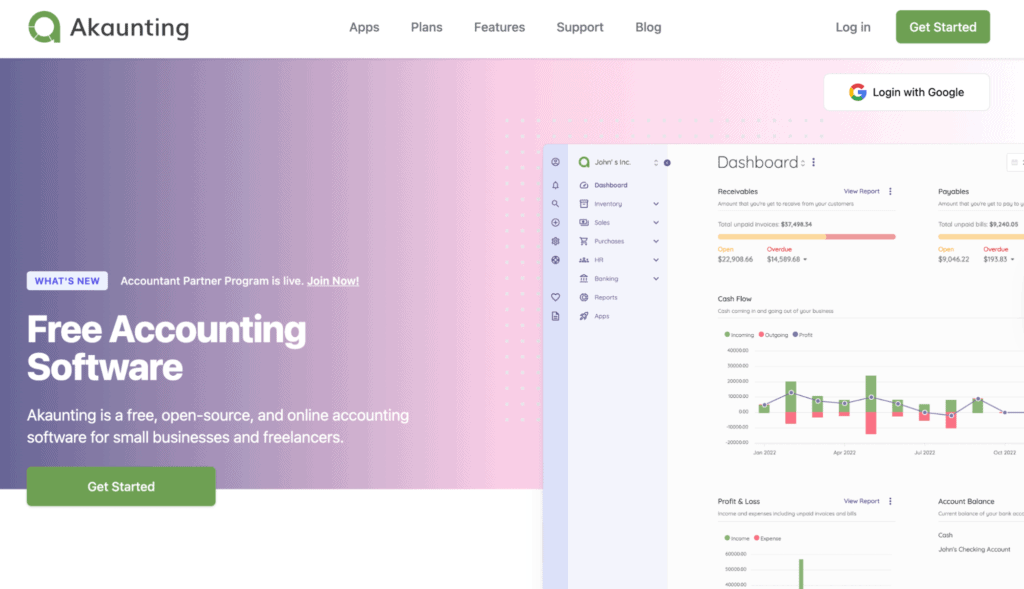
You can also see this positioning in the product itself, where its key features are completely free. And while optional add-ons are available, plans start at just $8/month compared to Xero’s $25/month entry tier.
Even its marketing hits this message home. Every post, Reel, and blog focuses on reducing business expenses, whether that’s cloud security costs, budgeting, or tax deductions.
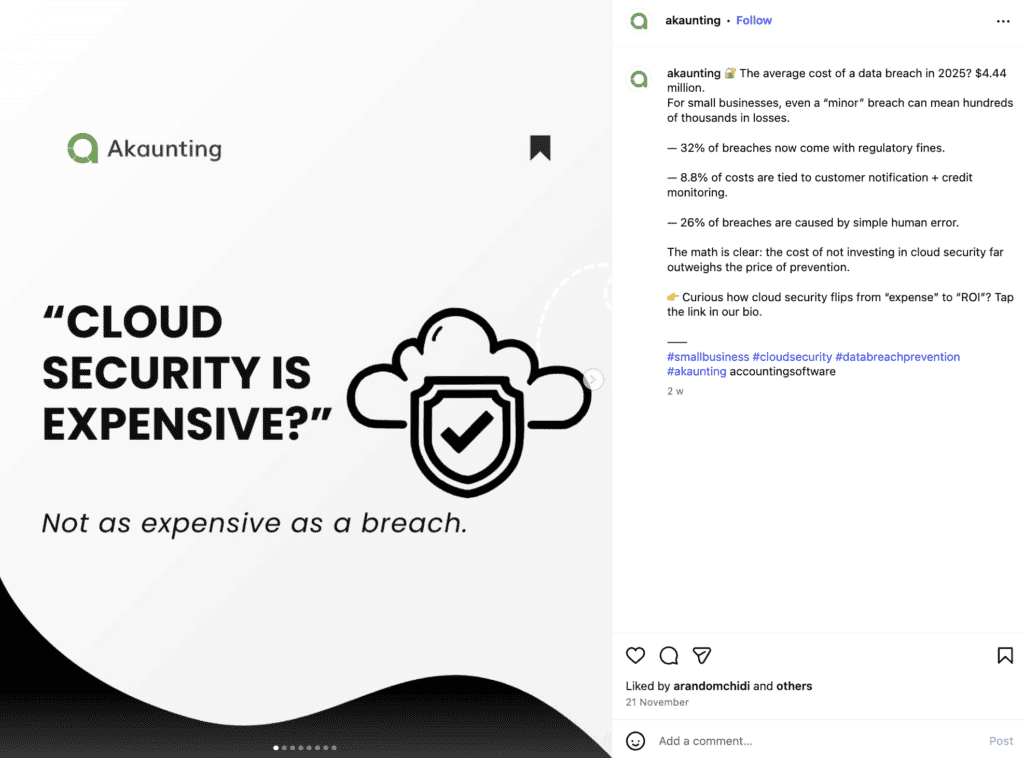
All these tactics together position Akaunting as the price advantage for low-budget companies. This makes it the go-to affordable accounting solution. For SaaS companies looking to choose the right tools in this space, exploring dedicated SaaS finance software options can help identify which platforms best match their billing complexity, compliance needs, and growth stage.
Wrap up
Strong brand positioning is the pathway to giving your SaaS a clear, memorable place in the market.
The most successful companies pick a lane. You need to choose a focus, like speed, simplicity, niche focus, quality, or price. Then reinforce it everywhere.
The best way to do this is to anchor your positioning in one thing your ICP cares about most. Then build every message around that promise, so customers know they can trust you’ll deliver on what you say.
If you’re finding it difficult to define that core positioning or translate it into consistent messaging, getting an outside perspective can help. In that case, you can book a call with uSERP now to refine your SaaS positioning.