Ever wondered how some brands get featured in major publications like The New York Times while others struggle to be seen? The secret often starts with one simple tool: HARO.
HARO, or Help a Reporter Out, is a platform that connects journalists with expert sources. It’s a bridge between the people writing the stories and those who have the insights to make those stories credible.
In this What is HARO guide, you’ll learn everything you need to know about this tool. You’ll see:
- How it works
- How to pitch effectively
- What mistakes to avoid
- Which alternatives to try
By the end, you’ll know exactly how to use HARO to earn media exposure, quality backlinks, and long-term brand awareness through digital PR and smart SEO strategies.
Highlights
- HARO (Help a Reporter Out) is a free platform that connects journalists at major outlets like the Wall Street Journal and Mashable with expert sources, giving businesses and professionals a direct path to earning media mentions, authority backlinks, and long-term brand visibility without cold outreach or paid PR campaigns.
- Brand mentions earned through HARO have a stronger SEO impact than most marketers realize — an Ahrefs study found that brand web mentions correlate with Google AI Overview appearances at 0.664, far outperforming backlinks at 0.218, meaning even unlinked citations from credible publications meaningfully strengthen search authority.
- An effective HARO pitch follows four non-negotiable rules: respond fast (journalists work on tight deadlines), keep it to 150–200 words, lead with a direct answer rather than a self-promotional intro, and personalize each reply — with Muck Rack reporting that nearly one in four journalists reject pitches that feel generic.
- The four-step HARO process is straightforward: create a profile on Featured (which now owns HARO), monitor email digests by category, send targeted pitches to relevant queries, and amplify any earned mentions through social media, press pages, and newsletters to maximize their reach and SEO value.
- HARO remains worth using in 2026, but success requires consistency and quality over volume — increased competition from AI-assisted pitching means journalists receive more responses than ever, so only pitches that are genuinely relevant, specific, and data-backed stand out and earn the features that build lasting authority.
What is HARO?
HARO stands for Help a Reporter Out. It’s a platform where journalists post queries when they need expert sources for their stories. In return, professionals and business owners can share their quotes and experiences. The exchange helps both sides. Reporters get credible information, and experts earn authority backlinks and media coverage.
HARO was founded in 2007 when Peter Shankman started it as a small Facebook group for journalists. It quickly gained traction. And in 2010, it was acquired by Vocus, which later merged with Cision Inc. to expand its reach.
Over the years, the platform has become one of the most trusted tools in public relations, content marketing, and media outreach. Journalists at major media outlets such as the Wall Street Journal, Fox News, and Mashable use it to find credible experts for their articles.
For businesses, it’s a chance to earn authority and build trust. A single HARO mention can lead to higher referral traffic, more brand awareness, and stronger SEO performance.
In short, HARO is a fast and effective way to share your expertise while improving your online visibility and credibility.
How HARO works
HARO follows a simple process. Here’s how it works.
Step 1: Sign up and set up your profile
Go to HARO’s homepage. Click “Sources” and then go to “Create Alerts”.
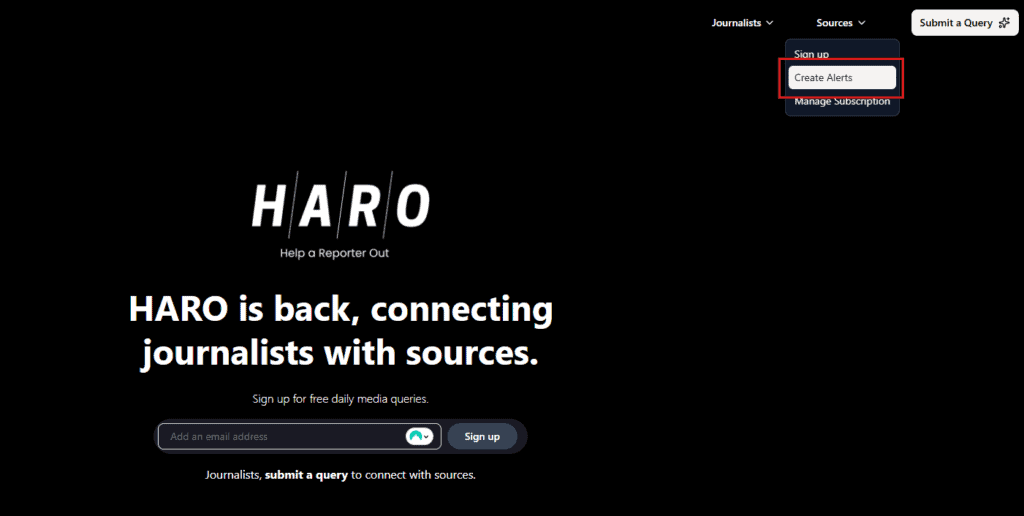
You get to create a profile on Featured (which has recently acquired HARO), where you can submit your expert insights to journalists’ requests.

Fill in your profile setup with your name, job title, and area of expertise. Add links to your website and LinkedIn. This helps journalists verify who you are and see your background.
A complete profile builds trust and ensures you receive the most relevant queries.
Step 2: Check your email digests
Once you’re registered, HARO / Featured sends email digests filled with journalist requests. Each digest lists topics by category, such as health, finance, travel, or marketing.
You can set up email filters or keyword alerts to find the right opportunities faster. For example, if you’re a small business coach, you might see a query asking for “experts on content marketing tips for startups.” If it fits your experience, reply.
These requests are also available on your Featured dashboard.
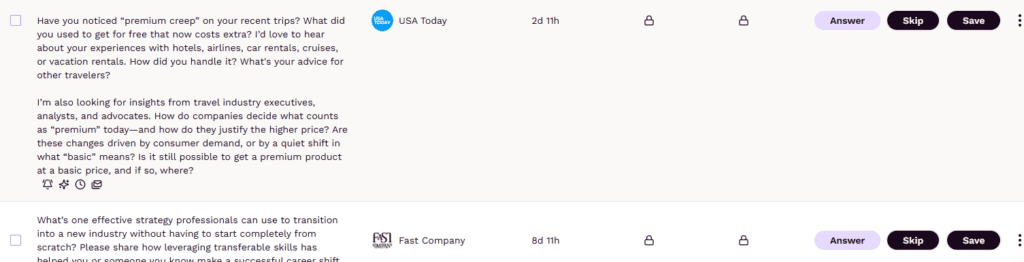
Screenshot provided by the author
Step 3: Send your pitch
When you spot a relevant query, reply fast. Journalists work under short deadlines, so response time matters.
Your pitch should be short, clear, and helpful. Provide a direct answer, one short quote, and a quick note about your experience. Skip long intros and get to the point right away.
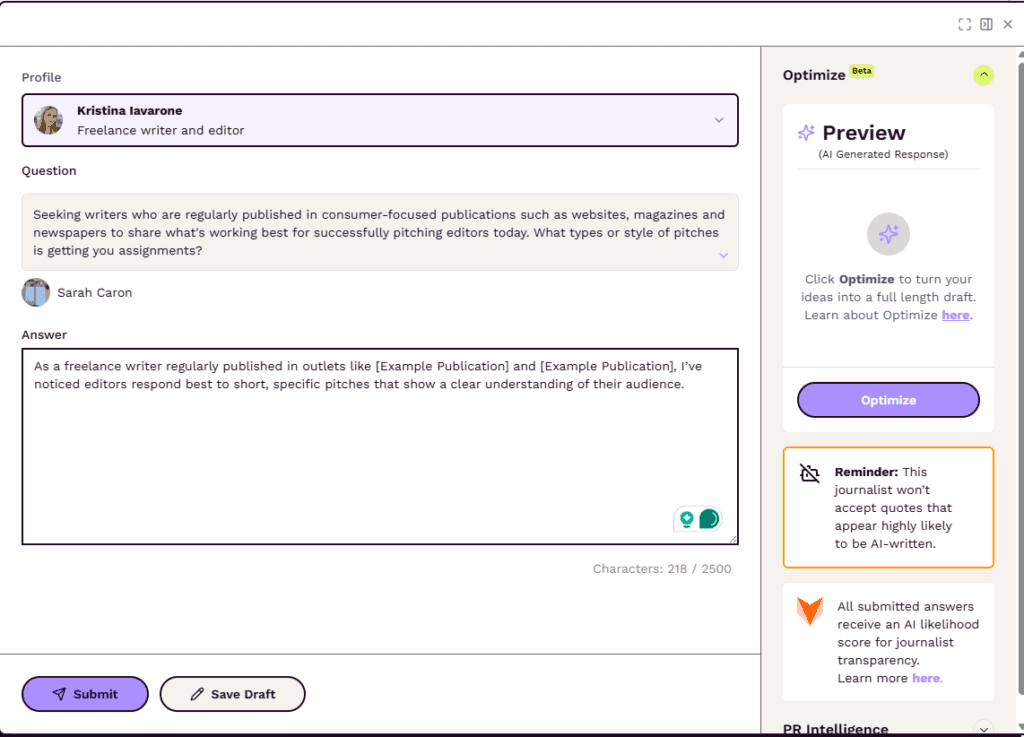
Screenshot provided by the author
Step 4: Get featured and share your mention
If your response gets selected, your quote will appear in the article. Celebrate your win by sharing it on social media, adding it to your press page, or mentioning it in your newsletter. You can even turn your media mention into a quick, polished clip with an AI video generator to give your win more reach across social platforms.
These media mentions help boost your reputation and SEO. As Jeremy Moser, founder of uSERP, noted in a recent LinkedIn post, brand and web mentions can sometimes have even more impact than backlinks alone. They build authority and recognition in ways search engines increasingly value.
They can also bring in referral traffic from readers who want to learn more about your business.
Why HARO still works for PR and SEO
You might think that AI and social media have taken over how stories are told. But when it comes to credibility, nothing replaces real human voices. Reporters still need experts who can share data and stories that feel authentic. And that’s why HARO still matters today.
HARO cuts out cold emails, long wait times, and social media noise. It gives professionals, founders, and PR specialists a way to connect with reporters who are actively looking for quotes and commentary.
Build media relationships
HARO helps you start real conversations with journalists and editors. When you provide helpful, fast, and accurate information, they remember you. That trust often leads to more opportunities, sometimes even direct outreach for future stories.
Build credibility and improve your online visibility
Mentions from reputable sources do more than send traffic. They tell Google your brand is trusted and recognized across the web.
A recent study by Ahrefs found that brand web mentions had the strongest correlation (0.664) with how often brands appear in Google’s AI Overviews. This is much higher than that of backlinks (0.218).

This means that when other websites mention your brand by name, even without a link, Google’s systems take notice. These mentions signal that your brand is authoritative and part of credible conversations online.
That’s exactly where HARO helps. Each time you’re quoted or cited in a publication, your name appears in front of both readers and search engines. Over time, these mentions strengthen your visibility and help your brand stand out in search and AI-driven results.
Build authentic brand awareness
When your insights appear in popular media outlets, your audience grows naturally. People begin to associate your name or your business with expertise and reliability.
HARO might not replace traditional outreach or guest posting, but it adds something every brand needs. And that is authenticity. Each quote or mention is proof of real expertise, trusted by both readers and search engines.
Once you understand why HARO works, the next step is learning how to respond effectively.
Tips for writing a great HARO pitch
You don’t need to write a long HARO pitch. Make sure it’s clear and relevant to what the journalist or editor is asking for. Here are a few simple ways to make yours stand out.
Be clear and helpful
Journalists have busy schedules and sometimes work on last-minute requests. Make your point in the first two sentences and share a quick fact, stat, or short story that fits the question. Avoid filler or long introductions.
Keep it short and conversational
Aim for 150–200 words. Don’t pitch your product or services, but write like you’re talking to a colleague. If it helps, run your HARO pitches through Quillbot to smooth out awkward phrasing or overly formal language.
The goal is to sound natural, confident, and easy to quote.
Respond fast and personalize
Check your HARO emails often and reply as soon as you see a query that fits your expertise. A quick, relevant answer has a better chance of being picked. Use the journalist’s name if available, and tailor each pitch slightly to make it feel personal.
According to Muck Rack’s 2023 State of Journalism report, nearly one in four journalists reject pitches that don’t feel personalized.
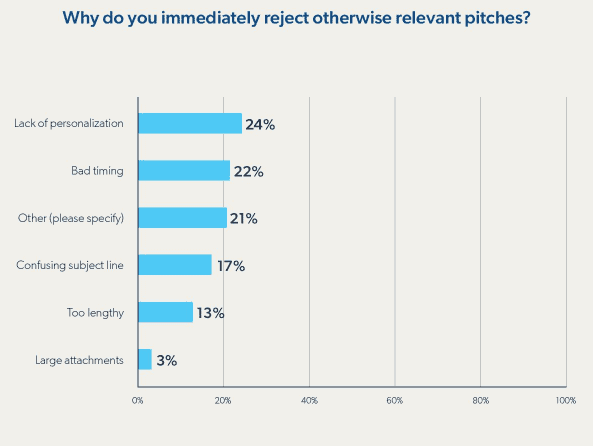
That means a few thoughtful adjustments, like referencing their recent work, can set your email apart from hundreds of generic replies. A personal touch shows respect for their time and increases your chances of getting featured.
What to expect after you pitch
You’ve written your HARO pitch and hit send. Now comes the waiting game. Here’s what usually happens after you reply to a journalist’s request.
How long does it take to hear back
Most journalists are working on tight deadlines. Some will publish within a few days, while others may take a week or two. Many don’t send emails to confirm they’ve received your pitch, so don’t worry if you don’t hear back. Instead, set a reminder to check the publication a few days later. If your quote is chosen, you’ll usually see your name or company mentioned in the article.
Why most pitches don’t get picked
Even well-written responses aren’t always selected. Reporters may receive hundreds of replies to a single query, and they have space for only a few quotes.
Don’t take it personally. Each pitch helps you learn what works, including sharper timing and stronger examples. Over time, those small improvements make a big difference in getting noticed.
How to learn from rejections
Keep track of the queries you respond to and the ones that lead to features. Notice what type of answers tend to get picked. Were they short? Specific? Data-driven? Use that insight to adjust your next pitch.
HARO success comes with consistency. The more you participate, the better you’ll get at spotting perfect-fit opportunities. And the more likely you are to earn high-value media mentions over time.
Is HARO still worth it in 2026?
The short answer is yes. But it depends on what you expect from it.
HARO has evolved a lot since its early days. Now that it’s part of Featured, it’s built for professionals who want exposure, not instant SEO wins. If your goal is to share credible insights, grow your personal brand, and get quoted by trusted publications, it’s still one of the best free tools out there.
What’s changed most is the competition. AI tools are making pitching easier, so journalists are receiving more responses. This means your success depends on whether your pitch is high-quality and relevant to the journalist’s needs.
HARO’s like your long-term PR training partner. Each pitch you send helps you understand how journalists think, what stories they need, and how to position yourself as an authoritative source.
And once you’re comfortable with that, you can take it further and explore our HARO link-building guide, which shows you how to build a link-building strategy with this platform.
Wrap up
By now, you should have a clear understanding of what HARO is and how it helps experts and brands stand out in 2026. It’s one of the easiest ways to connect with journalists and editors, share credible insights, and earn the kind of visibility that builds lasting trust.
If you’re ready to turn HARO wins into scalable PR and SEO growth, our team at uSERP can help. We specialize in earning high-quality editorial links and brand mentions that boost authority and search performance.
Book a call with uSERP to see how we can help your business earn media coverage that truly moves the needle.
FAQs
1. What is HARO used for?
HARO connects journalists with professionals (like physicians, SEO professionals, and marketers) for their stories. Experts get quoted in major media outlets, building credibility, brand awareness, and valuable backlinks.
2. Is HARO free to use?
Yes. Signing up as a source on HARO or Featured.com is completely free. You can also choose paid plans that include advanced features like keyword alerts or priority pitch placement.
3. How do I write a good HARO pitch?
Be relevant and helpful. Start with a direct answer, include one short quote, and mention your experience. Before you send emails, reread your pitch to make sure it sounds natural and adds value. Apply effective pitching techniques like being concise, focusing on the journalist’s needs, and backing up your point with real examples.
4. How long does it take to get featured?
It depends on the journalist’s schedule. Some publish within days, others within weeks. Many don’t reply, so check back later to see if your story or quote was published.