





Businesses around the globe are increasingly investing more money in affiliate marketing models. (I’ll get to those exact stats in a bit.)
This gives you more opportunities to grow your affiliate marketing earnings alongside them.
The best part is: The more experience you build over time, the more you’ll earn. According to AuthorityHacker’s massive survey, affiliate marketers with over three years of experience earn 9.45x more than beginners. And while the average affiliate marketer earns just over $8k per month, the most successful affiliates earn over $500k per month. 😯
That’s a lot of passive income potential!
Let’s take a closer look at some of the most reliable tips and affiliate marketing strategies you can implement to start earning more affiliate marketing commissions. 👇
Highlights
- The affiliate marketing industry is growing rapidly and presents significant earnings potential — US affiliate spending jumped from $9.1B in 2021 to $13.62B in 2024, the global market is projected to reach $31.7B by 2031, and experienced affiliates with three or more years of experience earn 9.45x more than beginners, with top performers exceeding $500k per month.
- Diversifying affiliate partnerships and income streams is essential for sustainable growth — joining multiple affiliate networks, adding recurring commission programs, scaling existing partnerships with performance data, and building a team are all strategies that higher-earning affiliates consistently use to reduce income risk and increase monthly revenue.
- A multi-channel content strategy is the most reliable engine for long-term affiliate earnings — combining SEO-optimized blog posts, dedicated landing pages, video marketing, podcast appearances, and email newsletters with a segmented list creates compounding traffic and conversion opportunities that generate passive income long after content is published.
- Honesty and trust-building are non-negotiable for affiliate marketers in 2026 — audiences are increasingly skeptical of AI-generated and promotional content, meaning genuine product reviews, transparent disclosure of affiliate relationships, and evergreen educational content are what differentiate high-converting affiliates from those who struggle to maintain loyal audiences.
- Tracking performance data and duplicating winning campaigns is what separates top earners from average ones — using dedicated affiliate tracking platforms like Tapfiliate or Voluum, combined with GA4 and UTM parameters, gives affiliates the attribution clarity needed to double down on the channels and campaigns driving the highest return on ad spend.
At what rate is the affiliate marketing industry growing?
The latest Performance Marketing Association (PMA) study says US affiliate marketing is booming. Spending jumped from $9.1 billion in 2021 to $13.62 billion in 2024, growing twice as fast as the overall e-commerce market.
And a recent Cognitive Market Research report projects that the global value of the affiliate marketing industry will reach $31.7 billion by 2031.
That’s a compound annual growth rate (CAGR) of 8%!
What an opportunity to grab hold of, right? 🤩
Keep reading to see how you can set yourself up for more affiliate marketing commissions.
1. Choose programs that give you a better chance of boosting your affiliate marketing earnings
Look for affiliate programs that pay well, have a good reputation, or offer products or services that have historically been easier to sell. Consider whether the program offers reliable tracking links, strong Earnings Per Click (EPC), and transparent reporting inside its affiliate marketing program dashboard.
For instance, Amazon commission rates tend to range from one to 10%:
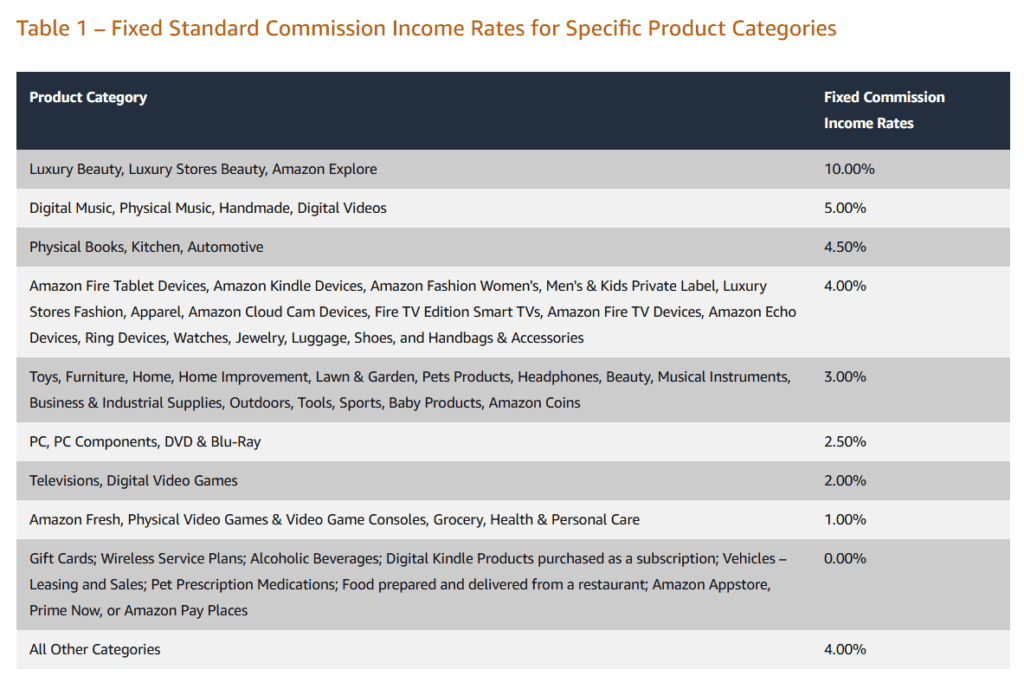
The commission structure isn’t super impressive, but since Amazon is well-known, it can be easier to sell their affiliate products. So the more items you sell, the more you’ll make.
*Pro-Tip: Consider focusing on brands or offers that you genuinely like using yourself. Since you already use them in your day-to-day, it’ll feel more natural to create content around them.
2. Expand and build more affiliate marketing partnerships
As an affiliate marketer, you should alwaysbe looking for more ways to scale your current partnerships and bring on more partners.
That’s why it’s so important to build strong relationships with your affiliate partners.
When you work closely with merchants, you can get better deals, higher commissions, and early info on new products. A good partnership helps both sides grow and makes your campaigns more effective.
How to scale your current affiliate partnerships
To expand your current partnerships, prove you’re a great affiliate with data. Show your partners how much you’ve sold for them and then ask for higher commissions.
Using multi-touch attribution can strengthen your case by demonstrating how different marketing channels and touchpoints contribute to conversions, giving partners a clearer picture of the value you bring throughout the customer journey.
You can also offer specialty affiliate marketing campaign projects or pitch collaboration opportunities that pay more.
How to find more affiliate partners
There are plenty of affiliate networks available. Just scour them to find more aligned affiliate partners.
Keep in mind that putting all of your eggs in one affiliate network can be risky.
Instead, join a few different networks to get access to more products and avoid losing income if one source slows down.
➜ You can also look into subscription-based affiliate programs. They pay recurring commissions, so you’ll get a steadier, more predictable income.
➜Or pay-per-click affiliate programs. PPC affiliate programs pay affiliates for each click they drive to an advertiser’s site. So, even if visitors don’t buy anything, you’ll still earn a commission.
AuthorityHacker’s survey also showed that higher-earning affiliates tend to have larger teams:
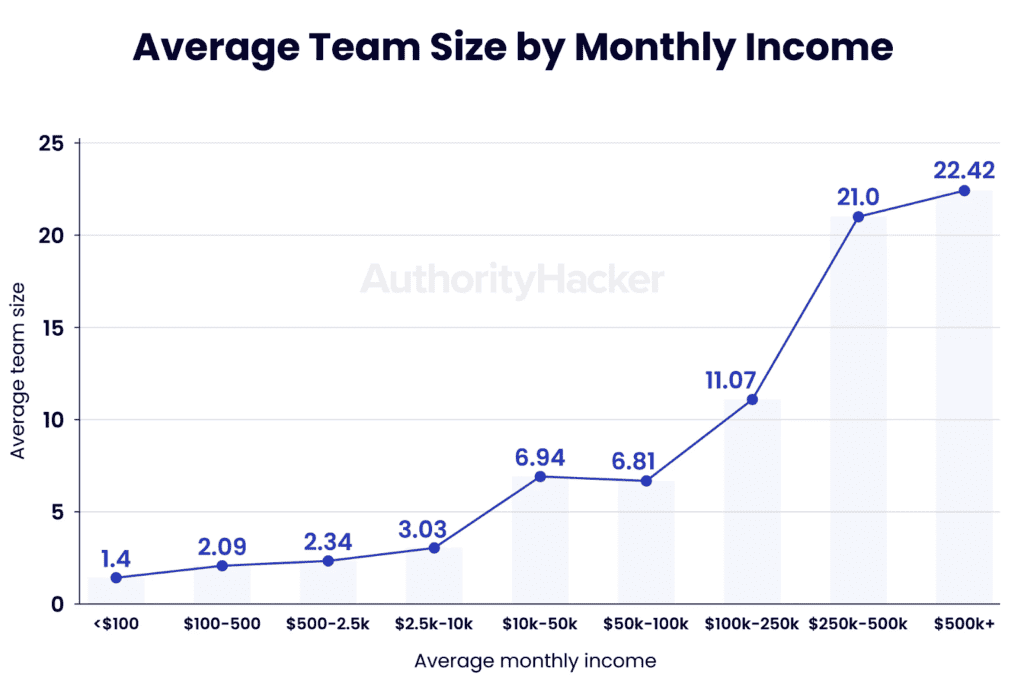
So you’ll need to plan on growing your team if you want to earn more monthly income.
3. Publish landing pages for each of your affiliate marketing products and services
Create a dedicated landing page for each affiliate marketing offer you have.
A high-converting landing page should include comparison tables, clear call-to-action buttons, SEO-optimized content, and structured title tags that improve Google rankings.
Landing pages are helpful sales tools because they give viewers a chance to say “no” a few times before saying yes and purchasing. (It’s a sales psychology thing.) As they scroll down your landing pages, they should see multiple calls to action (CTA) buttons.
In between that, they should see language that addresses their questions and primes them to buy. (For instance, an “Is this right for me?” section would be a great way to resolve all of their doubts.)
Use “assume the sale” language, a type of sales psychology, to nudge them to conversion.
For example, instead of: “Click to purchase.”
Test: “Yes, I want this!”
Or instead of: “If you’re ready to …”
Test: “You’ve tried the free courses and none of them worked. This masterclass is the answer you’ve been searching for.”
Once you’ve built these, connect them to relevant pages. For instance, your website, ads, email newsletters, automations, etc.
4. Create lead magnets to build your email list and send a weekly informative newsletter
Promote enticing lead magnets, like specialty offers and downloadable materials, across your marketing channels to build your email list. Then, send your new leads segmented email sequences that prime and nudge them to buy.
According to AuthorityHacker,affiliates who build an email list to promote products earn much more than those who skip email marketing:
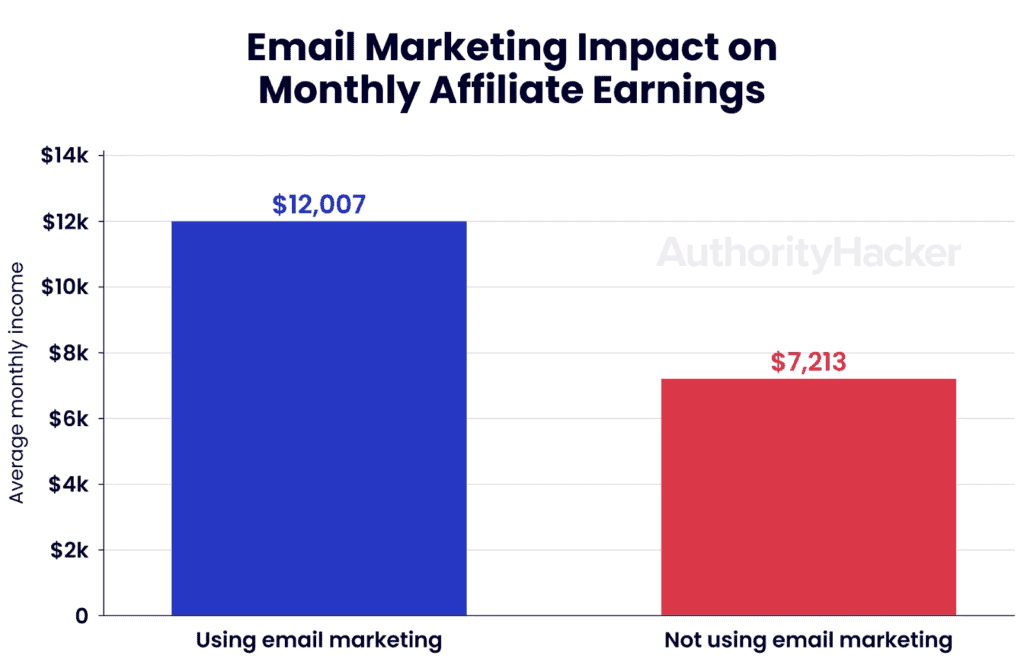
Ways to make money with emails:
- Feature an affiliate partner (especially if they paid for a sponsored post).
- Nestle links contextually when relevant throughout the email.
- Create a footer with all relevant links at the end of the email.
Be sure to also send an informative weekly newsletter with relevant affiliate links.
5. Be brutally honest in your affiliate marketing content
People are getting smarter about the content they consume. In 2026, they want honesty and real experiences. Especially with so much AI slop out there.
Be sure to share genuine reviews and be upfront about your affiliate partnerships.
(If a blender you’re marketing makes delicious smoothies, but you wish it were quieter, say that.) This is how you build trust, keep your audience loyal, and stay compliant with affiliate marketing rules.
Also, focus on creating content that stays useful over time.
Evergreen content, like tutorials, product comparisons, and list-style posts, keeps bringing in traffic and income long after you publish it.
6. Plan and implement a content marketing strategy
Use search engine optimization (SEO) and GEO strategies to bring more traffic to your affiliate marketing website.
Helpful affiliate marketing blog posts you can write include:
- Your anecdotal/personal experience with the product/service
- Pros and cons pieces
- Comparison articles
- How-tos/tutorials
- Case studies
- Listicles
Be sure to include natural (and relevant) contextual links in any piece you post. This is a great time to link those landing pages you made!
Make sure to distribute your blog posts as well to encourage more traffic.
Talk about them in your social media posts, ask people to share them, send them in emails, and publish them inside of your industry groups when relevant.
You can also guest post on authoritative sites that allow affiliate links.
This is how uSERP helped master affiliate marketer Adam Enfroy get tons of organic traffic and build website authority. (500k monthly readers to be exact. 🤩)
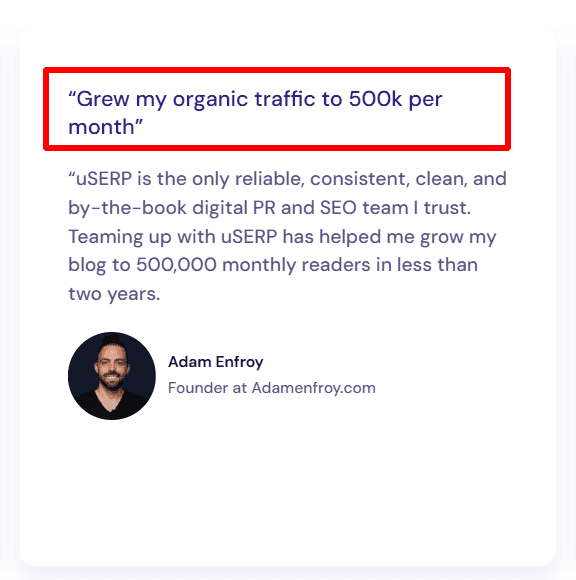
The more backlinks you get from high-quality sites, the more traffic and authority you’ll have.
7. Strategize and implement a video marketing strategy
Affiliate marketing conversion rates surge when you use video marketing, according to Global Tech Stack. While a YouTube channel is the main source, consider experimenting with videos on Instagram and TikTok as well.
You can also upload your affiliate videos to your email campaigns when relevant. And embed them in your blog posts for extra SEO brownie points.
Similar to blogging, you can make:
- Videos about your anecdotal/personal experience with the product/service
- Recap videos (after using the product or service for X days)
- Behind-the-scenes videos
- Pros and cons videos
- Day-in-the-life videos
- Comparison videos
- How-tos / tutorials
- Unboxing videos
- Listicle videos
- Case studies
You can also feature videos on a dedicated video page or affiliate marketing page on your website.
8. Create and implement a podcast marketing strategy
Host your own podcast and appear as a guest on other podcasts. Create intermittent podcast “commercials” to feature your affiliate partners.
You can also feature podcast episodes on your website. (Make sure to invite email subscribers and social media users to tune in, too.)
9. Test affiliate marketing ad campaigns across multiple channels
This may require a greater investment than the other options listed. But if you nail this, your return on ad spend (ROAS) and affiliate income growth could make it really worth it.
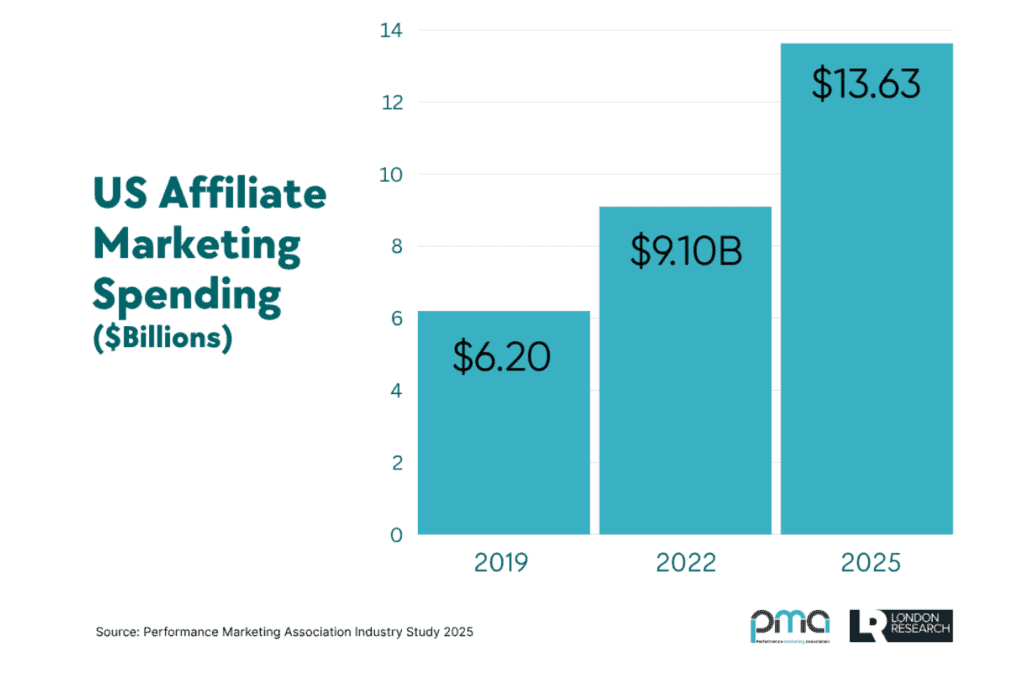
In fact, the PMA study I referenced earlier reports high returns on ad spend across sectors.
For example:
- Travel generates $19 for every dollar invested.
- Retail delivers $11 for every dollar invested.
Within Retail, department stores show the strongest ROAS at $21:1.
And:
- Office supplies follow with $20:1.
- Automotive parts achieve $19:1.
Consider testing: PPC ads, Meta/IG ads, TikTok ads, YouTube video ads, and LinkedIn ads.
10. Track where most of your leads and sales are coming from and duplicate those campaigns
As you learn more about what works and implement it, you’ll earn more.
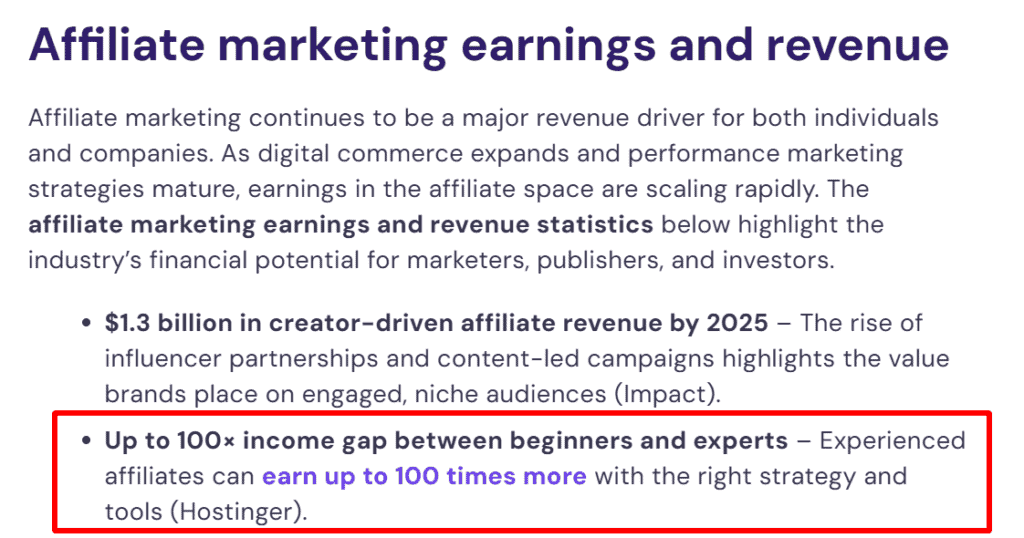
In fact, according to Hostinger, experienced affiliates can earn up to 100 times as much as beginner affiliates.
Here are some ways you can track where your leads and sales are coming from:
Use dedicated affiliate tracking platforms
These are built specifically for tracking affiliate links, sales, and commissions:
- Tapfiliate: Lets you track referrals, manage affiliates, and integrate with e-commerce platforms like Shopify and WooCommerce.
- PartnerStack: Great for SaaS affiliate programs. It tracks partner performance and automates payouts.
- Post Affiliate Pro: Tracks clicks, conversions, and commissions across multiple networks.
- Affise: Provides detailed reports on traffic sources, conversions, and partner activity.
- Refersion: Tracks affiliate sales in real time and shows where each sale originated.
Try link tracking and analytics tools
These help you see exactly where clicks and traffic come from before affiliates convert:
- ClickMeter: Monitors clicks, conversions, and link performance for both paid and organic traffic.
- Voluum: Tracks every click, conversion, and traffic source with advanced attribution and reporting.
- RedTrack: Combines ad and affiliate tracking to show how each channel contributes to revenue.
Use web and CRM analytics tools
These tools don’t specialize in affiliate tracking but are valuable for understanding audience behavior:
- Google Analytics 4 (GA4): Tracks traffic sources, user paths, and conversions. (Use UTM parameters on affiliate links for accurate attribution.)
- HubSpot: Monitors leads as they move through your funnel. Connects sales activity to affiliate sources when set up with tracking URLs.
Use affiliate network dashboards
If you work with networks like ShareASale, CJ Affiliate, or Rakuten Advertising, their dashboards already include detailed tracking for clicks, leads, and sales per campaign.
Wrap up
As you can tell, there are lots of ways you can increase your affiliate marketing income. But they’re going to take some elbow grease. As with most business models, you’re going to need a team, or at least some partners you can rely on to help you grow.
If your affiliate strategy depends on stronger Google rankings and scalable link-building tools, uSERP can support that growth.
uSERP can help your website attract thousands of organic users and gain authority in your niche. (Which helps you attract even more traffic.)
You’ll earn more while spending less time on technical work and media relations. We’ve already got that part down.
Book your free intro call to learn more now.
FAQs about affiliate marketing earnings
How much can you realistically earn with affiliate marketing?
Earnings vary widely — from a few hundred dollars monthly for beginners to 500k+ a month for experienced marketers. This depends on your niche, traffic, and strategy.
How long does it take to start making money with affiliate marketing?
Typically, it takes a few months of consistent effort to generate meaningful income. But results depend on content quality and promotion tactics. The massive survey results I shared earlier recommend that you stick with it for at least two years.
Can affiliate marketing be a passive income source?
Yes, with evergreen content and automated funnels, affiliates can earn passive income. But this requires upfront work and ongoing optimization. uSERP can be immensely helpful here.
How do I track affiliate marketing earnings effectively?
Use tools like Google Analytics, affiliate dashboards, and UTM parameters to accurately monitor clicks, conversions, and commissions.