




The IoT is like a digital freeway, subway, and Wall Street all at once, all the time. Visitors split their attention between multiple tabs, screens, popups, and conference calls all day, everyday.
They don’t just want easy answers, they need simple solutions that they can access in a single click, not five. And they expect brands to keep up.
That’s why AI in content marketing is getting so much attention. It helps you see what people are searching for in the moment. You get clear hints about what to produce, how deep to go, and what will help keep leads moving down the funnel.
In this guide, we’ll explore how AI enhances insight, surfaces better ideas, guides each user, and helps you improve every step of the customer journey.
Highlights
- AI in content marketing helps teams understand real user behavior by analyzing search patterns, browsing habits, engagement signals, and customer interactions in real time.
- Marketers use AI to create, refine, and personalize content across formats, from blog posts and videos to email paths and on-page recommendations.
- Audience segmentation and AI-powered CRM integrations guide users to content that fits their needs, improving satisfaction and reducing friction.
- AI tools strengthen strategic decisions by revealing keyword trends, content gaps, competitor weaknesses, and opportunities for optimization.
- An AI-integrated workflow boosts performance through smarter ideation, behavior-based personalization, ongoing SEO refinement, and continuous testing that improves digital experiences.
How content marketers are using AI
Content creation, research, and brainstorming are the top three AI use cases among marketers, according to HubSpot’s 2025 State of Marketing Report.
Artificial intelligence in content creation helps teams sort through ideas, spot patterns, take the pressure off the blank page, and spotlight what people care about.
The rise of AI content creation tools enables marketers to test new content formats with less effort. Think long posts, short explainers, scripts, product breakdowns. AI in content marketing helps build the foundation. This allows creators to edit, refine, and add the personality their audience expects.
Some teams even use AI to generate images from text to pair with their article or social media topics. This helps speed up the visual side of the workflow.
As AI-generated visuals become more common, many marketing teams also use AI image detector tools to help identify whether an image was created or significantly altered by AI. This can support content verification, maintain brand credibility, and provide greater transparency when working with user-submitted or third-party visuals.
AI use is spreading across channels, too. On social media, it helps teams identify topics that spark interest. In email marketing, it guides subject lines and gives suggestions that lift open rates and conversions.
Email marketing also relies on authentication protocols like SPF to improve email security and deliverability. These protocols help verify that emails are sent from trusted sources, reducing the risk of spam, phishing, and unauthorized messages reaching users.
Behind the scenes, AI supports audience segmentation. It does this by categorizing individuals based on their reading, clicking, or ignoring behavior. It also works with CRM software systems to match content with the right groups at the right time.
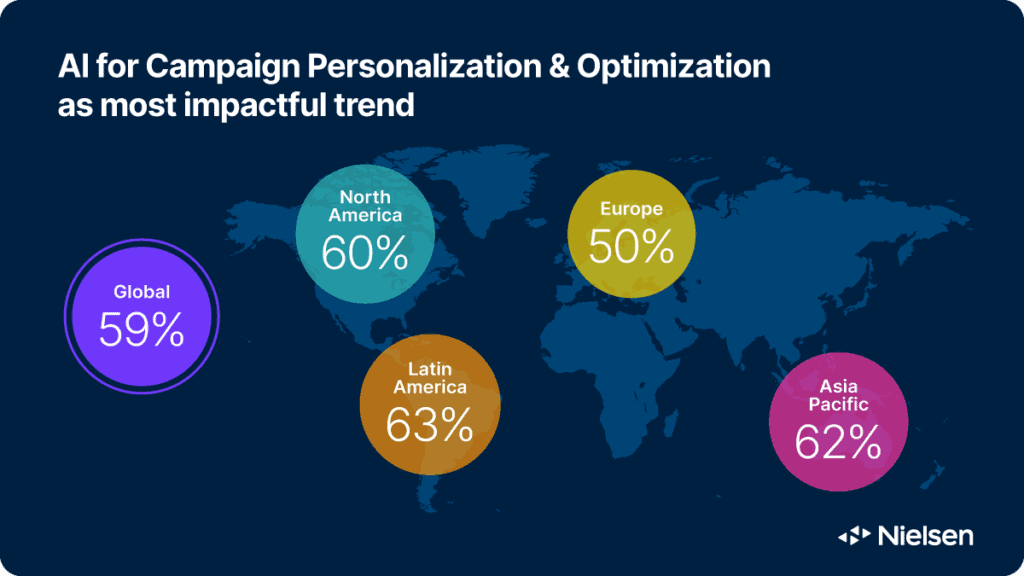
A Nielsen report shows how marketers are expanding the use of AI. In fact, 59% of global marketers agree that using AI to personalize and optimize campaigns is the most impactful industry trend.
That’s because stronger customer engagement starts with timely, relevant content. The more you optimize your content creation process, the better you are at revealing effective strategies, spotting gaps, and improving your overall marketing strategies.
All of this is easier when you have the right marketing tools in place, you know, like the ones AI powers behind the scenes.
Why smarter digital experiences depend on AI in content marketing
Smarter digital experiences rely on timing, relevance, and a clear read on what users want in the moment.
AI in content marketing helps you stay ahead. It analyzes search patterns, on-page behavior, and content performance.
Users expect personalized, intuitive journeys
People no longer just want a good customer experience. That’s so 2015. And we’re in 2025. Customers want an experience that reads their minds a little. They expect smooth pages, relevant content, and paths that adjust as they click.
You can use AI to analyze customer interactions.
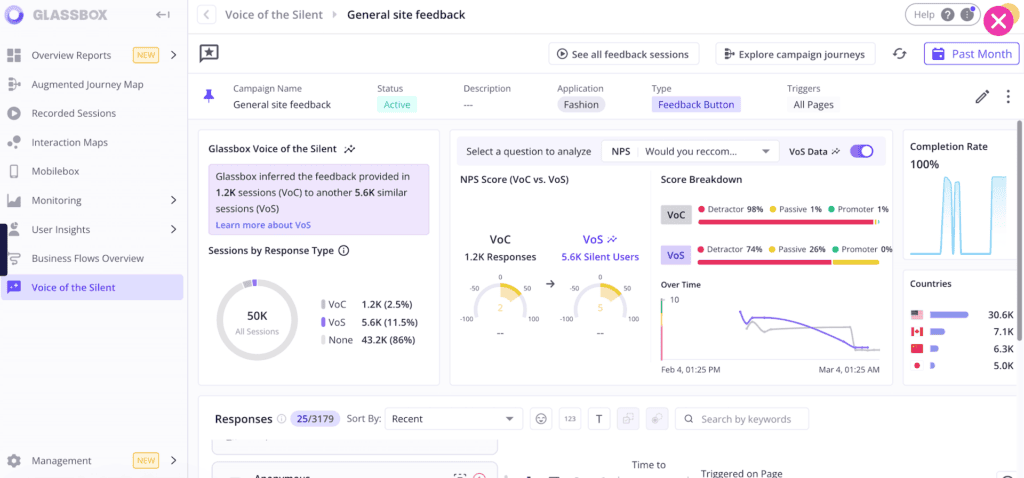
For example, this Glassbox dashboard shows how you can track real user journeys, including every click, hesitation, and drop-off point, so you can see where friction happens and what’s working.
From there, you’ll get the clues you need to create content that feels personal without compromising their privacy.
This leads to higher customer satisfaction, fewer dead ends, and a journey that feels tailored to your target audience.
Content volume and competition make manual decisions inefficient
There’s way too much content flying around for guesswork to keep up. Trying to stay on top of trends manually is a lot to handle.
AI sorts through the chaos, helps with more intelligent audience segmentation, and keeps your brand consistency intact, even when you’re producing more than ever.
Even CRMs like EngageBay now rely on AI to analyze behavior patterns and identify which groups respond to specific types of content. Instead of blasting the same message to everyone, you can match content to the people who will actually care.
A good example of this in action is Sephora’s Smart Skin Scan. In the Sephora app, users can take a selfie, and the tool uses deep learning to detect issues such as dryness, texture, dark spots, and redness in seconds.
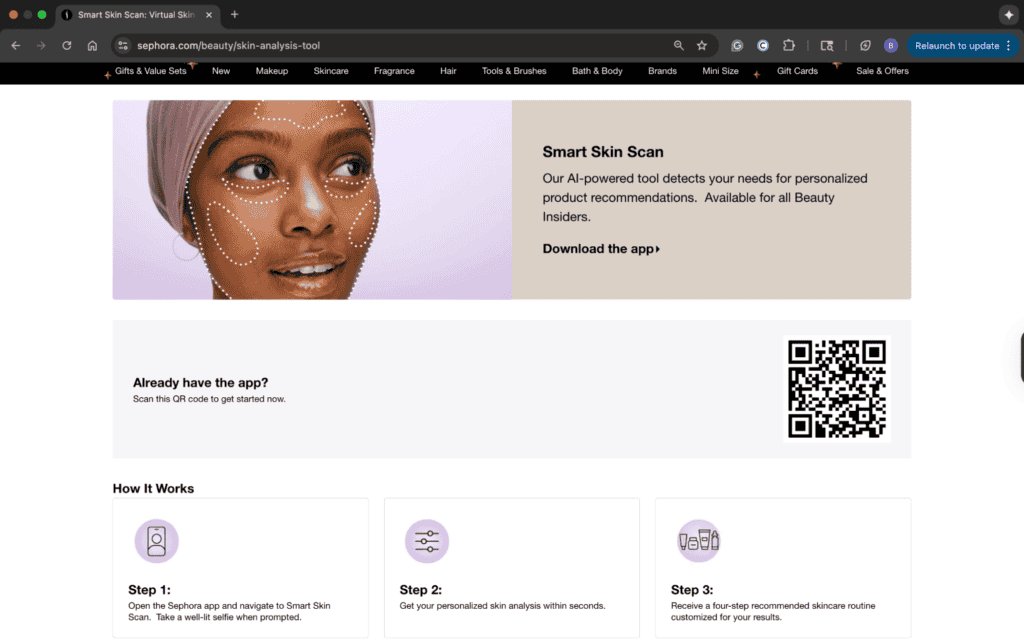
Why does this matter? What does it have to do with AI in content marketing? Smart Skin Scan uses AI to read a user’s needs in real time, then guide them toward the content that helps them most.
Instead of sending everyone the same generic skincare tips, AI sorts through signals to identify each person’s concerns. Then, it pairs them with routines, guides, and product education that match.
Real-time insight is now the differentiator
Timing is everything. The brands winning people over right now aren’t the ones shouting the loudest. They’re the ones using real-time insight to show the right message at the right moment.
What AI in content marketing brings to the digital experience
The internet is crowded. People bounce between tabs, skim content, and decide in seconds if a page is worth their time. AI in content marketing helps you keep up with that pace.
It shows you what type of content users gravitate toward, skip, and search for right before they land on your page.
Audience insight and behavior patterns
Most teams sit on more customer data than they know what to do with. AI helps break it apart so you can see real patterns:
- The pages people read before bouncing
- The topics they come back to
- The sections they scroll past
- The points where they stall
Once you can see those signals, you stop guessing. You create content based on what’s already working – and more of it reaches the right people.
Keyword discovery and topic selection
Topic ideas can come from many places, but AI helps cut through the noise. It identifies search behavior, seasonality, and shifts in interest that you might miss on your own.
The real advantage is speed. You catch what’s gaining traction early – before everyone else jumps on it – giving you time to create content while the topic still has room to breathe.
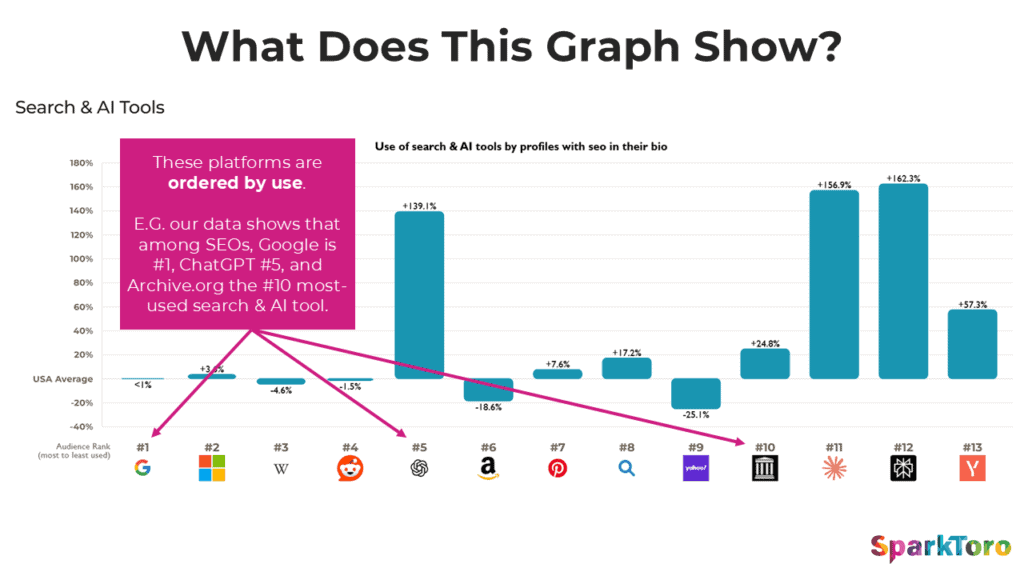
Some tools, like SparkToro, even surface original research in your niche so you can see which conversations are gaining traction.
It also shows which platforms, search engines, and social networks a particular audience uses.
Competitor analysis and opportunity spotting
Looking at competitors doesn’t mean copying them. AI in content marketing helps you see where the gaps are, the questions other brands aren’t answering, or the pages they barely touch.
This helps you choose the type of content that fills a gap rather than repeating what’s already out there.
Content ideas influenced by user intent
Intent is everything. AI can scan search patterns, page flows, and questions real users ask. Then it suggests ideas that align with the problems people are trying to solve.
For example, if it detects users comparing pricing pages, jumping between two product features, or returning to the same tutorial twice, it’ll suggest topics that directly address those issues.
This is a huge step away from traditional content generation, which often starts with keywords rather than real needs. This isn’t to say that keywords don’t reveal key insights about your audience. It’s just that AI goes a bit deeper into what they really need.
Personalized on-page content
Once you know what your audience cares about, AI can help shape your content formats on the fly.
For example, you might swap modules, offer different examples, or recommend related pages based on the user’s path.
A/B testing support and version comparisons
AI makes testing easier by comparing patterns across large sets of readers. It shows which version gets more engagement, which headline keeps people reading longer, or which callout clears up confusion.
You can also use a tool like Paraphraser to rewrite sections during testing without slowing down the process.
Content audits that flag updates and gaps
Every site has pages that are outdated, thin, or losing traffic. AI in content marketing helps spot those pages so you can update them before they slip further.
It indicates which topics are still relevant and which ones could benefit from a refresh. This gives you a clearer map of what deserves attention next.
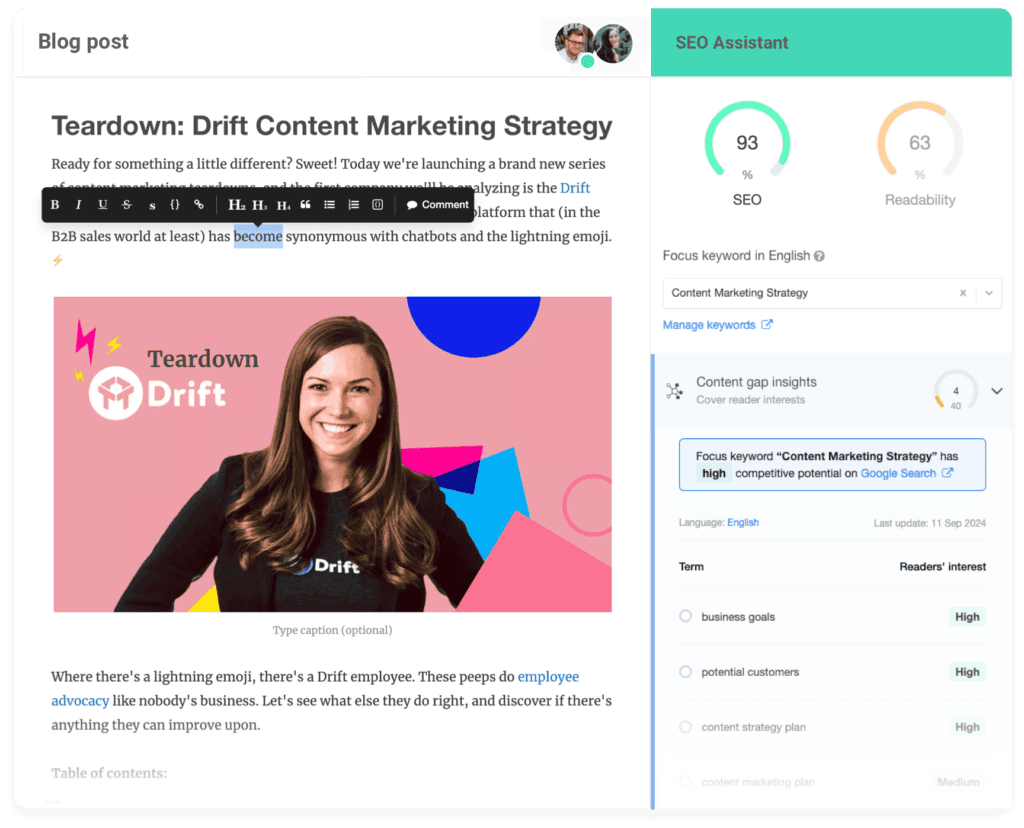
StoryChief is a great tool that uses AI-powered insights in its content audit feature. It tracks metrics such as traffic, engagement, and keyword positions, and provides suggestions for SEO and readability improvements.
How to create an AI-integrated content workflow
Adding AI to your workflow should make your content marketing efforts smoother, faster, and way less chaotic. Teams that want to go beyond individual tools and build truly connected systems often turn to AI workflow automation services to integrate AI across content creation, distribution, and analytics in a way that scales reliably.
Here’s how to fold AI into your day-to-day.
1. Use AI to uncover key audience insights
Trying to understand your audience through scattered comments and loose assumptions only gets you so far.
AI tools scan browsing patterns, search behavior, website analytics, and engagement signals so you can see what people repeatedly care about, not just what they happen to mention.
It gives you a better view of what content to prioritize before you start creating anything.
To get started:
- Use AI tools to pull the top questions people ask across search, social, and support channels for deeper audience research.
- Compare returning-visitor behavior with new-visitor behavior to see which topics generate more traction.
- Set ROI targets (e.g., traffic lift, signups, scroll depth) so you know exactly which insights matter.
2. Identify content themes that match behavior patterns
Once you understand what users gravitate toward, you can create content themes that line up with those habits.
For example, if users binge-watch tutorials, that’s a theme. If they keep searching for comparisons or reviews, that’s another theme.
AI helps you spot these patterns effortlessly.
To get started:
- Use behavior clusters to map which content formats your audience prefers.
- Let AI group search items into themes so you can see which topics deserve long-form content vs. short explainers.
- Tie your themes to business growth goals (e.g., education, acquisition, retention), so you’re not creating content at random.
3. Build content using AI-assisted ideation and refinement
Blank pages are the enemy. AI helps you break the ice so you’re not stuck staring at a blinking cursor.
You still have control. AI just hands you the angles, outlines, rewrites, tighter transitions, and fresh ways to say what you already know. Tools such as AI techpack can also support specialized product-development workflows, helping teams turn ideas into more structured and usable outputs.
For marketing teams that want fully custom AI-powered content systems built to their exact workflows, from ideation to personalization to distribution, partnering with specialized AI development services ensures your AI infrastructure is built with enterprise-grade scalability and seamless integration into your existing marketing stack.
For example, say you’re trying to make videos. Ai makes it easier to script short explainer clips, turn blog posts into video outlines, and automatically generate captions so you’re not spending half the day transcribing your own voice. Some tools even suggest videos or pull key moments to highlight.
Businesses and creators also use AI video generator tools to simplify video production and improve content workflows. These tools help transform blog ideas, educational topics, and marketing concepts into engaging visual content faster, making it easier for teams to scale video marketing efforts without increasing production complexity.
Tools that turn static images into videos, like AI image to video generator, make it even easier to repurpose existing visual assets into scroll-stopping social and marketing clips without new footage or design work.
To get started:
- Use AI to generate 10–15 angles, then narrow them down manually so your voice stays intact.
- Run quick trafts through content optimization tools to catch gaps before publishing.
- Use AI to speed up batch production for multichannel campaigns.
4. Personalize user journeys using behavior-based rules
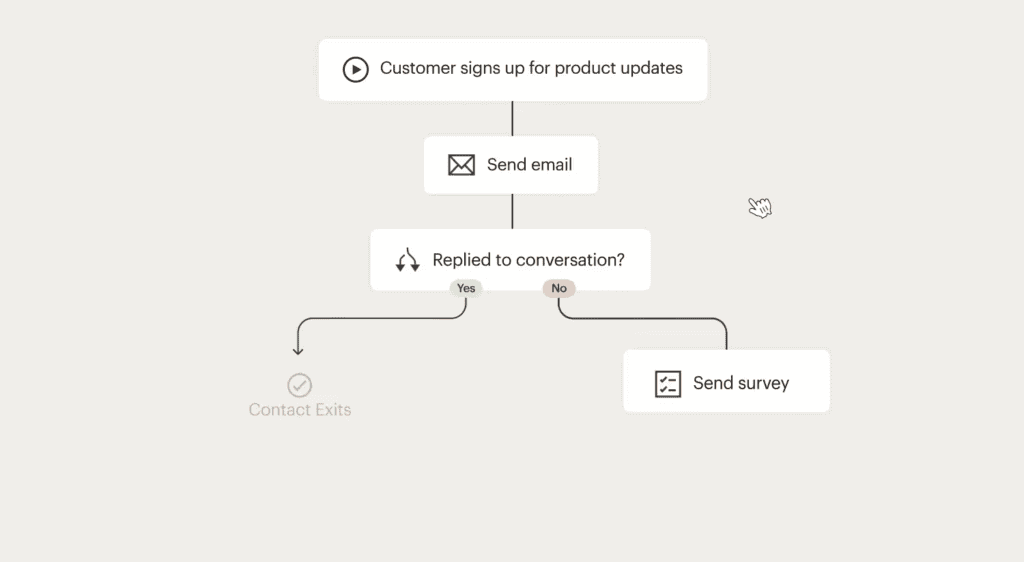
Artificial intelligence also helps determine what people see based on what they’ve viewed, clicked, or shown interest in.
Email marketing platforms like MailChimp use behavior-based rules. These rules help you tailor email paths and site recommendations. That way, each person sees content that makes sense for them.
To get started:
- Trigger content recommendations based on scroll depth or past topic interest.
- Let AI score users by intent, so high-intent groups get fewer steps before conversion.
- Personalize follow-up content based on performance metrics like link clicks or time on page.
5. Optimize for discoverability using AI SEO tools
AI search engine optimization (SEO) tools point out the keywords, topics, and questions that matter right now. They help you refine structure, update older pages, and understand where your content might be falling behind.
It makes SEO feel more manageable and less like you’re constantly catching up.
To get started:
- Use AI to compare your top URLs against competitors to spot content gaps.
- Refresh pages quarterly based on keyword movement and declining impressions.
- Let AI rewrite meta descriptions, schema suggestions, or FAQ blocks to speed up updates.
6. Continuously test, evaluate, and improve with AI analytics
Testing doesn’t have to be tedious. AI tools compare variations, spot trends in user behavior, and highlight friction points you might overlook.
If you want stronger behavior insights without relying on heatmaps, many Hotjar alternatives now use AI to uncover deeper patterns.
To get started:
- Run small A/B tests weekly instead of waiting for big quarterly experiments.
- Let AI monitor micro-interactions (e.g., hover time, rage clicks, hesitation points).
- Use AI summaries to shortcut long analytics and get right to the next improvement.
Bridging AI into your content workflow the right way
AI isn’t going to replace your process. But it will give you better signals, clearer direction, and less guesswork.
Start using it to understand what people want and how they move through your content. This makes for a more frictionless, seamless digital experience.
Want help turning these insights into real growth?
Book a call with uSERP today to see how a smarter content creation process can support your goals.