





Have you noticed that brands are all starting to sound the same?
With so much generic content churned out via AI or copy-paste, many brands sound beige and boring. And if leads and customers don’t feel excited about a brand, why would they sign up to learn more or buy something?
That’s why brand differentiation must be a top priority going forward. And it’s also why you need a killer brand style guide.
In this article, I’ve gathered brand style guide examples to inspire you.
I’ve also put together several straightforward steps you can follow to create your own style guide.
Bookmark this article now, and forward it to your marketing manager. Then read it and implement the steps.
Let’s get started.
Highlights
- A brand style guide is a documented system that ensures consistency in how a brand looks, sounds, and behaves across all channels — covering elements like logo usage, color palettes, typography, tone of voice, and image guidelines.
- Brand consistency drives measurable business results — companies with strong, consistent branding can see revenue increases of up to 23%, making a style guide one of the highest-ROI investments a marketing team can make.
- A complete brand style guide covers five core components: brand strategy (mission, vision, target audience), brand voice and tone, visual identity (logo, colors, fonts), image and multimedia guidelines, and writing dos and don’ts.
- Style guides should be living documents — start simple (even a Google Doc works), share it with all employees and contractors, and update it at least once a year or whenever the brand undergoes a significant shift.
- Both large and small businesses benefit from brand style guides — they help any organization present a professional, cohesive image that builds recognition, trust, and long-term customer loyalty.
What is a brand style guide, and why is it important?
A style guide is basically a brand manual. It outlines the brand guidelines that marketers, designers, and creators must follow to maintain a consistent brand identity across all channels.
Some elements might include:
- Brand experience guidelines
- Copywriting dos and don’ts
- Brand voice guidelines
- Logo usage rules
- Media guidelines
- Grammar rules
- Brand colors
- Brand fonts
Having a brand style guide is important because it helps you establish a consistent brand identity. When you have a consistent brand image, you’re easier to recognize.
CI Hub shows that consistency also directly impacts growth. Brands with strong consistency can achieve revenue gains of up to 23%, making a well-documented style guide one of the most cost-effective ways to strengthen brand performance.
Benefits of having a brand style guide
Your brand’s success heavily depends on the kind of content experience it gives people, according to Bynder’s State of Content Report,
Here’s what can happen when you implement a brand style guide:
Establish a brand personality
A style guide clarifies how your brand should sound and behave. Whether your brand personality is bold, reassuring, or playful, consistency helps the right audience recognize and trust you.
Build brand awareness and a better UX
Having a brand style guide also helps with generating brand awareness and enhancing customer experience. When your logo, digital colors, and voice are unified, your brand becomes recognizable.
This helps set the tone for how customers consistently experience your business.
Establish brand loyalty
Brand recognition helps your audience develop confidence in your brand. When customers know what to expect from your brand, trust can grow naturally.
Pause for a moment and think about your favorite brands. I bet you’re picturing their colors or logos as you’re reading this. Or thinking about what you usually buy from them. This instant response shows how familiarity influences loyalty and keeps people connected to your brand
3 Brand style guide examples
Now that we’re clear on the basics, here are some top brand style guide examples to inspire your own:
NASA
NASA’s brand style guide is absolutely gorgeous. I recommend heading to it and scrolling down to see how immaculate it is. (That said, no need to get this fancy with yours.)
It also includes a table of contents, shown below, so designers can click to quickly navigate to the section they need.
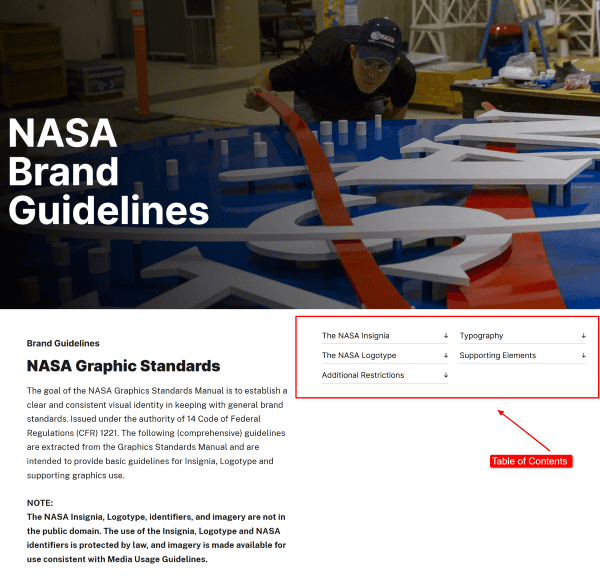
I’ve noticed that this style guide includes logo and typography guidelines, but no copywriting or tone-of-voice guidelines. (They might have a different style guide for their written content marketing brand assets.)
You can choose how you want to structure yours. For example, you might want a visual brand guide or a brand book for designers. And a separate copywriting/content writing guide for SEO teams and writers.
If you combine both and have a lot of pages, add a clickable Table of Contents to make it easier to sort through.
The Purdue University Fort Wayne Brand
This next style guide by Purdue University in Fort Wayne is super detailed.
With a PDF that’s 81 pages long, they definitely know how they want to look and sound. ✅
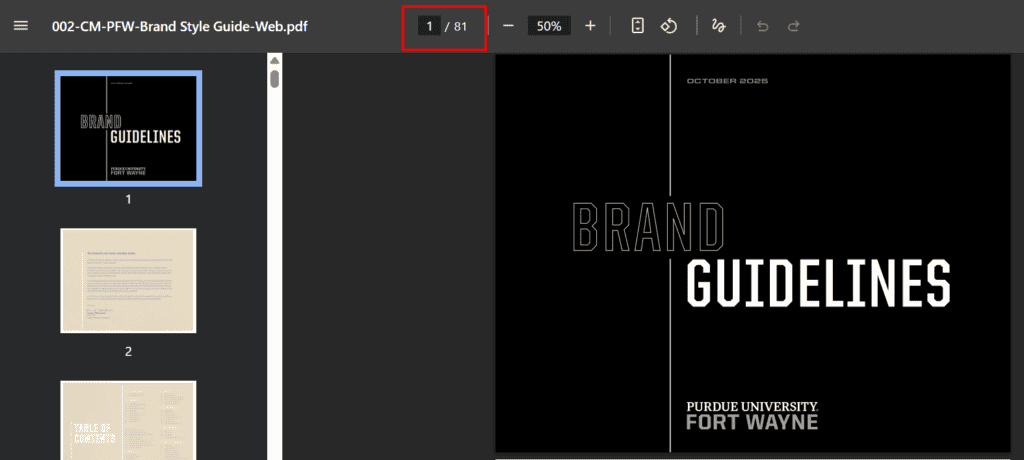
Their style guide includes:
- A “brand in action” section with extensive branding resources
- Rules about graphic elements
- A brand strategy section
- Photography guidelines
- Brand color usage guidelines
- Brand identity section
- Brand voice details
- Typography rules
It also includes an introduction, which I think is smart, given how robust this style guide is:
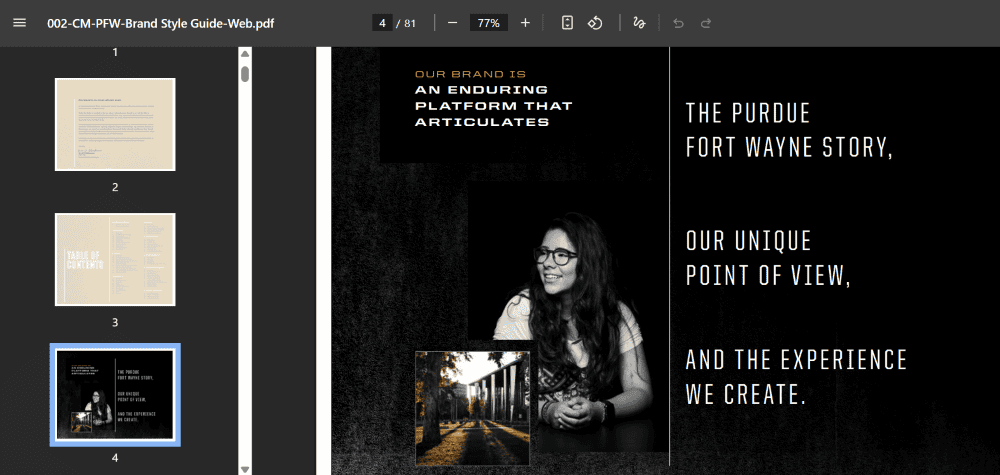
Below, I’ll show you one more peak inside of this monster, but feel free to give it a quick glance now.
A List Apart
The next style guide is for the online magazine A List Apart. And it’s basically an everything-you-need-to-know cheat sheet for writing and formatting web content.
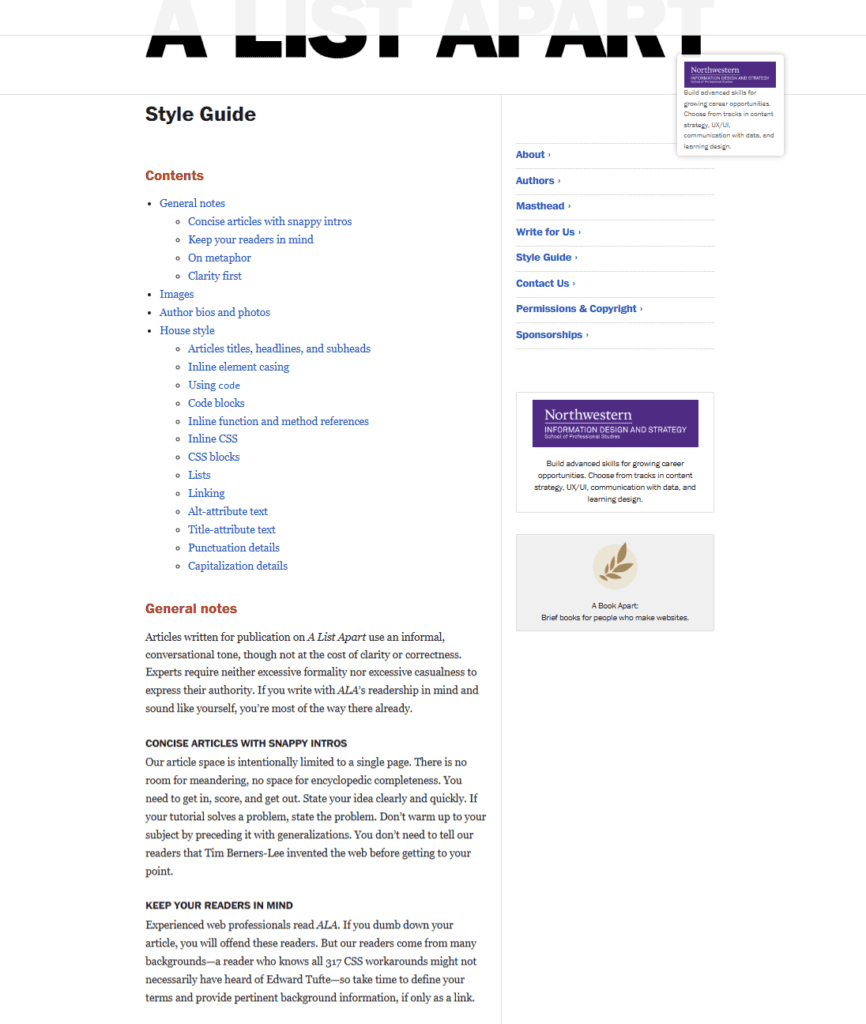
It tells you how to sound clear and friendly. But it also ensures your code, images, headings, and punctuation all work together.
Its sections cover:
- Their extensive house style includes guidance on formatting articles, using code, and linking properly
- General notes, like writing concise articles with snappy intros
- Rules about author bios and photos
- Image guidelines
However, it doesn’t include logo or brand color guidelines.
How to create your own content style guide
While the examples above look really polished, you can always start with a simple style guide and edit it later. The best style guides are living documents that evolve as the brand does.
Here’s a quick template I made in Google Docs to show you how easy this is to set up:
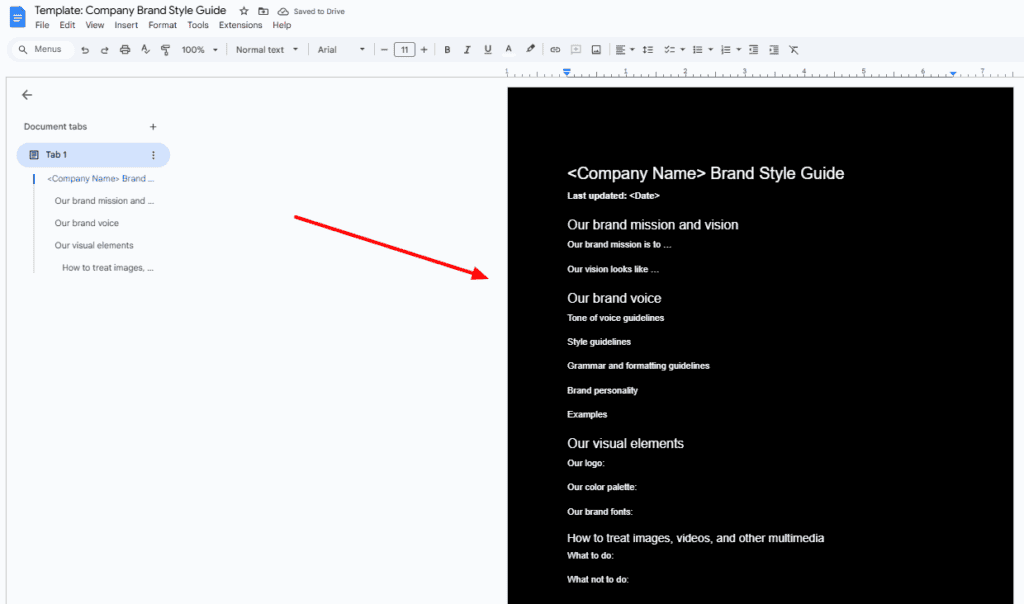
(Image by Ioana)
If you’d like to get fancier, outsource your brand building doc to a designer or creative copywriter. Just give them your brand guidelines, images, and other requirements.
Here’s how to create your brand guidelines in five steps.
Step 1: Get clear on your brand strategy first
The first step is to develop a foolproof brand strategy before creating your style guide, so you’re crystal clear on your brand image.
Make sure it includes:
- Your brand mission and vision statement
- Your target audience and buyer personas
- Your brand values and personality
- Your brand positioning strategy
- A competitive analysis
If you already have a brand strategy, head to the next step. Otherwise, pause and do this first — then head to step two.
Step 2: Include your brand mission, vision, and target audience
Explain what your brand does and your long-term vision.
In other words: Who do you help and why? What do you hope your brand will be known for 10 years from now? What do you hope your brand achieves by then?
Here’s LinkedIn’s mission and vision:
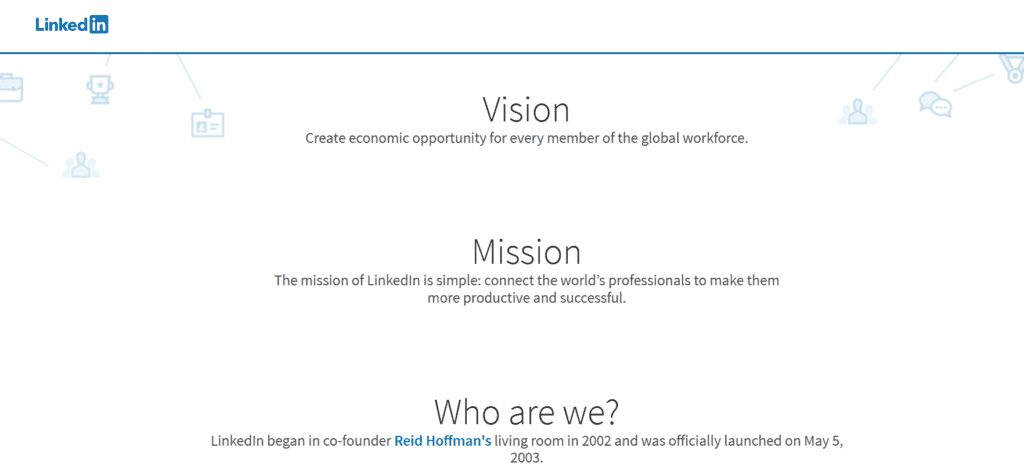
Also, make sure to list your target audience and any customer groups you serve within it.
For example: “We help project management teams shave 20 hours off their workweeks. Our customer groups include: Small business project managers, mid-size business project managers, and enterprise project managers.”
Step 3: Describe your brand voice
Add your tone of voice guidelines, style guidelines, and grammar and formatting guidelines.
For example:
- Use Writer.com to check for grammar mistakes and achieve an 85-90% score
- Conversational expert is our tone of voice
- Use AP style rules
When formatting long-form content, like blog posts, brands typically use:
- H1s: For titles
- H2s: For main ideas
- H3s: For subtopics
- H4s: For sub-subtopics
- And bulleted lists to break up longer sections
Be sure to also include writing tips to help your copywriters and content writers focus their pieces.
Here’s an example from The Purdue University Fort Wayne Brand:
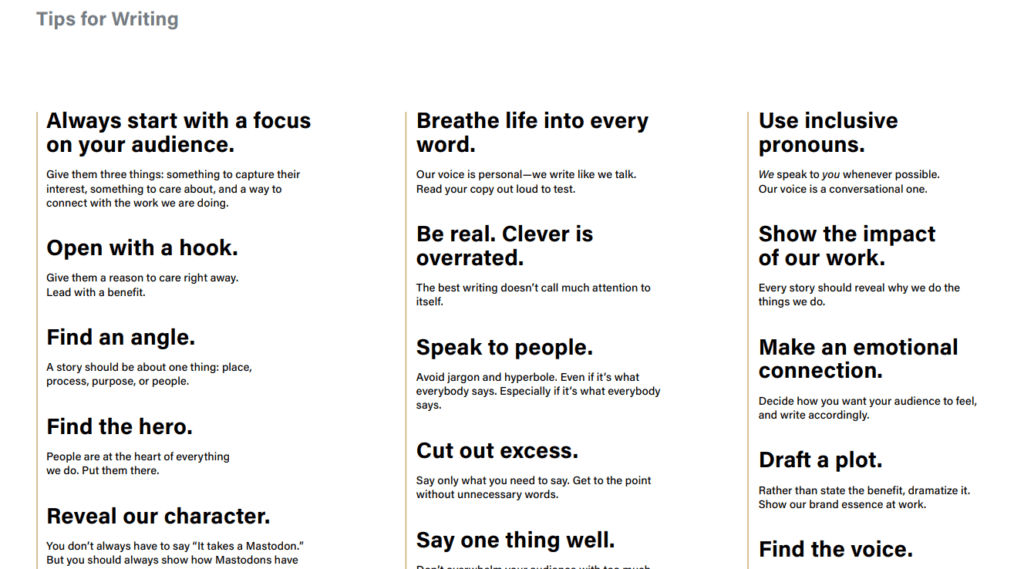
If your team writes blog posts often, consider also including a topical content map with links to your pillar pieces.
You also need clear examples that showcase your brand personality.
Is it witty and cheeky? Educational and inspiring? Conversational and informed? Show your team.
Here’s what I mean:
➜ Witty and cheeky:
“Feeling overwhelmed? Same. Let’s fix that before your coffee gets cold.”
➜ Educational and inspiring:
“You have the skills to grow. You just need the right roadmap, and we’re here to guide you.”
➜ Conversational and informed:
“Use our dashboards to see what’s working, track your progress in real time, and spot what you need to improve next.”
I also like to include a do’s and don’ts section to help guide marketers even further:
For example:
Do: Use simple, direct language that sounds like a real person.
Don’t: Use jargon or long, formal sentences that slow readers down.
Do: Match your tone to our brand personality (witty, inspiring, or informed).
Don’t: Mix tones in the same message or switch styles without reason.
Do: Give clear guidance that helps users take the next step.
Don’t: Leave people guessing about what to do or why it matters.
*Pro-Tip: Include an SEO checklist that breaks down how to write content with SEO in mind. This is especially important for guest post authors and SEO content teams. (You can also include a link to your dedicated SEO optimization tool with instructions for logging in.)
Step 4: Describe and include your visual elements
Add your logo design, color palette, and brand fonts.
Here’s an example by Tailor Brands:
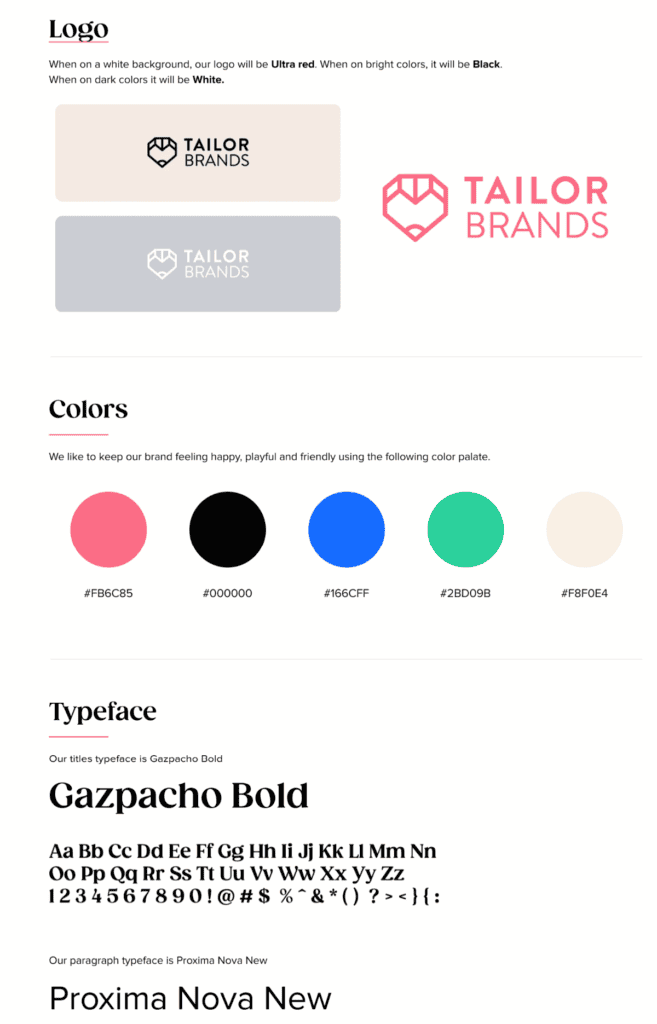
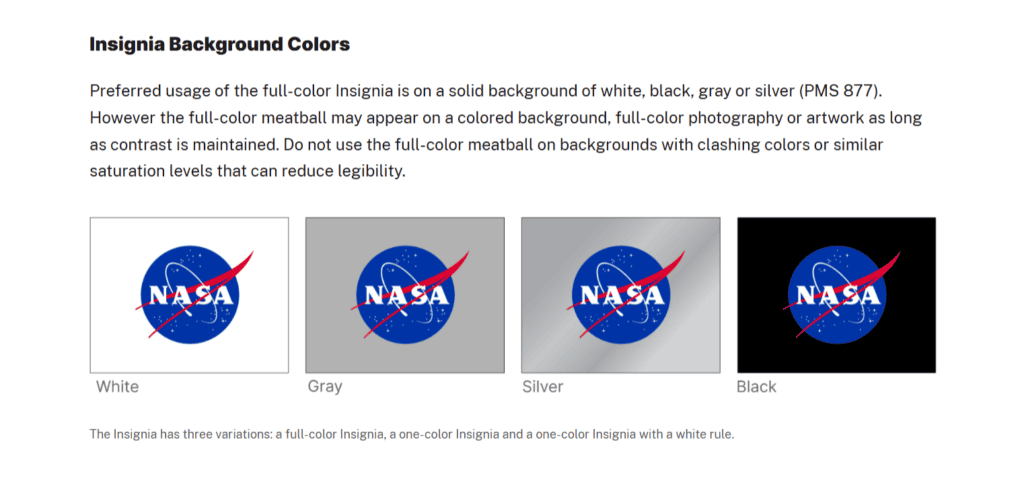
If you’re specific about color variations, include that, too.
Here’s a look at NASA’s policy on how to handle logo color variations:
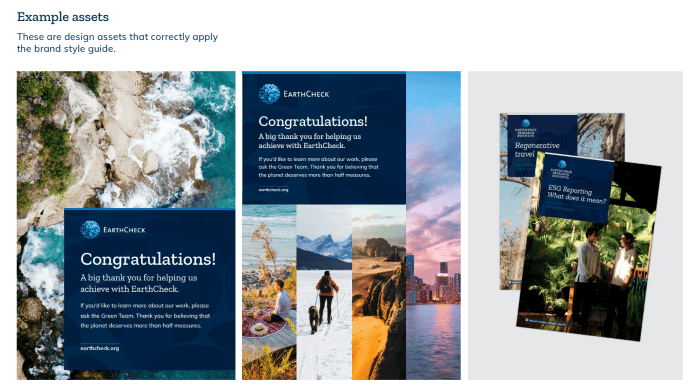
Make sure to include complete visual examples or links to downloadable assets, so it’s obvious what look and feel you’re going for.
Here’s an example by EarthCheck:
Step 5: Explain how to treat images, videos, and other multimedia
Give visual examples of what to do and what not to do.
As part of these guidelines, you should clarify technical boundaries, such as whether it is acceptable to use an image enlarger to upscale low-resolution pictures or if only original high-definition files are permitted.
Starbucks is highly specific. It explains how to style whipped cream, cinnamon, and dark crema in its visuals. It also explains not to use visuals with loose ingredients, crumbs, or bites. (See below.)
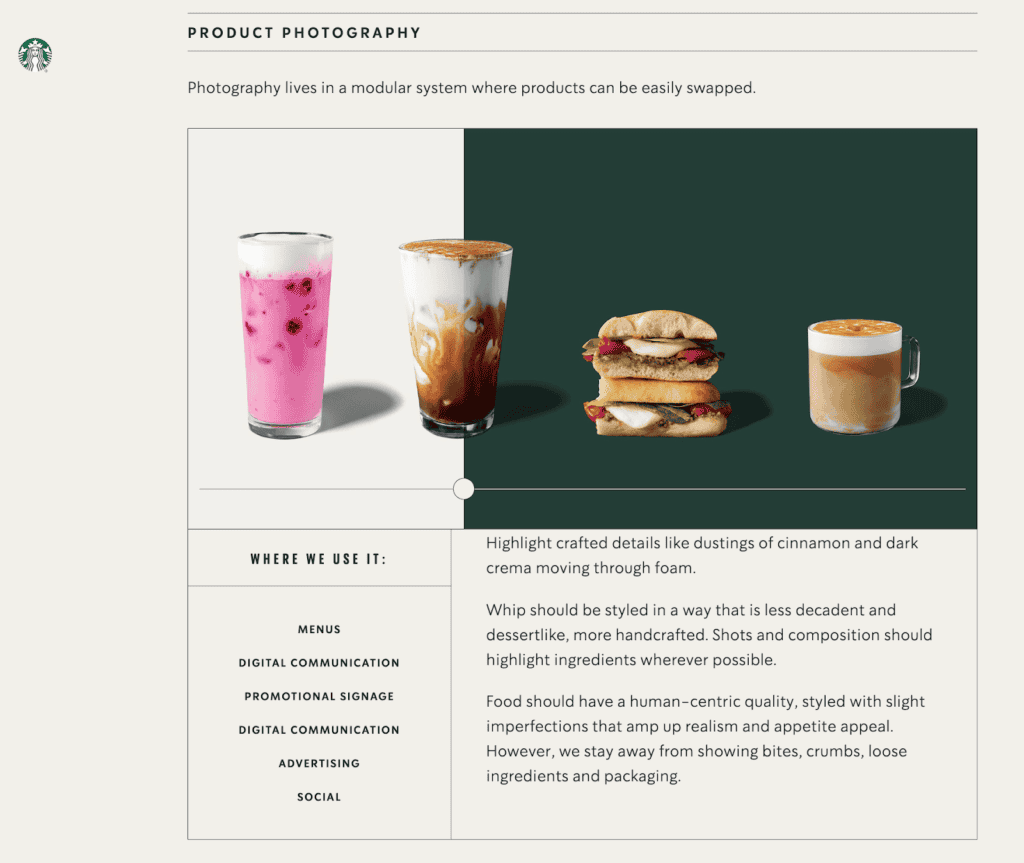
*Pro-Tip: If your brand relies on a lot of product visuals, consider having a modular system like Starbucks does. It’s super helpful because designers can easily swap out products.
Be sure to also include any video creation or editing expectations you might have. (And other rules you have about multimedia assets, including GIFs, memes, or infographics.)
Distribute your new brand style guide
Make sure to give your brand style guide to any contractors, employees, and CMOs helping you with your marketing. You can use it during training, onboarding, and more. It’s super practical.
Mine’s in a Google Doc and saved to Google Drive, so it’s easy to share with anyone I work with. But you can also create a Notion site for it, a more elaborate PDF, or a private webpage on your website.
Feel free to start simple and build on it over time. (And remember to include a Table of Contents if your guide has multiple pages.)
Wrap up
And there you go! Those are some of the best brand style guides I’ve come across.
Remember, when creating your own, you need to:
- Get clear on your brand strategy.
- Include your brand mission, vision, and target audience.
- Describe your brand voice.
- Describe and include your visual elements.
- Explain how to treat images, videos, and other multimedia.
If you need help with creating a style guide, conducting market research, or developing an SEO content plan, reach out. Our expert marketers and SEOs would love to help you create a strategy to attract the right leads and customers.
Book an intro call with uSERP now.
To your immense success!
FAQs
What is a brand style guide?
A brand style guide outlines how your brand should look and sound, ensuring consistency wherever you appear. If you have a business, you need a brand style guide! And so does everyone on your marketing team.
What should be included in a brand style guide?
In your brand guidelines, include your logo rules, colors, fonts, imagery style, tone of voice, and quick examples of what to do and what to avoid.
Can small businesses benefit from brand style guides?
Yes, absolutely! Brand style guides help businesses, including small ones, present a professional image. It’s how brands stay cohesive, stand out, and build customer trust.
Are there digital tools to create brand style guides?
Yes, you can build guides with tools like Frontify, gamma or Canva. They offer templates and easy-to-share formats. These tools also make it easier to keep your brand’s visual and messaging elements consistent across different platforms.
(Make sure to check out these tools for website content creation.)
How often should we update our brand style guide?
Review your brand guidelines at least once a year. (Or anytime your brand or market shifts in a big way.)
Can a brand style guide include tone of voice?
Yes, many brand guides include messaging rules so your brand sounds consistent across emails, ads, blogs, and every other touchpoint.
How detailed should a brand style guide be?
Keep it clear and detailed enough to avoid confusion, but simple enough for people to use.
Can brand style guides help with marketing campaigns?
Yes, absolutely. Brand style guides help keep all campaign content aligned with your brand, making your marketing sharper and more consistent.