





Before reaching out to a lawyer, most people search Google. Common queries include “divorce attorney near me” or “personal injury lawyer consultation”. They sift through the initial few legal firms to select one. Unless your firm appears on the first page, you are missing out on a massive population of prospective customers.
Legal services are among the most competitive search queries. One customer is worth thousands of dollars in revenue.
Here comes the crucial role of search engine optimization for law firm websites. Ranking high on Google translates to a consistent flow of inbound requests without the need for pay-per-click.
This guide covers the SEO techniques that matter most. From local search to technical basics, you’ll find steps you can act on right away.
Highlights
- Legal SEO is dominated by local intent. Most clients search for lawyers using location-based queries like “personal injury lawyer near me.” Optimizing a Google Business Profile and creating dedicated location pages are the highest-impact tactics for law firms targeting nearby clients.
- Organic search is a cost-effective alternative to paid ads. High-competition legal keywords can cost $50–$300 per click on Google Ads. SEO allows law firms to generate consistent inbound leads without ongoing ad spend, making it a more sustainable long-term channel.
- Content must match where the client is in their decision journey. Legal searchers move through three stages — informational (researching options), local (finding a nearby attorney), and transactional (ready to book). Effective law firm SEO targets all three with the right content type: guides and FAQs for early-stage searchers, optimized service and location pages for those ready to hire.
- Backlinks from authoritative legal sources significantly improve rankings. Links from directories like Avvo and FindLaw, bar association websites, and legal media outlets signal trustworthiness to Google. Quality matters more than quantity — a single high-authority link outperforms hundreds of low-quality ones.
- Technical SEO and tracking are non-negotiable foundations. Law firm websites must be mobile-friendly, load in under three seconds, and use HTTPS. Tracking metrics like phone calls, form submissions, and keyword rankings — not just traffic — helps firms identify which pages drive real client inquiries.
Quick answer: How lawyers can get clients from Google
Lawyers attract clients on Google through search engine optimization of their websites. Local organic search visibility, legal obligations, and credibility through backlinks and reviews help them reach target clients.
SEO helps law firms show up when someone searches for “personal injury lawyer near me” or “divorce attorney consultation.”
According to a Fraud Blocker research, 19.4% of the top 5,000 most costly Google Ads keywords are legal keywords.
Why SEO matters for law firms
Smaller firms usually can’t compete on ad spend for high-cost legal keywords. SEO works best when it focuses on local visibility, niche services, and high-intent searches rather than broad terms.
When an individual has a legal issue, such as a car crash, a divorce, or a DUI, they need information first. Google is their first stop.
Legal keywords are also the most highly competitive and costly of all the paid search keywords. Keywords such as “personal injury attorney” or “criminal defense lawyer” may cost $50- $ 300 per click on Google Ads. That renders organic SEO a cost-effective strategy for long-term lead generation.
Firms on page one get most of the calls. The top three results alone capture over half of all clicks. The second page? Only 1 out of every 100 searchers makes it there.
Here’s what potential clients are searching for right now:
- “Personal injury lawyer near me”
- “Family lawyer consultation”
- “Criminal defense attorney Florida”
- “How much does a divorce lawyer cost?”
- “Immigration attorney free consultation”
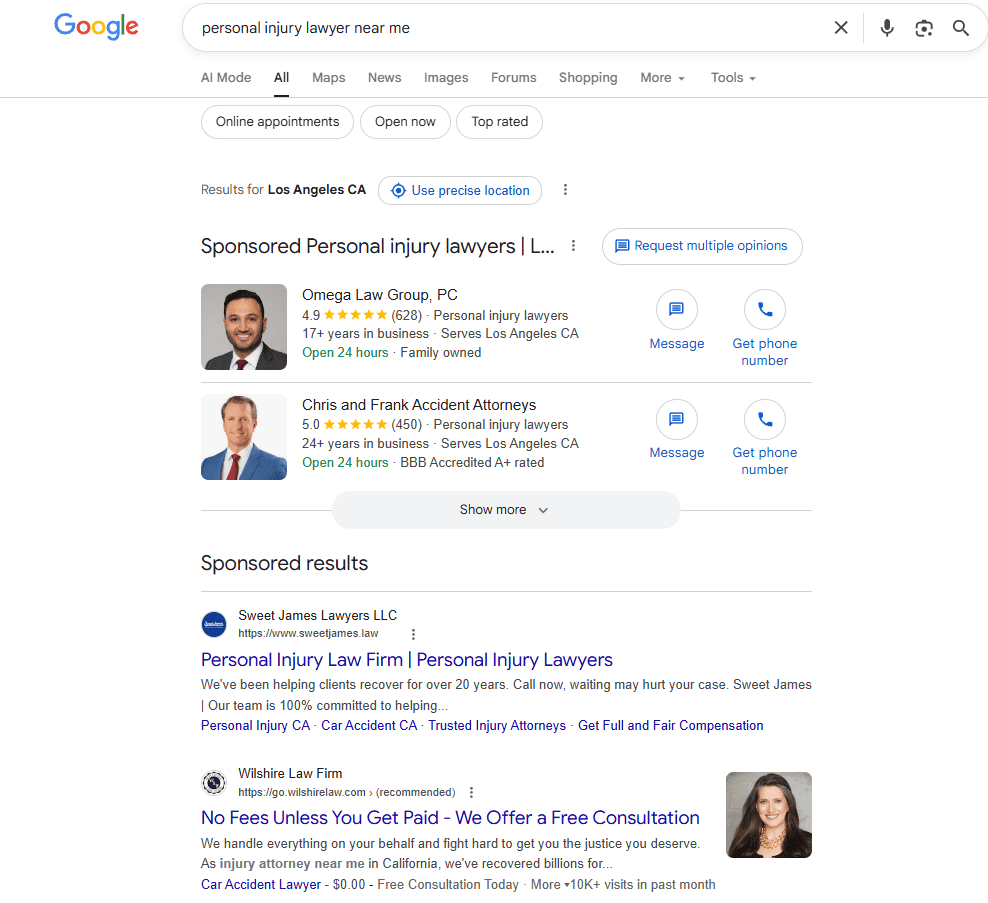
Each of these searches represents a real person with a real legal need. You can’t miss a real opportunity if your firm is ranking well.
How potential clients search for lawyers online
Not every search is the same. People look for legal help in three distinct ways, and a smart SEO strategy targets all three stages of that journey.
Informational searches
At this stage, someone is researching their options. They are not ready to hire yet. They want to understand their situation first. When users do informational searches, they look for answers before consultations. Such search queries may also include long-tail keywords:
- “What to do after a car accident”
- “How much does a divorce lawyer cost”
- “What is the statute of limitations in Montana”
High-quality content, blog posts, guides, and FAQ pages pull in this traffic. They put your firm in front of people before they are ready to hire.
Local searches
Here, the person knows they need a lawyer and wants one nearby. The following location-specific keywords carry high intent and convert well.
- “Personal injury lawyer Chicago”
- “Best DUI attorney near me”
- “Family solicitor San Francisco”
Ranking here requires a strong Google Business Profile and well-optimized location pages on your site.
Transactional searches
These searchers are ready to act. They want to contact someone now. Search queries and keywords may look like this:
- “Hire an accident lawyer”
- “Free legal consultation”
- “Book a lawyer appointment”
Optimize your service pages and contact forms for these searches. Clear calls to action and fast load times make a big difference here.
Local SEO for lawyers: The most important strategy
Most legal work is local. Clients prefer to see an attorney in person, someone who is familiar with the local courts and processes. That is why local SEO is the most influential strategy for most law firms.
Optimize your Google Business Profile
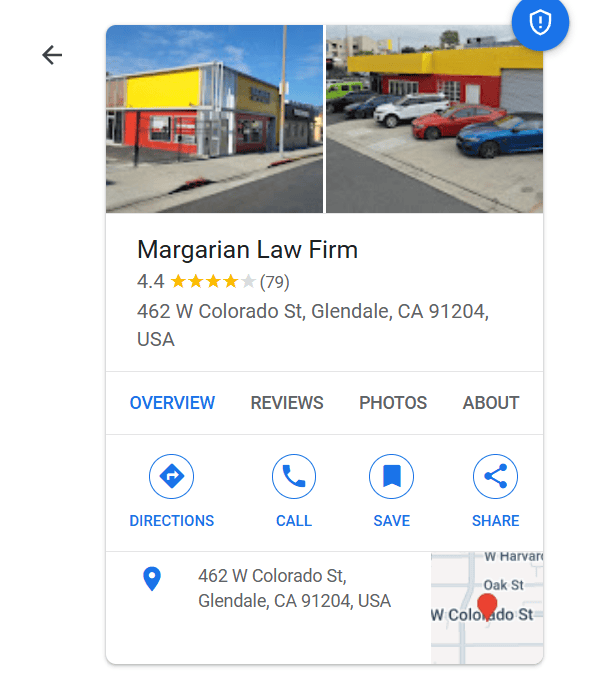
Google Business Profile controls how your firm appears in local search and Google Maps. It is what a potential client notices first. Be sure that yours is complete and true.
- Add an effective business statement about your major areas of practice
- Mention the revised business hours, including closing and holidays
- Include firm name, address, and phone number, as on your site
- Add images of your office, staff, and reception
- Clearly state areas of practice
Well-profiled companies are more likely to appear in the Google Local 3-pack. The three highest results in the map feature take up most of the mobile search results.
Collect client reviews
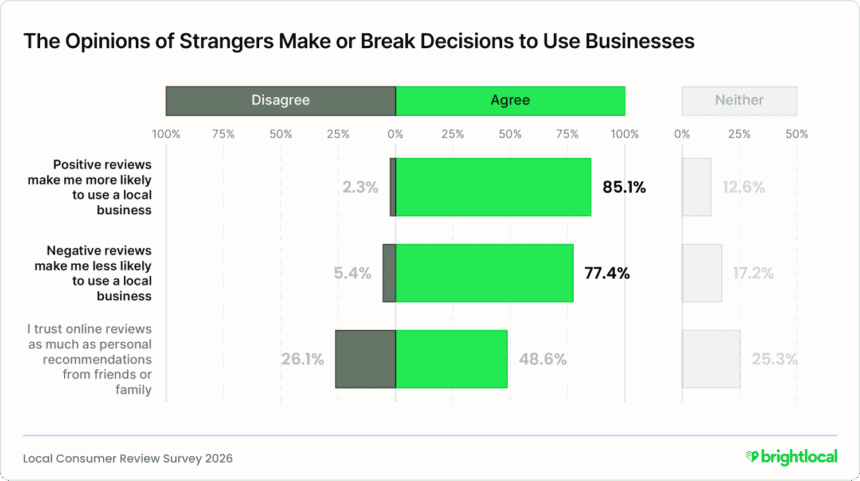
Client reviews influence three key areas:
- Increase the chances of clicks on your listing over the competitor
- Build trust in potential customers
- Improve local ranking
According to BrightLocal’s Local Consumer Review Survey, about 49% of consumers trust online reviews as much as personal recommendations.
Request your clients to leave a Google review after a good result. Make it plain and simple. A single direct link to your review page makes it easy to follow through.
Use location pages
If your company operates in several locations, create separate pages for each location. This tells Google which geographic searches your firm belongs to.
Examples of effective location pages:
- “Personal Injury Lawyer in Houston”
- “Criminal Defense Attorney in New York”
- “Family Lawyer in LA”

Every page needs locally relevant information. Not the same content as your main practice area page, with the city name replacing the main office name. Provide information about local courts and local or regional law. Add the history of your firm serving that community.
Location pages only work when each one is unique. Repeating the same content with a different city name weakens rankings. Each page should include local courts, services, and a real presence in that area.
Keyword research for legal SEO
Keyword research helps you know precisely what your prospective clients are searching for on Google. It determines every content management and optimization choice you make.
Types of legal keywords to target
Practice area keywords are the basics. They are the direct service-based terms that clients use when they are aware of the type of lawyer that they need:
- “Employment law solicitor”
- “Personal injury lawyer”
- “Immigration attorney”
- “Divorce lawyer”
Location keywords will use your practice area in combination with a city or region. It will capture high-intent local searches. Some examples are “criminal lawyer Alabama” or “personal injury lawyer Texas.”
The question keywords may resemble informational searchers at the beginning of their decision-making process. Examples: “What is the cost of a lawyer?” or “Do I need a lawyer for a truck accident?” They are effective on blog materials and the FAQs sections.
Tools for keyword research
You don’t need to guess what clients are searching for. These SEO tools show you real search volume and competition data:
- Google Search Console — shows which queries are already bringing people to your site.
- Google Keyword Planner — free and reliable for volume estimates.
- SEMrush — excellent for tracking rankings and spotting competitor keywords.
- Ahrefs — detailed keyword difficulty and competitive analysis.
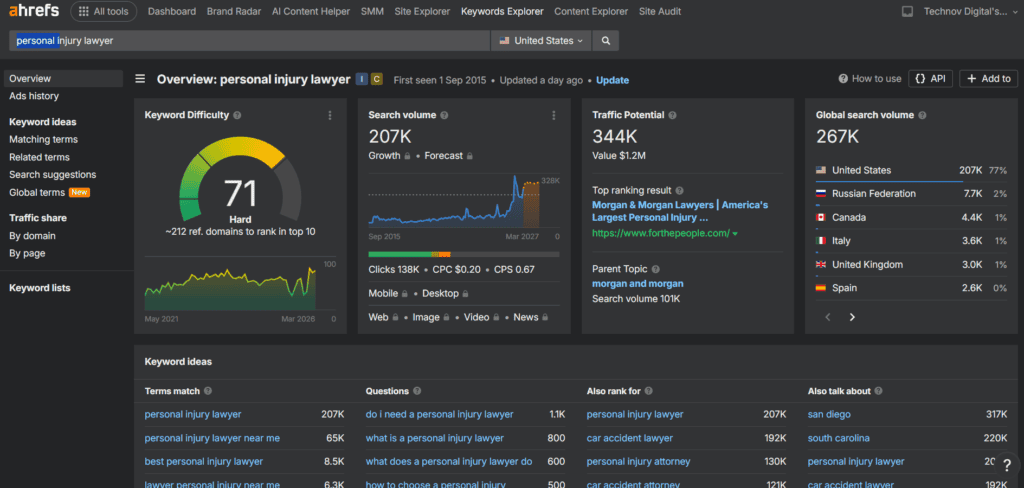
Focus on keywords with strong commercial intent terms that suggest someone is actively looking to hire, not just browse.
Content marketing for law firms
Good content serves two functions. It attracts search traffic and establishes the trust that converts visitors into clients. Legal searchers are usually anxious. Explicit, authoritative information will get them a long way in outreach.
Educational legal guides
Long-form articles with informational searches make your company a trustworthy source of information. The pages can rank for a wide variety of related keywords and drive traffic over a long period.
Strong examples include:
- “The Divorce Process Explained: What to Expect at Every Stage”
- “What to Do After a Car Accident: A Step-by-Step Guide”
- “Your Rights If You’re Arrested: A Plain-English Guide”
Write these guides for real people, not other lawyers. Avoid excessive legal jargon. Use headers, bullet points, and short paragraphs to make them easy to scan, and consider offering downloadable resources where clients can request signatures on PDF documents when formal review or approval is needed.
FAQs pages
FAQ pages answer questions that prospective clients are already asking Google. They also fit well into featured snippets or the boxed answers at the top search results pages.
Consider addressing:
- What’s the difference between a solicitor and a barrister?
- When should I contact an attorney after an accident?
- How long does a personal injury claim take?
- What are the costs of hiring a lawyer?
Case studies and legal insights
Try to include experience and results in case studies (written in compliance with the legal advertising rules). A concise story of a complicated case without client data will let your potential clients know what it is like to work with your firm.
Besides your own site, featuring on sites such as LawFirm.com puts your firm in front of clients who are actively seeking legal services. It is an add-on visibility channel to complement your local SEO.
Some legal sites and journalists also cover legal commentary and local court cases. Once your content is aligned with search intent, the next step is building authority signals that help those pages rank. That brings us to backlinks.
Backlinks: Building authority in legal search
Backlinks refer to links from other websites to yours. It remains one of the most crucial ranking signals at Google. Think of backlinks as votes of confidence. The more quality sites link to you, the more Google trusts your site — and the higher you rank.
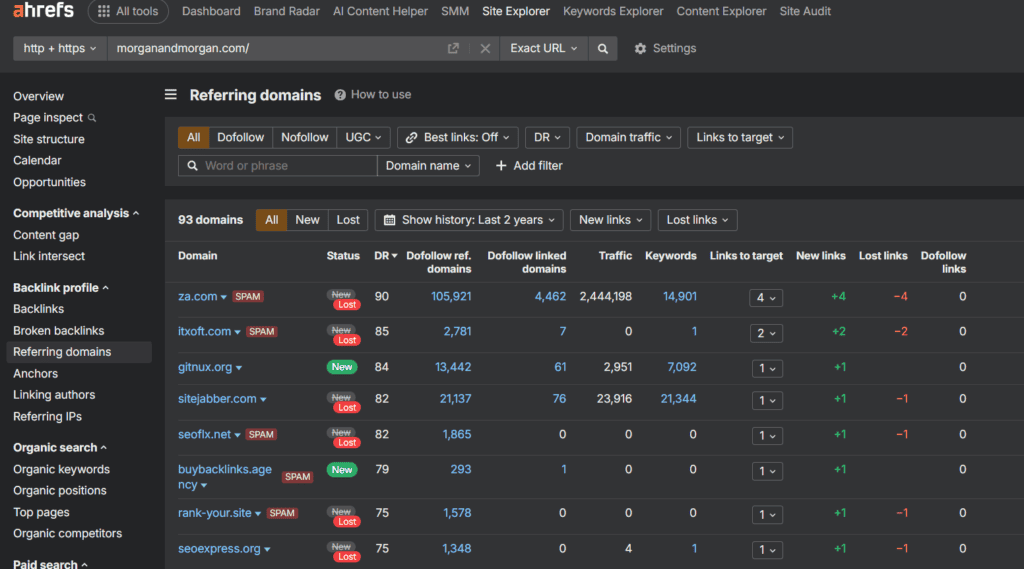
How law firms can build quality backlinks
Here are some link-building strategies for local law firms:
- Local business partnerships — co-marketing with complementary local businesses, such as accountants, financial advisors, and medical practices, can produce natural, relevant links.
- Legal directories — reach out to sites like Avvo, FindLaw, and Justia, which pass authority and also send direct referral traffic.
- Original research and data — publish original surveys or studies that other sites in your niche want to reference and link to.
- Guest posts on legal blogs — contributing expert articles to respected legal publications earns both links and visibility.
- Media mentions — comment on legal news stories and position your attorneys as expert sources for journalists.
One link from a respected legal media outlet or bar association website can significantly boost your rankings. Focus on quality over quantity! 100 high-quality links are better than 1,000 low-performing site links.
Technical SEO basics for law firm websites
Even the best content will not work when your site experiences technical issues. Technical SEO ensures search engines can locate, crawl, and index your pages while also improving the user experience for potential clients.
Mobile-friendly design
Most people conduct local legal searches through smartphones. Google applies the principle of mobile-first indexing. When ranking the pages, it uses the mobile version of your site.
A law firm website that performs well on desktop but fails on mobile will lose a lot of ground. Use Google’s Mobile-Friendly Test tool to test your page and address any performance issues.
Fast page speed
Slow pages annoy users and can signal poor quality to Google. Google research states that 53% of mobile users give up on a page that fails to load within three seconds. Tools like Google PageSpeed Insights help track particular fixes, such as image compression, browser caching, or the use of unnecessary scripts.
Secure website (HTTPS)
One of the proven ranking factors of Google and a fundamental trust signal is HTTPS. Upgrade your law firm website to HTTPS. An SSL certificate is cheap, and installation is automatic with most hosting providers.
Clear site structure
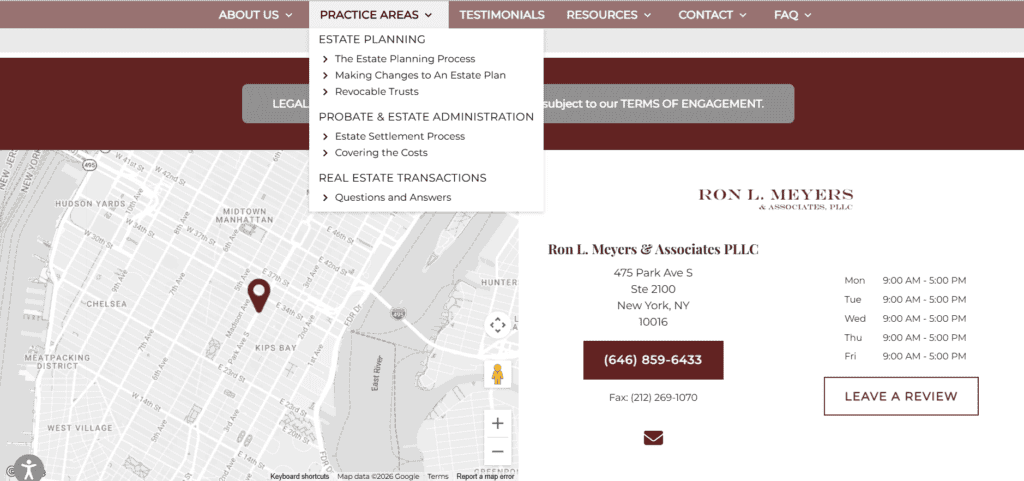
Organize your site so both visitors and search engines can understand what you offer. A logical structure also helps Google assign relevance to your pages:
- Homepage → Practice Area Pages (Personal Injury, Family Law, Criminal Defense)
- Practice Area Pages → Location Pages (Personal Injury in Los Angeles, Criminal Defense in Chicago)
- Blog/Resources section for educational content
A clean, intuitive structure improves user experience and reduces bounce rates. It makes it easier for Google to understand what each page is about.
Tracking SEO results for your law firm
You can’t improve what you don’t measure. Tracking your SEO performance helps you understand what’s working, where to double down, and where to course-correct.
Key metrics to track
- Google Business Profile interactions: calls, direction requests, and website visits from your profile
- Phone calls and form submissions: the actual leads your SEO is generating
- Bounce rate and time on site: whether visitors are engaging with your content
- Keyword rankings: where your pages appear for your target search terms
- Organic traffic: the number of visitors arriving from Google searches
Traffic alone is not enough. Law firms should track which pages generate calls and leads, then invest more in those areas rather than focusing solely on rankings.
Essential tracking tools
- Google Search Console — shows which queries bring visitors to your site, plus technical issues
- Google Analytics — free, comprehensive traffic and behavior data
- Ahrefs or SEMrush — keyword ranking tracking and competitor analysis
Set up a simple monthly review. Compare your key metrics month-over-month and year-over-year. When you see a page performing well, look for ways to expand on it. When traffic drops, identify whether the issue is technical, competitive, or content-related.
Conclusion: Long-term SEO success for lawyers
SEO is a long-term investment, not a quick fix. Firms that commit to SEO build a lead engine that runs 24/7. No ad spend required.
The plan is simple. Maximize your local footprint, publish useful legal information, earn high-quality backlinks, maintain your technical foundation, and monitor your performance. Each element builds on the others. The combined impact over 12–24 months can be significant.
Once your local pages, content, and technical foundations are in place, the next challenge is scaling what works without spending time on tactics that don’t move rankings.
Working with a team that knows competitive search markets, like legal SEO, can close that gap faster. Platforms like uSERP build high-authority backlinks and content strategies for law firms targeting high-value keywords where positions are harder to earn.
If your firm is already publishing but stuck outside the top results, a more structured SEO approach can convert existing traffic into steady client inquiries.
FAQs around SEO for lawyers
How long does SEO take for a law firm?
Law firms experience material ranking movement within three to six months, and greater results in 12 months. Local search is normally quicker to yield results than broader organic results.
What is the most important SEO factor for lawyers?
Google Business Profile optimization is the quickest and most immediate payoff to local firms. To achieve sustainable organic expansion, content quality and authoritative links are the most important.
Do lawyers need a blog for SEO?
A blog is not necessary, but it is quite beneficial. It allows focusing on informational keywords, developing expertise, and obtaining backlinks. Companies that publish content often rank better than those relying only on static service pages.
Is SEO better than Google Ads for lawyers?
Google Ads are instantaneous and stop working once you stop paying. SEO is also more time-consuming to develop, but it yields over time and is more appropriate in the long term.
How competitive is legal SEO?
Law is also one of the most competitive SEO markets, particularly when using personal injury or criminal defense keywords. Hyperlocal targeting provides smaller companies with realistic chances of ranking even in saturated markets.