




Real estate SEO is entering a new era.
Search behavior is shifting fast—driven by smarter algorithms, the rise of AI-powered search experiences, and buyers who expect seamless, mobile-first journeys. At the same time, competition is heating up. Real estate developers, platforms, and marketplaces are investing more in organic search because it’s the one channel that compounds over time—without the ongoing costs of paid ads.
But real estate SEO strategies in 2025 require more than outdated checklists or keyword stuffing. It’ll come from blending technical performance, AI-enhanced content creation, local search optimization, and link-building strategies that reflect how people actually look for properties today.
Optimizing a real estate website for on-page SEO involves the strategic placement of target keywords, which enhances search engine rankings and improves user experience. Achieving better search engine rankings not only boosts visibility but also ensures a seamless user experience.
In this article, I’ll share 10 actionable strategies to help you maximize your real estate SEO in 2025, whether you’re scaling a luxury development or managing organic growth for a high-value property site. These aren’t just tips—they’re practical, forward-looking tactics designed to drive qualified traffic and long-term visibility.
1. Prioritize AI-optimized content creation
Content is still king—but in 2025, it’s the AI-assisted king that rules the SERPs.

Image Source: Search Engine Land
Search engines are becoming adept at understanding the quality and relevance of website content. They reward content that’s not just well-written, but structured, topical, and timely. For real estate SEO, that means combining subject matter expertise with AI-enhanced workflows that help you scale high-quality, user-focused website content without sacrificing authenticity.
How to do it right:
- Use AI for content strategy, not shortcuts: Tools like Frase and Surfer can help you cluster related keywords, analyze competitor content, and identify content gaps across your real estate site.
- Automate outlines, not tone: Leverage ChatGPT or similar tools to generate draft structures, FAQs, or summary content—but always rewrite with your voice, brand, and audience in mind.
- Map content to the full search journey: Real estate searches often start broad (“invest in beachfront property”) and narrow down to hyper-specific intent (“eco-resort investment Belize”). AI tools can help you identify these content stages and match them to funnel intent.
- Keep EEAT in focus: Even if AI helps produce the first draft, your final content needs human oversight—expert commentary, client quotes, and firsthand knowledge all signal experience and authority to both users and search engines.
AI won’t replace your content team. But it will supercharge their ability to publish faster, rank better, and hit the intent behind every real estate search query.
Tip: Combine AI with tools like Frase’s topic modeling to ensure your content thoroughly addresses key subtopics—ideal for building topical authority in competitive niches.
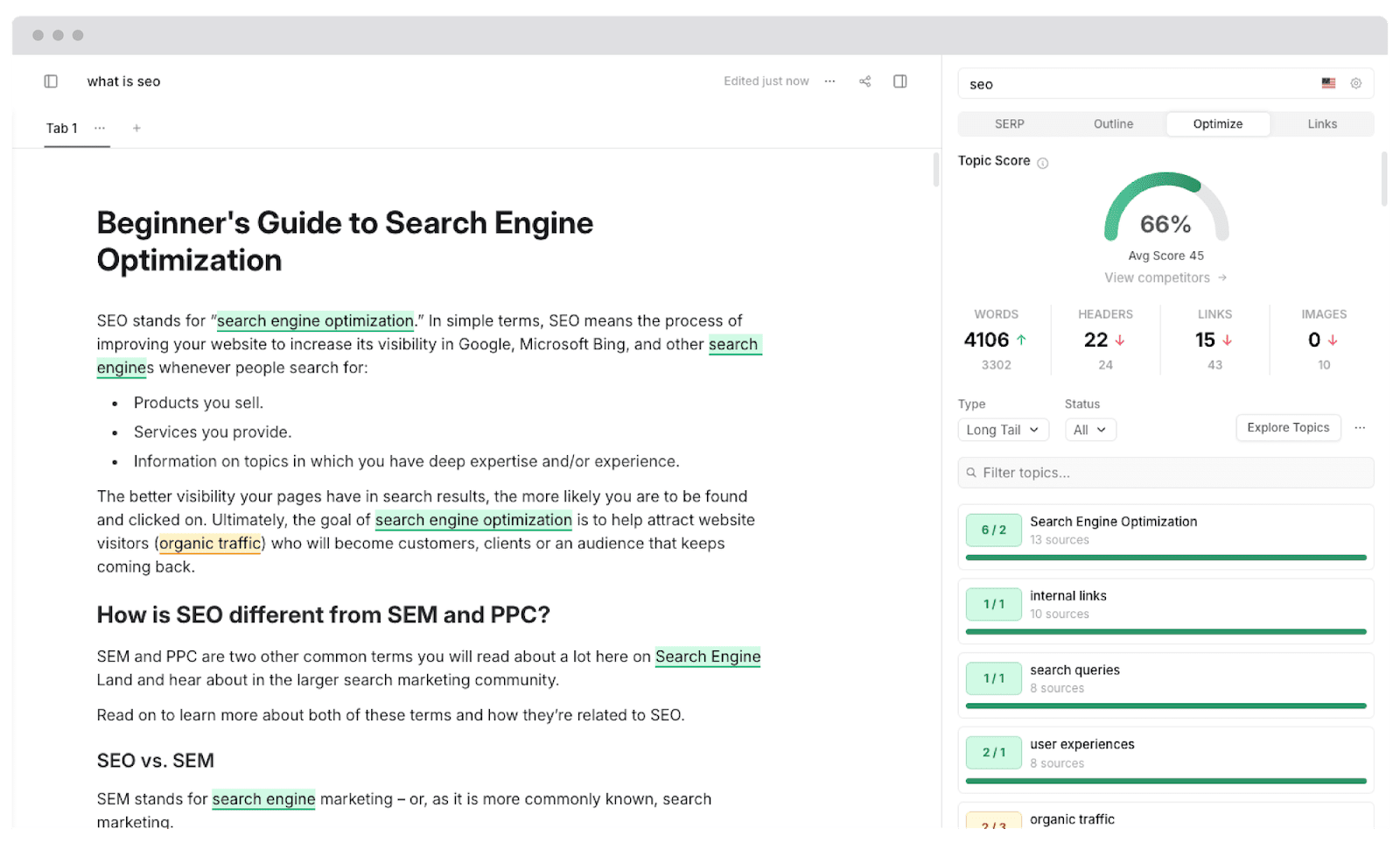
Image Source: Frase
2. Target long-tail and localized search intent
In real estate SEO, specific beats broad—every time. Understanding your target market is crucial in developing effective real estate SEO strategies. By defining your target audience, you can tailor your content and services to specific demographics and geographic areas, ultimately enhancing engagement and conversion rates.
Searches like “homes for sale” or “real estate investment” are massively competitive and often too vague to convert. But add context—location, property type, buyer profile—and you uncover long-tail keywords with clearer intent and less competition. A well-defined keyword strategy enhances content creation, which in turn boosts site authority and improves search rankings by connecting effectively with potential clients.
Why it matters in real estate:
- Buyers and investors use hyper-specific language: “off-grid eco villas in Costa Rica,” “pre-construction condos Tulum,” or “buy-to-let apartments in West London.”
- These searches indicate higher purchase intent—you’re catching users further down the decision funnel.
- Long-tail keywords help you stand out in voice search, AI summaries, and featured snippets where specificity matters.
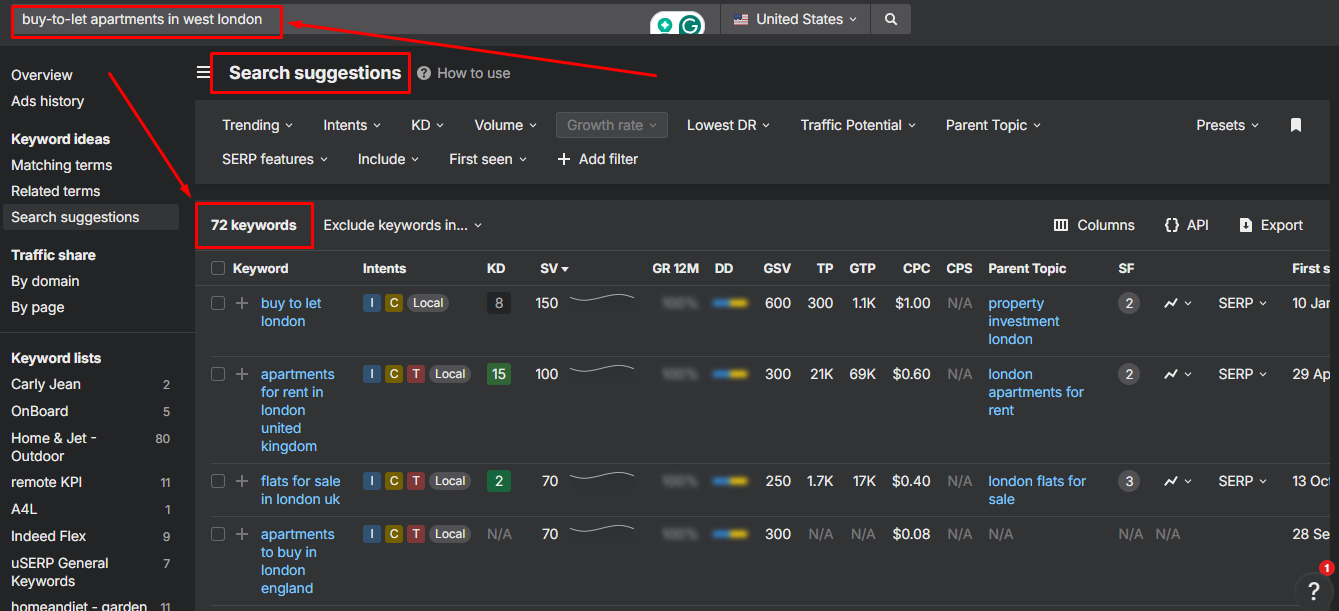
Screenshot provided by author
How to target these searches:
- Group keywords into clusters based on buyer intent, region, or property type. Use tools like Frase or Keyword Magic Tool (Semrush) to identify natural groupings.
- Create landing pages for specific use cases: “Luxury Homes in Napa for Remote Workers,” “Family-Friendly Investment Villas in Algarve.”
- Build blog content around FAQs and pain points tied to these queries:
e.g., “Is it safe to invest in rental properties in Belize?” or “Best areas in Barcelona for expat families.”
Tip: Mix in related keywords like “real estate agents,” “real estate website,” and “property listings” as part of your on-page copy—these help reinforce topical relevance even if they aren’t your core audience.
Bonus: To better serve niche queries, explore this article on how to structure long-tail content that drives traffic and matches specific user intent.
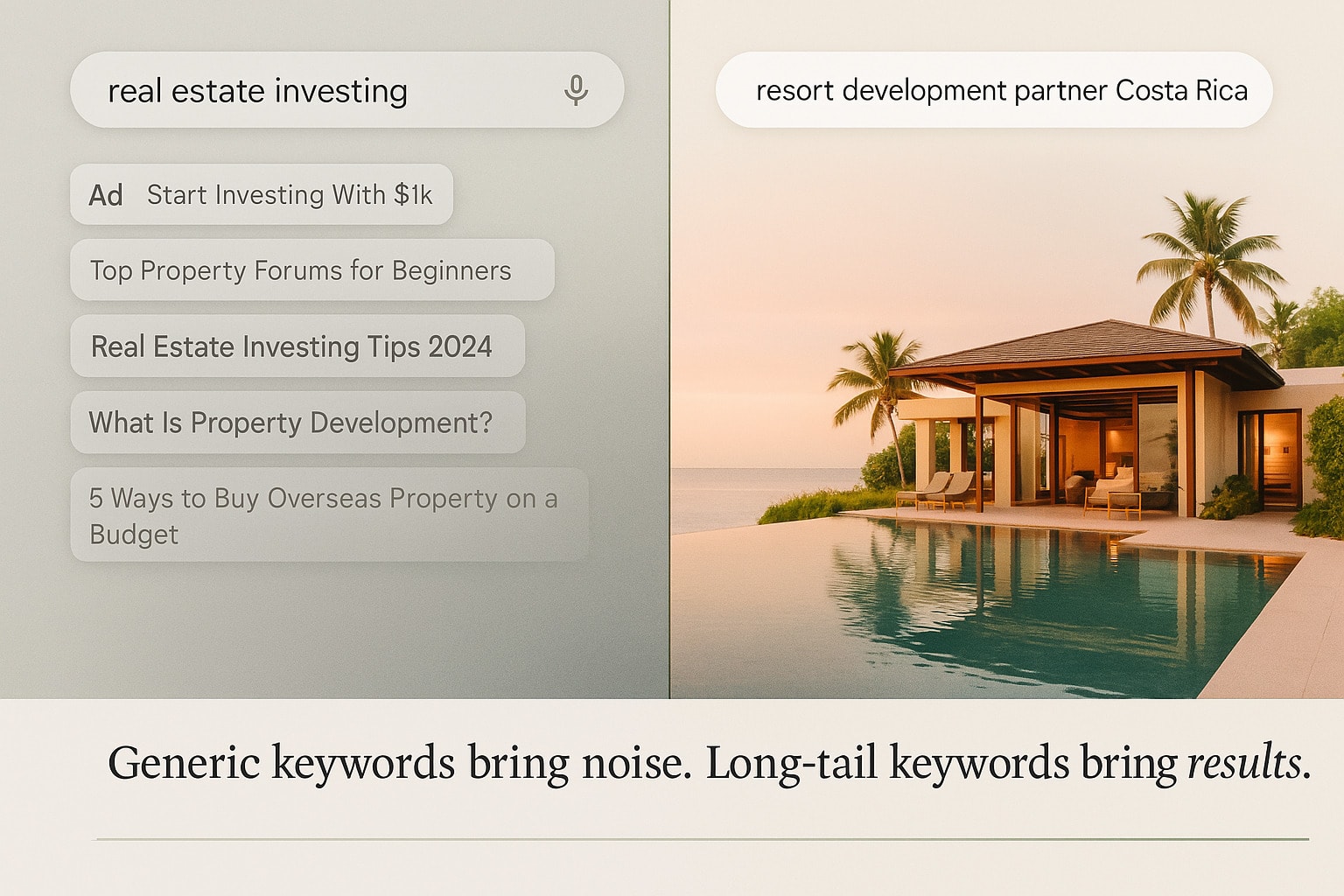
Image Source: Proven Partners
3. Strengthen technical SEO foundations
You can have the best content in your niche, but if your site is slow, messy, or hard to crawl, you’re leaving rankings and revenue on the table.
Technical SEO is the foundation that makes every other strategy work harder. For real estate sites—especially those that are visual-heavy, mobile-driven, and updated frequently—enhancing page speed is crucial. It’s non-negotiable.
Key areas to optimize:
Site speed
- Real estate sites often use high-resolution images, videos, and interactive maps—great for users, terrible for load times if not optimized
- Compress images, use lazy loading, and limit third-party scripts
- Tools like Google PageSpeed Insights or Sitebulb can pinpoint bottlenecks
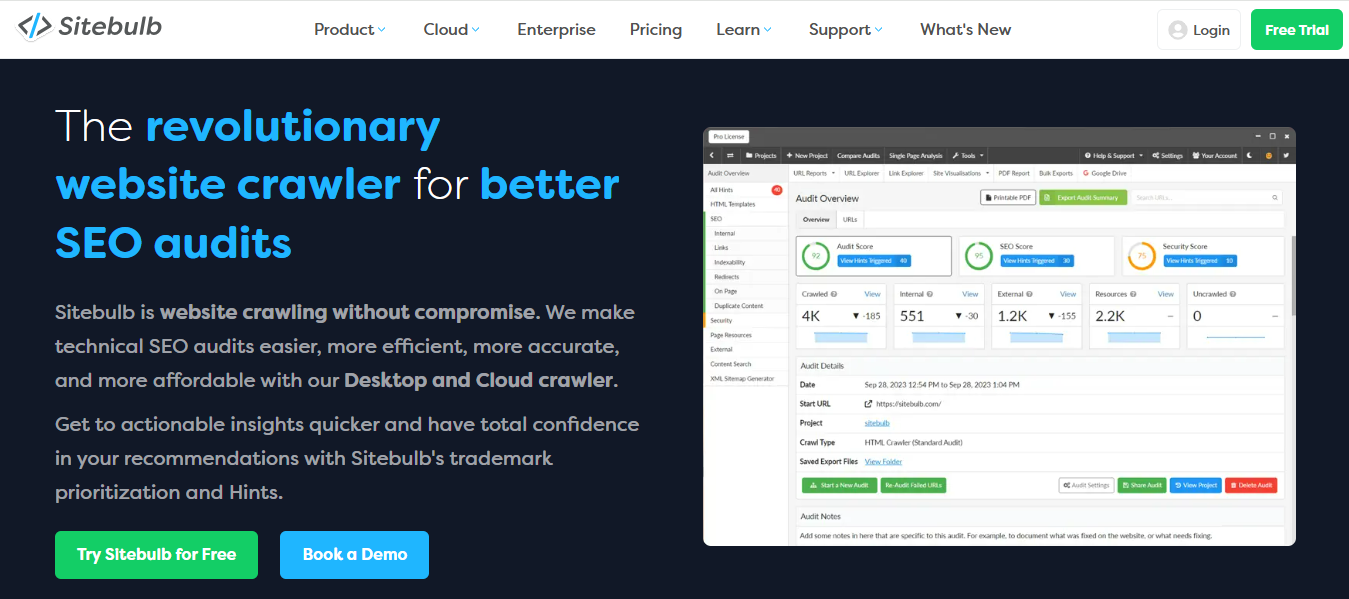
Image Source: Sitebulb
Mobile-first performance
- Over 60% of real estate searches happen on mobile. If your site isn’t easy to browse on a phone, it’s not just inconvenient—it’s costing you rankings
- Check for mobile usability in Google Search Console and test across multiple devices
Crawlability and structure
- Submit a clean XML sitemap
- Fix broken links (internal and external)
- Ensure logical page hierarchy and consistent internal linking—especially for listings, location pages, and blog content
Structured data & Core Web Vitals
- Add schema for properties, reviews, and FAQs
- Monitor Core Web Vitals (LCP, FID, CLS) and fix issues flagged in Search Console or Lighthouse
Strong technical SEO doesn’t just improve rankings—it creates a faster, smoother experience for every potential buyer or investor who lands on your site.
Tip: Conduct a quarterly SEO audit using tools like Screaming Frog or Ahrefs. Look for redirect chains, orphan pages, duplicate content, and any crawl issues that might limit indexation.
4. Build high-authority backlinks with digital PR
Backlinks are still one of Google’s most powerful ranking signals—but in 2025, how you earn those links matters more than ever. Acquiring backlinks from relevant sites, especially high-authority websites like NAR and Zillow, can significantly improve your search engine rankings and enhance your visibility.
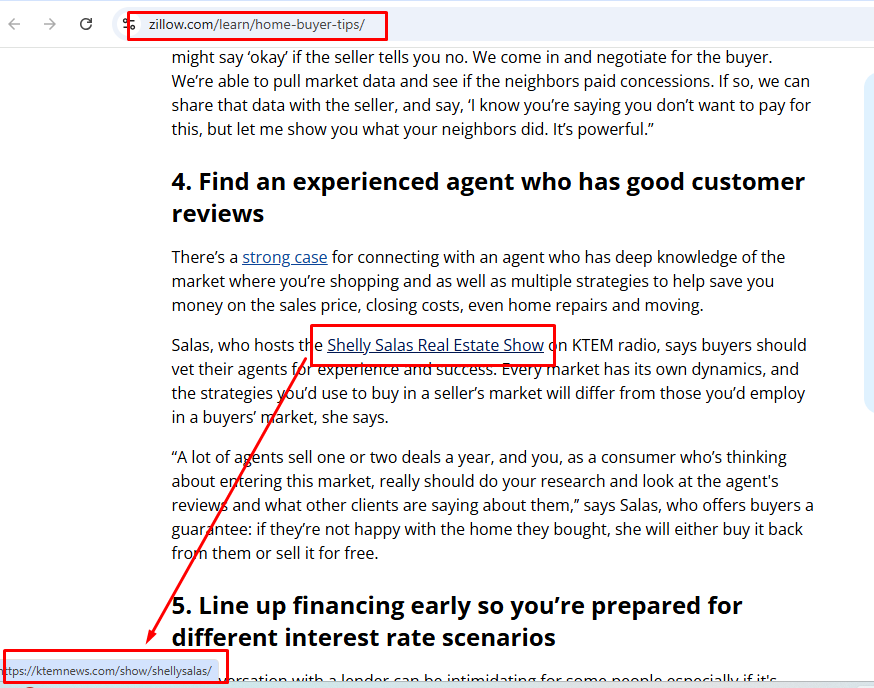
Image Source: Zillow
For your real estate SEO strategy, that means moving beyond outdated guest post swaps or spammy directories. Instead, think like a SaaS brand: build authority through media mentions, data-driven content, and strategic partnerships that align with your positioning. High-quality backlinks serve as votes of credibility in the digital landscape, making them essential for enhancing both visibility and credibility.
Link building real estate SEO strategies:
Digital PR campaigns
- Pitch data stories (e.g., “Top 10 U.S. cities with rising luxury condo prices”) to media outlets.
- Create custom reports or rankings that journalists in your niche will want to cite.
Co-marketing and partner mentions
- Collaborate with architects, developers, interior designers, or fintech platforms on thought leadership or cross-promotional content.
- Earn backlinks through resource guides, case studies, or “as featured in” placements on partner websites.
Content worth linking to
- Create original tools (e.g., ROI calculators, investment checklists).
- Publish highly visual, data-backed content (market trends, cost comparisons, ownership guides).
- Build internal authority first, then layer in external links to amplify.
Backlinks shouldn’t be an afterthought. They’re your proof of relevance, credibility, and trust—and they’re essential if you want to rank for competitive real estate keywords.
For example, if you’re looking for a construction credit card — a contractor searching for one has moved past general business banking and wants a card built around job-site purchases and crew spend. It’s an excellent showcase of how a relevant backlink can boost your content instead of bringing it down.
Tip: Shift your mindset from “link building” to “link earning.” What would someone genuinely want to link to? That’s where your strategy should start.
Bonus: For deeper insight into what’s working now, review 2025’s most effective backlink strategies according to 800+ SEO pros.
5. Invest in interactive tools and property features
User engagement is now a direct signal to search engines, and few industries benefit more from interactive experiences than real estate. Whether it’s a buyer researching neighborhoods or an investor modeling returns, people want tools that help them explore, compare, and decide.
That’s where interactive features come in. They don’t just enhance user experience—they boost dwell time, reduce bounce rate, and increase the likelihood of backlinks and shares. By improving user engagement, these features also play a crucial role in real estate lead generation, as they help attract motivated clients and build relationships through social media engagement.
High-impact tools for real estate SEO strategies:
- 3D virtual tours: Especially powerful for off-plan developments, overseas buyers, or high-end listings. These keep users on your site longer and lower friction in the decision process.
- ROI calculators: Help investors estimate net returns, taxes, or rental yield based on location and property type.
- Interactive maps: Let users explore nearby schools, dining, transport, or lifestyle amenities.
- Smart filtering tools: For property marketplaces or multi-unit developments, allow users to narrow by price, size, view, or location.
The best part? These features don’t just drive engagement—they also signal to Google that your site is worth ranking, especially when paired with fast load times and mobile optimization.
Tip: These tools also create unique link opportunities. Sites are more likely to link to calculators, visual maps, and data tools than to generic listings.
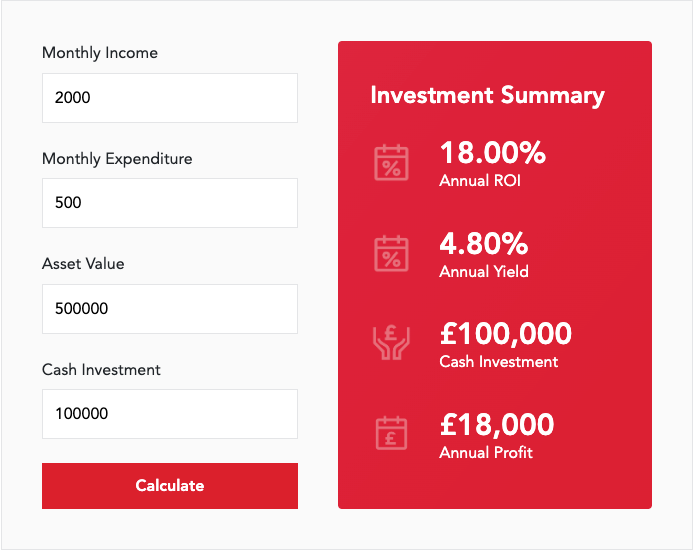
Image Source: Nock Deighton
6. Optimize for AI search results and featured snippets
As Google continues rolling out AI-powered search experiences—such as AI overviews—your content strategy needs to evolve.
In 2025, it’s no longer just about ranking in the top 3. It’s about earning visibility in answer boxes, summaries, and featured snippets on search engine results pages (SERPs), where Google pulls trusted information to respond instantly to user queries. Optimizing for SERPs is crucial for attracting potential clients and enhancing your website’s visibility.
How to optimize for AI and featured results:
Answer direct questions clearly
- Start with a concise, 40–60-word summary before expanding.
- Use subheadings like “What is…” or “How to…” to trigger snippet eligibility.
Use structured data and schema
- Add FAQ, HowTo, and Article schema where relevant.
- Mark up reviews, pricing, location, and availability using structured data for real estate to feed AI tools with trustworthy data.
Cover semantic depth
- Instead of targeting one keyword per page, include related terms:
“property taxes,” “closing costs,” “zoning laws,” “investment potential”
These help your content show up in multi-angle responses and AI-synthesized answers.
Create digestible formats
- Use bullet points, tables, and numbered lists—AI tends to pull structured content.
- Break up complex concepts (e.g., real estate investment structures) into simplified, educational chunks.
If your content isn’t optimized for how Google summarizes, you’re missing a huge visibility opportunity—even if you rank well. Moreso, AEO services are a whole new beast. Ensure you follow up on the most common AI SEO trends to please Google and rank even higher in the SERPs.
Tip: Review the questions and snapshots Google surfaces for your target real estate keywords. Then reverse-engineer your content to better match those formats.
Bonus: To increase your chances of ranking in AI-powered results, follow Google’s E-A-T guidelines to strengthen perceived content quality.
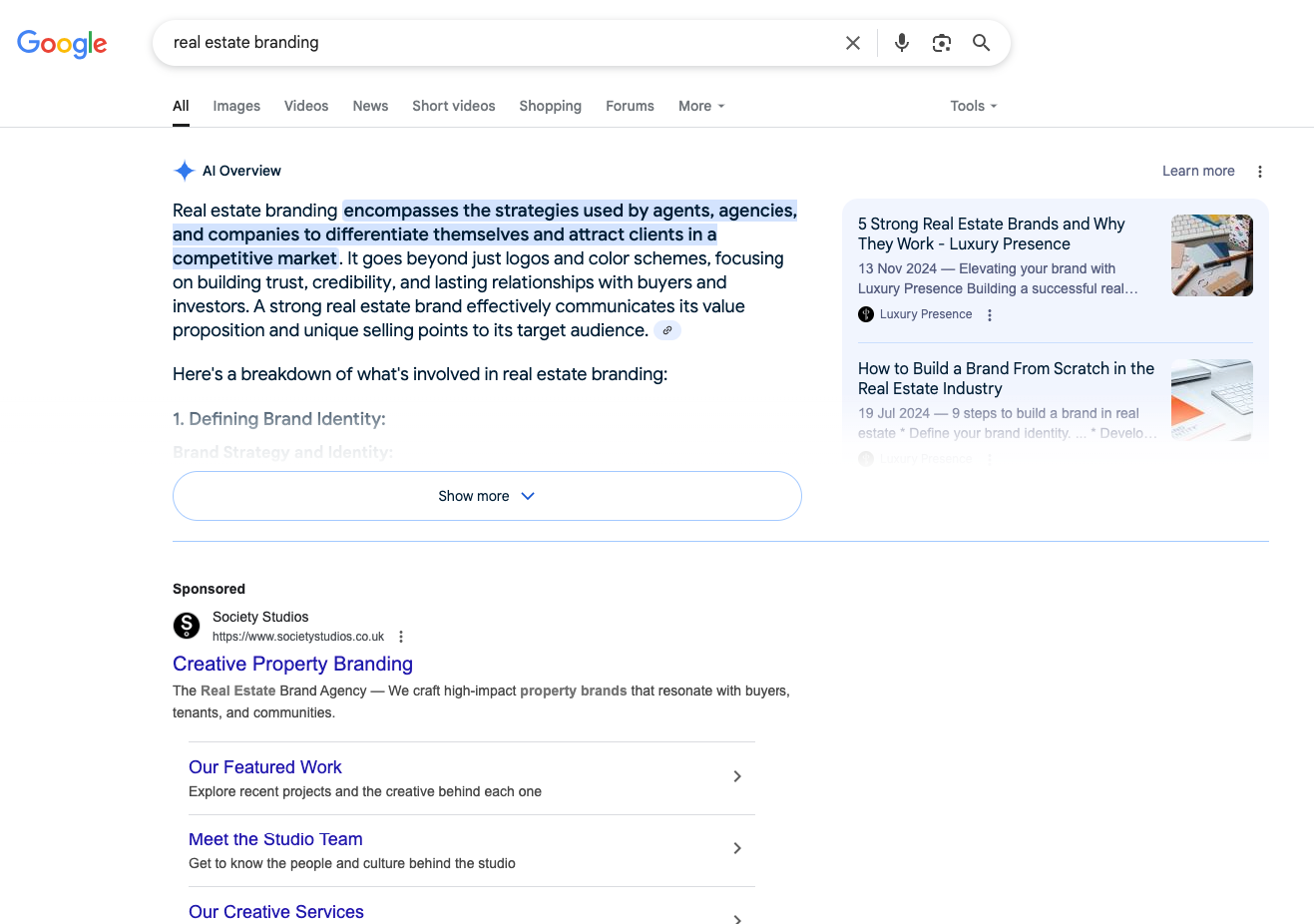
7. Use region-based landing pages and Google Business Profile
Real estate is inherently local. Whether you’re selling luxury villas in Marbella or launching a new condo development in Miami, buyers search with location-first intent—and your SEO needs to reflect that.
Two of the most effective tactics for capturing this traffic are region-based landing pages, getting listed in local directories to enhance SEO for real estate professionals, and a well-optimized Google Business Profile (GBP). Including details about the real estate office in the Google Business Profile can significantly enhance local search visibility.
How to make it work:
Create region-specific landing pages
- Build individual pages for each city, neighborhood, or development hub you serve.
- Optimize titles, H1s, and meta descriptions with localized keywords like “luxury homes in Scottsdale” or “off-plan apartments in Lisbon.”
- Include internal links to listings, blog posts, or tools relevant to that region.
Optimize your Google Business Profile
- Even if you’re not targeting local walk-ins, a verified GBP gives your brand legitimacy in Google Maps and local search packs.
- Add images, office hours, property photos, and service categories (e.g., real estate developer, property management office).
- Collect and respond to reviews to build trust and local authority.
Local SEO isn’t just for agents. Developers, investor platforms, and marketplaces all benefit from surfacing in “near me” and regional searches, especially when buyers are researching from abroad or relocating.
Stat check: Businesses with complete GBPs are 2.7x more likely to be considered reputable by searchers (Source: Google Business Profile Help).
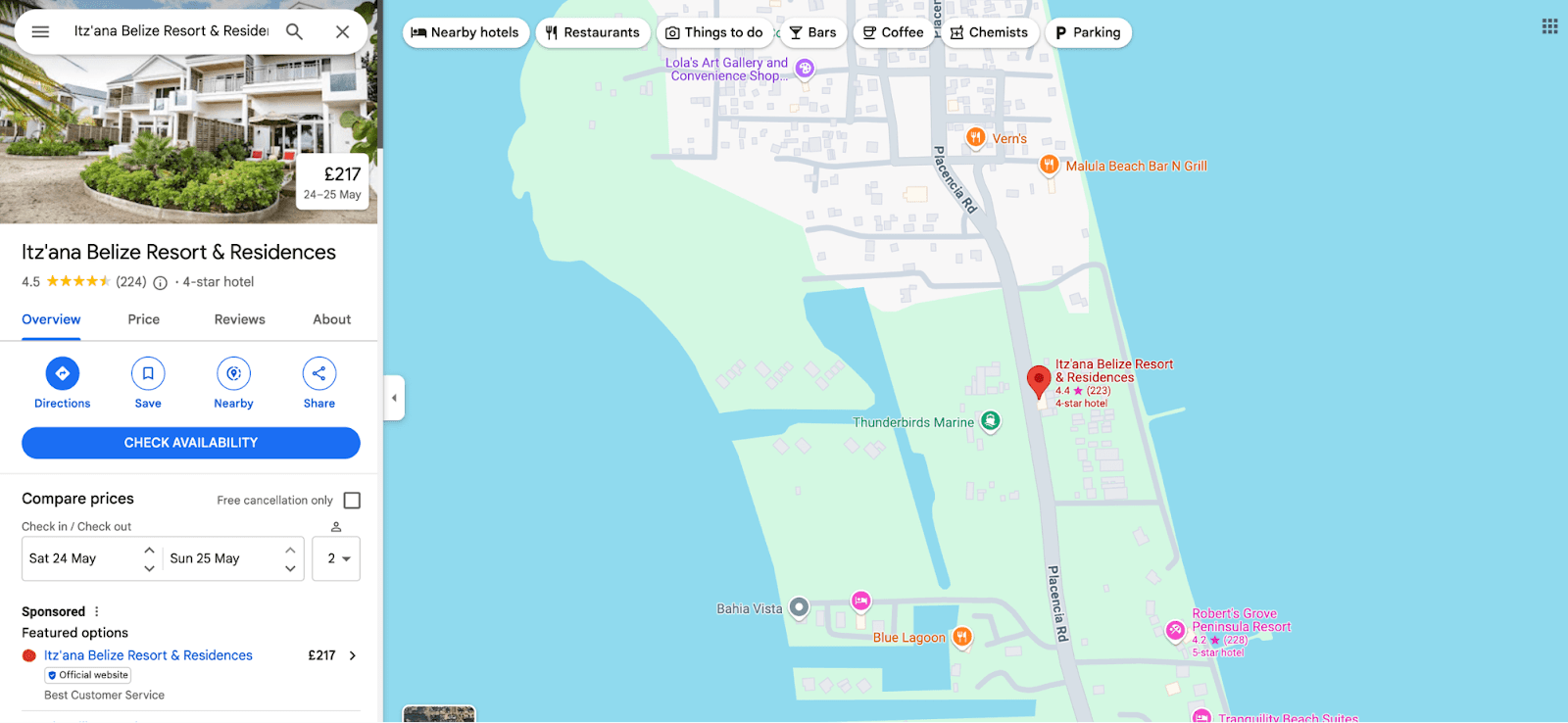
Image Source: Proven Partners
8. Focus on content that nurtures long sales cycles
Real estate isn’t impulse-driven—especially when you’re marketing high-end developments, second homes, or international investments. These purchases often take months of research, comparison, and reassurance before a buyer is ready to act.
That’s why your SEO strategy needs to do more than capture traffic. It needs to nurture trust over time by creating quality content that meets the needs of your target audience. This quality content not only enhances search engine rankings but also helps turn organic traffic into a long-term pipeline.
What nurturing content looks like:
Blog series and educational guides
- Create multi-part content that walks a prospect through the full buying process:
“How to Buy Property in Portugal” → “Navigating Legal Requirements” → “Managing Rentals Post-Purchase” - Think beyond listings—educate.
Construction updates or project timelines
- If you’re marketing off-plan properties, publish regular progress updates.
- Add photos, drone shots, and key milestones to keep prospects engaged (and coming back).
Lifestyle and location content
- Highlight what it’s like to live, invest, or vacation in a particular area.
- Great for attracting organic traffic while soft-selling the value of your developments.
Glossaries and explainer pages
- Define terms like “net yield,” “tenure,” or “closing costs” in your market.
This builds topical authority and earns featured snippets.
This is the kind of content that gets bookmarked, forwarded, and revisited. And it’s exactly what helps turn organic traffic into a long-term pipeline.
Tip: Add internal links between nurturing content and conversion-focused pages—so when the buyer is ready, there’s a clear next step.
9. Leverage SEO data for strategic brand decisions
SEO isn’t just a channel—it’s a real-time focus group. When used correctly, your search data can reveal what your audience cares about, where demand is shifting, and how to position your brand to meet it. Utilizing tools like Google Analytics is essential for tracking various performance metrics, understanding visitor demographics, monitoring A/B testing outcomes, and evaluating key performance indicators (KPIs). This data helps refine SEO strategies and enhance your online presence.
For real estate marketers, this means going beyond traffic reports and using SEO insights to shape broader marketing, product, and content decisions.
Smart ways to apply SEO data:
Use search trends to identify market demand
- Tools like Google Trends or Semrush can help you spot rising interest in locations, property types, or buyer preferences.
- For example, an uptick in “co-living apartments London” may justify a content hub—or even an acquisition angle.
Monitor keyword movement to guide messaging
- If you’re climbing for “eco homes in Mallorca” but flatlining for “investment property Spain,” it may be time to double down on the former across email, social, and paid.
Evaluate content gaps through competitor analysis
- Use tools like Ahrefs to track how competing developers or platforms position themselves. What keywords are they winning on? What are they ignoring?
Match search intent to user journey
- Are people landing on your guides but bouncing? That might signal a mismatch between query and content depth, or an opportunity to build a dedicated landing page.
When you treat search data as a strategic asset, your SEO becomes more than a traffic driver—it becomes a decision engine.
Tip: Use your SEO insights during quarterly marketing planning to align content creation with real-world demand, not just internal assumptions.
10. Track and refine performance continuously
Great SEO isn’t set-and-forget. It’s iterative.
To achieve SEO success, real estate brands need to continuously monitor what’s working, flag what’s not, and adjust quickly. This ongoing refinement of strategies is crucial, especially as Google rolls out new AI-driven SERP features and user behavior continues to shift.
What to track (and why):
Core KPIs
- Organic traffic: Are your pages attracting qualified visits?
- Keyword rankings: Are you moving up for your most valuable search terms?
- Leads or conversions: Is your SEO content driving inquiries, downloads, or bookings?
Key tools to use
- Google Search Console: Essential for tracking impressions, clicks, and site indexing issues.
- GA4: Monitor user behavior, conversion paths, and engagement metrics.
- Hotjar or Clarity: Visualize how users interact with your pages—great for spotting friction points on high-traffic property pages.
- CRM + UTM tracking: Attribute leads to organic sources, especially for gated guides or webinar signups.
Refinement process
- Run monthly performance reviews: Which pages are losing traffic? Which ones are gaining links or conversions?
- Refresh content every 3–6 months: Update data, add visuals, improve internal linking, or expand sections to maintain rankings.
- Log technical issues quarterly with a crawl from Sitebulb or Screaming Frog.
The most successful SEO strategies in real estate aren’t just implemented—they’re optimized, over and over again.
Tip: Create a simple SEO dashboard combining Search Console, GA4, and keyword tracking to monitor progress across the funnel.
Bonus: Make ongoing optimization easier by following this SEO performance checklist to track rankings and results.
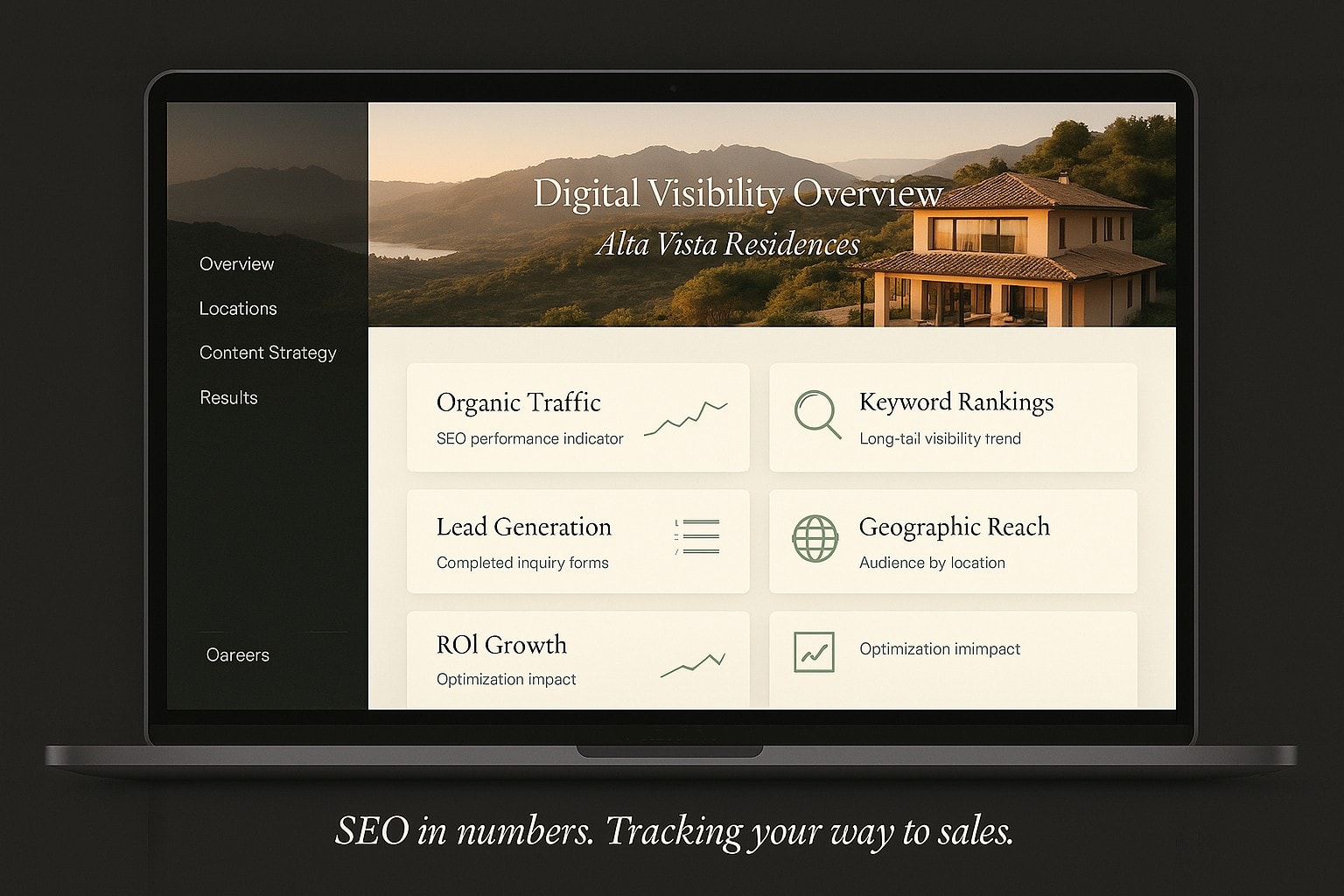
Image Source: Proven Partners
Final thoughts
Real estate SEO in 2025 isn’t about chasing hacks—it’s about building long-term visibility through comprehensive real estate SEO strategies. Enhancing online visibility requires monitoring, auditing, and continually improving these strategies to connect effectively with potential buyers and sellers.
From leveraging AI to scale high-value content to earning trust with digital PR, the best-performing real estate brands are the ones who treat SEO as a strategic engine, not just a checkbox. And with search evolving faster than ever, staying ahead means investing in content quality, technical performance, and data-backed decisions that reflect how people actually research, compare, and buy property today.
Practical real estate SEO tips include focusing on keyword research and local targeting to connect with potential clients more efficiently and at a lower cost compared to traditional marketing methods.
Whether you’re working with international investors, marketing a new development, or scaling a property tech platform, these 10 strategies will help you rank higher, attract better leads, and grow sustainably—even in an increasingly competitive market.
Start with one. Implement it fully. Then build momentum. SEO rewards consistency, clarity, and user-first thinking—and 2025 is the perfect time to double down.