



You can pour endless time and resources into perfecting your website messaging. But if you’re not getting eyes on your landing pages, what’s the point? For your website to be effective, it needs visibility. People need to see your site to take the desired action.
Fortunately, there are quite a few website traffic sources that you can tap into to get more people to your site. You can use a mix of organic search, paid ads, referral links, direct traffic, and social media to boost your site’s visibility.
This article will compare organic search to other types of traffic sources, including paid, referral, and social traffic. We will discuss how these traffic sources work and what each one brings to the table. From there, we’ll discuss how to assess and improve your website traffic through these sources.
Highlights
- This guide focuses on five broad traffic categories: organic search, paid media, referral traffic, social media, and direct traffic. Analytics platforms may divide these categories into more specific channels.
- Organic traffic is crucial for driving targeted traffic, as it indicates genuine interest in your offerings.
- Platforms like Google Ads and Meta Ads help boost traffic by targeting specific audiences.
- Referral traffic from third-party sites builds brand credibility, and social media traffic can effectively engage audiences.
- Direct traffic indicates brand familiarity, coming from users who either type your URL or access it through physical marketing materials.
5 types of traffic sources that drive website visits
There are five main ways to drive traffic to your website. You can leverage organic search engines, paid ads, referral sources, social media, and direct traffic to get people to your site.
Each of these traffic sources is unique, so it’s important to understand how each fits into your marketing initiatives and serves your business.
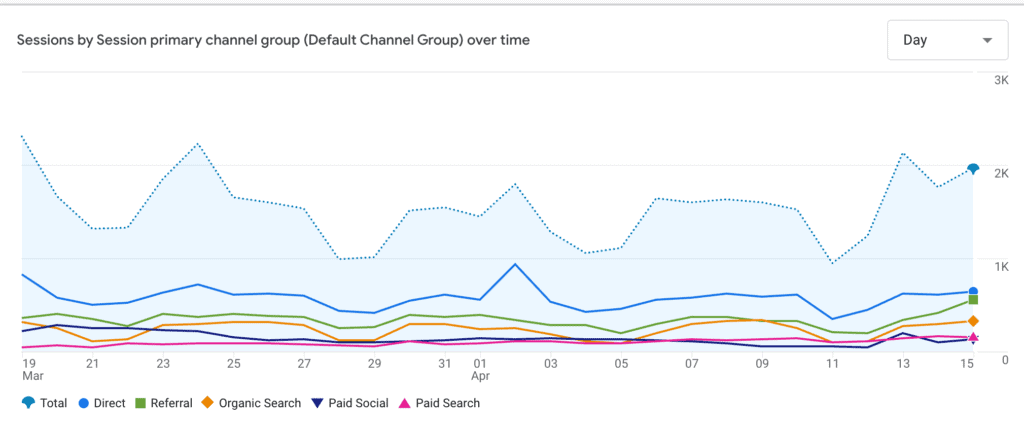
Let’s take a moment to break down each of these web traffic sources.
1. Traffic from organic search
Organic search is one of the most prominent sources of traffic for many websites. Organic search traffic refers to clicks that originate from search engine results pages (SERPs) on Google, Yahoo, Bing, and similar platforms.
Search engine optimization (SEO) is the marketing technique that businesses use to tap into organic traffic.
Organic search engine traffic is valuable because it typically indicates a specific interest in what you have to offer. However, a click coming from a search engine doesn’t guarantee conversion. Search intent ranges from informational to transactional.
However, it’s a great sign that the search engine has deemed your site worthy and relevant, and that your SERP listing was appealing to viewers.
2. Traffic from paid ads
Paid traffic is traffic generated by paid advertisements. You can run ads on all different types of digital real estate, including SERPs, other websites, social media, and video platforms.
Although it’s possible to run paid ads through other platforms, Google Ads and Meta Ads are two of the most popular options. Google Ads is used to place ads on Google SERPs, YouTube, and on websites that turn on advertising through this platform. Meta Ads is used to place ads on Facebook, Instagram, Messenger, and some third-party destinations.
We will discuss how to leverage Google Ads and Meta Ads to tap into paid traffic later in this guide.
3. Traffic from referral sources
Referral traffic is another important source of website traffic. This traffic source accounts for clicks originating from third parties.
Common referral sources include:
- Other non-ad links from third-party sites
- Partner websites and apps
- Online directories
- Media coverage
- Review sites
Referral traffic is important because, in addition to driving traffic to your site, it builds brand awareness. When your site is linked to other reputable sites in your field, it also helps to build trust among your audience. These link-building initiatives can also help SEO.
AI assistants can send traffic to your site too, but analytics platforms don’t always lump that in with regular referral traffic. Track it separately when you can, so you actually know how much AI-generated answers are contributing to discovery and conversions.
4. Social media traffic
Social media is another major traffic source for many websites. It can be either organic or paid. That means you can drive traffic through organic posts via content marketing, or pay for social media ads.
Analytics platforms usually break this down into a few categories: Organic Social, Paid Social, and Referral. Organic Social means people click a link on social media for free. Paid Social means they came from an ad.
Social media is also a major content distribution channel. HubSpot’s 2025 State of Blogging survey found that 83% of businesses with blogs distribute their content through social media, making it the most widely used distribution channel among respondents.

(Screenshot provided by author)
Common social media sources for website traffic include:
- TikTok
- X
Although any business can leverage social media traffic, not every social media platform is created equally.
For example, LinkedIn is great for B2B businesses that maintain a highly professional brand, whereas Instagram and TikTok are better options for retailers who benefit from visual content.
5. Direct traffic
Although direct traffic is not as prominent as the other traffic sources we’ve covered, it is worth mentioning because it appears on many website analytics dashboards.
Direct traffic is exactly what it sounds like: people who type your URL straight into their browser. Usually that means they already know your brand. Sometimes it’s because they saw your URL somewhere offline, like a flyer, a billboard, or a business card.
Occasionally, direct traffic also picks up people who had a broken link, couldn’t get it to work, and just fiddled with the URL until it loaded.
Which types of traffic sources should you prioritize?
There’s no single best traffic source for every business. Which channels you prioritize should depend on how your audience actually behaves, what budget you have, your time horizon, conversion quality, and whatever performance data you already have.
Organic search builds visibility over time. Paid media lets you test faster and target more directly. Referral and earned media help build authority, and social media helps with distribution and staying in front of your audience. Direct traffic is worth watching as an attribution category, but it’s not something you can build a strategy around on its own.
And don’t judge channels by traffic volume alone. Look at qualified leads, conversion rates, acquisition costs, assisted conversions, and revenue contribution before deciding where to actually put your money.
For example, a SaaS company might use paid search to test which messages generate qualified demos, turn the strongest findings into organic content, and secure industry mentions that create referral traffic and reinforce search visibility.
Social media can then distribute that content, while direct traffic may increase as more prospects become familiar with the brand. In practice, the strongest traffic strategies usually rely on channels supporting one another rather than operating independently.
How to assess website traffic
Thanks to advanced analytics dashboards, it’s easy to assess website traffic. Although many website hosting platforms come with built-in analytics tools, many marketers and website owners leverage more detailed reporting software.
Google Analytics is the go-to for a holistic view of website traffic, with detailed information on traffic sources, viewer demographics, live sessions, and more. This platform integrates with a ton of other marketing tools, making it a seamless fit in many marketing tech stacks. It’s worth noting that it can take some time to get the hang of Google Analytics if you want to make the most of its in-depth reporting.
Google Search Console is another great tool if you’re looking for a more granular look at your organic traffic. Google’s Looker Studio is another tool for creating custom dashboards to analyze website traffic and correlate it with specific conversions on your site.
Aside from tools within the Google suite, SEMrush and Ahrefs are useful for analyzing web traffic.
How to increase website traffic
Increasing your website traffic is the ticket to getting more eyes on your content and giving potential customers more chances to convert. With that said, here are six steps you can take to increase your website traffic.
These aren’t new traffic sources. They’re ways to strengthen the five channels already covered. SEO supports organic search, paid media expands your targeted reach, earned media builds up referral traffic, and AEO or GEO helps you show up in search and AI-assisted discovery.
1. Determine which traffic sources matter most
As we mentioned, different traffic sources are more important for different types of businesses. You’ll likely want to drive traffic from multiple sources, but it’s okay to focus on building up one at a time.
If you’re not sure which traffic source is most relevant to your business, start by thinking about your typical customer’s journey. If you’re selling clothing, creating content or running ads on Instagram or TikTok is a good place to start. If you’re trying to close high-ticket deals for a SaaS platform, investing in efforts to boost your organic traffic with high-quality website content might be a better option.
Another way to assess which website traffic source to lean into is to look at what your competition is doing.
2. Get intentional with your content
Gone are the days of using “post and pray” as a marketing strategy. If you want to drive traffic from the right audience, you need to be very intentional about the content you publish.
A useful test is whether the content addresses a clear audience need and connects naturally to the next stage of the customer journey. Not every article needs a direct sales pitch, but readers should understand what relevant action or resource is available next.
Another part of getting intentional with your content is getting strategic and ensuring that the search intent of your target keywords aligns with your offer and your audience. If you choose keywords that seem relevant but the intent doesn’t fully align, viewers won’t find what they’re looking for on your site.
3. Invest in search engine optimization (SEO)
Search engine optimization (SEO) is a go-to marketing technique for improving website traffic. This is especially true if organic traffic is an important source for your business.
Some important SEO practices include:
- Improving your site’s technical performance, including page speed, mobile usability, crawling, and indexing.
- Creating landing pages and blog posts to target viable keywords
- Investing in strategic link building
- Leveraging schema markup
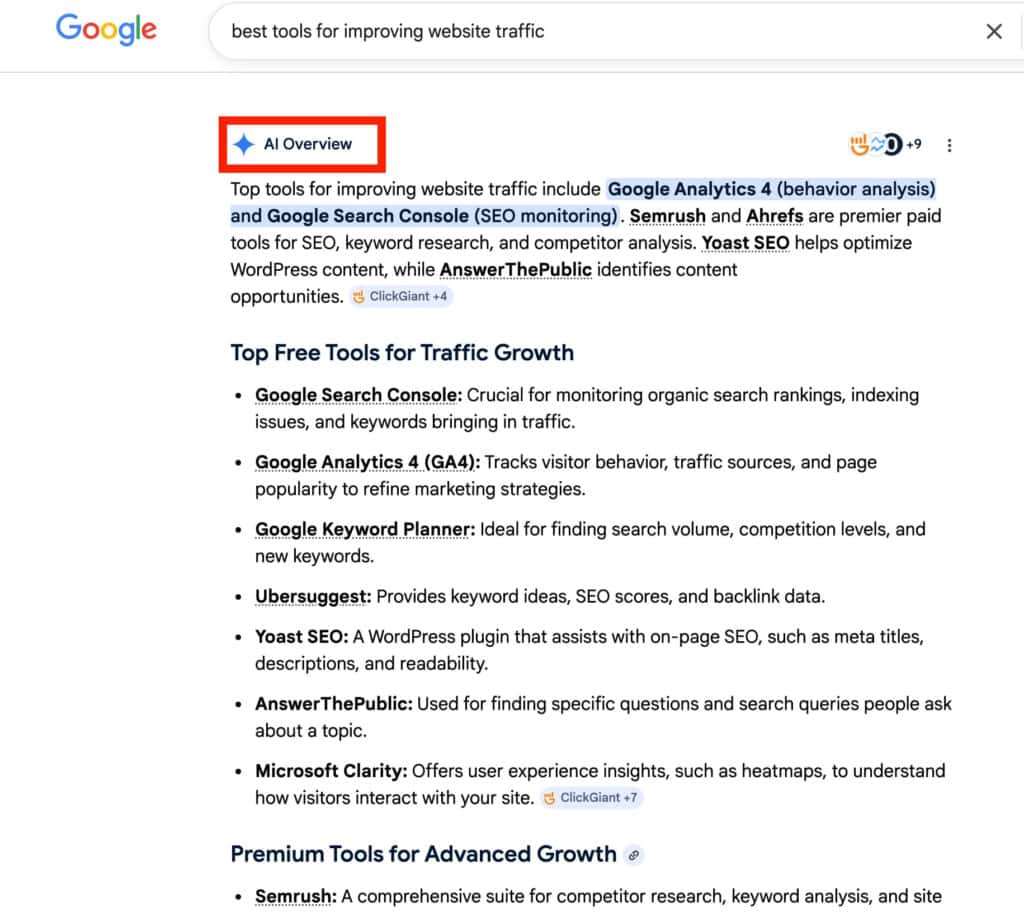
Answer Engine Optimization (AEO) is an important, rapidly emerging layer of SEO. If you’re not familiar, AEO is an optimization technique designed to target the AI snippet at the top of SERPs.
The principles of AEO are very much aligned with SEO. The idea is to provide valuable answers to users’ questions.
(Screenshot provided by author)
4. Invest in generative engine optimization (GEO)
The use of AI for everyday queries is on the rise.
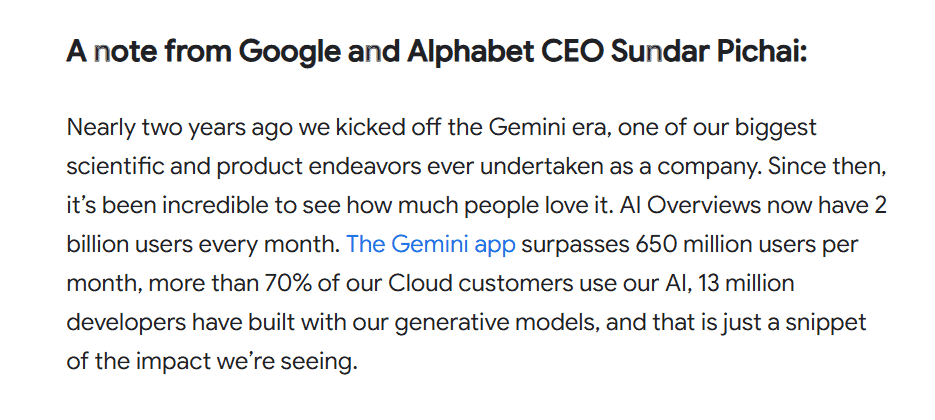
Google reported in November 2025 that AI Overviews had reached 2 billion monthly users, showing how quickly AI-generated discovery has become part of mainstream search behavior.
(Screenshot provided by author)
As users adopt these AI-powered experiences, businesses also need to understand how their content is discovered and cited beyond traditional search listings.
Generative engine optimization (GEO) is an optimization specific to the AI-powered chatbots we mentioned above. GEO is a counterpart to SEO and AEO. The idea is that your site is referenced when a user asks a relevant question.
For example, an SEO software provider may publish an evidence-based comparison that explains use cases, limitations, pricing, and methodology. This creates a stronger resource for both human readers and systems generating recommendations.
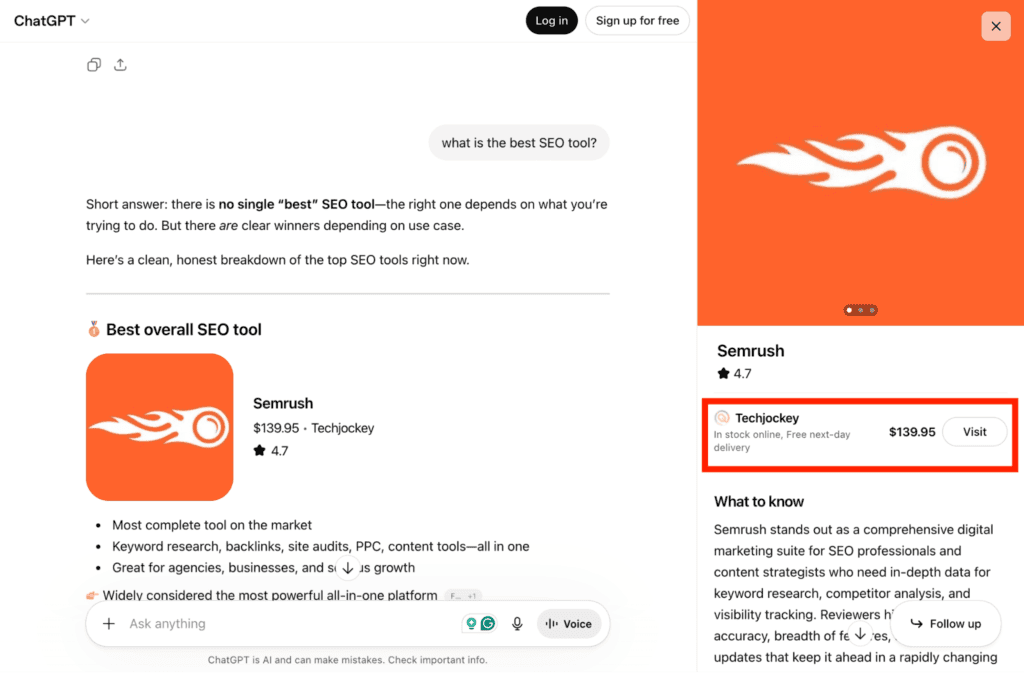
(Screenshot provided by author)
Like AEO, GEO is very much aligned with traditional SEO at this point. There is still a lot to discover about AI crawlers, but the idea is that they seek high-quality answers to users’ queries, just like search engine crawlers.
5. Optimize paid and earned media
In addition to content that lives on your website, it’s smart to optimize paid and earned media, as well. Beyond driving traffic to your site, these mentions of your brand will help create relevance and awareness.
Google Ads and Meta Ads hand you the tools for targeting, budgeting, and tracking performance. But the platforms alone won’t optimize your campaigns.
You still need clean conversion tracking, real testing, a good read on your audience, and someone actually managing the budget day-to-day.
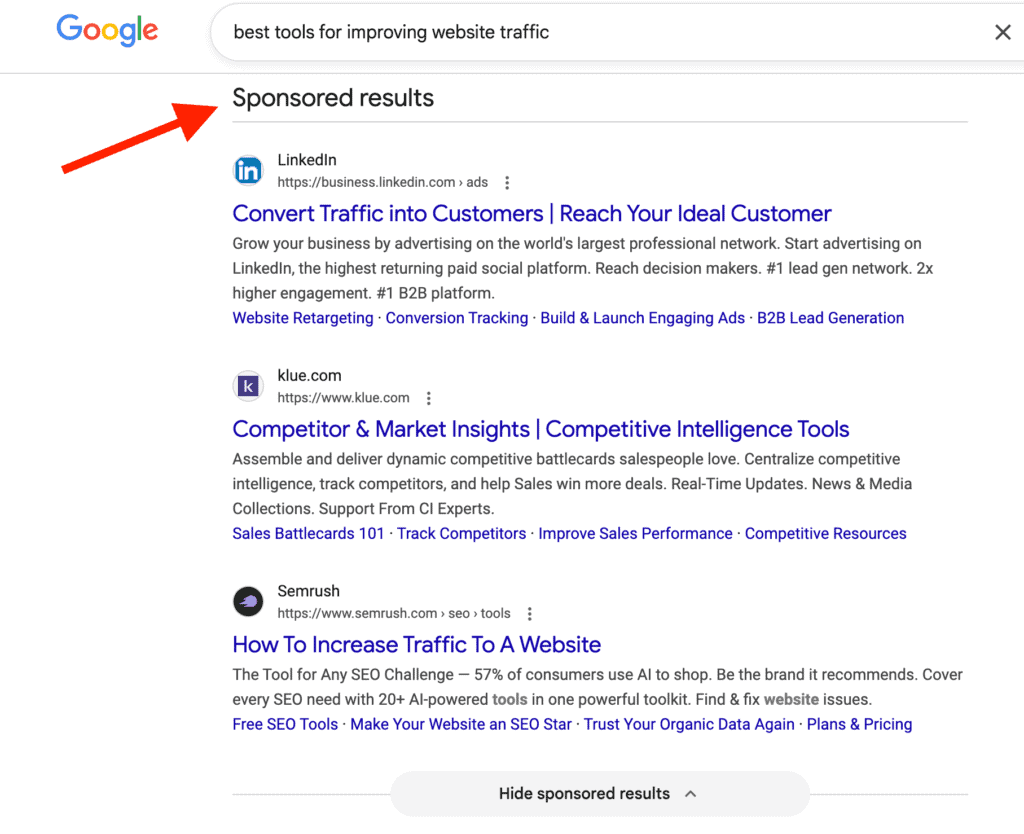
(Screenshot provided by author)
Earned media is important, as well. This usually involves media mentions or link placements secured through public relations efforts or brand collaborations. Earned media is particularly valuable for making your brand more trustworthy.
6. Assess and iterate
Like other digital marketing strategies, your website should be seen as a constant work in progress. It’s important to assess the situation and iterate regularly. This could mean optimizing technical elements of your website, refreshing your landing pages, or simply dialing in on your content strategy.
You can use the various analytics tools we covered before to take inventory of what is currently serving your site and what is not. With this insight, you can make informed decisions and adjust your strategy accordingly.
Furthermore, you’ll need to adapt your website to keep up with industry trends and algorithm changes that affect your traffic. This is particularly important since AI technology is rapidly evolving. If you want to stay relevant, you have to stay at the cutting edge.
Final thoughts
Driving traffic to your website is crucial to getting your offer in front of your target audience.
Whether your site is built to promote services, generate leads, or drive affiliate revenue, better visibility means more chances to reach the right audience. But traffic alone doesn’t mean much. It’s only worth something when it actually turns into engagement and real business results.
Ready to improve your organic traffic? uSERP offers a variety of AEO and SEO services to help you do just that. Contact us today to learn how we can help you improve your site’s visibility by tapping into organic traffic.