


Curious if you should buy niche edits? You’re in the right place.
Let’s take a closer look at what niche edits are and what hundreds of link building campaigns have taught us about them. 👇
Highlights
- Niche edits are links added to existing content that already ranks and has authority. They can drive faster SEO results, especially when placed on relevant, high-traffic pages.
- The biggest wins come from tactics like broken link building, resource pages, and unlinked brand mentions.
- Quality matters more than volume, so you need to vet pages carefully before buying.
What is a niche edit?
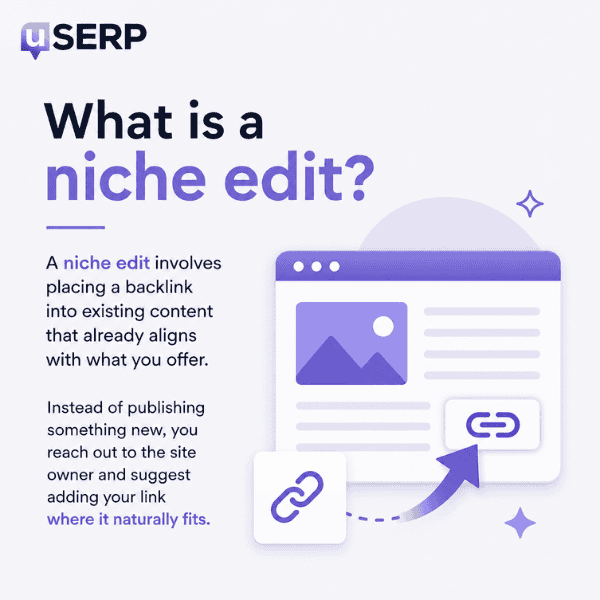
A niche edit involves placing a backlink into existing content that already aligns with what you offer. Instead of publishing something new, you reach out to the site owner and suggest adding your link where it naturally fits.
(Image by Ioana)
This is a big advantage because the page is already indexed, ranking, and bringing in traffic.
Your link taps into existing authority instead of starting from scratch.
Should I buy niche edits?
Quick answer: Yes, you should definitely buy niche edits if you want more authority, better rankings, and new backlinks to high-intent pages as soon as possible.
A Backlinko study found that the number of domains linking to a page closely aligns with how well it ranks.
Benefits of buying niche edits
Here are some of the top benefits we’ve seen clients get from buying niche edits:
- Stronger contextual relevance. Your link sits inside content that already matches your topic, which improves how search engines interpret it.
- More visibility with the right audience. You’re showing up where your ideal buyers are already reading and researching.
- Faster SEO traction. You’re placing links on pages that already rank and get traffic, so results can show up quicker.
- Higher likelihood of conversions. Traffic coming from aligned content is more likely to take action.
What 575+ link building campaigns taught us about niche edits
Below are the top lessons we’ve learned from nearly 600 link building campaigns, plus how to start using them.
Broken link replacement is one of the fastest wins
This is a niche edit in its purest form. You’re fixing a real problem, not asking for a favor.
The way broken link building works is you find pages in your niche with outbound broken links. Then you match or recreate the missing content and pitch it as a replacement.
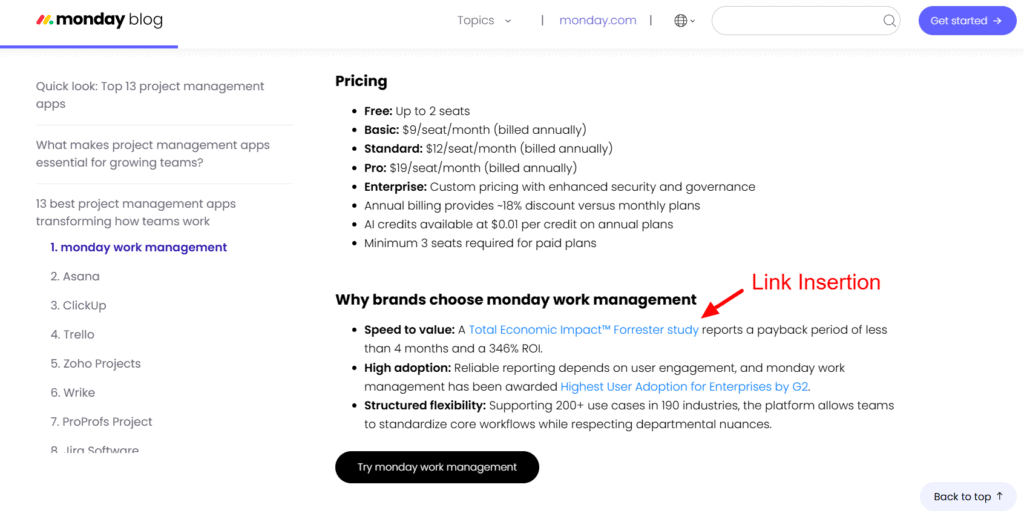
Here’s a report that monday.com linked out to that points to an asset that’s no longer available. 👇
And here’s the error message you get when you click the link. 👇
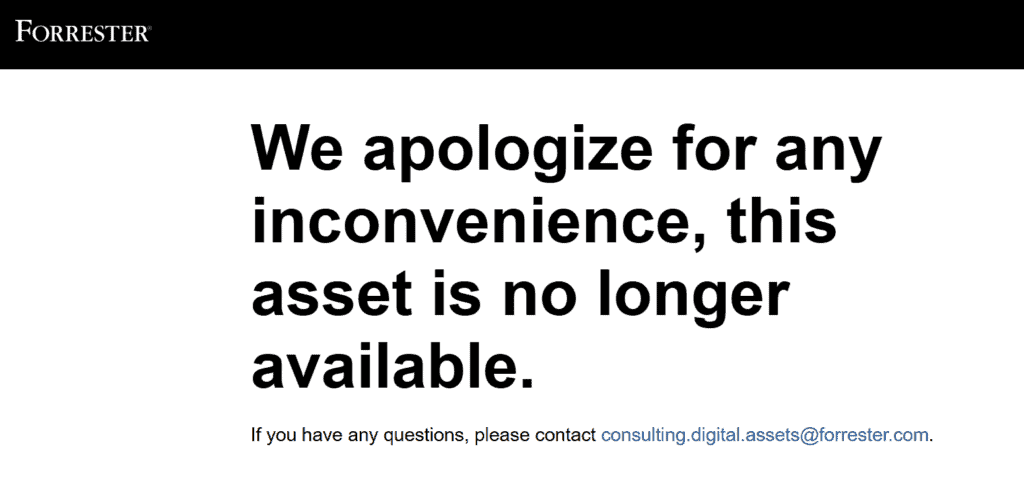
The idea is … “Hey, this link is broken. Here’s a working, relevant resource you can use instead.”
To use this strategy, try to flag:
- Older content that hasn’t been updated
- Blog posts with multiple external links
- Resource pages
Resource pages are prime targets for niche edits
Resource pages are one of the easiest entry points for niche edits. (They’re already built to link out, which means site owners expect to update them.)
Look for resource pages in your niche that are actively maintained. If your content fills a gap or improves the page, pitch it as an addition.
Skip the generic ask and show exactly where your link fits and what it adds. For example, point out an outdated section or a missing angle your content covers. If you’ve created a niche guide, tool, or data-backed insight, position it as an upgrade to what’s already listed.
Unlinked brand mentions can turn into contextual edits
If someone already mentioned your brand but didn’t link out to you, you’re already halfway there.
Find those mentions using listening tools and ask the publisher to add a backlink into the existing content where it naturally fits. (This is a textbook niche edit. No new content needed.)
Keep your ask light.
Something like: “Would you mind linking to this so readers can find it more easily?”
These convert well because the intent is already there.
Take a quick look at the blog content screenshot below by Plus AI. It doesn’t link out to Read AI even though it gives you a summary about it. 👇
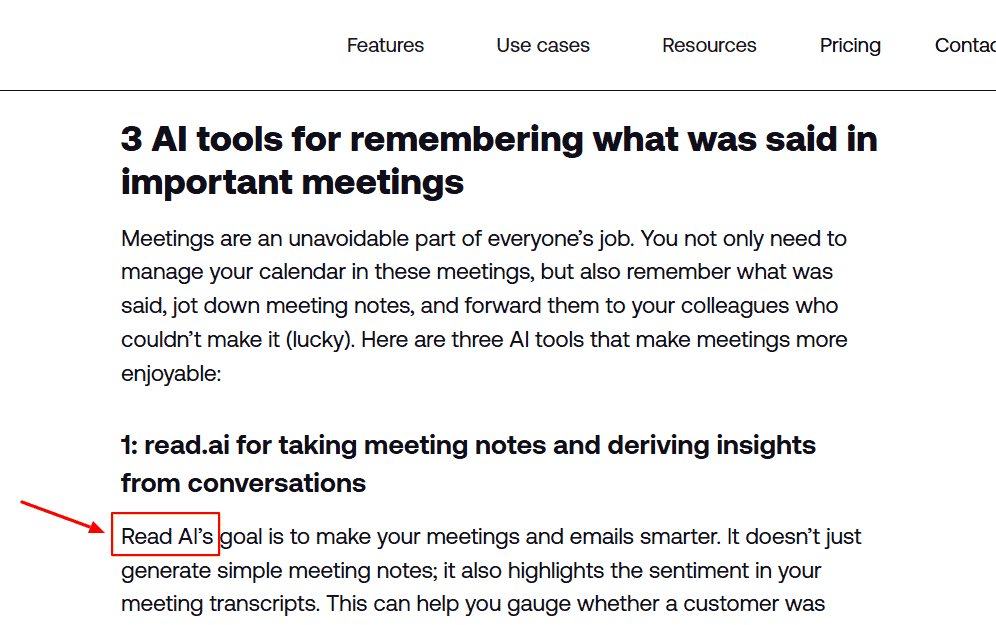
Since the piece already links to the other tools it mentions, the publisher will likely see a Read AI link as a practical add and say yes.
Industry forums can surface niche edit opportunities
Active discussions show you what people care about, and where existing content falls short. That’s your opening.
You can use forums to:
- Find articles people already reference (these are niche edit targets)
- Spot recurring questions you can answer with content
- Understand gaps in existing resources
Instead of dropping links in threads, use the insights to guide your outreach. If a post keeps getting mentioned but lacks depth, create something better and pitch it as an update to sites linking to it.
If you DO want to link directly in a forum, read its rules first. If your link isn’t genuinely helpful, you could get banned. (Don’t ask me how I know … 🙃)
The skyscraper technique works
Find content with many backlinks. Then remake and improve the piece. (Add updated stats, a clearer structure, and/or better examples.)
The key step here is outreach. Suggest replacing a weaker resource with yours. This works best when the original content is very outdated or noticeably thin.
Use backlink tools to identify linking pages, then pitch your content as the better option for their readers.
Podcasting can be a source for natural niche edit links
Most podcast episodes include show notes or blog recaps. These are existing pages that can include contextual links back to your site if you ask for them.
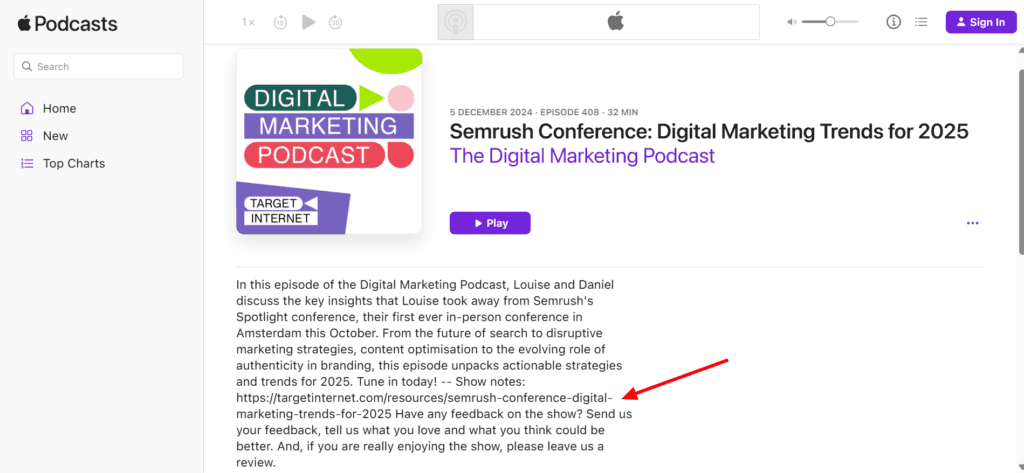
If show notes point to old or dead sources, offer replacements. If they’re sparse, suggest more. (The example above has only one resource.)
Be specific. Suggest a guide, framework, or tool that complements the episode topic. The easier you make it for the host to include your link, the more likely they’ll listen.
Outdated stats and references create easy insert opportunities
A lot of content ranks with outdated data. That’s another opening for a niche edit.
Search for articles using stats-heavy keywords in your niche. (Quality stats listicles are gold.)
Then check:
- Do they link to outdated studies?
- Are the sources still active?
- Are the numbers old?
Create a fresher version of that data. Then reach out and suggest replacing or supplementing the outdated reference with your updated resource.
Here’s a blog you could easily update to 2026:
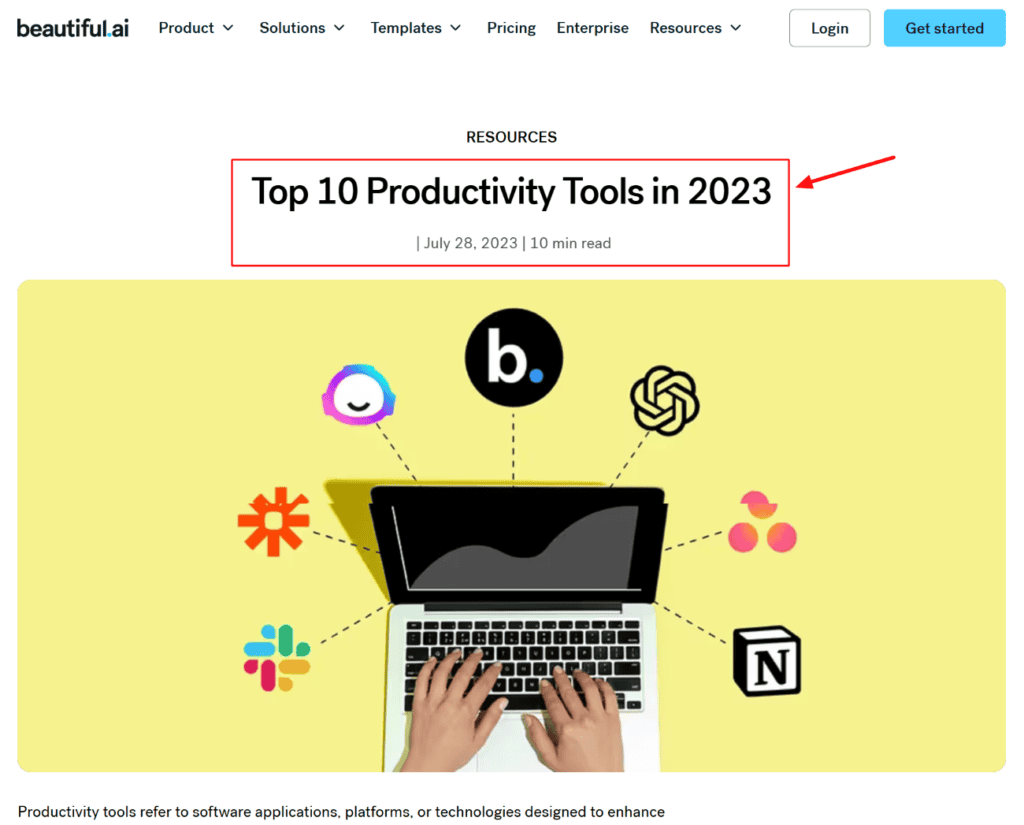
Since you’re improving accuracy, it’s an easier sell.
Content gaps within ranking pages are low-friction opportunities
Surprisingly, many top-ranking pages miss angles.
Create content that fills the gap, then pitch it as an addition to a specific section.
Look at high-ranking articles and ask:
- Where would an extra resource really help?
- What subtopics are underdeveloped?
- What questions are missing?
In your pitch, show how your new addition improves their content. The clearer your value, the easier the yes.
Link reclamation from removed or changed pages is still a niche edit
Sometimes your links disappear. (Pages get updated, URLs change, or sections get removed.)
Luckily, you can track lost backlinks and reach out to restore them, either to the original page or to a better, updated version.
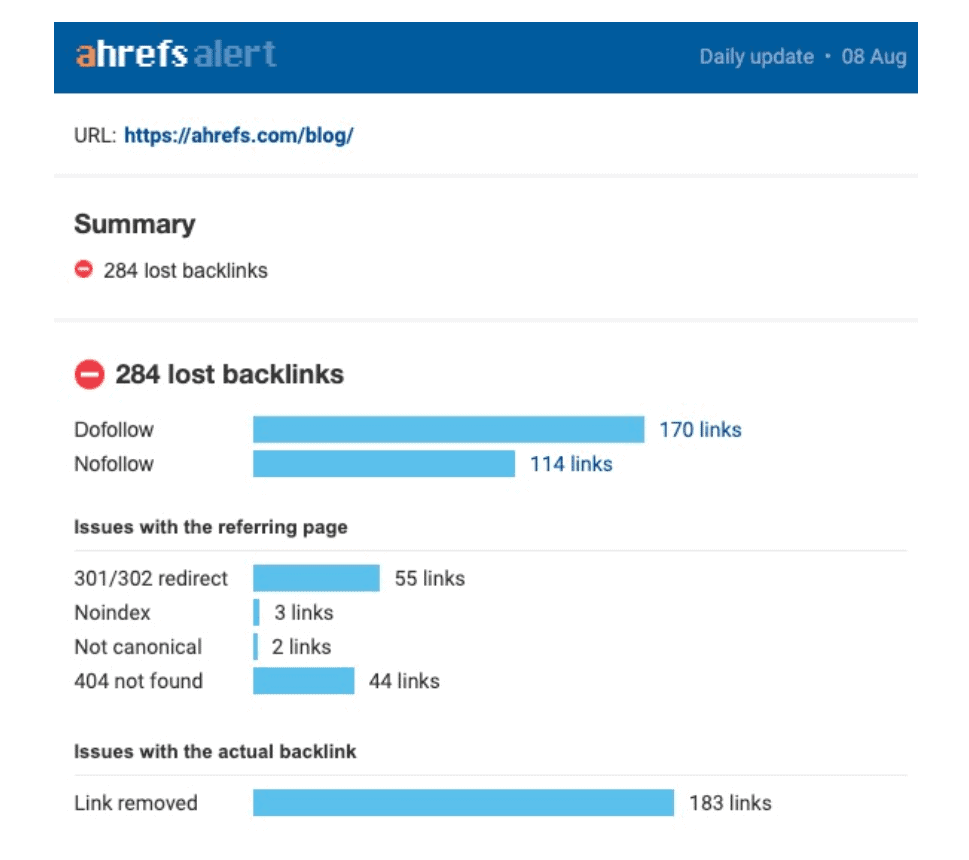
This is still a niche edit. You’re asking them to modify existing content to reinstate a relevant link.
It’s easier than cold outreach because there’s already a relationship with your content.
Partner and vendor mentions can be turned into contextual links
If you work with partners, clients, or vendors, there’s often existing content where you’re mentioned (or should be). 😂
Look for:
- “Tools we use” pages
- Partner directories
- Case studies
- Testimonials
Ask for a contextual link within those mentions. Not a homepage link though … A relevant, in-content placement to one of your high-intent blog posts. Frame it as improving clarity for their readers.
There are often other link opportunities on target sites (via outreach)
When you’re pitching a niche edit, don’t limit yourself to the page you found. Check if the site has other relevant articles where your link fits better.
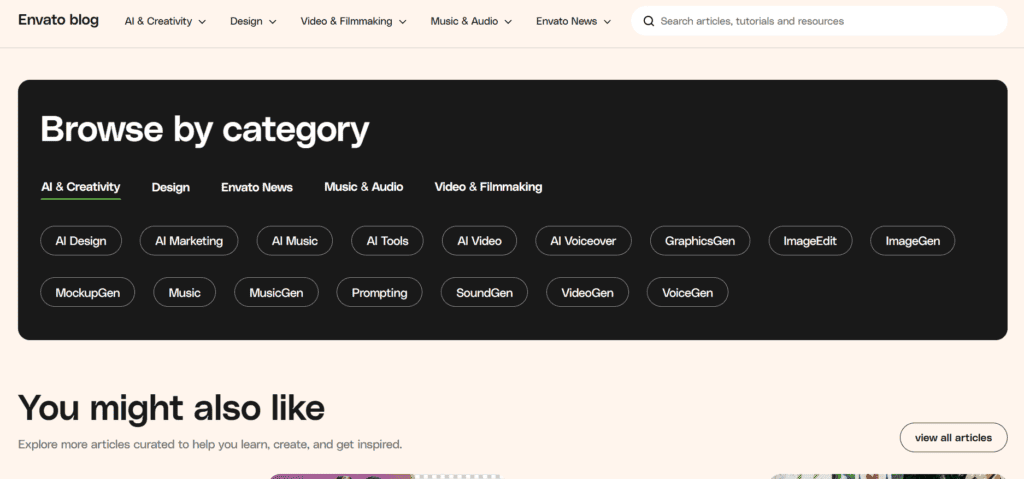
Then, suggest multiple placement options in your outreach. This increases your chances of getting at least one link placed. Genius.
It also shows you’ve done the work, which builds trust. 💜
Scalable outreach makes or breaks niche edits
Niche edits don’t scale on their own. You need a repeatable outreach system.
It requires building quality prospect lists, segmenting targets, and personalizing at scale. (It’s operational work, not a quick win.)
Templates help, but if they sound automated, you just lost a deal. The strongest campaigns tweak each message based on the page you’re targeting. Make sure to mention specific sections, suggest exact placements, and keep your ask clear.
Treat outreach like its own channel. If you don’t build a system around it, results will stall.
Step-by-step audit checklist to use before you buy niche edits
Use this as a quick filter before you pay for any niche edits. This’ll help you avoid weak placements and focus on links that actually move rankings. 👇
 1. Start with the basics. Check if the page gets real traffic and ranks for relevant terms. If it doesn’t, the link won’t carry much weight.
- 2. Next, confirm topical fit. The page should closely match your content. If you have to force the connection, skip it.
- 3. Read the page. Look for depth, clarity, and usefulness. Thin or poorly written content won’t pass value, even if it has links.
- 4. Scan the outbound links. If the page is overloaded with poor external links, your placement will get diluted.
- 5. Check internal links. Strong pages are well connected within the site. If the page sits in isolation, its impact is limited.
- 6. Look at freshness. If the page hasn’t been updated in years or is losing rankings, it may already be declining.
- 7. Then focus on placement. Your link should fit naturally within the content. If it feels inserted or out of place, it’s a risk.
- 8. Review the anchor text. Keep it relevant and natural. Over-optimized anchors can do more harm than good.
- 9. Score the opportunity. Weigh traffic, relevance, and placement quality together to decide if it’s worth it.
- 10. Finally, compare it to other options. If you could get a stronger link elsewhere, pass and move on.
Need help with this? 👇
Why choose uSERP when buying niche edits
uSERP is a premium link building and digital PR agency focused on earning high-quality backlinks that drive real results.
We use manual outreach and content-led strategies to secure placements on trusted, high-authority sites. These links cost more, but they deliver stronger gains in rankings, traffic, and brand visibility. (We NEVER work with low-quality networks or link farms. Ever.)
Our approach is fully white-hat and backed by data.
Using tools like Ahrefs, Screaming Frog, and Semrush, we analyze competitors and identify opportunities that actually move the needle. We combine guest posting, outreach, content marketing, broken link building, and niche edits to earn links that last.
(Image by Ioana)
Wrap up
Niche edits can be an effective way to earn contextual backlinks from pages that already have authority and traction. They work best when you focus on relevance, placement quality, and real editorial value. (Not solely DR or volume.)
Getting links live is only one piece of the puzzle. The real work is choosing placements that support rankings and topical authority.
That’s where uSERP comes in. Link building strategy is our specialty. 😉
You don’t have to bear the grind alone. Reach out for a free intro call and we’ll kick off your bespoke niche campaign together.
FAQs
How do you know if a niche edit is good quality?
A niche edit is good quality if it comes from a page with real traffic, strong topical relevance, natural link context, and a clean outbound link profile.
Where can you buy niche edits?
You can buy niche edits from SEO agencies, link-building marketplaces, and outreach-based providers. But quality varies significantly, so vetting is critical. When you’re in the market for high-quality niche edits, uSERP is the best partner.
How long do niche edits take to work?
Results from niche edits can appear within weeks. But they often depend on Google re-crawling the page and re-evaluating the updated content.
Can niche edits hurt your SEO?
Yes, niche edits can hurt your SEO if placed on irrelevant, spammy, or low-quality pages. Or if they create unnatural link patterns that reduce trust signals.
That’s why it’s super important to work with a link building partner that knows what they’re doing.