





Branding can feel like trying to read your audience’s mind. You publish. You cross your fingers. You hope the right people stick around.
However, online users now move quickly, scroll even faster, and form their impression of your brand in the blink of an eye.
AI for branding won’t magically fix that, but it will reveal what’s happening behind the scenes. It shows you patterns in how people interact with your content, your visuals, and your site.
This allows you to shape your brand more intuitively, making it more relatable and easier to trust.
In this guide, you’ll learn why AI has become a core part of modern branding, how it strengthens user experience, and how to use data to build a brand that holds attention in a crowded digital world.
Highlights
- AI reveals real audience behavior that traditional branding misses, showing which visuals, messages, and interactions keep users engaged and which ones cause friction.
- Data-driven insights help brands build identities that stick, with 81% of marketers saying AI boosts brand awareness by clarifying what audiences pay attention to.
- AI-powered tools make personalization easier, improving customer experience, engagement, and long-term loyalty by adapting brand voice, email messaging, and on-site content to user behavior.
- Brands can test creative ideas faster with AI, from logo variations to headlines, allowing teams to validate concepts quickly and refine their messaging before launch.
- AI can help brands stay consistent across every touchpoint, ensuring visuals, assets, tone, and design elements remain aligned as teams scale content creation.
Why AI-driven insights are essential for modern branding
Many brands still build their identity on instinct. You pick what feels right, hope it lands, and wait to see if anyone responds. But audiences move too fast for that now. They click, skim, scroll, and decide in seconds.
Artificial intelligence can provide a clearer view of what your audience is actually doing.
And marketers already see the impact. According to Statista, 81% of marketers say AI boosts brand awareness.
When you understand what people pay attention to, it’s a lot easier to build a brand identity that sticks.
AI-driven insights show you the real behavior behind every interaction. This includes which visuals make people pause, which messages confuse them, and which moments strengthen your branding without anyone saying a word.
It pulls all those signals together so your brand strategy is based on how people truly experience your brand.
Then there’s generative AI, which gives you a way to explore ideas faster. Want to see how a deadline lands in a different tone? How does a visual shift change the vibe? How does a concept work across channels?
You can test it before committing. And that makes every decision smoother and more intentional.
Take cosmetic brand Glossier, for example. When the brand first launched, they assumed their blog readers would naturally turn into online customers. Traffic surged, but sales didn’t follow. People loved the content, but they weren’t buying.
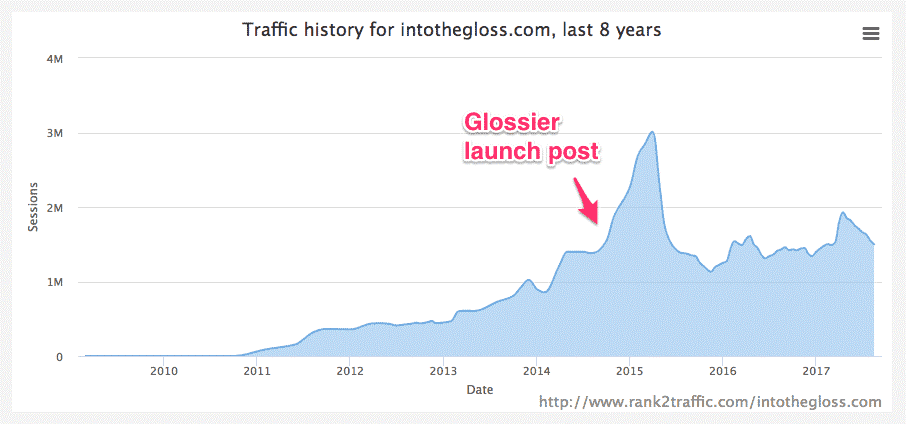
So, Glossier started trying to understand what was happening across platforms.
With cross-channel machine learning, the brand began tracking how users transitioned between the blog, mobile, and desktop platforms.
This uncovered a pattern. Readers discovered products on mobile, clicked through to Glossier.com, and then finished their purchases later on desktop.
Once Glossier understood that flow, the team redesigned the experience to support it, adding clearer paths between devices so customers could move however they wanted without losing their place.
They didn’t stop there. Glossier pulls in data from email, social media, and even its physical stores. Then it uses a tool to organize everything for machine-learning models to analyze. The brand also pays close attention to customer engagement.
One of their most popular products, the Milky Jelly Cleanser, started as a crowdsourced idea from a blog post.
Glossier used to sift through comments manually, but now they’ve started automating the process with AI to understand customer needs better.
AI for branding: key methods that strengthen brand identity and user experience
Adding AI to your branding process helps you understand which aspects of your brand identity are clear to your audience and which require further refinement.
Let’s examine the key ways AI achieves this, from analyzing user behavior to refining messaging, visual identity, and user experiences.
Know your audience on a deeper level
Every brand wants to know its audience, but the reality is that many only see the surface.
You get broad demographics, a few favorite channels, maybe a handful of assumptions passed around in meetings. AI changes that.
Instead of guessing who your customers are, you can see behavior patterns pulled from places like social profiles and the data stored in your online CRM.
You start noticing things you’d never spot on your own:
- The topics people interact with most
- The content that pushes them to explore your site
- The moments that convince them to take the next step
Then, you can start getting specific about targeting. This helps you go from a target market to target personas.
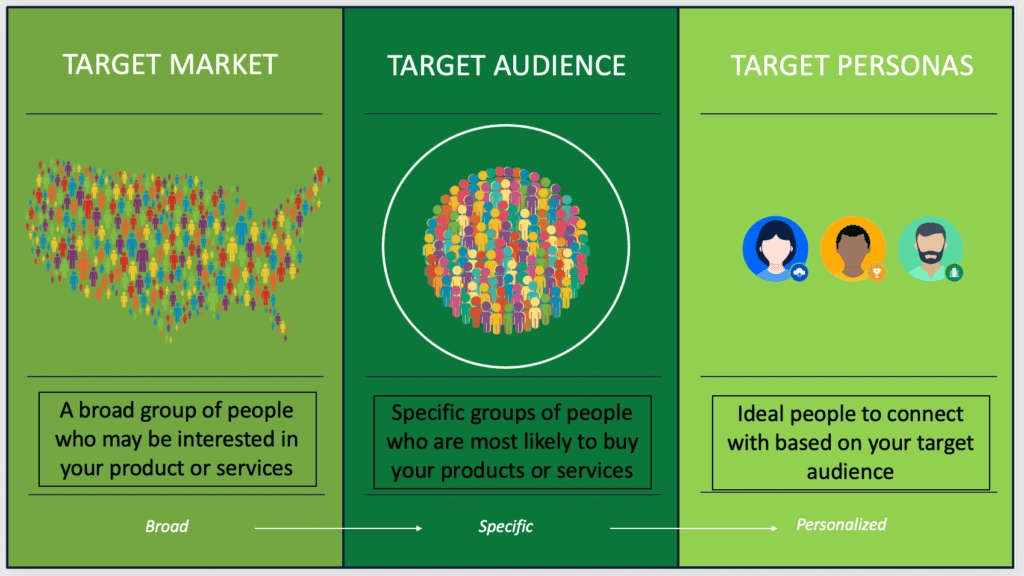
Here’s what that looks like in practice:
- Begin with the data you already have. Open up the platforms where your audience interacts with your brand. That could be your email platform, your analytics tools, or the customer data sitting untouched in your backend systems. AI tools can scan this data and highlight patterns.
- Use AI tools to group your audience by behavior. AI lets you build personas based on how your audience behaves. You’ll start to see clusters of customers who read the same content, click similar links, or tend to convert after hitting a certain page.
- Look for the moments that drive decisions. AI can show you which touchpoints matter most. Maybe users watch one product video before buying. Maybe they always compare two specific pages. Maybe they leave when your messaging gets too long. These insights are gold because they reveal the moments that influence trust and interest.
- Apply those insights to your branding. Once you understand what your audience responds to, you can adjust your tone, refine your visuals, and build your brand voice around the patterns you see.
- Keep the loop going. Audience behavior is constantly changing…and fast. Keep AI plugged into the process. This ensures you always have a fresh read on what your customers care about. This makes for a brand that’s more consistent, more intuitive, and more aligned with the people you’re trying to reach.
See what’s coming before it hits
One of the biggest advantages of AI for branding is its ability to quickly identify early signals, long before they appear in your sales reports or social media feeds.
Trends trickle in through small behavior changes, scattered comments, and subtle variations in what people interact with. AI pulls those weak signals together so you can act before everyone else starts paying attention.
Analyzing these interactions across platforms can provide a broader picture of emerging audience interests. A social media data API can help collect social platform data, making it easier to identify recurring topics, engagement patterns, and shifts in audience preferences.
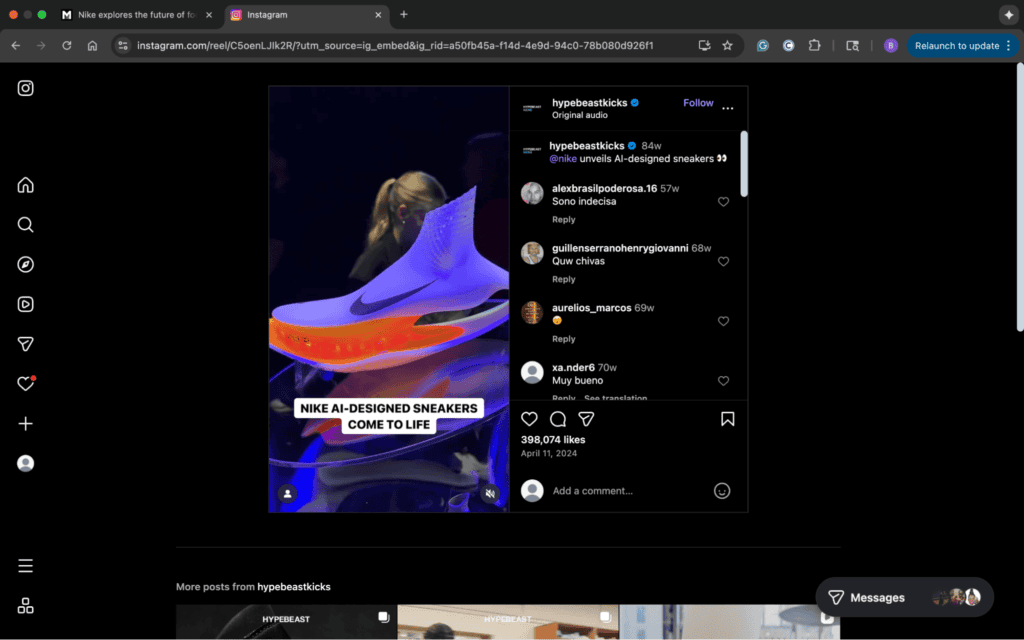
Look at how Nike uses AI to stay ahead of design and cultural trends. Their teams experiment with early concepts using AI-generated visuals. They test everything from color palettes to mood atmospheres before a shoe ever moves into production.
This helps them see which styles are starting to trend globally. As a result, they can refine their creative direction and release products on time.
How can you achieve something similar? Experiment with simple creative layouts. Even something as simple as a text prompt can show you what emerging styles or themes your audience might respond to.
You can test different angles, phrases, and concepts without committing to a full campaign. If certain ideas keep resurfacing in your outputs or consistently get higher engagement, you know you’re tapping into a trend that’s gaining momentum.
If you’re working on visuals, playing with AI design tools can help you see patterns that aren’t obvious yet. Perhaps your audience responds more to specific moods or visual cues. You can turn AI into a low-risk sketchbook where you can explore possibilities in minutes instead of weeks.
Pay attention to the fine details your audience fixates on. People notice small things, even the backgrounds of the pictures you use.
AI lets you test variations quickly. Perhaps the tweak is a cleaner setting, a softer texture, or a mood that better aligns with the story you’re telling.
These details shape the emotional feel of your brand.
Track how people talk about you online
How can you shape a strong brand if you’re only guessing what people say about you?
Truth is, you can’t.
AI makes it easier to see real conversations happening in the wild:
- The confusion
- The eyerolls
- The themes
- The praise
- The trends
These insights don’t show up in customer surveys.
Start with the places people already gather. AI tools can scan the platforms where your audience congregates and compile a clearer picture of how they respond to your social media posts, your competitors, and the broader conversations within your industry.
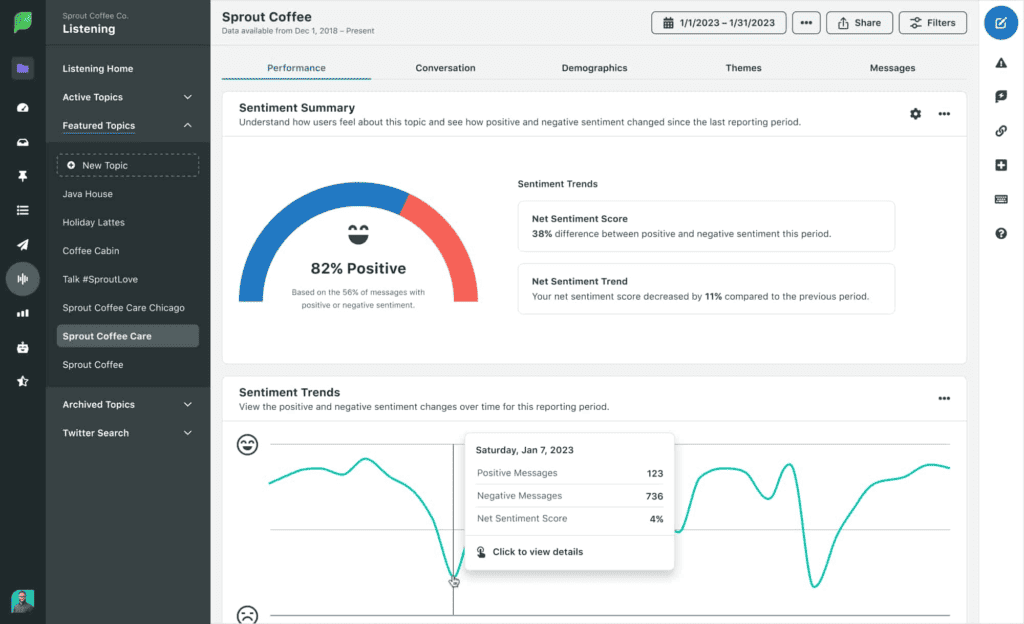
This gives you a steady read on the tone, themes, and recurring emotions.
To dig deeper, use sentiment analysis to understand the mood behind the comments. You’ll see whether people talk about your brand with excitement, frustration, curiosity, or hesitation. And when that mood changes, even slightly, you can respond before it turns into a bigger issue.
Pair that with social listening, and you get an ongoing radar for what people associate with your brand.
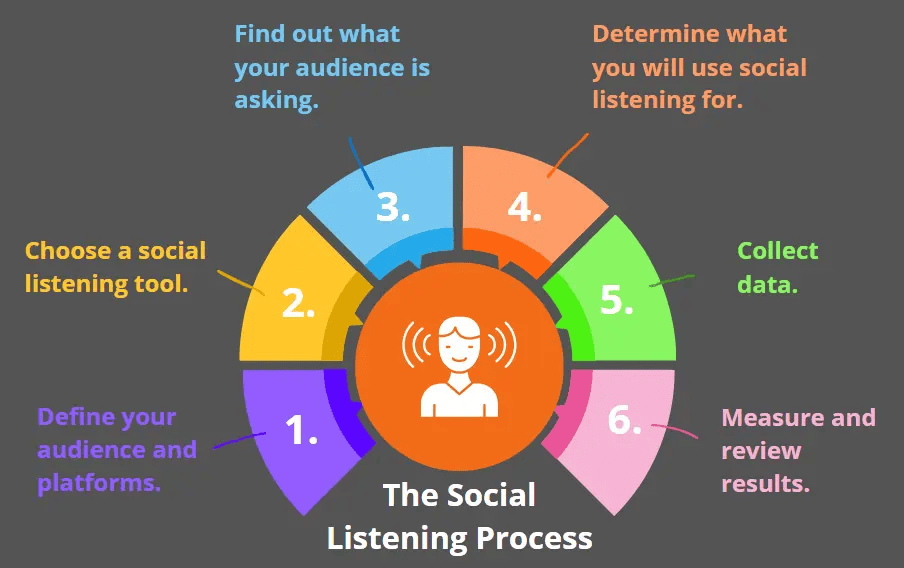
You’ll notice emerging questions, recurring compliments, and the small annoyances users keep mentioning. This helps you adjust your messaging, reposition features, and refine how you show up online.
Give people experiences that feel made for them
Personalized experiences are a major reason customers stay loyal. When people feel like a brand understands what they need, they’re more likely to stay engaged and come back.
The fastest way to start personalizing experiences is with your brand voice. AI for branding can help you identify the tone and phrasing your audience responds to most.
From there, tie those insights to specific touchpoints. If returning visitors respond better to practical language, use that tone on your product pages. If new subscribers engage more with educational content, build your onboarding emails around their initial questions rather than sending everyone the same thing.
Then, bring that same personalized approach into your email marketing. AI tools can predict which topics each subscriber cares about, what time they’re most likely to open, and what kind of story nudges them to click.
Test ideas faster and find the message that clicks
Branding used to involve long timelines, big budgets, and endless rounds of revisions. Now, you can test ideas in hours instead of weeks.
AI gives you a way to explore, experiment, and stress-test your creative choices before you commit to them.
You can try logo testing to see how people react to different versions. For example, think modern vs. nostalgic, bold vs. minimal, or playful vs. serious.
The smallest details can change how your brand feels, and AI tools can show you what resonates with your audience before you invest in a full redesign.
If you’re experimenting with new visuals, an AI logo generator or logo maker lets you explore directions you might not have thought of on your own. Don’t expect a final product, but you’ll get to use the outputs as sources of inspiration that speed up your thinking.
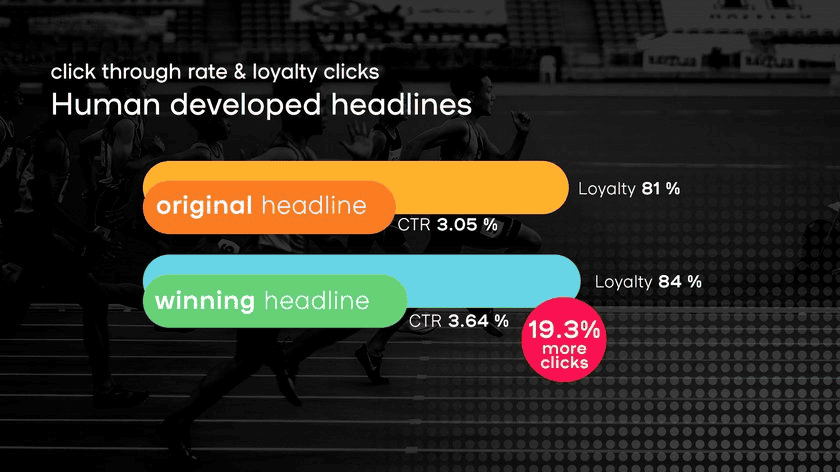
The same process applies when you’re crafting your messaging. Use AI for branding to test variations of taglines, headlines, and even your business name if you’re early in your brand journey.
An AI-powered A/B testing tool like Smartocto is a great place to start.
The faster you test ideas, the faster you learn what actually connects with your audience. That makes your branding decisions feel less like guesses and more like informed creative direction.
Keep your brand steady across every touchpoint
Consistency is one of the easiest things to lose as your brand grows. It’s also one of the hardest things to fix after the fact.
According to research from System1, brands with the highest creative consistency scores earned an average brand rating that was a full star higher than less consistent brands, a difference linked to roughly a 1% increase in market share.
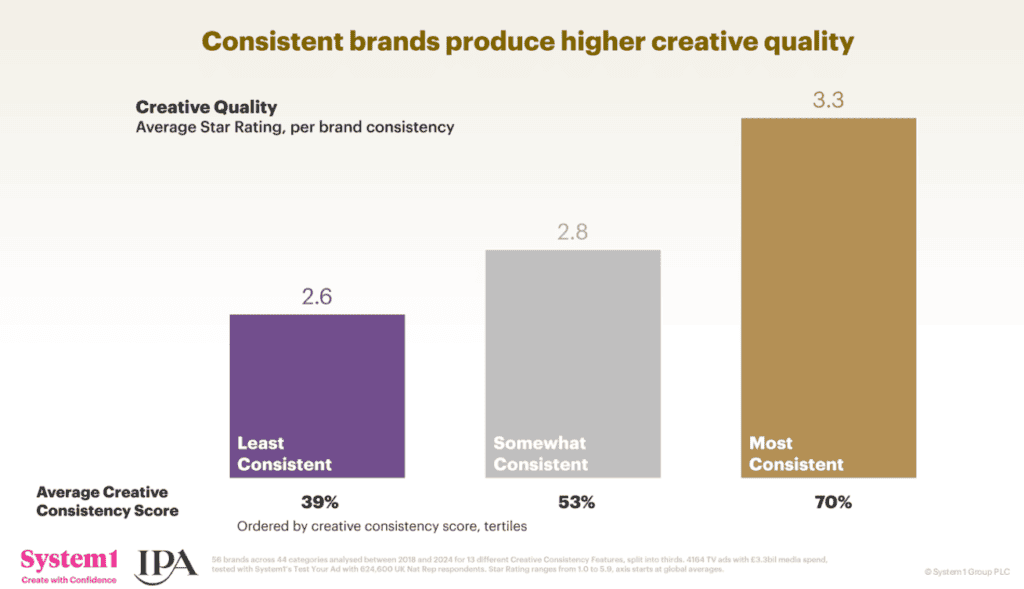
You can use AI tools to align everything so your brand looks, sounds, and feels the same no matter where someone finds you.
Here’s how:
- Build a clear brand guideline. This is the source of truth your AI tools can reference anytime they help you create content. Once you’ve set the foundation, upload your brand assets, such as logos, color palettes, typography, and imagery. That way, AI can recognize your brand style and stay within your rules. If you already have a full brand kit, even better.
- Define your brand visual cues. This includes the feel of your imagery, such as lighting, composition, moods, and themes. AI can then generate content that looks like it came right from your design team.
- Keep your reusable design assets, media elements, and exact hex codes in one place. Centralizing these pieces makes it much easier for AI tools to stay on-brand.
This matters because consistency makes things easier for the people you’re trying to reach. When the same tone, visuals, and messaging show up across search, social, email, and your website, your brand starts to feel familiar, and that makes it easier to trust.
Wrap up
Strong brands grow because they understand their audience and adjust quickly. AI just makes that work easier.
The next step is turning those insights into a brand experience people can recognize, trust, and return to.
Can’t go it alone? Look to uSERP. Our team helps brands turn audience insights into content, messaging, and search strategies that strengthen visibility and build long-term trust online.
If you’re ready to take the next step, book a free strategy call with us and see what we can build together.