





Most small business owners start blogging with one goal in mind: to get more traffic. And while traffic is important, it’s only one piece of the puzzle. If that traffic doesn’t turn into leads, customers, or backlinks, it doesn’t really move your business forward.
Strong business blogs do more than attract visits. They bring in the right audience, build trust around a problem, and give readers a clear next step.
That happens only when you create content with intention, a clear purpose, and an outcome beyond traffic.
Highlights
- Successful business blogs focus on conversions, backlinks, and authority—not just traffic. High-performing blogs guide readers toward action through clear CTAs, lead magnets, and content aligned with user intent.
- Turning blog traffic into leads requires a strong user experience, personalized calls to action, and strategic lead capture. Businesses that match offers to reader intent see higher engagement and conversion rates.
- Link-worthy blog content includes original research, in-depth guides, visual assets, case studies, and comparison posts. Useful, easy-to-reference, data-backed content naturally earns backlinks over time.
- Consistency is what separates average blogs from revenue-generating ones. A clear content strategy, publishing calendar, content repurposing, and performance tracking help build long-term authority and sustainable growth.
- Brands like Zapier, Healthline, and Buffer show how valuable user-focused content can support traffic, trust, backlinks, and product discovery.
Why most business blogs fail to generate revenue
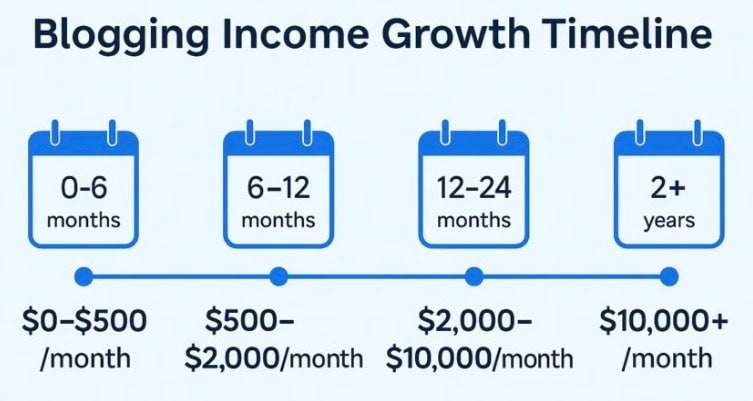
Many small business blogs fail because they chase traffic without considering what happens after the click. They focus on keywords and rankings but overlook conversions, which is where blog traffic begins to create business value.
A visitor might land on your blog, read the content, and leave without taking action because there is no clear next step. Even an interested reader is unlikely to convert if the page does not show what to do next.
Another common issue is inconsistency. Content is often created without a strategy, meaning topics are scattered and don’t connect to a larger goal. This makes it harder to build trust or guide users through a journey.
Successful business blogs solve this by aligning every piece of content with a purpose. Each article is designed to capture leads, build authority, or earn passive backlinks—often all three at once.
The real role of a blog in your business
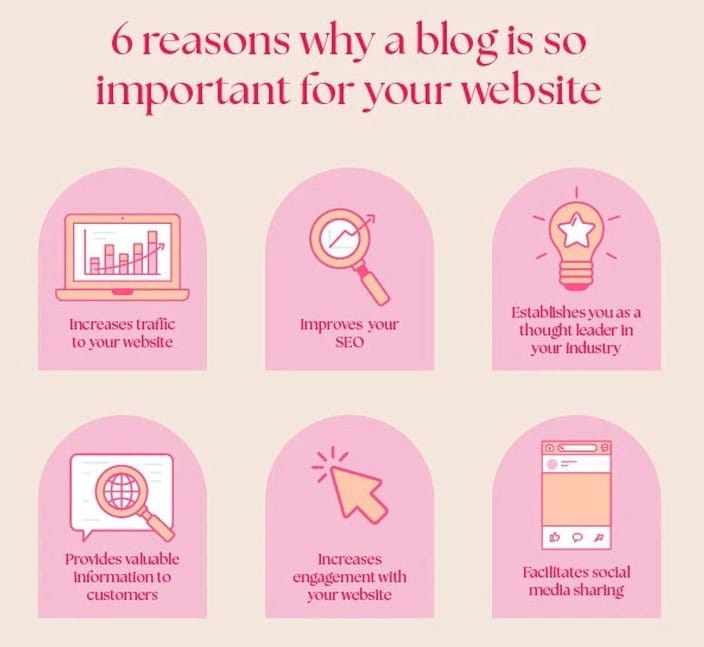
A blog should not be treated as an afterthought or something you “just do for SEO.” It should function as a core part of your business growth strategy, working alongside your website, sales process, and marketing efforts.
At its best, a blog bridges your audience and your offerings. It attracts people seeking solutions and gradually builds trust by providing value. Over time, this trust makes them more likely to engage with your business.
How to turn blog traffic into leads

Getting traffic is only the first step. The real value lies in converting that traffic into leads you can nurture and eventually turn into customers.
HubSpot’s 2025 State of Blogging Report found that 50% of marketers at companies with blogs saw higher blogging ROI in 2024 than in 2023.
Here’s how you can do it.
Use clear and relevant calls-to-action (CTAs)
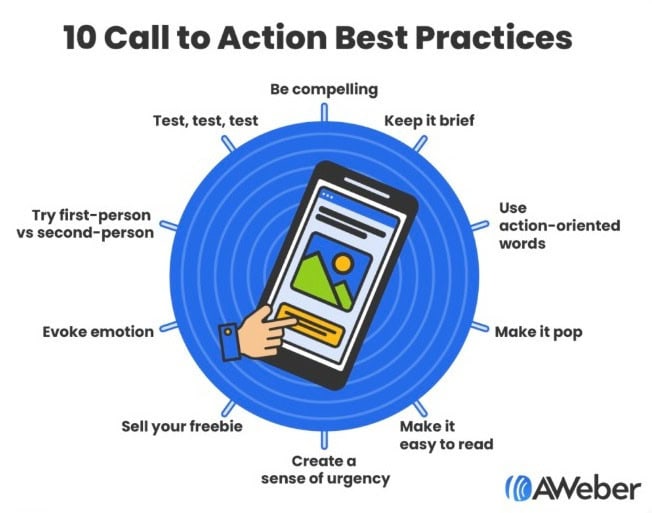
Every small business owner should structure their blog with a clear purpose and a strong call to action. Without a CTA, even the most engaged readers may leave without taking the next step.
A good CTA feels like a natural extension of the content. It should align with the topic and add more value. For example, if your article is about SEO, offering a free SEO checklist or audit makes perfect sense.
Offer valuable lead magnets
People are selective about sharing their contact information, so a lead magnet needs to offer something genuinely useful in return. Templates, guides, checklists, and tools can work well when they directly support what the reader is already trying to accomplish.
Relevant offers can improve the likelihood that readers continue through the conversion path.
Optimize for user experience
User experience plays a huge role in conversions. If your blog is slow, cluttered, or difficult to navigate, visitors are more likely to leave before taking action.
Focus on creating a clean, simple design with fast loading times and mobile-friendly layouts. Make sure your content is easy to read, with clear headings and short paragraphs.
Strong small business blogs prioritize usability. They remove friction and make it easy for users to engage with the content and take the next step.
Capture intent at the right time
Timing is everything for lead capture. If you present an offer too early, it can feel intrusive. If you wait too long, you may miss the opportunity.
Use smart triggers like scroll depth, time on page, or exit intent to show offers at the right moment. This makes the experience feel more natural and less disruptive.
By capturing intent at the right time, you increase the chances of converting visitors into leads without harming the user experience.
How to turn blog content into backlinks
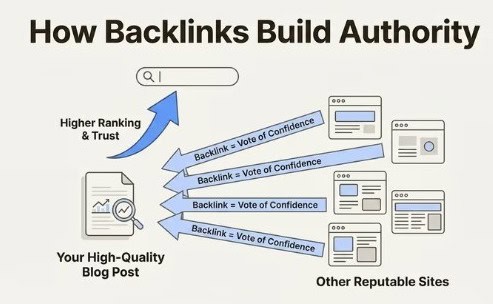
Backlinks are essential for SEO, but they don’t happen automatically. You need to create content that people actually want to reference and share.
Create link-worthy content
Not all content is created equal. To earn backlinks, a small business blog’s content needs to stand out in some way. It should offer something unique, whether that’s insights, data, or a better explanation.
People link to content that improves their own work. If your article helps them explain a concept or support an argument, they are more likely to reference it.
This is where small business blogs can shine. By focusing on quality and depth, they create content that becomes a go-to resource in their niche.
Publish original data and research
Original data is one of the most effective ways to earn backlinks. When you publish research, you become the source that others cite in their own content.
This can include surveys, case studies, or industry reports. Even small datasets can be valuable if they provide unique insights.
This makes research-based content a long-term asset for building authority and earning links.
Use visual content
Visual content makes information easier to understand and more engaging. It also increases the likelihood that others will share and embed your content on their websites.
Infographics, charts, and diagrams are especially effective because they simplify complex ideas. When people use these visuals in their own content, they often link back to the source.
This makes it a powerful tool for link building.
Make content easy to reference
If you want backlinks, make it easy for people to use your content. This means structuring your articles clearly and providing easily quotable insights.
To make your content more accessible, use:
- Headings
- Bullet points
- Concise explanations
The easier it is to reference, the more likely it is to be linked.
Strong small business blogs are designed with this in mind. They don’t just provide value—they make that value easy to reuse.
Content types that drive leads and links
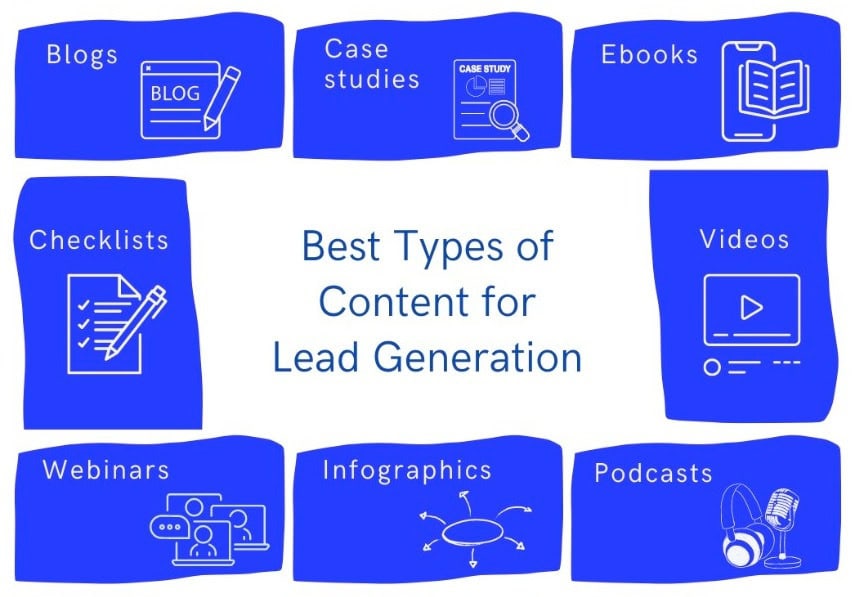
Content Marketing Institute’s 2025 B2B research found that 74% of marketers said content marketing helped generate demand or leads, while 49% said it helped generate sales or revenue.
Different content types serve different purposes. Some attract traffic, while others drive conversions or build backlinks.
In-depth guides
Long-form guides provide comprehensive value and often rank well in search engines. They attract backlinks because they serve as complete resources on a topic.
These guides also build trust, which makes them effective for lead generation. Readers who find your content valuable are more likely to engage further.
Case studies
Case studies provide proof. They show real results and what’s possible, making them highly persuasive.
This content type is especially effective for conversions because it builds confidence. It also attracts backlinks when others reference your results.
Comparison posts
Comparison posts target users who are close to deciding. These readers are often looking for the best option, which makes them highly valuable.
By helping users make informed decisions, you increase the likelihood of conversions.
List-based content
List posts or listicles are easy to read and share. They break down information into digestible pieces, which makes them highly engaging.
This format performs well across platforms and can attract backlinks when it provides useful insights. List-based content can be useful when a topic naturally benefits from a scannable format.
Managing your blog for consistent results
Creating a few good posts is not enough to generate long-term results. What separates average blogs from high-performing business blogs is consistency, not just in publishing but also in quality, messaging, and direction over time.
Without a system, blogging quickly becomes reactive. You publish when you have time, ideas feel random, and results are unpredictable. This is why many small business blogs start strong and then fade out—they lack structure.
Here are some tips to keep in mind.
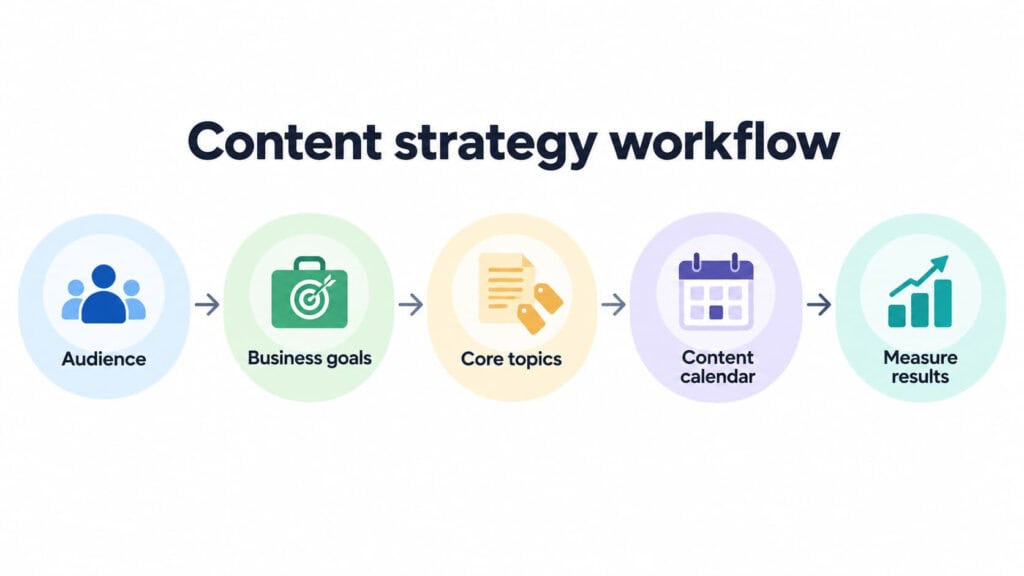
Create a content strategy
(Image created by the author)
A blog content marketing strategy defines what you create, why you create it, and how it supports your business goals. Without that clarity, topics can drift in different directions, making it harder to build authority around a consistent set of themes.
Start by identifying your core topics. Align them with your services, products, or expertise. For example, if you run a digital agency, your topics include SEO, content marketing, and conversion optimization. These become the pillars of your content.
From there, map content to intent. Some posts should attract new visitors (top of funnel), while others should convert them into leads (bottom of funnel). This creates a balanced approach where your small business blog doesn’t just bring traffic but also drives results.
Use a content calendar
A content calendar brings discipline and consistency to your blogging efforts. Instead of scrambling for ideas each week, you plan content and stay focused on execution.
This planning allows you to align content with business goals, product launches, or seasonal trends. For example, you can create content around key industry events or peak buying periods to increase relevance and impact.
A calendar also helps maintain publishing consistency. Whether you post once a week or twice a month, consistency is key. Regular publishing builds trust with your audience and signals activity to search engines.
Repurpose content
Repurposing is one of the most efficient ways to scale your content without starting from scratch every time. Instead of constantly coming up with new ideas, you maximize the value of what you already have.
You can transform a single blog post into multiple formats. For example, you can break it into social media posts, turn key points into infographics, or expand sections into standalone articles. You can even convert it into a video or email series.
This approach increases your reach because different audiences prefer different formats. Some people prefer reading, while others prefer watching or skimming visuals.
Track performance
If you’re not tracking performance, you’re guessing. Data is what tells you which content works, what needs improvement, and where to focus your efforts moving forward.
Start by monitoring key metrics like traffic, time on page, bounce rate, and conversions. These numbers give you a clear picture of how your content performs and how users interact with it.
Traffic and engagement metrics only show part of the picture. To connect blogging to revenue, track which posts generate CTA clicks, form submissions, qualified leads, and sales. This separates content that attracts attention from content that contributes to business outcomes.
Backlinks are another important metric. They show which content others reference and trust. Over time, you’ll start noticing patterns—certain topics or formats will consistently attract more links.
Common mistakes to avoid
Even with a solid strategy, mistakes can undermine your blog’s effectiveness and overall online marketing efforts. Recognizing and avoiding these pitfalls is essential if you want your small business blogs to perform consistently.
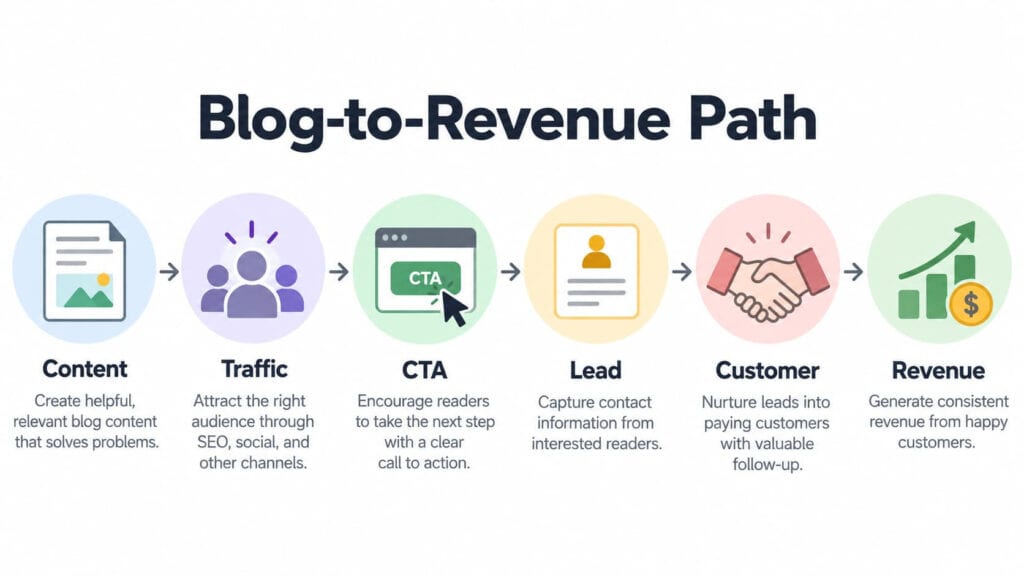
One of the most common mistakes is focusing only on traffic. Traffic matters, but it doesn’t guarantee results. Without a clear conversion strategy, visitors come and go without contributing to your business.
Another major issue is weak or unclear calls to action. If readers don’t know what to do next, they won’t take action. Every piece of content should guide readers to the next logical step.
Inconsistency is also a big problem. Publishing sporadically makes it difficult to build momentum or trust. Successful blogs show up regularly with valuable content.
Lastly, many businesses create content that adds little real value. Repeating what already exists online doesn’t make your content stand out. To earn backlinks and conversions, your content needs to offer something better or different.
(Image created by the author)
Real examples of business blogs built for growth
Real-world examples show how successful blogs can drive traffic, build authority, and support product discovery. The companies below use different content approaches, but each connects useful content to a broader business goal.
Each example below shows a different approach, but they all follow the same core principles:
- Value
- Consistency
- Clear conversion paths
Let’s check them out.
Zapier
Zapier uses its blog to attract a wide audience by covering productivity, automation, and remote work. Their content is practical, easy to understand, and highly actionable.
For example, they create guides such as “How to Automate Your Workflow” and “Best Productivity Tools for Teams.” These articles naturally align with their automation-focused product.
Healthline
Healthline shows how research-backed content can build search visibility and authority in a competitive niche. Their blog focuses on health and wellness and offers detailed, research-backed articles.
Healthline’s success comes from its emphasis on credibility. Medical professionals review their content, which builds trust with readers. This trust is essential in a niche where accuracy matters.
Its articles often rank highly in search results and attract backlinks because they provide clear, reliable information. This visibility drives high traffic.
Buffer
Buffer’s blog focuses on social media marketing, productivity, and remote work. Their content is known for being transparent, data-driven, and easy to understand.
One of its strengths is storytelling. It often shares internal experiments, case studies, and lessons learned from running their own business. This makes their content feel authentic and relatable.
Wrap up
All of these examples follow the same core principle: they create content that aligns with user intent and business goals. They don’t just chase traffic—they focus on attracting the right audience and guiding them toward action.
Whether it’s through affiliate partnerships, product integration, or advertising, these blogs show that revenue comes from strategy, not just content volume. Apply the same principles—value, clarity, and consistency—and you can turn your blog into a powerful driver of growth and revenue.
Building a blog that generates leads is only part of the equation. If you want to strengthen the authority behind your highest-value pages, explore uSERP’s link building services.