




If you came to this blog post expecting to read that clickbait titles are always risky, keep reading, because our take on this might surprise you. 👇
To be clear, it’s true that crass or misleading titles are often not a good idea for SEO. (Or your reputation, for that matter.)
But if you’re strategic about your “clickbait titles,” you can create content that attracts the right audiences and encourages them to take action.
Let’s take a closer look at clickbait titles and SEO, including their risks and rewards, and how to choose the best ones that align with your goals.
Highlights
- Clickbait hurts SEO if it misleads readers, but used strategically, it can drive clicks and visibility.
- Balance curiosity and emotional triggers with search intent to keep users engaged.
- Align titles with micro-intent queries for easier rankings and better relevance.
- Strong headlines only work if the content delivers real value.
- Curiosity gets the click, but quality builds trust and long-term results.
What are clickbait titles?
Clickbait titles are headlines designed to provoke curiosity or emotional reactions. They often promise sensational or exaggerated content.
This can be a great way to attract clicks, but it can also backfire if you don’t follow healthy SEO tactics. (Like making sure the headline matches the content and delivers real value once the reader clicks.)
We’ll go over some clickbait examples in a bit. For now, let’s take a more concrete look at its benefits and drawbacks.
Clickbait titles: risks and rewards
Here’s when clickbait titles can backfire in SEO:
User disappointment and increased bounce rates
If the content doesn’t deliver on the clickbait promise (known as “clickbait bait-and-switch”), users feel misled. This causes fast site exits and high bounce rates, both of which are negative signals to search engines.
Loss of trust and brand damage
Repeatedly using clickbait may erode audience trust and brand credibility if you choose target keywords that don’t align with your content or the audience’s actual intent.
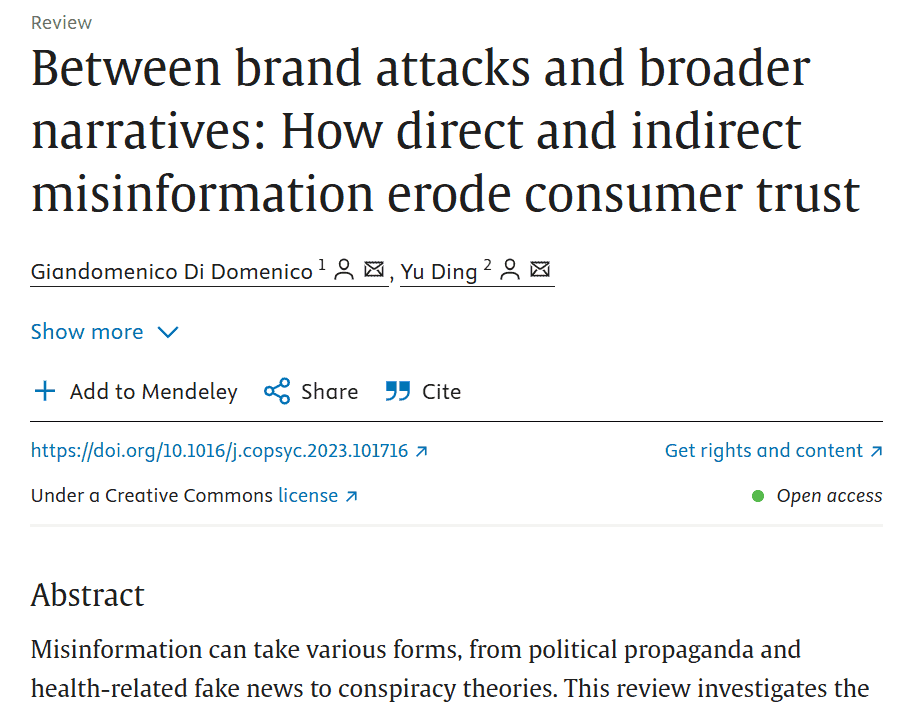
It can also undermine long-term authority and loyalty, which are key factors in search engine quality evaluations.
Search engine algorithm penalties
Google’s algorithm increasingly favors “quality signals.” These include engagement metrics, dwell time, and content relevance.
Manipulative titles that drive clicks but poor engagement may lead to a drop in rankings.
Poor conversion rates
Visitors attracted by sensational headlines but mismatched content rarely convert. This is a complete waste of your ad spend and content marketing time.
Here’s when clickbait titles can support SEO:
Higher initial CTR
Clickbait can dramatically increase click-through rates in SERPs because it triggers curiosity or emotional responses. This can help increase impressions-to-click conversions.
Potential short-term traffic spike
More clicks mean more traffic, which can trigger search engines to increase rankings temporarily.
(This is mostly due to perceived content relevance and engagement signals.)
Couple this with a strong link building strategy to increase your authority, and you have a recipe for sustained visibility that outlasts the initial spike.
Social sharing amplification
Clickbait titles are often shared widely on social media. This can help you increase your brand exposure and referral traffic.
Aligning with micro-intent queries
The right clickbait titles can help you take advantage of targeting micro-intent queries. These are really important to target for voice SEO, local SEO, and AI SEO. (They’re also less competitive and easier to rank for.)
More on micro-intent queries in a bit.
Examples of poor clickbait titles and strategic clickbait titles
Here are some examples of poor and strategic clickbait titles:
Poor clickbait titles:
- “X Reasons Why
Has the Worst Productivity Tool” - Disparaging the competition doesn’t make your brand look better. It makes your business sound unprofessional or threatened by your competitors.
- “Lose 25 Pounds in Two Weeks Using These Elixirs and Ancient Supplement Blends”
- This is likely a false claim or a very unhealthy or outdated guide on losing weight. Google might even deem this as unsafe content and penalize your site.
Strategic clickbait titles:
- “Unpopular Opinion: Only Professional Graphic Designers Are Qualified To Design Vectors”
- This positions graphic designers as experts in design. It’s a great way to demonstrate their value if you use the right tone and context.
- “Top 10 Pesticide-Contaminated Vegetables (And Why Organic Produce Matters More than Ever)”
- This sparks fear and urgency around health risks, while still promising a solution (organic produce). This makes readers feel like they need to click to protect themselves.
Surprising benefits when using the right clickbait titles
Long story short: The right clickbait titles and SEO work well together.
But here’s why …
There’s so much content out there. Users are constantly bombarded with videos and articles trying to capture their attention. But people only stop to click … when something clicks for them.
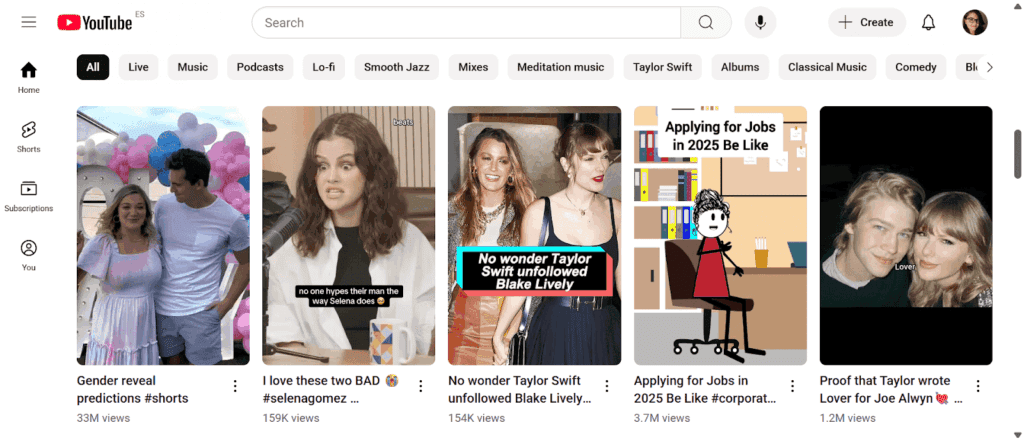
(Screenshot by Ioana)
For example, they’ll stop if a title brings out their curiosity, fear, or outrage. It intrinsically motivates them to find out what the piece of content is truly about.
As long as you deliver on your end (meaning you produce content in line with search intent), you can captivate users and keep them on-page longer.
This is because clickbait headlines on their own only grab attention.
What makes them work well is when they align with search intent — the real reason someone typed that query into Google.
TL;DR: If a title sparks curiosity, and the content also answers the exact question they had in mind, you satisfy both the emotional trigger and the informational need. Striking this balance is what turns a quick click into longer engagement, better rankings, and stronger customer trust.
Clickbait titles and micro-intent queries: Striking a happy medium
To write clickbait titles that help your SEO and satisfy user intent, try aligning them with micro-intent queries.
These are searches where users are looking for very specific answers, comparisons, or actionable advice, so it’s easier to deliver value. Plus, they’re not as competitive, so they’re easier to rank for.
For example, picture a title like “The Top 5 Remote Project Management Tools Your Team Will Regret Not Using in 2025.” This title sparks curiosity and urgency, while still targeting users looking for software recommendations.
If your content thoroughly explains why these tools are super valuable to project managers, you’ll improve overall content relevance in search engines. (All without misleading your audience.)
A simple title like “5 Project Management Tools” may still bring in traffic, but it’s a highly competitive term because it’s too broad. And, there’s no emotional hook that encourages users to stop scrolling and click.
Here are some other examples of clickbait titles based on potential micro-intent queries:
- “The Best Video Editing Software Social Media Pros Don’t Want You to Know About”
- “The Lightweight Accounting Software That Startups Wish They Found Sooner”
- “Slack Alternatives That Remote Teams Are Secretly Loving”
- “These Sales Report Tools Will Save You Hours Every Week”
- “You Won’t Believe What These AI Email Tools Can Do”
- “Top 7 Invoicing Apps Freelancers Swear By in 2025”
13 actionable steps for managing clickbait titles and SEO strategically and responsibly
Here’s how to strategically and responsibly use clickbait titles in your SEO campaigns:
1. Align titles with content
Your headline should honestly reflect what’s inside. Misleading titles might get clicks, but if readers leave immediately, your bounce rate spikes and Google notices.
This piece promises 21 email marketing mistakes, and keeps that promise:
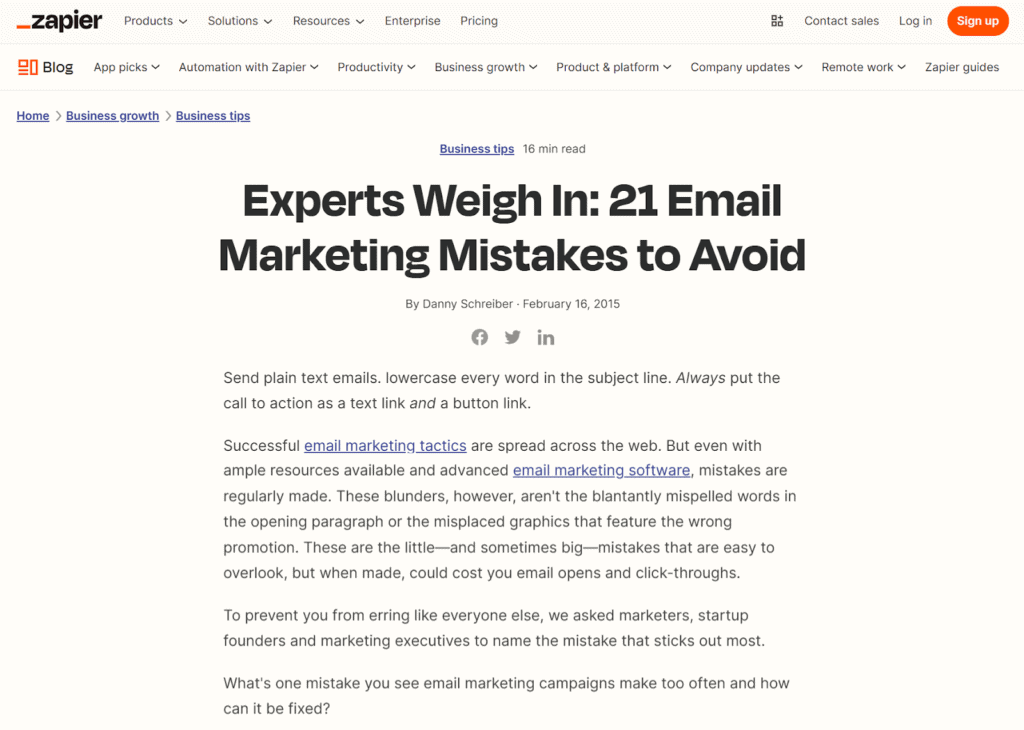
Take a minute to read your title and ask: Does this really match the content? If not, adjust either the title or the content so they align.
2. Focus on user intent
Think about why someone’s searching for your topic.
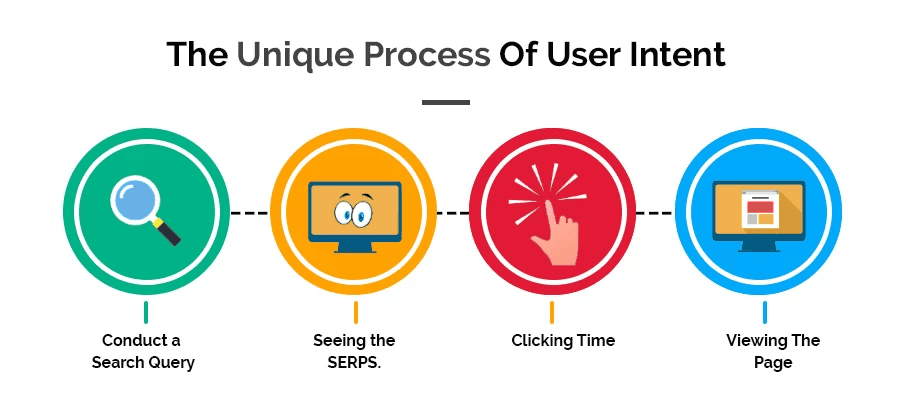
Do they want a quick answer, a comparison, or step-by-step instructions?
Titles should make it clear you’ve got exactly what they’re looking for. For example, “The Top 7 CRMs That Actually Save Small Businesses Hours Every Week” tells users they’ll get actionable recommendations, not vague lists.
3. Use emotional triggers responsibly
Curiosity, excitement, or urgency can get clicks — but don’t exaggerate. Titles like “5 Workflow Mistakes That Slow Most Teams Down” tap interest without making ridiculous promises.
In fact, data backs this up. One Backlinko study found that titles with positive sentiment earn 4.1% more clicks than negative ones. Emotion works best when it builds genuine intrigue or optimism, not when it manipulates readers.
4. Test headlines using A/B experiments
Small tweaks can make a huge difference.
Try a few versions of the same headline. Nielsen Norman Group recommends running A/B tests for a maximum of two weeks. Then see which one gets more clicks, keeps people reading, or increases conversions.
5. Monitor engagement metrics post-publication
After your post goes live, keep an eye on dwell time, scroll depth, and bounce rates.
If people click and leave immediately, something isn’t working. Maybe the content doesn’t match the headline, or the info isn’t clear enough. Adjust and improve.
6. Avoid overusing sensational words
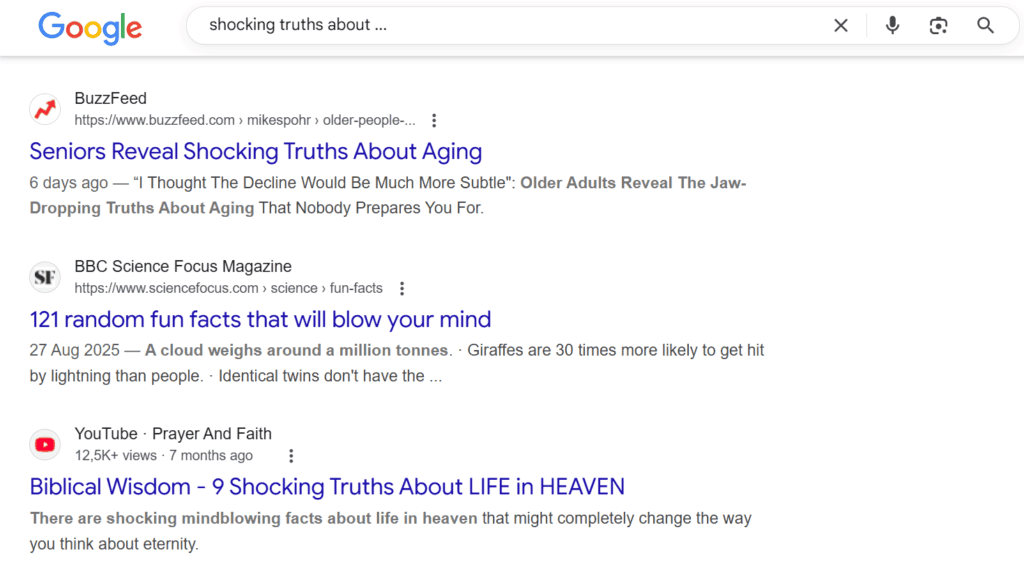
Google loves it when your content is original. Words like “shocking” or “you won’t believe” grab attention. But overuse makes your site feel spammy.
(Screenshot by Ioana)
Save these for moments when your content really delivers something unique or surprising.
7. Prioritize brand trust over short-term traffic
A flashy headline might get clicks today, but a loyal audience will pay off in the long run. People return to sources they trust, share links willingly, and convert better.
So think long-term.
8. Use analytics to spot content gaps
High clicks but high bounce? That’s a signal your content isn’t hitting the mark.
Check what users want, then improve the page or adjust the headline. Data helps you fix problems before they hurt rankings.
9. Pair compelling titles with quality content
A great headline only works if the content delivers.
Make sure to give readers actionable tips, insights, or examples. When they feel they’ve gained value, they’ll stick around, share your content, and come back for more.
10. Educate your team on ethical SEO
Make sure writers and editors know how to create curiosity-driven titles that still deliver real value.
Share examples, tips, and guidelines so everyone can craft headlines that get clicks and build trust. (Add these to your style guide for easy reference.)
11. Use trending topics wisely
Pay attention to what’s trending in your niche and create headlines that tap into current conversations.
Trend-based titles can get high visibility, but make sure your content adds unique insights rather than just echoing what’s already out there.
12. Incorporate numbers and lists
Titles with numbers or clear list structures (like “5 Tools” or “7 Tips”) perform well because they promise digestible, actionable content.
Here’s one of our titles that includes “800+,” The State of Backlinks for SEO in 2025: What 800+ SEOs Think About Link Building. It’s a great way to entice readers to stay on page. Plus, it’s authoritative since we pulled advice from hundreds of SEO pros.
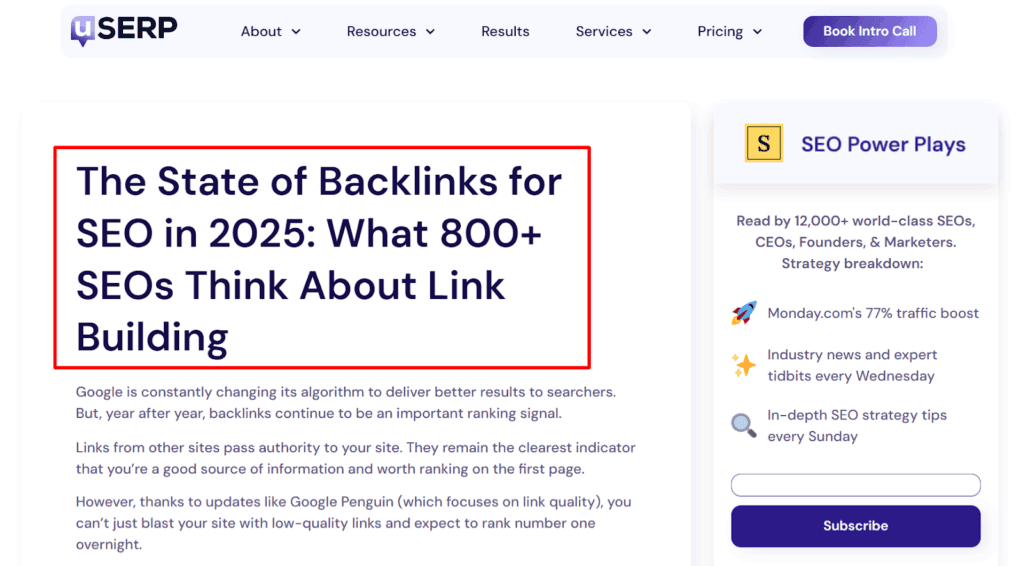
Use these titles often to give readers an immediate sense of what to expect and to help make content easier to scan. (Both are great for readability.)
13. Optimize for multi-channel sharing
Think beyond search engines when optimizing content.
Craft titles that also work on social media, newsletters, or YouTube. A clickable headline on Google might fall flat on LinkedIn, so tailor your phrasing to fit each platform’s audience while still staying honest to your content.
FAQs: Clickbait titles and SEO
What is a clickbait title?
A clickbait title is a headline designed to provoke curiosity or emotion to get clicks.
Are clickbait titles bad for SEO?
Clickbait titles can harm SEO if they cause high bounce rates and user dissatisfaction. This can lead to ranking penalties.
Why do clickbait titles get more clicks?
Clickbait titles get more clicks because they tap into curiosity and emotional triggers.
This prompts users to click impulsively.
How can clickbait affect user trust?
Misleading titles disappoint users, causing loss of credibility and long-term audience loyalty.
Can clickbait titles improve website traffic?
Clickbait titles may boost short-term traffic, but that might be at the cost of engagement and conversions.
How to create compelling titles without unsafe clickbait terms?
To create compelling titles, use clear, honest language that accurately reflects the content and addresses user intent.
Does Google penalize clickbait titles?
Google doesn’t penalize clickbait outright but lowers rankings if engagement metrics indicate poor user experience.
Are there ethical concerns with clickbait?
Yes, clickbait can be seen as deceptive and harm brand reputation and user trust.
How to test if a title is clickbait?
Evaluate if the title overpromises or misleads compared to the actual content.
Can clickbait work for social media marketing?
Clickbait can increase social media shares, but risks backlash if the content doesn’t meet expectations, which affects brand perception.
Wrap up
Clickbait titles aren’t inherently bad. You just need to handle them strategically.
When your headlines spark curiosity, align with search intent, and deliver real value, you can attract the right audience and improve SEO without sacrificing trust.
Remember: You don’t want to trick readers. You want to create headlines that compel clicks while genuinely serving user needs. (Follow the steps above, test carefully, and use data to guide improvements.)
Psst … Want to take your content strategy to the next level? 👇
Get on a call with uSERP to analyze engagement, optimize headlines, and see which click-worthy titles are getting you results. Your next viral headline might just be one tweak away.