


AI has changed how we build links over the last two years. It used to take hours to find a good prospect. Now, AI layers handle the heavy lifting across your entire workflow.
AI link building tools help with outreach, prospecting, and even qualification. You can use them to personalize emails or pull complex reports in seconds.
Marketers love these updates for a few reasons. Prospecting feels much faster now. You can lower your manual workload and scale campaigns without hiring ten new people. It’s also easier to add personal touches to every pitch.
There’s a catch, though. AI tools save tons of time, but they create a new tension. Pure automation often leads to low-quality outreach. It can damage relationships and make your brand look like a bot.
This post isn’t a roundup of the “best” tools. Instead, we’ll look at where AI link building tools help and where they fail. We’ll discuss where human judgment remains critical and the risks of over-automation. You will also see what a strong hybrid workflow looks like in 2026.
Highlights
- AI link building tools cut down on manual work, but they still fall short in true nuance and relationship-building.
- Top SEO teams use AI for research, clustering, and speed, rather than full automation.
- Sending too many automated emails hurts your reply rates and brand reputation.
- Human review ensures links align with your topic and meet high editorial standards.
- The future of link building is hybrid, using AI for tasks and humans for strategy.
Why AI link building tools became popular so fast
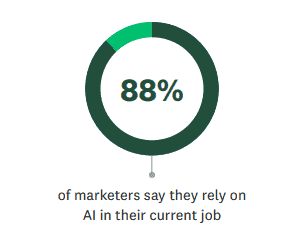
AI is no longer experimental for most marketing teams. SurveyMonkey found that 88% of marketers now use AI in their daily work. This technology moved fast because it solved real burnout. Teams needed a way to keep up without adding more headcount.
SEO teams needed more efficient workflows
SEO teams faced more pressure to publish and promote content with fewer people.
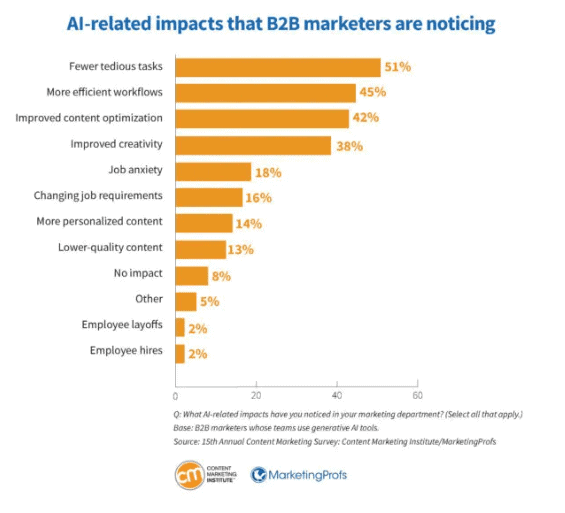
Manual prospecting ate up too much time, especially for agencies handling several clients at once. AI helped remove repetitive work. The Content Marketing Institute reports that 51% of B2B marketers who use generative AI say they have fewer tedious tasks. This makes outreach operations easier to manage.
Generative AI changed outreach expectations
Generative AI lowered the barrier to launching outreach campaigns. Teams no longer had to write every email from scratch. Tools started creating subject lines, outreach intros, follow-ups, and prospect summaries in seconds.
For example, a marketer could upload a prospect list and get personalized first-pass emails before lunch. That speed made outreach feel more accessible, even for smaller SEO teams with limited resources.
Link building software evolved from databases into workflow systems
Older link building tools worked more like databases. You searched websites, checked metrics, and exported lists into spreadsheets.
Now the software handles far more steps within a single system. AI tools can:
- Summarize past conversations
- Detect topical relevance
- Group websites by topic
- Suggest anchor text
- Score prospects
- Draft outreach
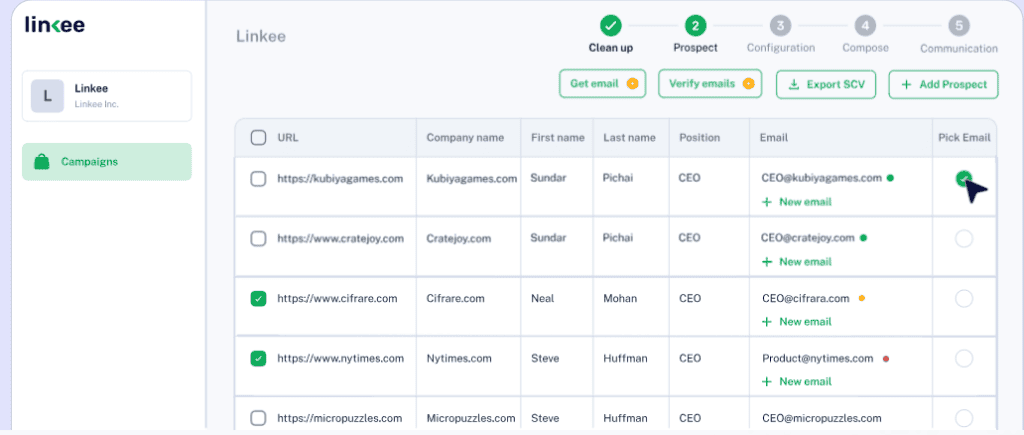
This means a small team can prepare far more outreach in a day than before. But higher output only helps when teams still review prospect fit, message quality, and editorial relevance before sending.
What AI link building tools do well in 2026
AI link building tools shine when they handle data. They take over the chores that used to drain your energy. These tools find patterns in seconds that would take a person days to see. They make your team faster and keep your data clean.
Prospect discovery and topical clustering
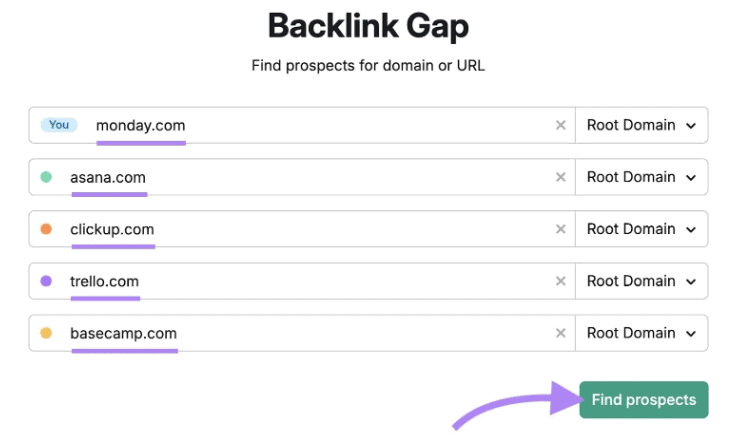
AI tools process large volumes of data faster than any human can. They identify related sites and find complex topic clusters. These systems identify gaps in competitor links and find relevant authors. They may also find a niche publication you missed.
Outreach preparation and research enrichment
AI helps you gather context before you ever send a pitch. It pulls author bios and finds recent articles from your target. You can see social profiles and the latest company focus. This helps your team avoid cold outreach.
Drafting first-pass outreach emails
AI writing tools speed up the repetitive parts of writing. They’re great for follow-ups and broken link outreach drafts. You can use them for resource page pitches or guest post ideas.
The key is to have the first draft ready. However, human review is still needed to improve tone and relevance.
Campaign organization and workflow automation
Large outreach campaigns create operational chaos fast. AI tools now help agencies manage:
- Response classification
- Outreach sequencing
- Lead prioritization
- Internal reporting
- CRM tagging
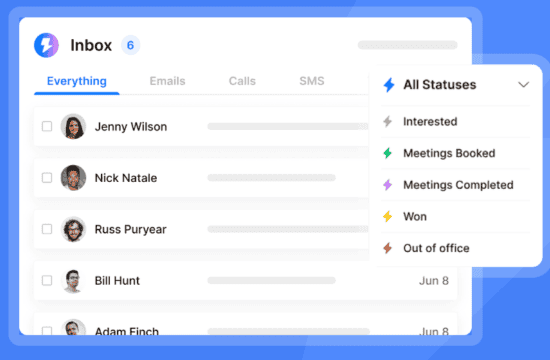
Agencies can now route positive replies into priority queues. They don’t have to sort their emails manually.
This becomes more useful as campaigns grow. Gartner says marketing leaders expect AI automation to rise from 16% in 2026 to 36% by 2028.
Performance analysis
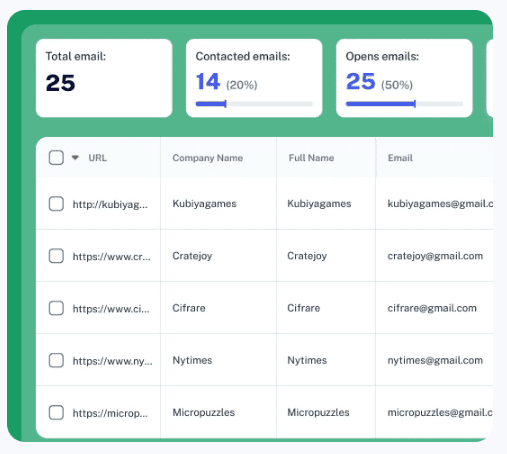
AI link building tools can spot trends across campaigns that teams may miss during manual reviews. They track:
- Which content types secure placements
- Which subject lines earn replies
- Which publishers convert
- Which industries respond
This kind of pattern recognition helps SEO teams make faster decisions without flying blind. Instead of running the same outreach process every time, teams can quickly see which publishers, angles, and content formats actually earn placements. Over time, that builds a more efficient system based on what’s really working, not what you’re assuming will work.
Where AI link building tools still fall short
AI has improved many parts of link building. But the weak spots still show up fast in real campaigns.
Automation helps with speed and organization. It struggles with nuance, trust, and editorial instinct. That gap becomes obvious when teams lean too hard on automation and remove human review from the process.
Personalization still sounds generic
Many AI-generated outreach emails still feel templated. Adding a first name or mentioning a recent article is surface personalization. Genuine contextual relevance goes deeper. It shows a clear understanding of the publisher, audience, and content goals.
Editors now quickly recognize common AI outreach patterns. For example, a pitch may mention an article title. But it may ignore the publication’s tone or target readers. This makes the email feel automated instead of thoughtful.
AI struggles with relationship-building
Strong link building often grows from trust and familiarity over time. This kind of relationship is hard to automate through prompts and workflows.
Human communication still performs better in high-value outreach. For example, publishers respond more often when they:
- Know the strategist behind the email
- Remember past collaborations
- Trust the quality of previous submissions
Topical relevance scoring is not always accurate
AI tools sometimes misclassify websites or misjudge a site’s fit. This leads to irrelevant placements and weak authority signals. You might end up with a poor contextual fit, which can hurt your SEO.
For example, a tool might tag a “tech” site that actually only covers crypto scams. Human review is necessary to catch these errors.
Outreach quality can collapse at scale
AI makes outreach cheap, so teams send more emails. This volume creates inbox fatigue for editors and leads to more spam complaints.
Your response rates will drop if you focus on quantity over quality. For example, sending many generic emails often performs worse than sending 10 tailored notes. Volume alone is less effective when the outreach lacks relevance or editorial value.
AI cannot fully replace editorial judgment
Link quality requires a sharp eye. Strong campaigns still need experienced SEOs who understand:
- Contextual placement quality
- Audience alignment
- Editorial integrity
- Brand safety
AI platforms can surface opportunities. But they cannot judge every risk.
For example, a site may show strong SEO metrics while publishing low-quality sponsored content across unrelated industries. Human editors catch those signals faster as they understand context beyond raw data.
What high-performing SEO teams do differently in 2026
The best teams don’t let bots run the whole show. They treat AI as an assistant rather than a replacement. These experts know that top-tier results require a human touch.
Success comes from how you use the tech to support your goals.
They use AI for acceleration, not replacement
High-performing teams keep humans involved in strategy, prospect validation, relationship-building, and final outreach review. AI handles research and repetitive tasks. But people still guide the campaign.
For example, a tool may suggest outreach targets for a fintech campaign. A strategist still reviews the list and removes weak fits. They also adjust the messaging before emails go out.
They focus on relevance over outreach volume
Smaller, targeted campaigns often beat mass outreach every time. These teams pick their prospects with a quality-first mindset. They don’t send thousands of emails to random sites.
For instance, they might reach out to 10 sites with personalized emails. This narrow focus leads to better links and higher trust with editors.
They build systems around editorial value
Successful campaigns offer readers something useful. They provide original insights, fresh research, or expert commentary.
You can offer useful resources that people actually want to cite. AI supports execution, but value creation drives the links.
For example, a survey with fresh industry data gives outreach teams a stronger pitch. This is compared to a recycled guest post idea generated from prompts.
They maintain human oversight across campaigns
Human QA prevents embarrassing mistakes that bots often make. It stops off-brand messaging and bad targeting. You can catch repetitive outreach or context errors before they ruin your reputation.
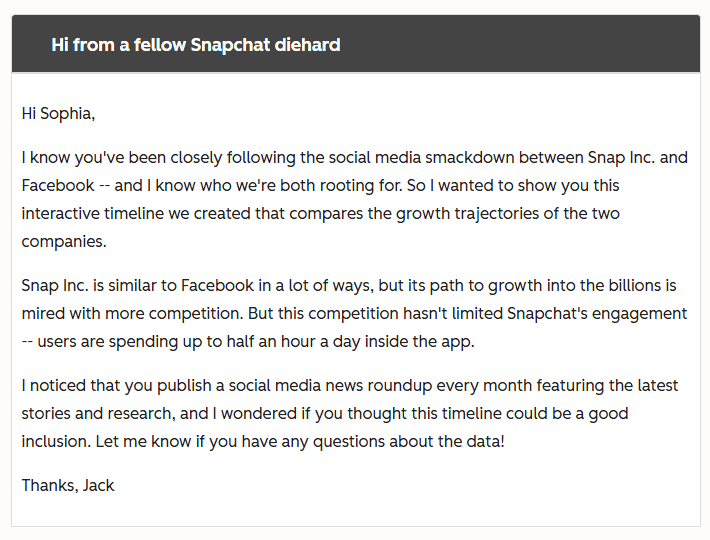
For instance, a strategist may catch that an outreach email references the wrong article category or uses a tone that feels too aggressive for a publisher relationship built over several years.
The future of AI-assisted link building
AI-assisted link building will continue to improve over the next few years. Tools already handle large datasets faster than most human teams. That capability will grow stronger as platforms improve:
- Semantic relevance detection
- Performance prediction
- Workflow automation
- Prospect analysis
Some systems can already predict which publishers are more likely to respond before outreach starts. Others detect topic relationships across entire industries instead of relying on simple keyword matching.
But human involvement will still have an important role.
Search engines continue getting better at evaluating link context, editorial authenticity, and relevance signals. A link from a wrong page becomes easier to spot. That means teams cannot rely on automation alone to build authority.
Human strategists still understand nuance in ways AI software struggles with. They recognize publisher expectations, brand risks, and relationship dynamics that raw data cannot explain.
The most successful SEO teams will use hybrid workflows. AI will handle speed, organization, and systems. Humans will guide strategy, review outreach, build relationships, and protect campaign quality.
That balance is what separates scalable link building from scalable spam.
AI can speed up link building, but strategy still wins
AI link building tools are useful assets when you use them correctly. They take the sting out of data research and keep your campaigns moving fast. However, automation alone doesn’t create authority. You cannot just press a button and expect to rank at the top of search results.
Valuable links still come from things a machine cannot fake. You need deep relevance and high levels of trust. Success depends on editorial value and building real relationships with other people. For example, a great guest post needs a unique point of view that only a human expert can provide.
Think of AI as a helpful assistant, not a replacement for experienced SEO teams. It handles the chores so you can focus on the big picture.
To grow your brand, you need a strategy that puts quality first. Explore strategic, human-led link building support with uSERP to see how real expertise drives results.
FAQs
Do search engines penalize AI-generated outreach?
Search engines don’t penalize outreach itself. But they track the links you earn.
If AI helps you get low-quality or irrelevant links, your rankings may drop. Use AI to find high-quality sites rather than sending mass spam.
Can AI tools fully automate relationship building?
No, AI cannot replace the trust built between two people. While tools can draft friendly notes, long-term partners want to work with real experts.
High-value publishers often ignore automated pitches. Use AI for research, so you have more time for real conversations.
Is AI better than humans at finding link prospects?
AI is much faster at scanning long lists of websites and finding patterns. It can spot gaps in competitor links in seconds. However, a human still needs to check whether those sites are brand-safe and truly relevant. AI provides the speed, while humans provide the quality control.
How do I know if an AI tool is actually helping?
Track your reply rates and the quality of the links you earn. If your response rate drops, your AI drafts might sound too robotic.
A good tool should lower your manual workload without hurting your reputation. Always prioritize link relevance over the total number of emails sent.