




Getting a high-authority backlink in 2026 is a brutal exercise in applied psychology. You need to persuade an exhausted editor that your digital asset is the right fit for their article. If you cannot afford a dedicated guest posting service or PR firm, you need specialized backlink software that tracks contacts, helps create value-driven pitches, and sends them at the exact right time.
The market is currently drowning in expensive SEO platforms promising impossible search engine ranking results. We bypassed those glossy sales pages completely. We spent hours reviewing verified user reviews, industry audits, and pricing details. Our goal was to uncover the truth about how these tools impact actual organic traffic.
We compared each tool based on its primary use case, pricing model, workflow strengths, and the limitations most likely to affect real-world teams.
Below is a breakdown of fifteen platforms real marketers use to earn links that actually move the needle.
First, here are the key takeaways.
Highlights
- No single tool does everything well — match the tool to your bottleneck. The 15 platforms reviewed each solve a distinct problem: Ahrefs and Semrush excel at backlink research and competitive analysis, BuzzStream and Pitchbox handle outreach CRM and automation, Hunter and Respona specialize in contact discovery, and Linkody focuses exclusively on 24/7 backlink monitoring. Teams should identify their primary constraint — research, prospecting, outreach, or tracking — before purchasing.
- Premium backlink intelligence comes at a steep price. Ahrefs starts at $29/month but limits reporting credits heavily, pushing most users to the $129–$249 tiers. Semrush begins at $165/month with additional costs for local SEO and analytics add-ons. Budget-conscious teams should weigh whether an all-in-one platform or a focused, lower-cost tool better fits their workflow.
- Outreach automation saves time but introduces quality risks. Platforms like Pitchbox and Respona automate email sequences and follow-ups at scale, but over-reliance on bulk templates risks domain blacklisting and generic pitches that editors ignore. Personalization remains a critical differentiator in competitive link-building campaigns.
- Original data is one of the most effective link-building assets. Tools like Youform (which offers unlimited forms and responses on a free plan) allow marketers to run surveys and generate proprietary research — a proven method for earning editorial backlinks from journalists and industry publications without paid placements.
- Backlink monitoring is a separate discipline from outreach. Many teams overlook the need to protect existing link equity. Linkody, starting at $14.90/month, provides real-time alerts for lost or changed backlinks and generates disavow files to guard against Google penalties — functions that research and outreach platforms typically do not include.
Now, let’s break down each tool based on its strengths, limitations, and best use case.
#1. Ahrefs: One of the best SEO link-building tools
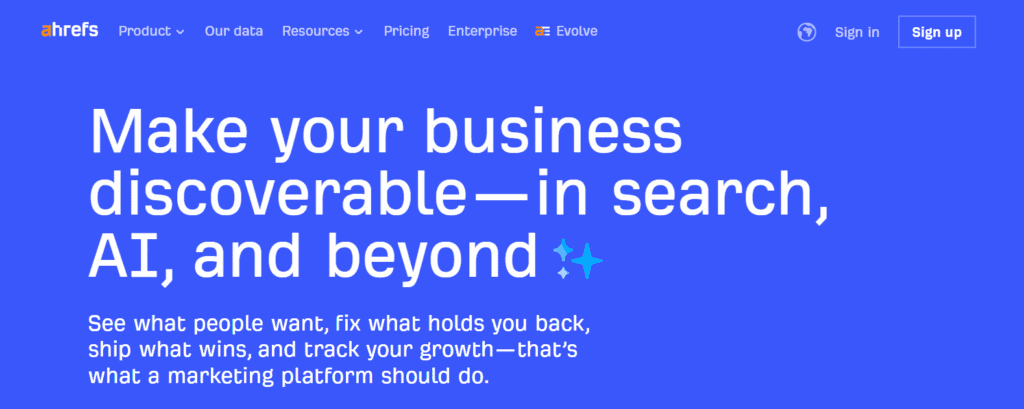
Ahrefs operates as the undisputed heavyweight champion of the SEO toolkit. It is built around a gigantic crawler that scans billions of pages daily to maintain a staggering database of over 35 trillion backlinks.
Core modules like Site Explorer, Keywords Explorer, and Site Audit help you analyze competitors and audit their backlink profiles. You can also easily find valuable link-building opportunities. Recent platform updates introduced AI-powered helpers for content optimization and brand visibility tracking. This upgrades the software from a basic data warehouse to a smart marketing assistant. Independent search ranking factors studies praise this change.
Gaining access to this fortress used to require a massive budget. The company recently opened the gates with a new Starter plan at just $29 per month. This low-risk entry point gives you a quick taste of the platform with 100 reporting credits. Your journey usually gets expensive very quickly from there.
The strict credit limits naturally push you up the pricing ladder. You eventually graduate to the $129 Lite plan or the $249 Standard tier just to unlock deeper historical data for competitor backlink analysis. Giant enterprise teams ultimately face a hefty $1,499 monthly bill.
Agencies prefer low-cost extra user seats and generous reporting limits in the higher tiers. That incredible power comes with a few distinct catches.
Choose Ahrefs if deep backlink analysis is your main priority and you can justify paying for premium data over broader workflow automation. Skip it if you need low-cost collaboration or a budget-friendly all-in-one system for a small team.
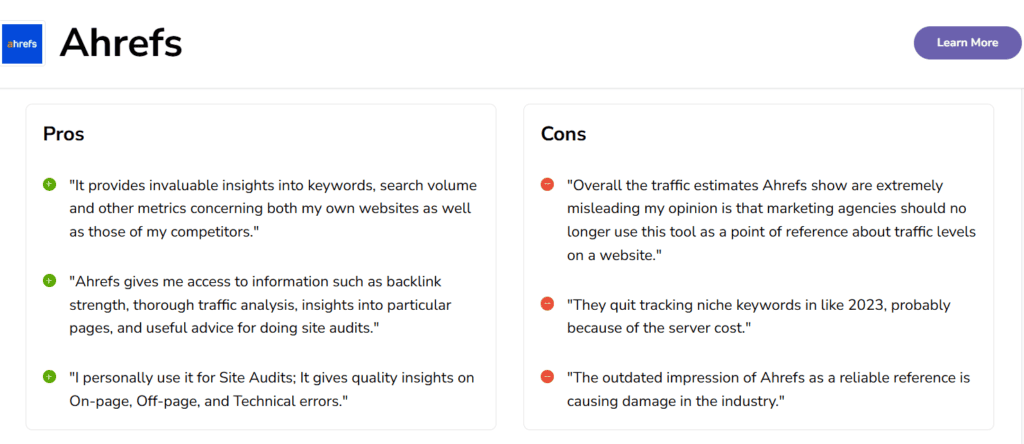
The platform lacks a free trial entirely. Verified users also found the interface slow at times. Traffic estimates can be off. Also, the platform has stopped tracking some niche keywords entirely.
- Ideal use case: Deep backlink intelligence, competitor analysis, and full-suite SEO diagnostics.
- Standout strength: An unmatched 35-trillion backlink index paired with reliable keyword difficulty metrics.
- Key limitation: Strict reporting limits on lower tiers, costly feature add-ons, and no mobile app.
Best for:
Agencies, big brands, and serious SEO pros ready to invest in great intelligence.
#2. Semrush: The Swiss army knife
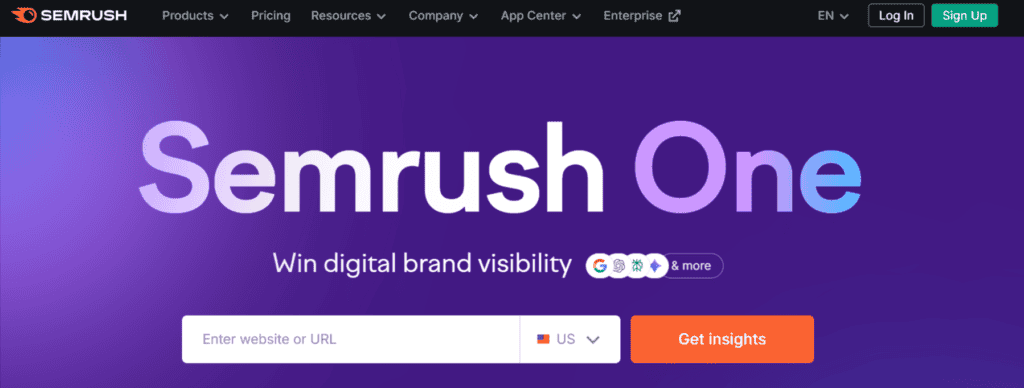
Running a modern digital campaign usually involves juggling a dozen different software subscriptions. Semrush solves this operational chaos by stuffing an entire marketing department into a single dashboard.
It’s like an all-in-one tool that covers keyword research. It also conducts technical site audits and competitive analysis. The platform even tracks exactly how your brand appears inside new AI-driven answer engines. You get the data required to plan content and benchmark competitors without ever switching browser tabs.
Consolidating your toolkit requires a serious financial commitment. The pricing structure starts at $165 per month for the Pro tier. Scaling up to the Guru or Business plans pushes your invoice to $248 and $455, respectively. If you are balancing these expenses, smaller and specialized tools like Zintego will help streamline these operations.
The base price tag rarely covers everything you actually need. Real-world usage frequently triggers strict caps on active projects and crawled pages. If you manage a high-velocity publishing schedule using seamless CMS integration tools like Wordable, this constant upselling makes monthly budgeting incredibly unpredictable. Your team will likely need to purchase expensive extra add-ons for local SEO and traffic analytics.
Semrush is perfect for teams trying to consolidate multiple SEO tasks into one platform. It doesn’t fit the buyers who need predictable monthly costs or only want a focused link-building workflow.
Independent testers consistently rank the site audit and keyword research engines as the absolute gold standard. Agencies love the built-in client portals and heat map analysis tools. Navigating this gigantic platform demands considerable patience. The interface is incredibly dense.
New users often get lost clicking through endless menus and similar-sounding features. You also need to remember that all metrics are simply estimates. The data accuracy drops significantly if you operate in a highly specific niche or a very small geographic region.
- Ideal use case: Managing holistic SEO and massive digital marketing campaigns from a single dashboard.
- Standout strength: Lots of tools for site audits and great keyword research.
- Key limitation: Expensive base plans, unpredictable add-on costs, and a dense interface.
Best for:
Established agencies, in-house SEO teams, and large content publishers
#3. Moz Pro: The authority architect
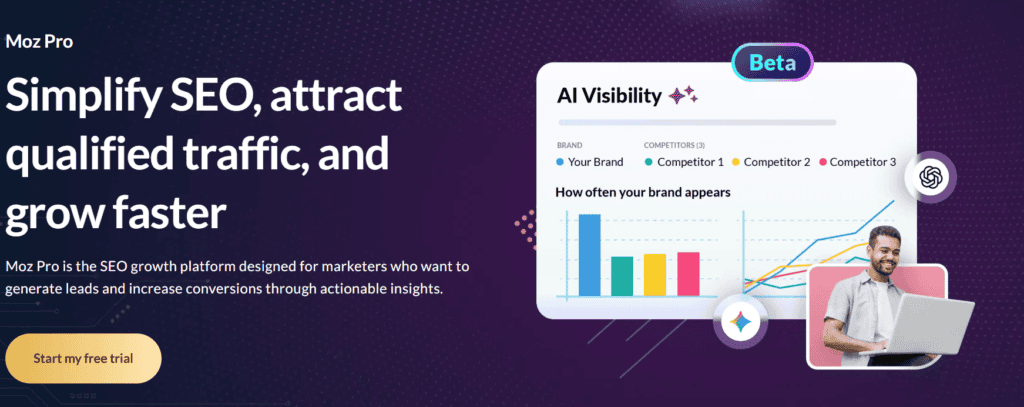
Moz Pro operates as the authority architect of the SEO industry. It built its entire reputation around its proprietary Domain Authority metric. The 2026 edition bundles keyword research, site auditing, and rank tracking into one cohesive dashboard. It integrates new machine-learning models to calculate a dedicated Brand Authority score effortlessly.
The platform offers a highly flexible pricing structure. A new Starter plan begins at forty-nine dollars per month. Scaling up to the Standard or Medium tiers naturally increases your limits for crawled pages and keywords. You get an in-depth keyword database featuring over five hundred million suggestions. The backlink analysis tools help you identify new opportunities and efficiently disavow toxic or broken links.
Users consistently praise the transparent pricing and highly respected metrics. The built-in Spam Score detection helps you flag toxic links immediately. This full-stack suite comes with a noticeable learning curve. Beginners often feel overwhelmed by the dense data.
The link database is noticeably smaller than competing platforms like Ahrefs or Semrush. The new AI features add another layer of complexity to the interface. You get a reliable thirty-day trial to test the waters completely risk-free.
- Ideal use case: Monitoring core authority metrics and executing full-stack SEO campaigns.
- Standout strength: Widely respected Domain Authority and Spam Score metrics.
- Key limitation: A smaller link database and complex new AI features.
Best for:
Marketers and agencies seeking credible metrics and customizable reports.
#4. BuzzStream: The outreach organizer
Handling a large-scale link-building campaign often leaves you overwhelmed by chaotic spreadsheets. BuzzStream serves as a dedicated digital PR workhorse, saving teams from this operational chaos. It functions as a specialized CRM specifically for your outreach efforts.
You can build highly targeted press lists, find relevant publishers, and run personalized email sequences directly from a single dashboard. A handy Chrome extension captures contact emails on the fly as you browse search results. Your entire team can finally see exactly who responded and schedule follow-ups without crossing wires.
The platform relies on smart prospecting tools to filter contacts by key metrics. You get detailed campaign analytics tracking your opens, clicks, and replies perfectly. This structural organization makes it a massive time-saver for PR professionals, allowing them to maintain strict credential security over their shared team accounts, a best practice highly recommended by cybersecurity hubs like LoginLockdown.
The user interface focuses entirely on raw functionality. The dashboard feels quite dated compared to modern marketing software. Reviewers frequently report clunky workflows in which vital email trails are easily lost. Contacts cannot be linked seamlessly across multiple projects. You also face a steep learning curve and a non-trivial setup time to get the system running smoothly.
Maintaining clean data within the platform requires constant vigilance. Users occasionally run into outdated contact information. Relying too heavily on the bulk templates creates the risk of sending generic emails and potentially blacklisting your domain. The pricing tiers generally remain accessible for smaller teams.
- Ideal use case: Managing structured PR campaigns and link-building outreach without messy spreadsheets.
- Standout strength: CRM-like contact management paired with time-saving personalized email sequences.
- Key limitation: A dated interface, clunky workflow navigation, and a recent unjustified price hike.
Best for:
Freelancers, PR professionals, and dedicated link builders needing absolute structural organization
#5. Supademo: The interactive magnet
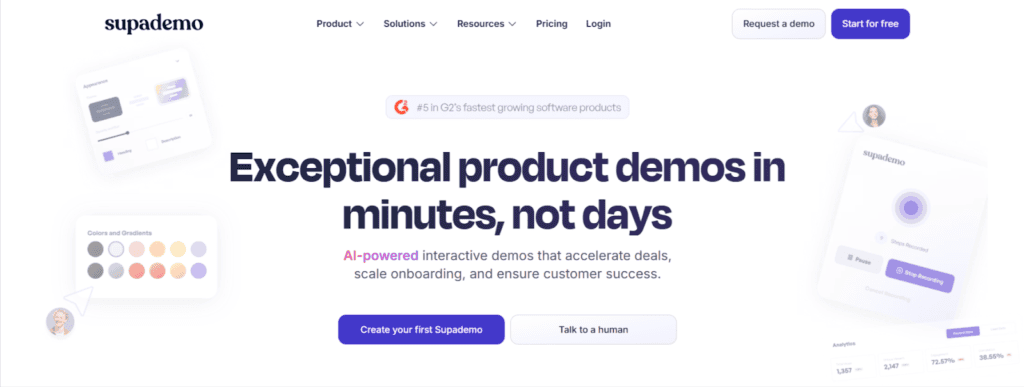
Static screenshots and dry user manuals don’t earn backlinks or hold attention. Supademo turns software workflows into interactive product tours. Over 15,000 users in 80 countries use the platform to build AI-powered guided demos.
You record a workflow, and the software automatically writes the text and adds voiceovers. Embedding these demos on your site can drive organic shares because they give visitors something to interact with. Supademo’s internal data shows 73% of buyers are more likely to purchase after trying a live demo.
No engineering help is needed to build these. The no-code editor lets a marketing team put together a polished demo in minutes. Group tours into bundles. Apply branding. Add branching paths. Track engagement.
The free tier limits you to five demos. Paid plans start at $38 per creator on the Scale plan. The Growth plan costs $350 per month for a team of five.
The top features sit behind the higher-priced tiers. Full HTML clones and interactive sandbox environments are not available on entry-level plans. Conditional branching and advanced personalization tools take time to learn. The integration library is still growing.
- Ideal use case: Creating highly shareable interactive product tours for marketing, sales, and onboarding.
- Standout strength: An incredibly intuitive no-code builder featuring AI-generated voiceovers and dynamic branching.
- Key limitation: Advanced sandbox formats require expensive tiers, and the integration ecosystem is still expanding.
Best for:
Software marketing teams and customer success departments replacing static tutorial videos
#6. Hunter: The digital detective
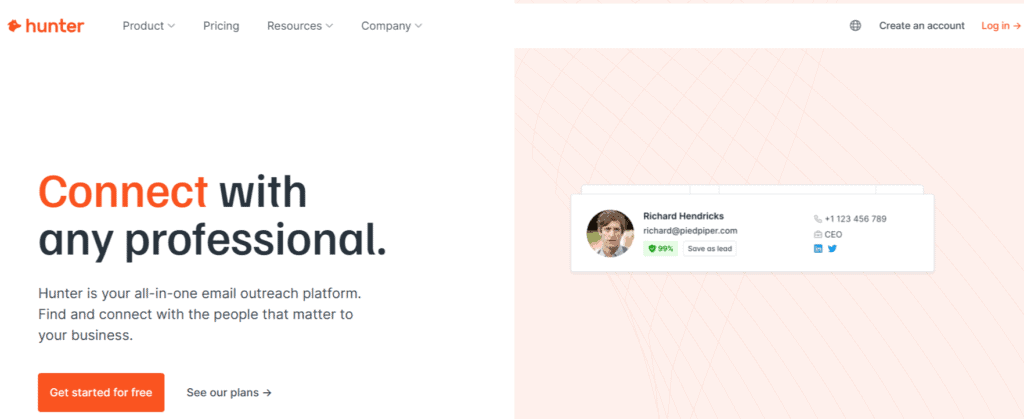
According to HubSpot’s email outreach report, sending a brilliant pitch to a generic support inbox is a guaranteed way to be ignored. But finding the exact email address of a senior editor is often the hardest part of any outreach campaign. Hunter acts as your digital detective to solve this exact problem. It scours the public web to uncover the specific email formats used by your target domain.
The platform is incredibly transparent about its data. It shows you exactly where it found the contact online, so you can judge its freshness for yourself. The interface is exceptionally clean and requires zero training to master. You can even run basic cold email sequences directly within the dashboard.
Testing the waters is easy with a free tier that offers 25 monthly searches. Scaling your operation starts at $49/month for 2,000 credits. You have to watch your usage very carefully. Searching for a contact and verifying that email address consumes entirely separate credits. Heavy prospectors burn through their monthly quotas incredibly fast.
The platform definitely has a few hard limitations. Because it relies heavily on public web scraping, you will frequently encounter generic company addresses while missing senior decision-makers entirely.
The company also removed its popular LinkedIn integration due to legal pressure. This removal completely broke the established workflow for many sales representatives. You will not find any phone numbers here either. The database is strictly limited to public email records.
- Ideal use case: Finding and verifying specific email addresses from public web sources.
- Standout strength: An incredibly clean interface featuring complete transparency on data sources.
- Key limitation: No LinkedIn integration, no phone numbers, and frequent generic email results.
Best for:
SEO link builders and PR professionals who need simple contact discovery
#7. Youform: The data collector
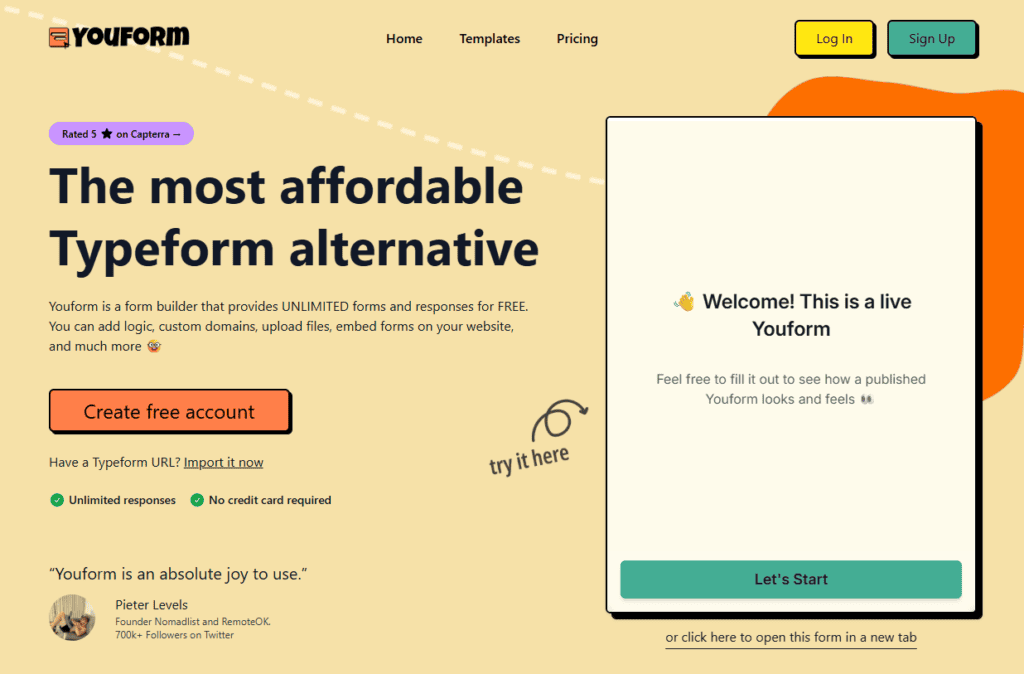
Earning powerful backlinks often requires publishing original data. Surveying your audience helps you build those highly linkable industry reports. Relying on expensive enterprise software to gather that data rapidly drains your budget. Deploying an affordable yet secure online form builder like Youform gives you a highly affordable way to capture valuable insights.
The platform is rapidly gaining a reputation of an ultimate Typeform alternatives solution. The free tier is incredibly generous. You get unlimited forms and unlimited responses right out of the box.
The intuitive drag-and-drop editor makes setup completely frictionless. Real users consistently praise how beautifully these fully responsive forms embed across different websites. One customer easily processed a three-thousand-person survey without a single hiccup. You get built-in conditional logic, seamless Zapier integrations, and the ability to export your raw data directly to a CSV file.
Every growing platform experiences a few growing pains. The feature set is still maturing rapidly. Users notice a lack of legacy templates and a few limitations around visual customization. You cannot insert images into multiple-choice questions or adjust specific font sizes just yet. True team collaboration features are currently in development.

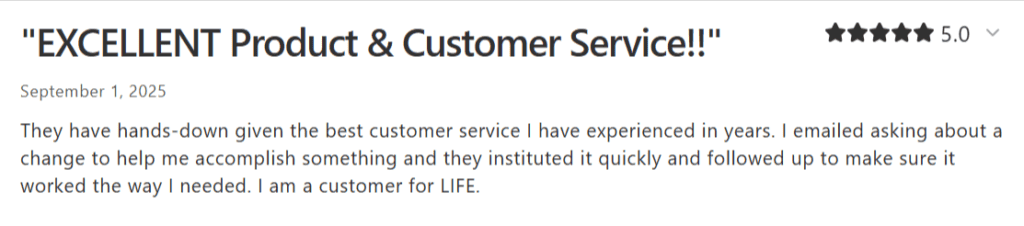
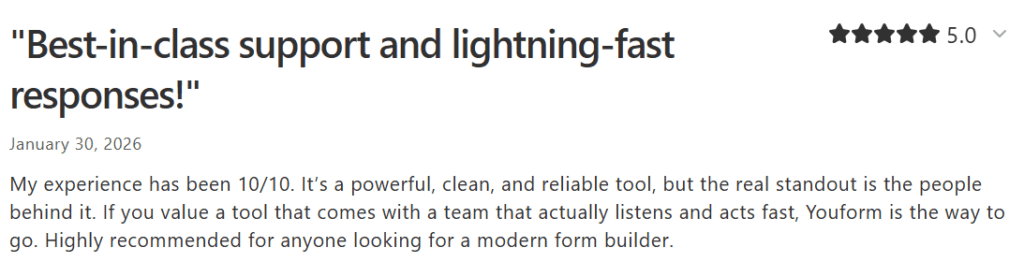
The platform more than makes up for these minor design limitations with legendary customer service. Reviewers constantly highlight the lightning-fast support team. The founders often respond directly and implement custom feature requests within days.
- Ideal use case: Collecting leads, surveys, and feedback to generate original data without breaking the budget.
- Standout strength: Unlimited forms and responses on the free tier, paired with incredibly responsive customer support.
- Key limitation: Visual customization options are still expanding, and team collaboration currently requires shared credentials.
Best for:
Start‑ups, small businesses, and cost‑conscious marketers who need a capable form builder without the premium price tag
#8. ScrapeBox: The raw sledgehammer
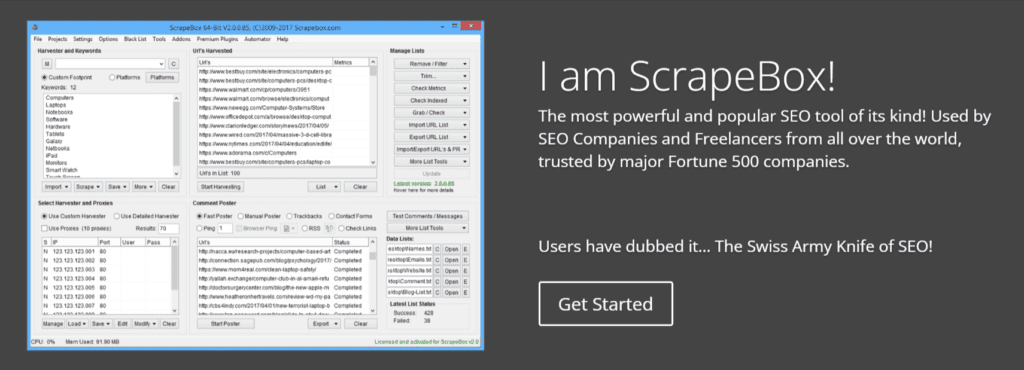
Gathering contact data one by one is a strategy for amateurs. If you are handling outreach entirely in-house rather than leveraging an established partner like uSERP, you need a different kind of weapon to harvest thousands of URLs or pull large volumes of search engine data simultaneously.
ScrapeBox operates as the raw sledgehammer of the SEO world. It is a dedicated desktop application built to scrape search results, check bulk backlinks, and uncover unregistered domains at an industrial scale. It easily harvests proxy lists and scrapes bulk email and phone records in minutes.
Because tools like ScrapeBox rely heavily on proxies and large-scale data extraction, many professionals also prioritize maintaining secure and private connections during these processes. Using solutions such as web scraping can help ensure safer data handling and reduce exposure risks when operating across multiple networks.
The software has been constantly refined by developers since 2009. Users absolutely love the enormous plugin ecosystem and the incredibly responsive tech support. You pay a one-time fee to access this scraping power. You get search engine scrapers, bulk anchor text creators, and RSS feed generators right out of the box. It is the perfect engine for seasoned growth hackers who need to quickly pull massive datasets.
Wielding this much power definitely comes with a few significant catches. You must purchase premium proxies separately to run large-scale scraping campaigns reliably. The user interface looks completely trapped in a time capsule. The software is strictly a desktop application for Windows or Mac machines.
You get absolutely no modern cloud convenience here. A few of the most useful premium plugins will also cost you hundreds of dollars extra. You must be prepared to tackle a very steep learning curve.
- Ideal use case: Gathering huge amounts of SERP data and bulk scraping contact details.
- Standout strength: Unmatched industrial scraping capabilities available for a single one-time fee.
- Key limitation: A severely dated interface, mandatory premium proxy costs, and absolutely zero cloud access.
Best for:
Seasoned SEO professionals and growth hackers who need raw data mining power
#9. Connectively (formerly HARO): The PR lottery
For years, HARO connected experts directly with journalists. You scanned daily media queries and pitched directly to reporters. For writers and digital PR Agencies who understood the process, getting high-authority press coverage was incredibly reliable.
The platform rebranded to Connectively and closed in December 2024. It reopened as HARO in April 2025. The gap hurt it.
It now gets lots of AI-generated responses. Journalists say the quality is poor. Rebuilding trust with reporters who left takes time.
Getting results means competing against thousands of pitches for a single quote. Some teams use SourceBottle or ProfNet. These platforms help them with more precise targeting and stronger analytics.
- Ideal use case: Earning high-authority editorial links via expert contributions.
- Standout strength: Direct access to working journalists reporting on specific topics.
- Key limitation: Fierce competition and a recent history of platform instability.
Best for:
Seasoned PR professionals capable of responding quickly and standing out.
#10. DeployHQ: The foundation builder
Earning premium backlinks is completely useless if your website crashes during a traffic spike. Technical stability and tight server access controls form the absolute foundation of any serious SEO campaign aiming for website ranking dominance.
DeployHQ exists to remove the drama from pushing new code live. It automatically handles website deployments directly from your code repositories. You can configure custom workflows and schedule true zero-downtime releases to keep your production site perfectly stable.
The platform integrates seamlessly with Slack and AWS. Users consistently rave about the stellar customer support. Their technical team will even migrate your existing projects directly from competitors. You can test the waters easily with a free single-project plan. The straightforward pricing scales naturally as your team grows.
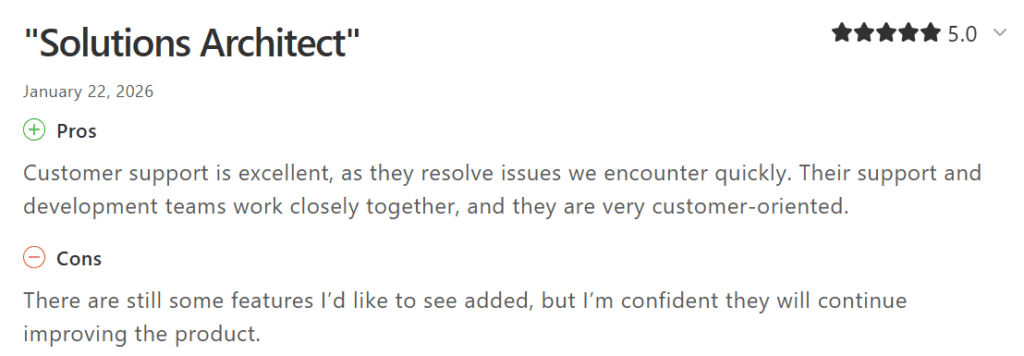
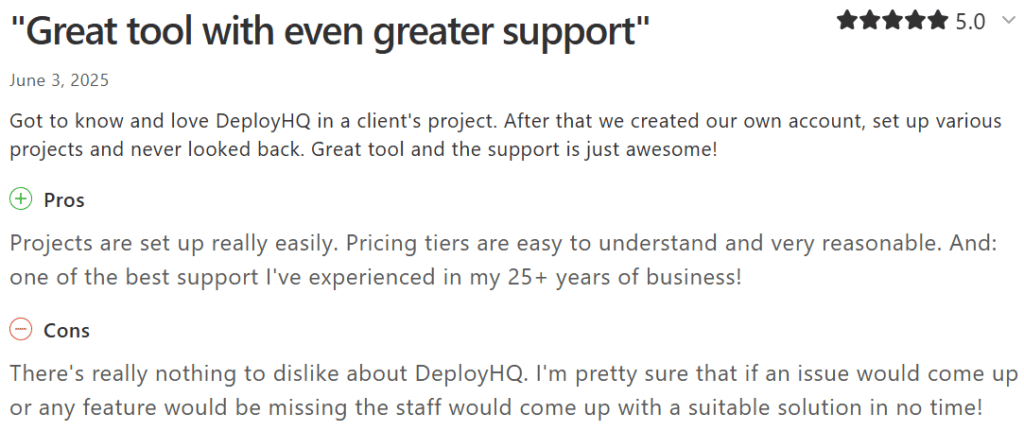
This streamlined focus does come with a few trade-offs. Setting up your initial servers still requires manual configuration. Reviewers also note a lack of advanced built-in features.
Building highly complex deployment pipelines typically requires a larger enterprise platform like GitLab. You are paying for a highly reliable, straightforward deployment engine.
- Ideal use case: Automating website deployments to keep production sites completely stable.
- Standout strength: Zero-downtime release scheduling paired with incredibly helpful customer support.
- Key limitation: Manual server configuration is required, and advanced pipeline features are absent.
Best for:
Developers and small teams who need a reliable, straightforward deployment process
#11. Pitchbox: The assembly line
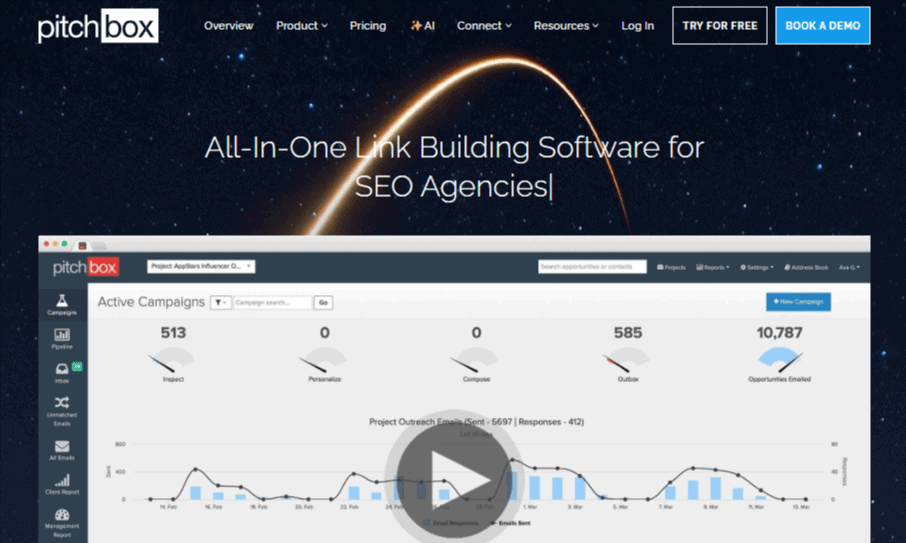
Coordinating guest posts is key. Meeting tight client deadlines matters too. This calls for a strong assembly line. Pitchbox operates as the ultimate factory floor for link-building campaigns. It delivers a comprehensive database of bloggers and journalists directly to your dashboard. You can fully automate your first email pitches. Set clear follow-up rules and manage complex prospecting easily.
Agencies absolutely love this level of automation. After you set up your custom templates, the software takes over. It runs your campaigns with little help from you. You get detailed reporting tracking every single open, reply, and final outcome. This structure saves a lot of time when your team handles multiple domains at once.
Building this factory floor takes serious effort. You will face a steep learning curve getting started. New users frequently describe the interface as complex and highly unintuitive.
Customer support responses occasionally lag behind expectations. The basic plan costs around $165 per month. This price keeps many solo bloggers and freelance writers from getting a simple solution.
- Ideal use case: Automating high-volume link-building and influencer outreach campaigns.
- Standout strength: Hands-off automation and deep campaign tracking.
- Key limitation: A complex interface, a steep learning curve, and occasionally slow customer support.
- Best for: Link-building agencies and in-house marketing teams managing complex outreach.
#12. Linkody: The security camera
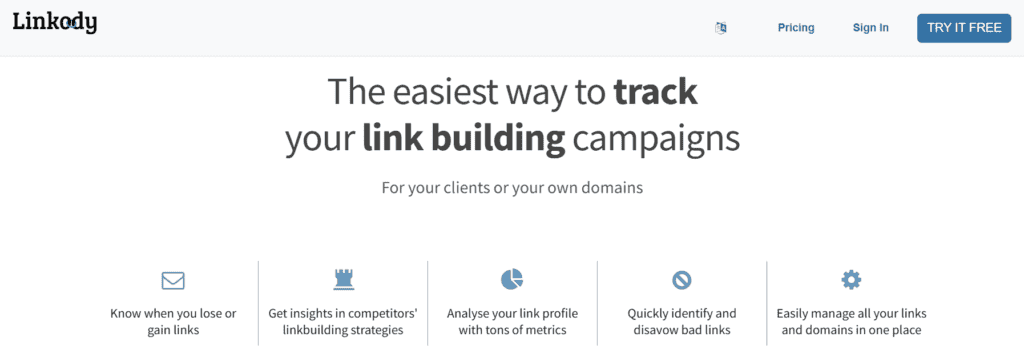
Linkody acts as a dedicated security camera for your link-building campaigns. It monitors your portfolio 24/7. You get instant alerts when a link is gained, lost, or changed. The dashboard also monitors your competitors. It gives you new outreach targets all the time.
The platform pulls key metrics from big industry data providers. It automatically calculates domain authority and checks spam scores. If your link profile suddenly looks toxic, you can instantly generate disavow files to protect yourself from a devastating Google penalty. The pricing is exceptionally accessible compared to heavy enterprise suites. The entry-level Webmaster plan starts at just $14.90 per month. Scaling up to the Pro tier costs $49.90 and unlocks white-label reporting for your clients.
You are paying strictly for 24/7 surveillance. The software completely lacks any built-in outreach functions. The dashboard has no automated email sequences. It also lacks contact discovery tools. You must handle the actual relationship building through a separate platform or your own email client.
- Ideal use case: 24/7 backlink surveillance and competitor link tracking.
- Standout strength: Real-time alerts and highly affordable pricing tiers.
- Key limitation: Absolutely zero built-in outreach or contact discovery capabilities.
Best for:
Marketers and agencies who need an affordable, dedicated backlink monitor.
#13: Respona: The link-building hub
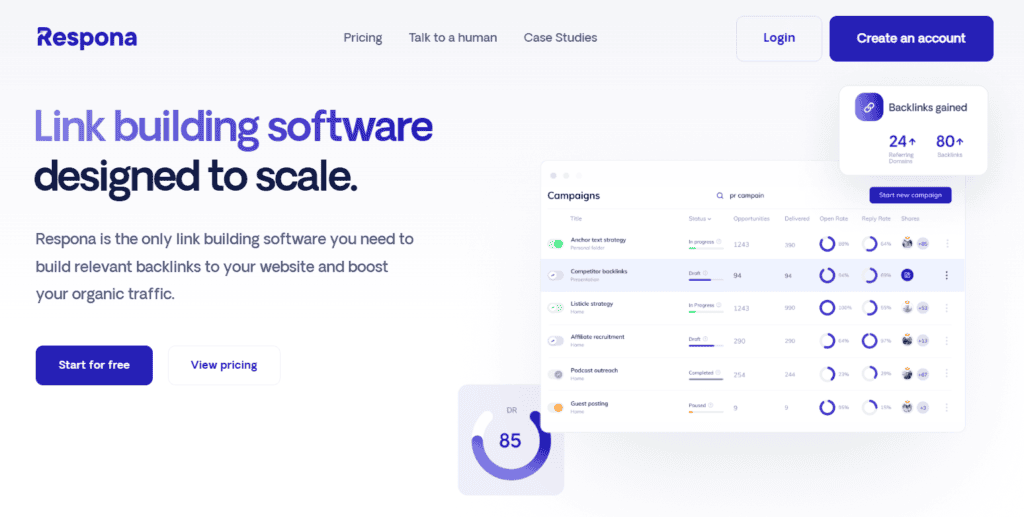
Scaling a B2B link-building campaign often fails because the pitches feel robotic. Respona tackles this by seamlessly blending deep prospect discovery with AI-driven personalization. Instead of manually hunting for blogs or podcasts to find link prospects, you simply enter your target keywords.
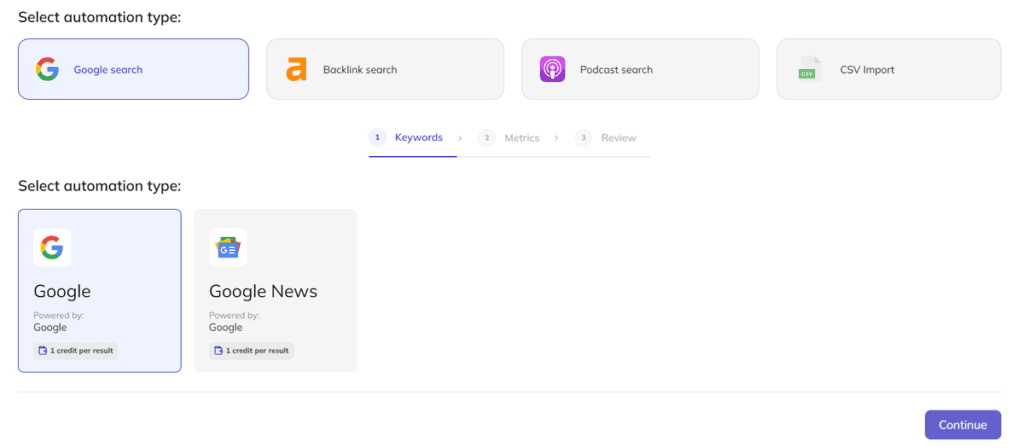
The platform’s search engine looks at Google and podcast directories. It also pulls competitor data directly from your Ahrefs or Moz accounts. It is expertly designed to turn cold prospects into warm editorial leads for guest blogging and PR campaigns.
(Image from the writer)
The platform has templates for guest posting and PR. These templates make it easy to set your search criteria and pull contact data from 24 sources. This helps find the specific author of an article, not just a support inbox.
You can automate your follow-up process. This way, no potential backlink gets missed. The Standard plan starts at about $99 per month. The Unlimited tier costs $399.
This high-speed workflow comes with a significant price tag and a noticeable learning curve. Beginners often find the extensive feature set and credit limits confusing. The system has no LinkedIn integration. The contact database can sometimes show generic “info@” addresses. It helps established agencies a lot. But solo consultants might see the cost and complexity as too much.
- Ideal use case: Scaling guest posts and PR outreach for B2B SaaS companies.
- Standout strength: AI-powered personalization variables paired with deep podcast and blogger discovery.
- Key limitation: High monthly costs, no LinkedIn integration, and a steep learning curve for new users.
Best for:
Established SaaS firms and agencies who need a collaborative, all-in-one outreach workspace.
#14. Uniqode: The offline bridge
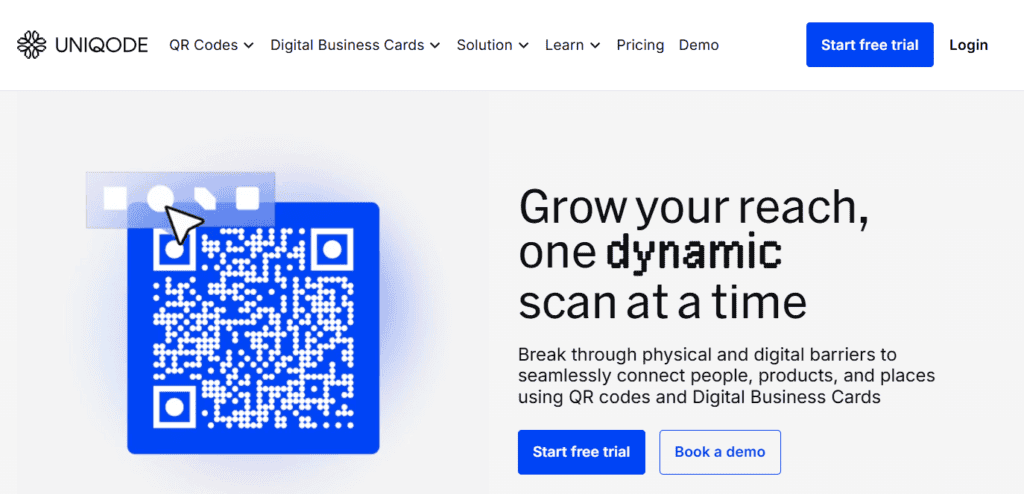
Securing premium backlinks often happens offline at real-world industry events. Journalists and bloggers are always on the hunt at trade shows. They seek fresh stories and exclusive data. Uniqode fills the gap. It turns your digital press kits into brandable, dynamic QR codes.
Reporters simply scan your code to access your digital assets. You can monitor their exact engagement using real-time QR code tracking and deep analytics. This data helps you send a well-timed follow-up pitch. Doing so can secure a strong editorial link that drives high-quality referral traffic.
The platform scales easily for massive global conferences. It has strong security and reliable API connectors. You can easily send scan data straight to your CRM. You can launch basic campaigns using the free tier. Upgrading to paid tiers unlocks dynamic routing. This feature is essential for effective PR tracking and brand growth.
Mastering these granular controls definitely introduces a noticeable learning curve for small teams. Advanced API access remains locked entirely behind the highest enterprise pricing plans. You must also handle the email follow-up with a different outreach tool.
- Ideal use case: Distributing digital press kits at offline events to secure online editorial links.
- Standout strength: Deep QR code tracking and analytics paired with enterprise-grade security.
- Key limitation: Getting advanced API access requires costly tiers, and the interface is hard to learn.
Best for:
PR teams and agencies bridging physical-event marketing and digital link-building campaigns.
#15. Vefogix: The placement marketplace
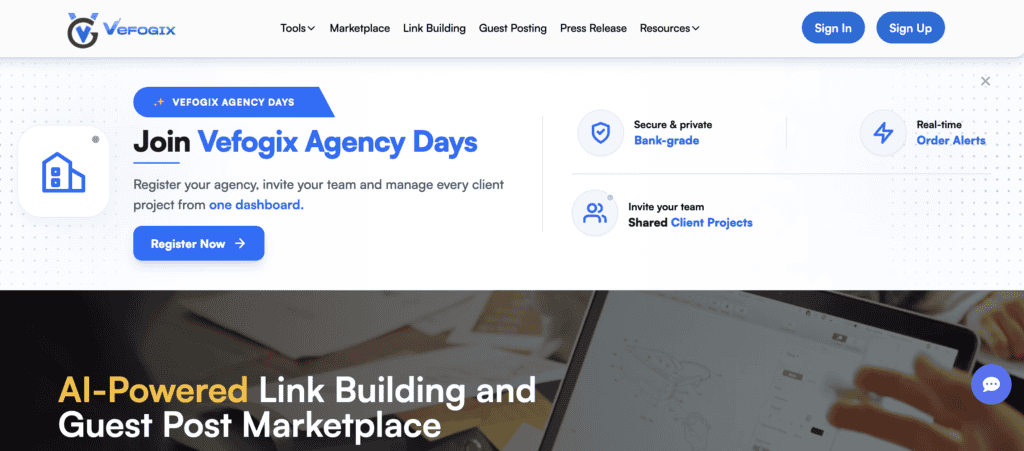
Vefogix is a marketplace for buying guest posts and link placements straight from publishers. Instead of pitching editors one at a time, you browse a catalog of more than 125,000 sites that accept guest posts and filter by DR, DA, traffic, category and price before you order.
Each listing pulls metrics from Ahrefs, Semrush, Moz and Majestic, so you can check a site’s numbers without leaving the page. Beyond guest posts, it sells press release distribution, content writing and Google Business Profile packages. Agencies can set up a workspace, invite their team and run each client’s orders as a separate project.
The catch is the same as with any open marketplace. Quality varies a lot between listings, and a high DR doesn’t guarantee real readers. Check each site’s organic traffic trend and how many outbound links it carries before you buy.
- Ideal use case: Buying guest posts and link insertions at volume when you already know what a good site looks like.
- Standout strength: A huge, filterable catalog with third-party metrics on every listing.
- Key limitation: Quality is uneven across sellers, so every order needs its own vetting.
Best for:
Agencies and in-house SEO teams that buy placements regularly and want orders, publishers and clients in one dashboard.
The final verdict
You don’t need to buy every subscription on this list to create a reliable link-building engine. It requires selecting the exact software stack that fits your daily workflow. If you’re managing guest post outreach, working from home, or racing to meet a deadline, the goal is the same. It’s all about success. You need to get your writing in front of the right editor at the exact right moment.
Start by identifying whether your main bottleneck is research, contact discovery, outreach execution, or backlink monitoring. If finding accurate contact data takes your whole afternoon, get a dedicated discovery engine. It can save you time. If tracking your live placements keeps you up at night, lock down a reliable security monitor. Pick your tools carefully, refine your pitches, and start building undeniable authority.
If your team needs help turning outreach into consistent authority growth without the hassle of managing software stacks, explore uSERP’s dedicated guest posting service to see how a specialized partner can support prospecting, placements, and comprehensive reporting.