




Teams often build SEO content to rank. It targets keywords, drives clicks, and generates traffic. It might look like it’s working. But when you look closer, conversions are often low.
That gap is where AIDA marketing becomes useful.
AIDA is a model that follows how people actually move through a customer journey.
- First, something grabs their attention.
- Then they get curious.
- Then they start to want a solution.
- Finally, they act.
Most content marketing doesn’t guide people through that full path. It attracts visitors but doesn’t move them through the marketing or conversion funnel.
This article breaks down how to use AIDA marketing in your SEO strategies. You’ll see how to structure content so it leads somewhere, driving not just traffic but real conversions and outcomes.
Highlights
- AIDA marketing helps turn traffic into conversions, not just visibility.
- SEO content often fails because it doesn’t guide the full customer journey.
- Structuring content around the marketing funnel improves engagement and decisions.
- Each AIDA stage connects to search intent and consumer behavior.
- A better structure can support higher conversion rates without requiring more traffic.
What is the AIDA marketing framework?
AIDA is a classic marketing model that guides how people move through the decision-making process. American advertising advocate Elias St. Elmo Lewis first introduced it in 1898, and it still fits how modern users behave online.
The acronym AIDA stands for:
- Attention: This is the first contact. It’s where your content shows up for the right search query and earns a click.
- Interest: It keeps the reader engaged. You show you understand their situation and give them a reason to stay.
- Desire: It’s where intent deepens. The reader starts to see real value. This is where social proof, examples, or a case study can make the difference.
- Action: This is the outcome. A clear call to action helps the user take the next step.
Each stage reflects a mindset shift.
It still works because it closely matches search intent. People move through a marketing funnel, and the AIDA model mirrors that flow.
Why AIDA marketing matters for SEO content strategy
Getting traffic is only one part of the equation. If users leave without taking action, the content isn’t doing its job.
Many pages answer a query but stop short of guiding the next step. That creates a gap in the conversion funnel. Users get information, but no direction.
Effective marketing communication needs structure. It should reflect how people think, not just what they search. AIDA marketing helps shape that flow in a way that supports real decisions.
It moves users forward through the customer journey. From early curiosity to stronger intent, each stage builds on the last.
It also ties closely to search intent. Different queries need different levels of depth and persuasion. When content matches that, engagement can improve.
This can improve the user experience and support stronger conversion performance. The page feels easier to follow, and people know what to do next.
At this level, AIDA marketing isn’t just about copy. It becomes part of your SEO content strategy, helping turn visibility into measurable results.
Using AIDA across the SEO funnel
Use the marketing funnel to understand the reader’s broader buying stage, then use AIDA to structure persuasion within the page. The two frameworks can overlap, but they are not a strict one-to-one match: a single page may use attention, interest, desire, and action even when it targets one funnel stage.
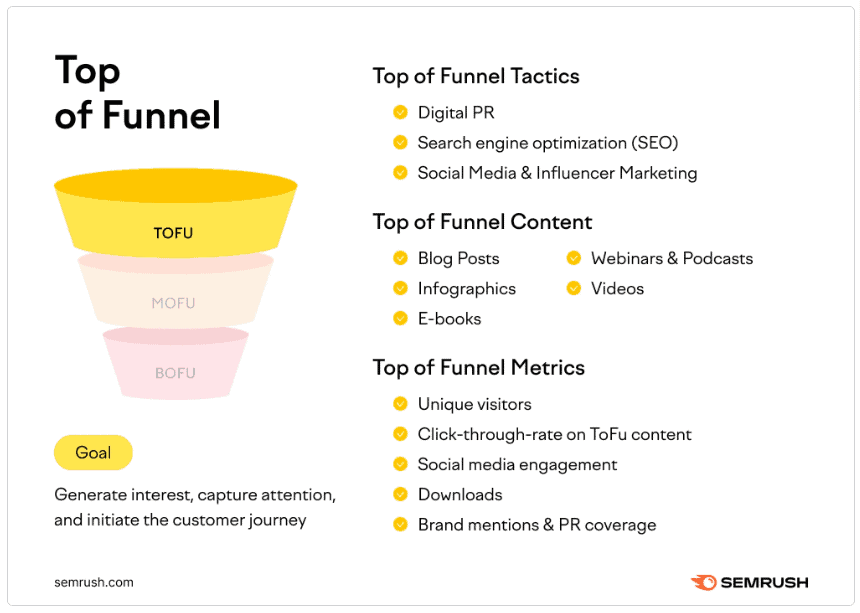
Attention at the top of the funnel (TOFU)
At the top of the marketing funnel, people are still exploring. They’re searching for answers, ideas, or a basic understanding. These are informational queries.
This is where blog posts, guides, and educational content come in. The goal isn’t conversion yet. It’s to attract the right target audience and make a strong first impression.
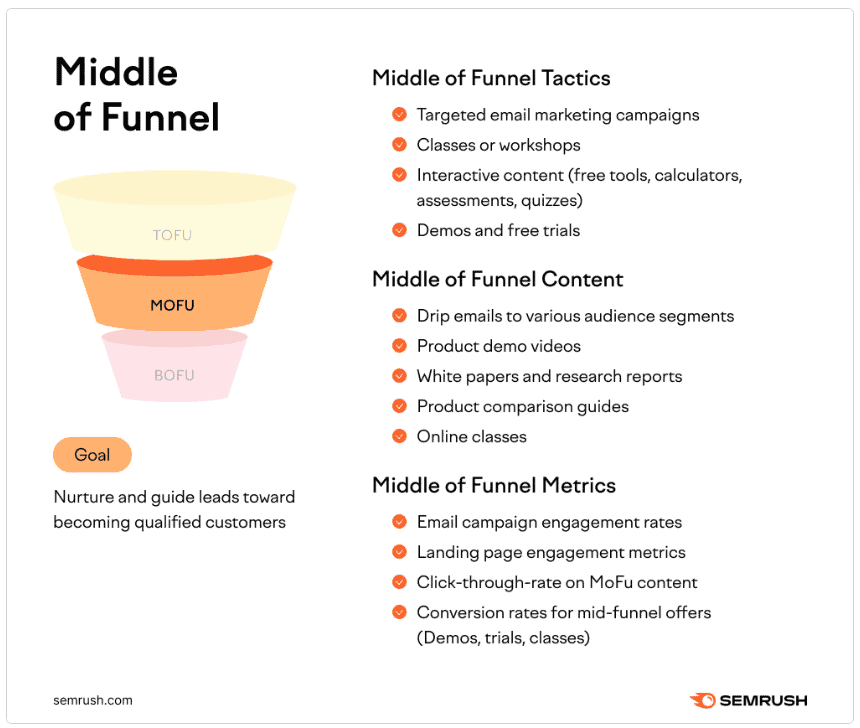
Interest at the middle of the funnel (MOFU)
As users move forward, they start looking deeper. They want to compare options and understand what fits their needs.
This is where comparison content and more detailed insights come in handy. Internal links guide them through related pages. Over time, this builds trust and shows you know the space well.
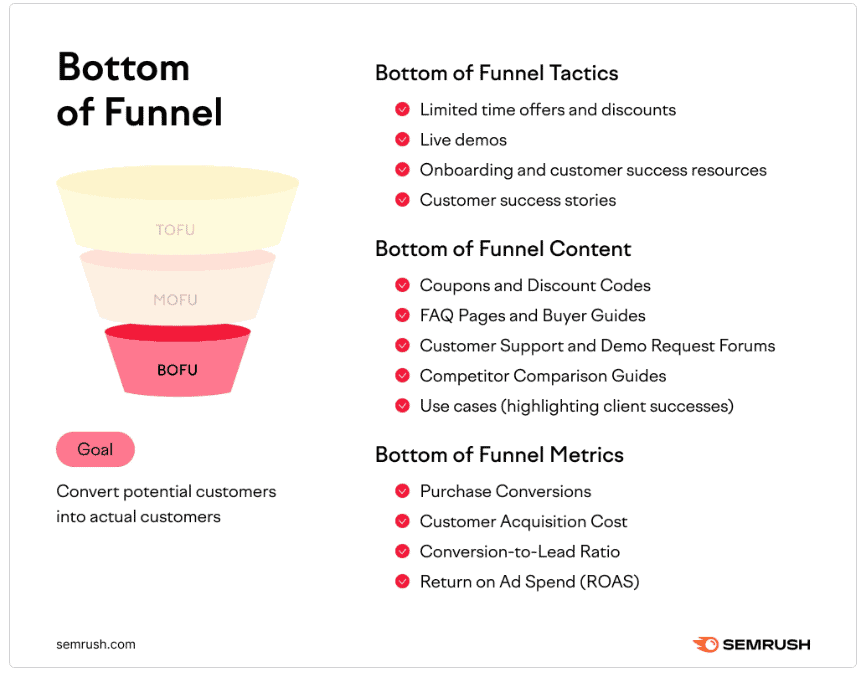
Desire at the bottom of the funnel (BOFU)
Here, users are closer to making a purchase. They’re looking for reassurance before they commit.
Product-focused content often works well here. Benefits, outcomes, and a strong case study help clarify things. You’re not just explaining anymore. You’re showing why your solution makes sense.
Action at the conversion stage
At this point, a potential customer may be ready to act but still hesitate if the next step isn’t clear.
Strong call-to-action elements make a difference. Landing pages, demos, or sign-ups should feel simple and direct. The goal is to remove friction and guide users toward a clear decision.
How to apply AIDA to SEO content (step-by-step)
Understanding the framework is helpful, but the real impact comes from how you use it. Every section of your page should move the reader forward.
Here’s how to apply the AIDA model in everyday content creation.
Step 1: Capture attention with search-driven headlines
Your headline decides whether someone clicks or scrolls past. It has to match what the user is searching for.
Start with the keyword, then make it compelling. Add a bit of curiosity or a clear benefit to attract engaged readers who want to continue.

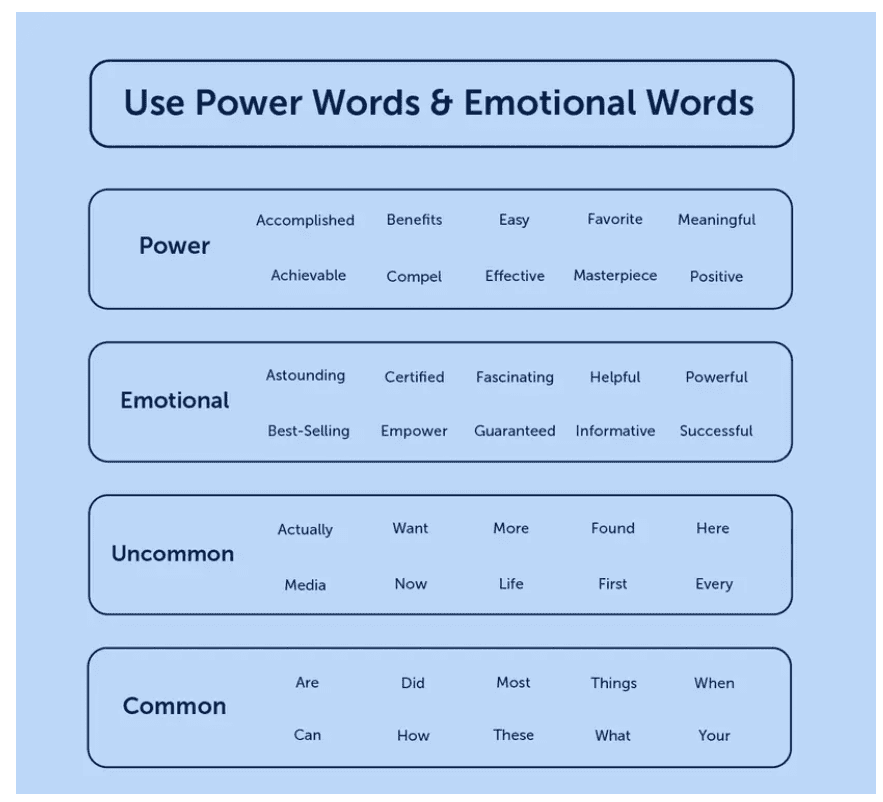
You might want to use power and emotional words to capture attention, drive click-throughs, and enhance persuasion.
Avoid clickbait. It might get clicks, but it quickly breaks trust and increases drop-off.
Step 2: Build interest with strong introductions
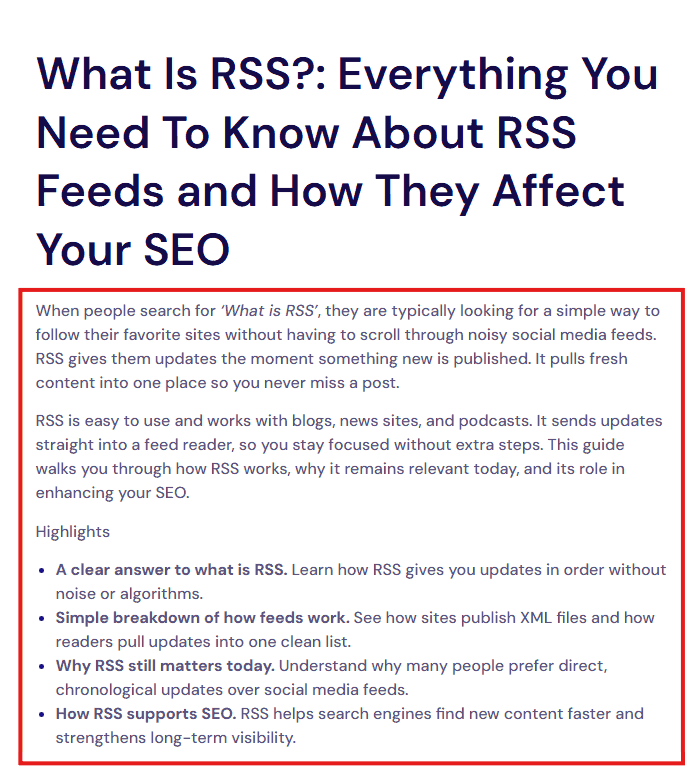
Once someone lands, you have a few seconds to keep them there. Your intro needs to feel relevant right away.
Show that you understand the problem and reflect what the reader is thinking. This builds a connection fast.
Then set clear expectations. Let them know what they’ll get from the page and why it matters.
Step 3: Create desire through value and proof
Now you need to go deeper. This is where content starts to influence decisions.
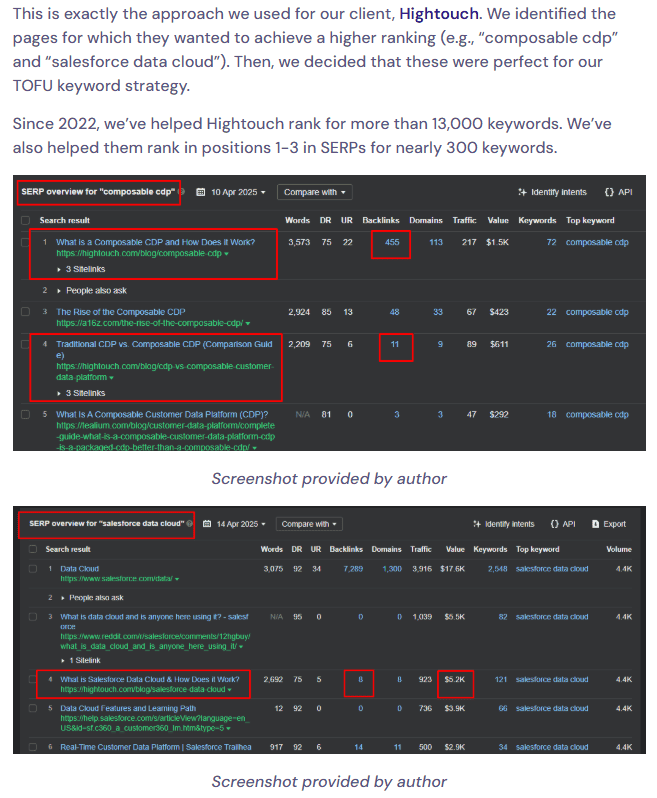
Use examples, data, or case studies to make things real. Speak to pain points, but also show outcomes. What changes after using your solution? Focus on results, not just features. This is where social proof helps build confidence.
Step 4: Drive action with clear CTAs
At this point, don’t leave the reader guessing. Tell them what to do next.
Place your CTA naturally across the page, not just at the end. Match it to the user’s position in the conversion funnel. Keep it simple. And consider inviting readers to a free trial or demo.
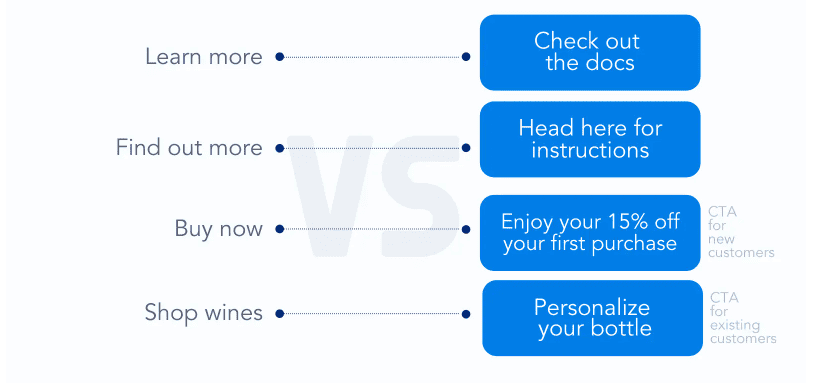
Remember that users often ignore generic CTAs. They don’t tell the user why they should click or what they’ll get.
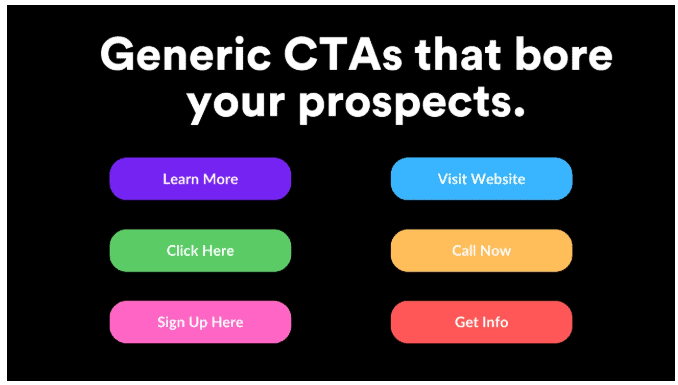
Tailored CTAs can make the next step more relevant by connecting the action to a specific user need or outcome.
HubSpot’s 2025 State of Marketing report found that 94% of marketers said personalized customer experiences affect sales. While this research examines personalization more broadly than CTA performance, it reinforces the value of matching CTAs to the reader’s context and funnel stage.
Applying AIDA to different SEO content types
Not every web page works the same way. Here’s how you can apply the AIDA model to each content type.
Informational blog posts
With informational blog posts, users are often early in the journey. They’re exploring, learning, and trying to understand a topic.
For these early-stage posts, the goal isn’t to sell right away. It’s to build trust and keep readers engaged.
Here’s how AIDA works in blog posts:
- Attention: Keyword-driven titles that match search intent.
- Interest: Engaging introductions and clear structure.
- Desire: Actionable insights that solve real problems.
- Action: Internal links and soft call-to-action prompts that guide next steps.
Landing pages
Landing pages need to be clear from the first second. Users don’t want to figure things out. They want to understand value fast.
Keep messaging simple and focused. Remove anything that distracts from the main goal. Every section should move the user closer to action.
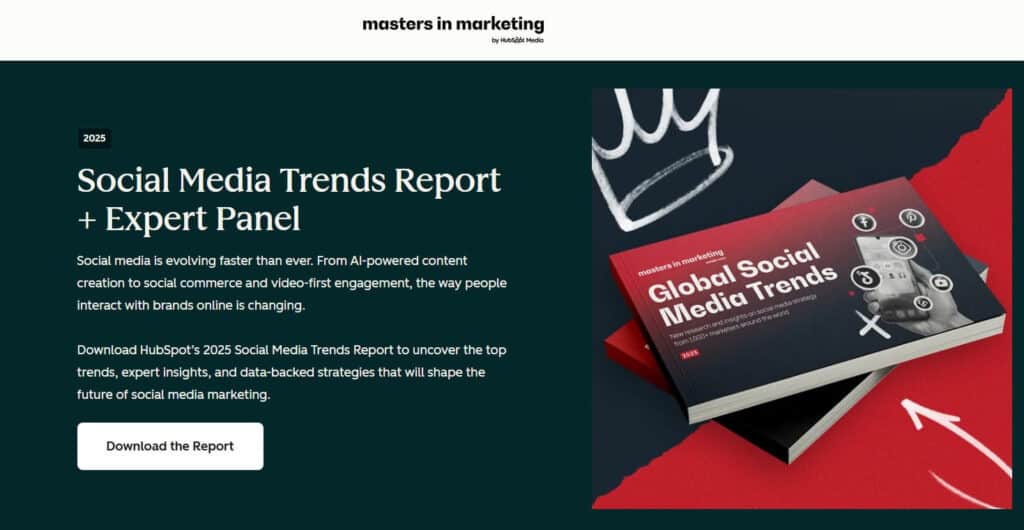
Here’s how AIDA works on landing pages:
- Attention: Headline and value proposition that immediately show value.
- Interest: Clear benefits and easy-to-follow messaging.
- Desire: Social proof and customer testimonials that build trust. For local businesses, BrightLocal’s 2026 Consumer Review Survey found that 85% of consumers were more likely to use a business after reading positive reviews.
- Action: Strong CTA, such as a demo or sign-up.
Product and service pages
On product or service pages, users are closer to a decision. They’re comparing options and looking for clarity.
Focus on outcomes first. What does the user actually gain? Then show what makes your offer different. The AIDA framework helps structure the page so each section builds momentum.
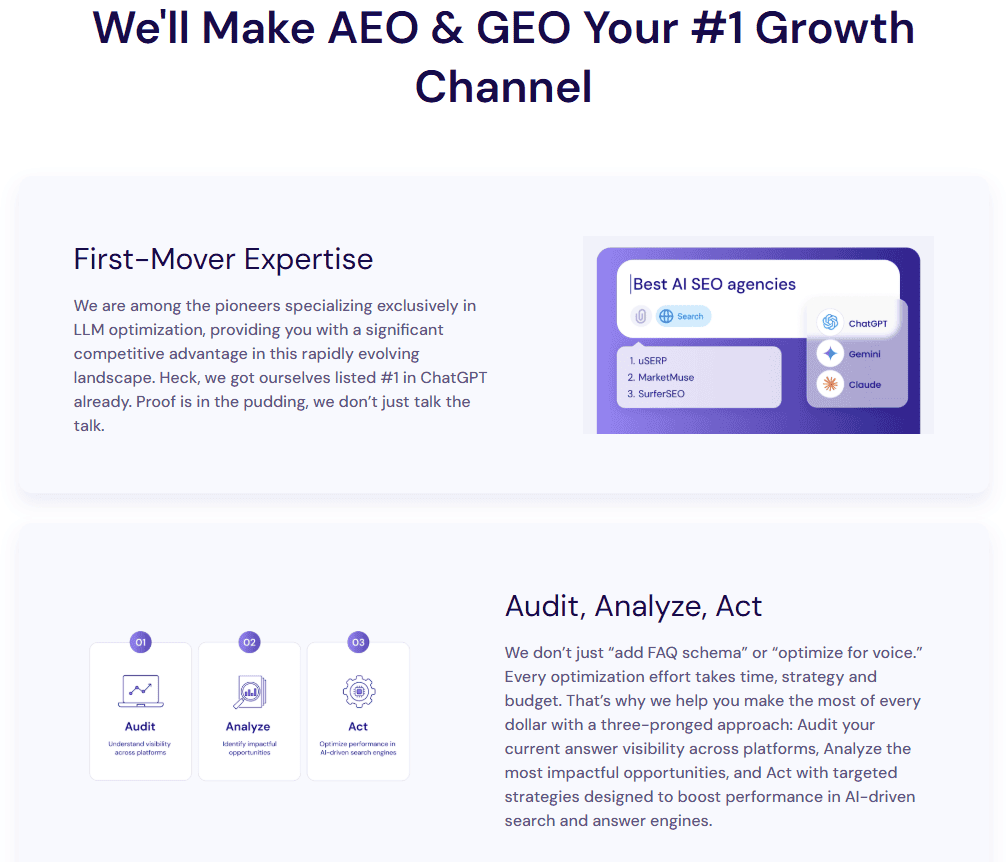
Here’s how the AIDA framework works on product and service pages:
- Attention: Clear positioning that shows relevance fast.
- Interest: Details that explain how the product or service works.
- Desire: Outcomes, benefits, and differentiation.
- Action: Clear next steps that move users toward conversion.
Comparison and “best” pages
Comparison and “best” pages attract users who are already evaluating options. They’re not browsing anymore. They’re deciding.
Clarity matters most here. If users struggle to compare options, they’ll leave. The goal is to make the decision feel easier.
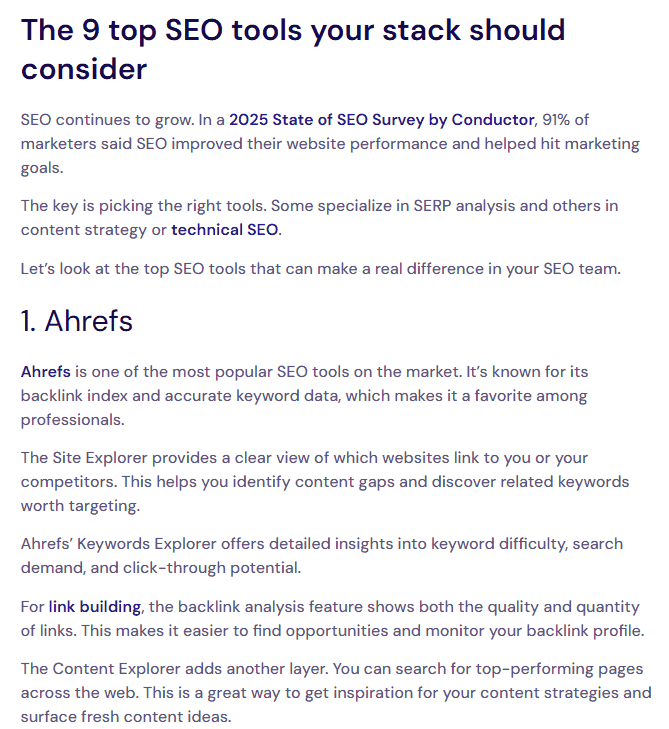
Here’s how the AIDA model works in comparison and “best” pages:
- Attention: High-intent keywords that attract ready-to-decide users.
- Interest: Structured comparisons that make options easy to evaluate.
- Desire: Clear differences, benefits, and outcomes.
- Action: Guidance that helps users choose without feeling overwhelmed.
Common mistakes when using AIDA in SEO content
Even when teams use the AIDA model in their marketing strategies, things can still fall short. Usually, it’s not one big mistake. Small gaps break the flow and stop users from moving forward.
Here are the most common ones:
- Overloading content without structure: Too much information can overwhelm readers. Without a clear structure, there’s no sense of progression. Users have to work harder to understand the page, which can increase drop-offs and reduce conversions.
- Focusing only on attention (traffic) and ignoring conversion: It’s easy to chase rankings and clicks, but traffic alone doesn’t drive results. Without guiding users through the conversion funnel, you can end up with high visits and low ROI.
- Misalignment with search intent: If content doesn’t match search intent, users won’t stay. Informational queries need education, while high-intent searches need proof and clarity. When this doesn’t line up, engagement drops quickly.
- Weak or generic CTAs: Vague calls to action leave users unsure of what to do next. Phrases like “learn more” don’t create urgency or clarity. Without clear direction, people hesitate and often leave without taking action.
Wrap up: Turn SEO traffic into real revenue
Traffic can look impressive. But if users don’t take action, it won’t drive growth.
That’s the missing piece for many teams. Content brings people in, but it doesn’t guide them anywhere. Without structure, users leave.
This is where AIDA marketing becomes practical. It gives your content direction. Each stage has a role, and each part moves the reader closer to a decision. It’s not about adding more content. It’s about shaping what’s already there.
Over time, this can support stronger conversion rates and more consistent results. You’re not relying on traffic alone. You’re building a system that supports the full customer journey.
If you want content that does more than rank, uSERP can help. Book a call to create a conversion-focused SEO strategy built for real growth.
FAQs
What is AIDA marketing in simple terms?
AIDA marketing is a framework that guides how people make decisions. It moves through four stages: Attention, Interest, Desire, and Action. Instead of just attracting traffic, it helps structure content so users stay engaged and take the next step.
How does AIDA marketing improve SEO performance?
Search engine optimization brings visibility, but AIDA marketing helps turn that visibility into results. It aligns content with search intent and the customer journey, so users don’t just land on a page. They move through it. This improves engagement and often leads to higher conversion rates.
Can AIDA marketing be used across different SEO content types?
Yes. You can apply AIDA marketing to blog posts, landing pages, product and service pages, and comparison pages. The framework stays the same, but the emphasis on each stage changes depending on search intent and where the user sits in the funnel.