




If you still think Instagram is just about pretty grids and witty captions, you’re about three updates behind. Instagram SEO has quietly turned this app into one of the most active search engines on the internet.
Social search is now a major force. Instagram has become a primary tool for discovery, allowing users to find products, brands, and services much like they would on traditional search engines.
Instagram is one of the leading social media platforms, each with its own unique SEO rules. People type queries into the Instagram search bar. They look up “easy travel outfits,” “AI tools for small business,” or “date night restaurants near me.”
Adam Mosseri, head of Instagram, has been pushing to make Instagram’s search and Explore page more dynamic. As a result, the app now decides what to show based on text, sound, visuals, and engagement patterns. In 2026, users are increasingly searching for brands directly on Instagram rather than through traditional search engines.
This means your Instagram SEO strategy has to play both sides. On one end, it needs to be creative enough to capture attention.
On the other hand, it must be structured enough for the platform to understand what your content is about and who it should reach.
This guide breaks down the ABCs of Instagram SEO and how to use it to grow your organic visibility. Instagram SEO is crucial for improving online visibility for brands. You’ll walk away with a few clever updates that help Instagram connect the dots between your content and your audience.
Highlights
- Instagram has evolved into a visual search engine, with nearly 3 billion monthly active users searching for products, brands, and services directly on the platform — making SEO optimization essential for organic discoverability in 2026.
- Profile optimization is the foundation of Instagram SEO — incorporating relevant keywords into your display name, bio, and category tags helps both Instagram’s algorithm and Google understand what your brand offers and who it should reach.
- Instagram’s algorithm ranks content based on a combination of relevance, engagement, and timing — captions with targeted keywords, hashtags, alt text, and strong early engagement signals all influence whether your content surfaces in search results, Explore, and recommendations.
- Public Instagram profiles and Reels now appear in Google search results, meaning brands should align their Instagram keywords, location tags, and handles with their website SEO strategy to create a consistent, cross-platform search presence.
- Instagram SEO is an ongoing, test-and-learn process — regularly running A/B tests on posting times, formats, and captions, tracking metrics like saves and replays, and acting on emerging trends before they peak are all critical to maintaining and growing organic visibility.
Why does Instagram SEO matter?
Instagram’s global user base has grown to about 3 billion monthly active users (MAU), according to CNBC. That’s nearly half the internet.
Many of them use Instagram as a visual search engine. They search for products, restaurants, travel ideas, tutorials, and solutions to everyday problems. Users search directly on Instagram for content, brands, and recommendations, making it essential for posts to be optimized for discoverability.
They follow location tags, explore Reels tied to trending topics, and rely on what they find to make decisions. User activity and user behavior, such as past interactions, likes, saves, and follows, influence what content is shown to each individual, personalizing their experience and affecting content visibility.
Instagram SEO helps your content show up in those moments. It gives your posts the signals they need to appear when someone searches for the kind of content you create. Using targeted keywords and relevant hashtags, especially niche-specific hashtags and keywords, improves the visibility and categorization of your content, helping it reach the right audience.
How Instagram decides what to show your audience
Instagram’s recommendation system works like a network of signals rather than a single algorithm. Instagram’s algorithm uses various ranking factors (e.g., keywords, engagement, and user behavior) to determine how content appears in search results, Explore pages, and suggested feeds.
The platform uses the Instagram Feed AI System. It orders posts by predicting what users will find most relevant, engaging, and timely.
Relevance comes from context. This includes the keywords in your captions, the hashtags you use, and even the text that appears in your videos.
Engagement reflects how people respond to your content through likes, saves, comments, and shares. And timing helps Instagram decide whether your post feels fresh and worth showing again.
Together, these signals help Instagram model customer behavior, such as what people pause on, repeatedly search for, or interact with before making a decision.
If your audience engages quickly, the post continues circulating through Explore and recommendations. If people linger on your reels or swipe through your carousel, that watch time is another layer of validation.
You have to understand those cues and design posts that are easy to read. This is all part of boosting your visibility for SEO. Proper optimization can improve your search ranking and ensure your content is categorized effectively by the algorithm, helping your content appear in the right places.
Use descriptive text, clear visuals, and captions that match how your audience searches or speaks. The more data you give the algorithm, the better it becomes at showing your content to the right people.
Ways to boost your Instagram SEO
Instagram search engine optimization works by helping the platform understand what your content is about and who it should reach. Using an Instagram SEO tool can help you optimize your content and track performance, making it easier to enhance discoverability and engagement.
SEO on Instagram is a strategic process that involves optimizing profile elements, content, and engagement to improve your ranking within the platform and in external search results. To get started, consider these Instagram SEO tips for optimizing your profile and posts to boost your visibility.
Every part of your profile and every post you share sends cues that guide how you appear in search and recommendations. Adding keywords to your profile and posts is essential for improving discoverability and search rankings.
Conducting keyword research and generating keyword ideas using tools like Google Keyword Planner or SEMrush can help guide your content strategy and ensure you target the right audience.
Make your profile easy to find and hard to forget
Before you worry about hashtags or Reels, start with your storefront: your Instagram profile. Optimizing your profile with relevant keywords in your profile name, bio, and captions is essential for improving discoverability and search rankings.
Every element on your page sends search signals, from your display name to your category tags. The goal is to make your profile bio as searchable as it is scroll-stopping.
Your bio is your elevator pitch. Use it to tell both people and Instagram what you do, where you’re based, and why you’re worth following. Using keywords in your profile name and bio is crucial, as these fields are searchable and help users quickly understand what your brand offers.
Use a few keywords that describe what you do in plain language. If someone searched your niche, would your profile appear?
Phrases like “wedding photographer,” “B2B copywriter,” or “plant-based meal ideas” help Instagram connect your account to search intent.
You should also:
- Make your display name do some work for you. Add a keyword alongside your name, like “Jenna | Interior Design.” Using relevant keywords in your display name, username, and captions can improve your ranking in Instagram’s search results. This helps your profile appear when people type related terms into the search bar.
- Choose a category tag that best represents your business or role. It helps Instagram classify your account correctly, which can improve your visibility in recommendations.
- Keep your branding consistent. Use the same handle, logo, and tone across your content. When users recognize your account instantly, they’re more likely to click, follow, and engage.
- Write keyword-rich captions and start them with important terms to improve searchability, but avoid keyword stuffing—use keywords naturally for better readability and engagement.
You might think, well, all these tips are great. What does a well-optimized IG profile look like?
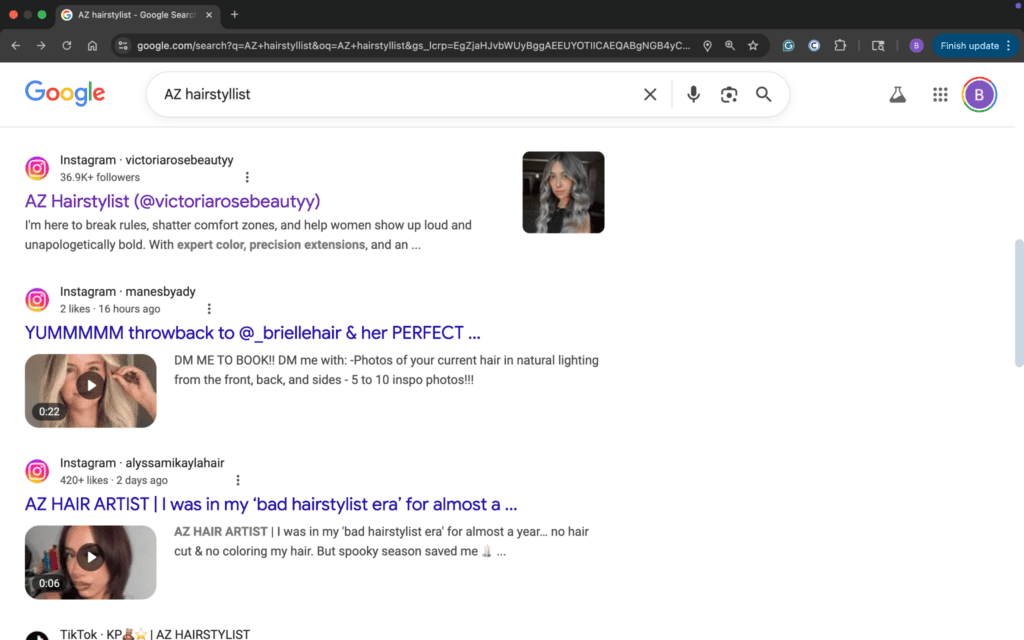
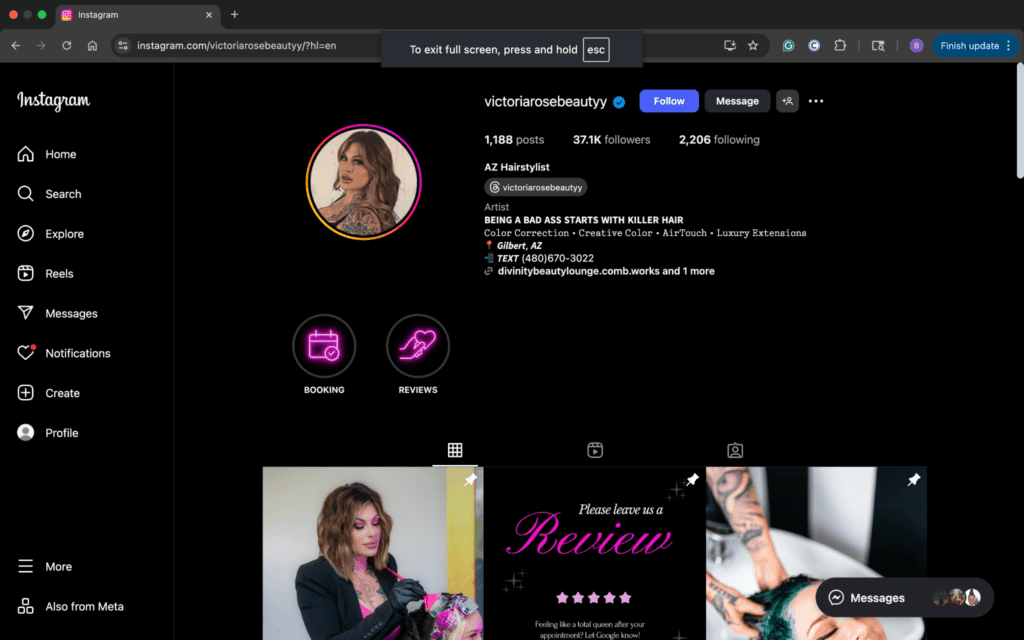
Let’s look at an example. When you search “AZ hairstylist” in Google, one of the first Instagram results you’ll see is @victoriarosebeautyy, a verified stylist based in Gilbert, Arizona.
Her profile checks all the boxes for Instagram SEO. The display name includes a searchable keyword (“AZ hairstylist”) that helps her appear in both local and general searches.
Her bio clearly outlines her specialties, including color correction, creative color, AirTouch, and luxury extensions. Notice how she doesn’t engage in keyword stuffing. Instead, she uses relevant keywords naturally to inform potential customers what to expect from her services.
This also gives Instagram and Google a precise understanding of what she offers. Consistency extends to her handle, highlights, and visual branding, all of which reinforce her niche.
Create content the Instagram algorithm wants to show off
Forget trying to “beat” the algorithm. Feed it what it already loves. Instagram rewards authenticity, consistency, and originality. Creating relevant Instagram content and consistently posting help you reach the right users, as the algorithm recognizes and serves your posts to the right audience.
Focus on:
- Building content pillars that help you post regularly without running out of ideas: These are the 3–5 themes you’ll post around consistently. These give your audience (and Instagram) context about what you’re known for and ensure you consistently post relevant content.
- Using a smart hashtag strategy that mirrors how people search. Mix broad, niche, and branded hashtags. And rotate them based on your post themes to optimize your Instagram posts for SEO.
- Optimize your Instagram captions by including relevant keywords and location tags to enhance search visibility and engagement.
- Write custom alt text for each Instagram post by accessing the Advanced Settings menu before posting. Instagram alt text is a concise description that explains the content of your post, improving accessibility for users with screen readers and helping Instagram’s algorithms understand and index your content for better search results. When writing alt text, describe the image clearly and accurately, incorporating relevant keywords naturally and avoiding keyword stuffing.
- For video content like Reels, add captions or subtitles to improve accessibility, engagement, and search visibility.
- Mix in user-generated content (UGC), whether that’s through influencers, customers, or even people on your team.
- Involve yourself with the community and encourage engagement through interactive content, such as asking questions or creating relatable posts, to boost search visibility and increase likes, comments, and shares.
You can also consider building relationships with creators in your niche. This helps you expand your reach, earn authentic mentions, and tap into shared audiences the algorithm already trusts.
Test, test, test
You can’t rank in search engine results if you don’t even know what content resonates with your target audiences. Tracking key metrics—such as reach, engagement rate, and follower growth—is essential for measuring the success of your Instagram SEO efforts and optimizing your strategy accordingly.
Run small A/B experiments to compare posting times, formats, and captions. Many teams usesocial media automation tools or the right Instagram SEO tool to schedule variations, analyze performance, and reach interested users by surfacing engagement patterns and performance trends without manually pulling reports.
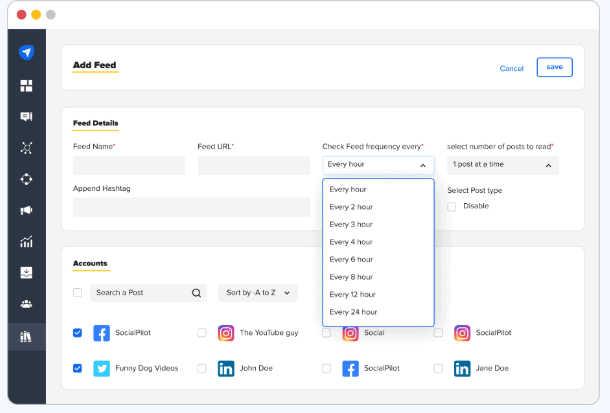
Early engagement signals to Instagram that your content is resonating, increasing the likelihood it will appear in Explore.
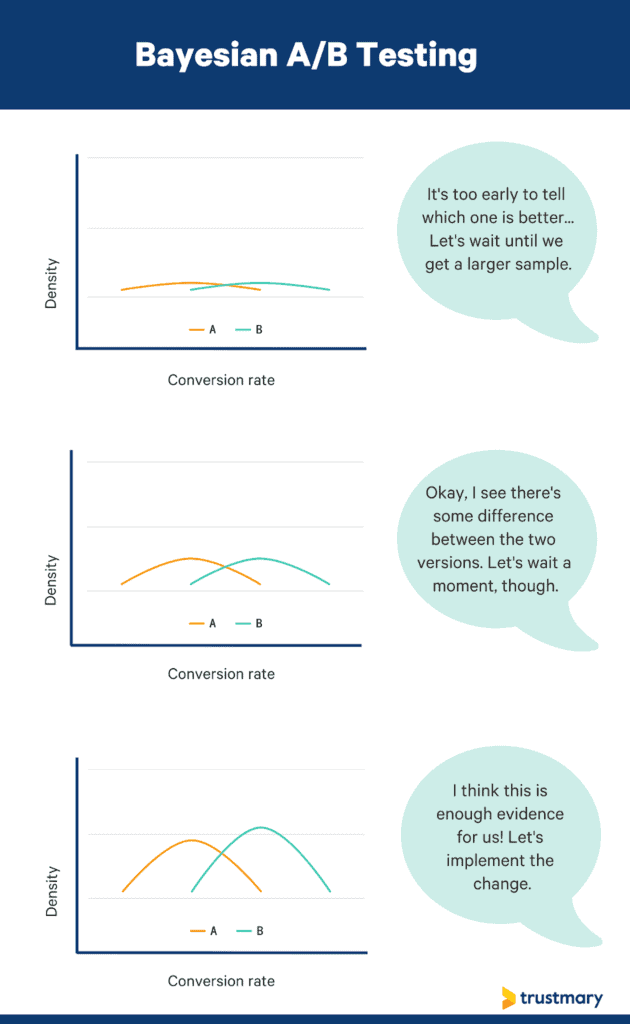
Pro tip: If you enjoy advanced SEO analytics, you can apply light Bayesian testing. Instead of looking at a one-time spike in engagement, this method helps you confirm whether a trend holds steady over time.
For example, confirming that posting at 10 a.m. truly outperforms 2 p.m. rather than assuming it’s a coincidence.
It looks at probabilities to tell you how confident you can be that one version consistently performs better. In other words, if your Reels with educational captions outperform lifestyle shots five weeks in a row, Bayesian testing helps validate that it’s a reliable pattern. Monitoring your Instagram SEO efforts over time helps refine your strategy for even better results.
Use Reels and the Explore Page to expand your reach
Reels and the Explore Page are where people discover you. They’re not following you yet. They’re browsing, judging, and deciding if they like your content…all within seconds. Optimized content is more likely to appear in suggested posts and suggested content feeds, helping you reach the audience most likely to engage and convert. Increasing engagement through likes, comments, and shares not only boosts your visibility but also signals to Instagram that your content is valuable, making it more likely to be surfaced to new users. By focusing on Instagram SEO, you can improve your organic reach and reduce reliance on paid ads to get in front of potential followers.
Here’s how to make that moment count:
- Treat every Reel like a searchable snippet. Add captions, on-screen text, and steady visuals.
- Use consistent audio to help your Reels appear in topic clusters.
- Watch your content engagement metrics and lean into what drives saves and replays.
- Respond to comments and encourage sharing—social engagement like this can enhance your visibility on the Explore page.
- Keep your layout clean. A smooth user experience still makes all the difference.
Connect Instagram SEO to Google search
Instagram is no longer isolated from the web. Public profiles and Reels are now creeping into Google search results, which means your Instagram SEO and web SEO are merging. To ensure your Instagram account is eligible for indexing by search engines, make sure you switch to a professional account—only public posts from professional accounts will be indexed by external search engines like Google. In July 2025, public Instagram posts began appearing in Google search results.
To take advantage, align your keywords, location tags, and micro-landing pages so your social presence supports your site visibility.
When your captions, bios, location tags, and post topics echo the same phrasing as your website, Google starts linking them together.
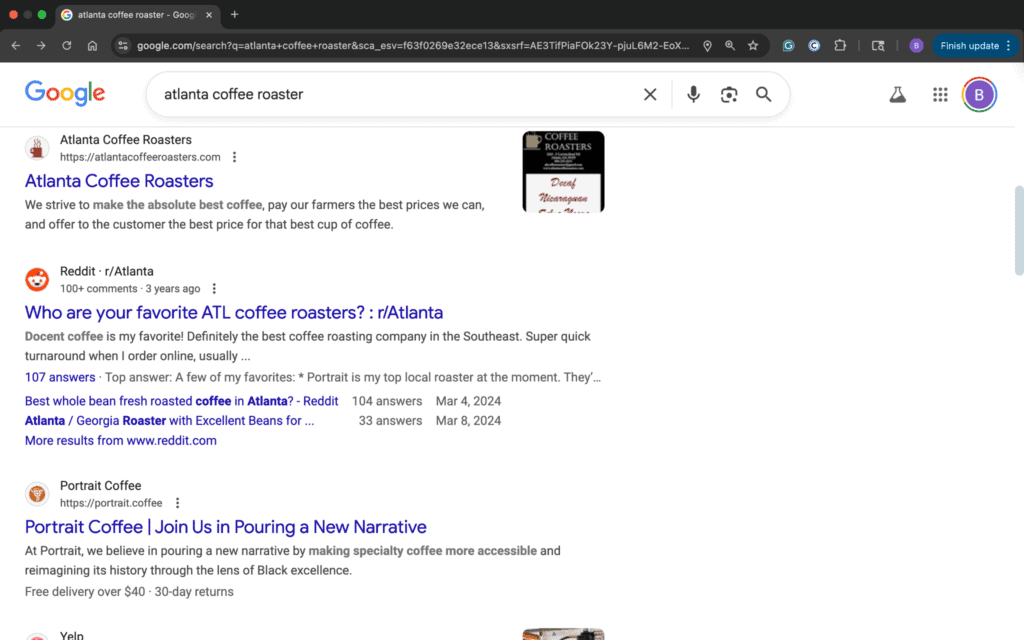
For example, if your site ranks for “Atlanta coffee roaster,” weave that phrase into your Instagram bio and a few well-placed captions.
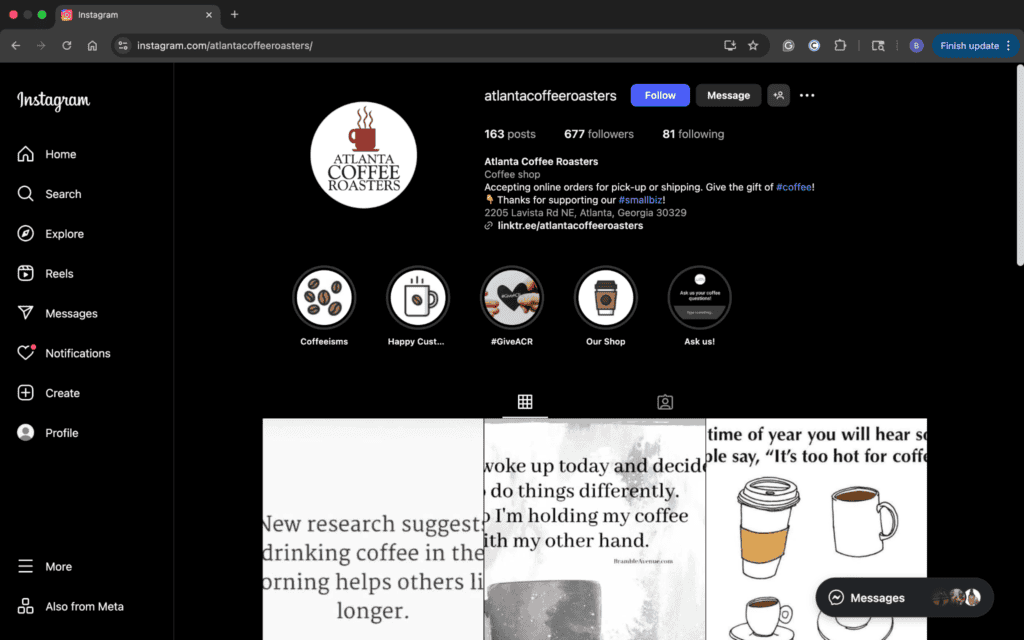
A great real-world example is @atlantacoffeeroasters, a small roastery that appears in Google search results. Their name itself contains the keyword, which might be a bit of luck, but it still shows how powerful exact phrasing can be for search visibility.
By using the same keyword in their handle, display name, and website URL, they create a clear connection between their online profiles.
Their bio keeps things natural and readable: “Accepting online orders for pick-up or shipping. Give the gift of #coffee!” The repeated use of “coffee” and “Atlanta” ties their profile to common search intent.
Other ways to boost discoverability:
- Add location tags that match your Google Business Profile and link your posts to micro-landing pages, which are short, focused pages tied to specific campaigns or product lines. It tells search engines, “Hey, this is all the same brand talking.”
- Keep your naming consistent. Google rewards this. If your website uses “YourBrand Studio,” but your Instagram handle is “YourBrand_Official,” and your YouTube says “YB Creative,” you’re making the algorithm guess.
- Use the same handle, logo, and naming patterns across all channels. It helps both Google and users recognize your brand instantly. Think of it like leaving breadcrumbs from one platform to another.
- Track where your posts appear and how AI Overviews or zero-click searches affect discovery.
- As AI Overviews start summarizing answers directly in Google’s results, your visual content could appear without users ever leaving the search page. Keep an eye on whether search traffic dips or stabilizes after these updates.
- Use Google Search Console and Instagram Business Insights to see which of your URLs are showing up in the index and where impressions come from.
- Optimize your posts with relevant search terms in captions, hashtags, and bios to improve indexing and organic visibility on Instagram.
Lean into trends before they peak
Trends move fast on Instagram, but the sweet spot for visibility often happens right before a topic explodes. Using the right, most relevant hashtags when you join a trend helps categorize your content, making it easier to appear in relevant searches and reach new audiences.
Keep an eye on the trends gaining momentum in Reel audio and Explore recommendations. New sounds, sticker styles, or content themes that appear repeatedly in your feed are early signals.
Use Google Trends, Sprout Social, or Later’s Trend Report to confirm whether a topic is starting to grow beyond your usual circles.
Once you spot a pattern:
- Act quickly
- Create content that naturally fits the trend without forcing it
- Use your brand’s voice to interpret the idea, whether it’s a short tutorial, a reaction, or a before-and-after clip
You don’t have to copy what everyone is doing, but you can (and should) post while the conversation is still fresh. Optimizing for Instagram SEO and organic discovery can also reduce your reliance on paid advertising, helping you attract customers naturally.
For example, when #coffeetiktok started spreading to Instagram Reels in late 2024, small cafés that posted early versions of the “latte art challenge” saw dramatic reach increases before the tag hit mainstream status.
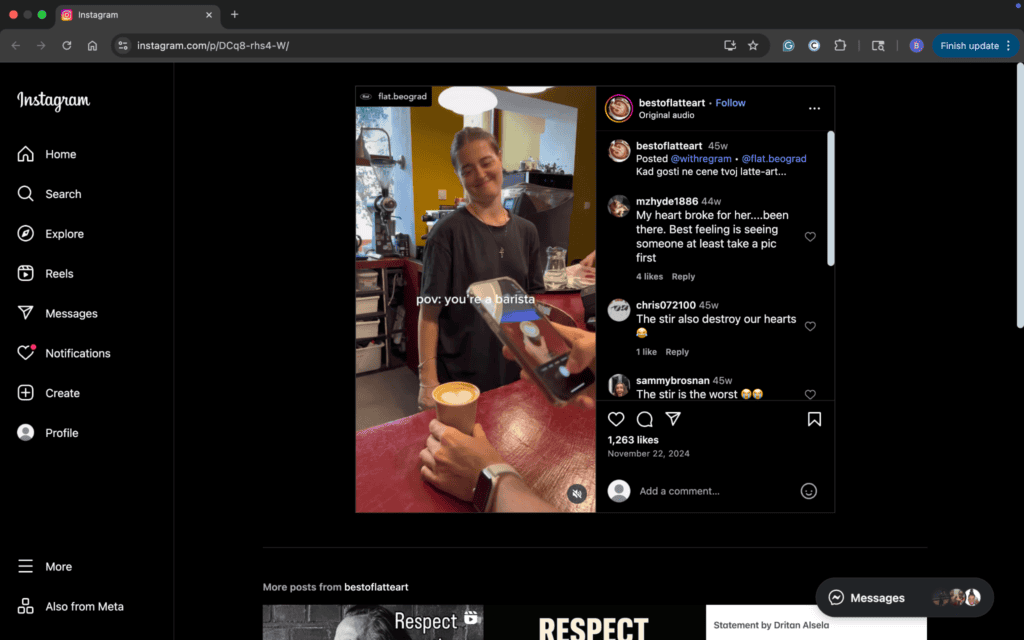
Early participation signals to Instagram that your content is current, which often leads to higher placement in Explore and recommendations.
Final thoughts on Instagram SEO: Measure, learn, and keep it moving
Instagram SEO is an ongoing process that grows with your content, your audience, and how Instagram and Google understand your brand. Social media managers can leverage Instagram SEO as part of a broader Instagram strategy, integrating SEO techniques to enhance visibility, increase engagement, and gain a competitive edge within your niche or local market.
The more you post, test, and refine, the stronger those signals become across search and social. Applying traditional SEO principles—like keyword research, relevance, and ranking strategies—to your Instagram content helps optimize your posts for both Instagram’s search and recommendations, much like optimizing for a traditional search engine.
Track the content that earns the most engagement and visibility. Pay attention to saves, replays, and keywords that help your posts appear in both Instagram recommendations and Google results.
Trends and algorithms will continue to evolve, but the foundation stays the same. Always strive to achieve clear messaging, consistent activity, and a deep understanding of the type of posts people want to see, while also fostering community involvement and encouraging user interactions to boost search visibility and engagement.
Keep learning, keep measuring, and keep creating content that helps people find you, wherever they’re searching.Need expert support? Partner with uSERP to turn your social presence into a discoverable, search-ready brand. Book a strategy call today.