




Link building has changed a lot. AI-driven results, constant spam updates, and tighter quality checks mean Google now looks at links very differently. Tactics that once worked at scale no longer carry the same weight. Some get ignored. Others can even hurt your site.
Links still play a big role, but how you earn them now makes the difference. What works is earning fewer, stronger links in the right context on pages that actually make sense to users.
Let’s discuss link building best practices. In this guide, you’ll see what still works, what to avoid, and how to adjust your approach so your links drive real results.
Highlights
- Quality matters more than quantity: A small number of strong, relevant links often delivers better results than a large volume of weak ones.
- Context shapes link value: Links naturally embedded in useful, relevant content carry more weight.
- Old tactics can backfire: Scaled guest posts, PBNs, and undisclosed paid links increase risk.
- Links influence visibility beyond rankings: They affect how often your content appears in AI-driven and zero-click results.
- Sustainable link building strategies win in the long term: Strong link building focuses on authority, trust, and real audience impact.
Why link building still matters in 2026
Even with all the changes, links still sit at the core of how Google ranks content. They help search engines decide:
- What deserves attention
- What can be trusted
- What’s credible
The difference now is how those signals are evaluated and applied.
Backlinks as trust and authority signals
Links still act like endorsements. When a trusted website points to you, it signals that your content is worth paying attention to. So, that hasn’t changed.
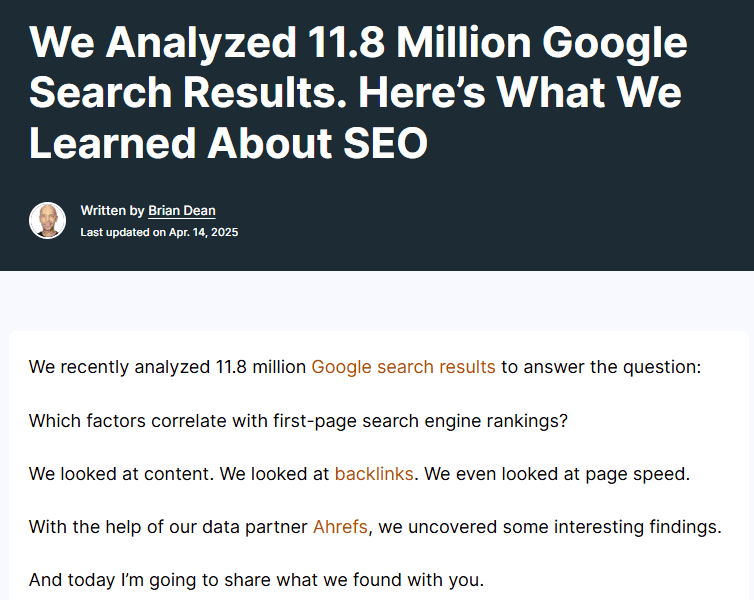
According to Backlinko, pages that earn more backlinks tend to rank higher more consistently. The correlation reinforces the continued relationship between backlinks and search visibility, although backlink volume alone doesn’t determine rankings.
The relevance and credibility of the linking source matter, too.
The shift from volume to relevance
It’s no longer about how many links you can get. It’s about where they come from and how they fit.
A handful of relevant links can be more valuable than dozens of unrelated ones. Context matters. A backlink placed within genuinely relevant content is more useful to readers and creates a clearer topical relationship between the two pages.
How AI and SERPs changed link value
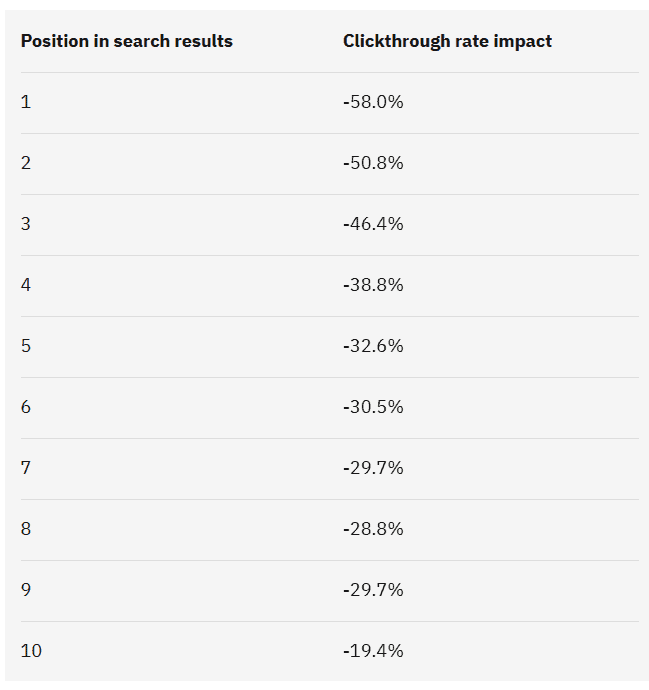
Search results don’t work the same way anymore. AI Overviews and zero-click results are taking up more space, which means fewer users actually click through.
Ahrefs found that AI Overviews lowered clicks to top-ranking pages by 34.5% in April 2025. By December, they were linked to a 58% drop in average CTR for the top result. Links now help with visibility, not just rankings.
What Google rewards now (modern link signals)
Google hasn’t removed links from the equation. It just looks at them more carefully now. Not every link counts the same. Some carry real weight. Others do almost nothing. The difference comes down to relevance, trust, and how naturally the link fits within the page.
Topical relevance and contextual placement
Prioritize where you’re placing your link.
A link inside relevant, useful content is more meaningful than one placed randomly.
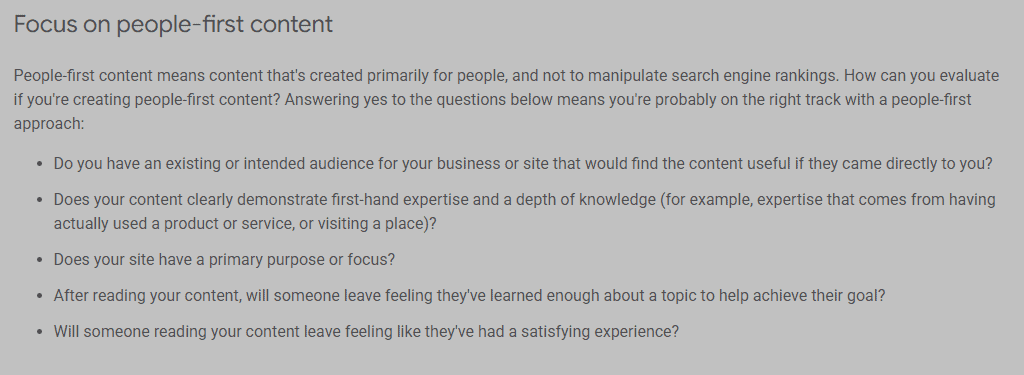
Google’s people-first content guidance reinforces the importance of creating content primarily for users, not manipulating search rankings. Links should follow the same principle: they should support the surrounding discussion and give readers a useful next step.
Editorial, earned links
Editorial links are earned when a publisher considers your content useful, relevant, or worth citing, rather than when you purchase or exchange placement.
These mentions are especially valuable when they come from credible, relevant sites with real audiences. The placement supports the content instead of existing solely to create a backlink.
Authority and trust of the linking domain
Not all websites pass the same value. A link from a strong, trusted site has a bigger impact than one from a low-quality page.
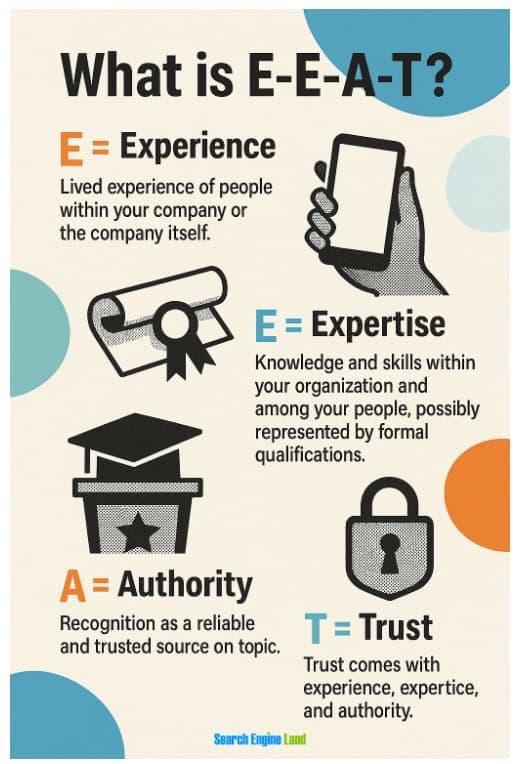
Google considers signals such as organic traffic, credibility, and expertise. This ties back to E-E-A-T. Metrics like domain authority can give a rough idea of a website’s strength, but what really counts is whether the source is trusted and relevant.
Anchor text that looks natural
Anchor text still plays a role, but it needs to feel natural. Over-optimized anchors stand out in the wrong way.
A natural backlink profile can include branded, generic, and partial-match anchors. The priority is to use anchor text that accurately reflects the linked page and reads naturally within the surrounding sentence.
Traffic and engagement signals
The best links get clicked.
A link that gets clicks does more than sit on a page. It can send referral traffic, introduce your brand to new audiences, and support real business results. That makes traffic and engagement worth tracking alongside traditional link metrics.
Link building best practices that still work in 2026
The link building strategies that work today focus on earning links through real value. Here are some examples.
Digital PR and data-driven campaigns
Doing digital PR is an effective way to earn high-quality links. It starts with something worth talking about. Original research, industry data, or even a simple survey can turn into a strong asset.
When you publish proprietary data, you give other publishers something original to reference. Journalists, bloggers, and creators looking for fresh insights can cite those findings in their own coverage.
Search Engine Land highlights this clearly. Original research and unique storytelling often lead to more citations because they offer something new.
Outreach still plays a part, but it works best when the story already stands on its own. A strong angle gives journalists and publishers a clearer reason to reference the asset.
Guest posting on authoritative, relevant sites
Guest posting can be an effective way to drive traffic to your website. You have to be selective. Publishing on any site that accepts content won’t get you far.
Focus on sites with real audiences that publish quality content and maintain clear editorial standards. Your contribution should fit naturally into their existing coverage.
When done well, guest posts can bring visibility, credibility, and referral traffic, not just a backlink.
Linkable assets and “citation-worthy” content
Some content attracts links on its own. These are the pieces people reference again and again.
Linkable assets include in-depth articles, templates, tools, or original frameworks that are useful enough for others to reference.
The goal isn’t just to publish content. It’s to create something people rely on. When your content becomes a go-to resource, links happen naturally over time.
Strategic partnerships and collaborations
Partnerships open the door to more natural link opportunities. This could be co-marketing, integrations, or shared campaigns.
Both sides benefit. You reach new audiences, and the collaboration creates shareable content. Links are part of that process, not the main goal.
HARO-style and expert contributions
Providing expert input is a simple way to earn strong links. Platforms like HARO (Help a Reporter Out) connect journalists with sources, making it easier to get featured.
By sharing insights, quotes, or data from industry leaders, you position yourself as a trusted voice. Over time, these mentions build authority.
P.S. If you’re new to this, you might want to read our HARO link building guide for more insights.
Reclaiming lost and unlinked mentions
Sometimes you don’t need new content. You need to find what’s already there.
Brands often get mentioned without a link. Reaching out and asking for one can turn those mentions into easy wins.
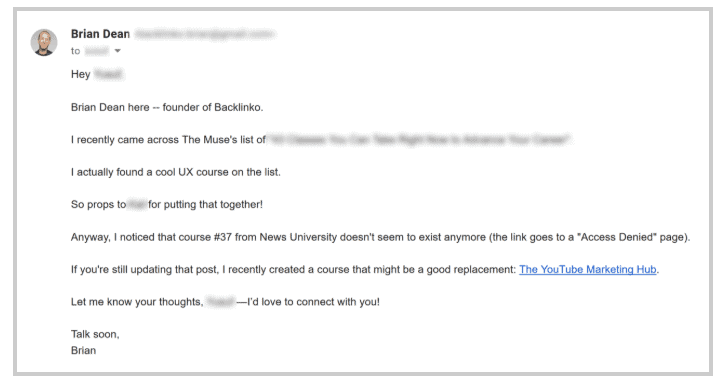
A related opportunity is broken link building. When a relevant page points to a resource that no longer exists, you can identify the broken link and determine whether your content provides a suitable replacement.
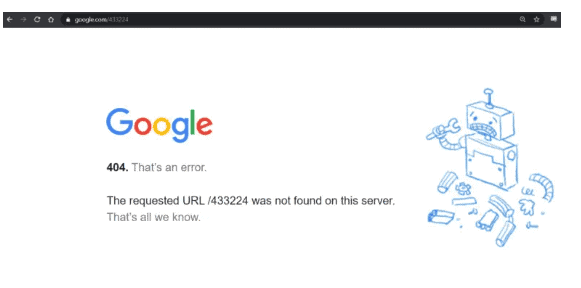
If you have suitable content, you can suggest it as a replacement. It’s a simple fix that benefits both sides.
Here’s what a broken link building email can look like:
What Google now penalizes (or ignores)
Google’s spam systems are designed to identify manipulative linking practices. Depending on the situation, questionable links may be ignored or lose their ranking value, while violations of Google’s spam policies can result in manual actions or other ranking consequences.
That makes scalable tactics designed primarily to manipulate rankings increasingly risky.
Low-quality guest posts at scale
Guest posting can backfire when you use the wrong sites. Link farms and generic blogs built just for backlinks are easy to spot.
These sites often have no real audience and publish low-effort content. Links from these sites may provide little meaningful referral or SEO value, especially when the publication exists primarily to sell or exchange backlinks.
Paid links without proper disclosure
Paying for links without disclosure is risky. Google expects paid or sponsored links to use appropriate attributes, such as rel=”sponsored” or rel=”nofollow”.
If you don’t qualify paid links properly, you can violate Google’s spam policies and risk a manual action. A placement that looks natural to readers doesn’t automatically make a paid link compliant.
Over-optimized anchor text
Repeatedly using the same anchor is a clear signal that something’s off. It doesn’t read naturally, and it stands out.
Repeated keyword-rich anchors can create an unnatural linking pattern, particularly when they appear across placements created primarily for ranking purposes.
Private blog networks (PBNs) and link schemes
PBNs are built to manipulate SEO rankings. They often reuse similar structures, content, and linking patterns.
PBNs fall under the broader link schemes targeted by Google’s spam policies. Google may simply ignore these links. More serious violations can also lead to manual actions.
Irrelevant or spammy directories
Directory links offer little value unless the site is credible and relevant. Many directories exist only to host links, not to help users.
Listings on low-quality directories are unlikely to provide meaningful referral traffic or contextual relevance. Prioritize directories that serve a legitimate audience and clearly connect to your industry.
How to build a future-proof link strategy (2026 and beyond)
A strong link building strategy isn’t about quick wins. It’s about building something that lasts. That means focusing on quality, consistency, and real value.
Focus on authority, not shortcuts
Shortcuts can work for a moment. Then they fade or create problems later.
A better approach is to build authority over time. That comes from:
- A consistent content creation process
- Strong positioning
- Trust
When your brand becomes a reliable source, links follow more naturally. It takes longer, but the results last.
Integrate link building with content strategy
Link building works best when you plan it alongside content.
Create link-worthy assets such as guides, reports, or tools that others have a reason to reference. Then support those assets with targeted outreach and digital PR. When search engine optimization, content, and PR align, the process feels more natural and effective.
Track the right key metrics
It’s easy to focus on link counts, but that doesn’t tell the full story.
Look at what those links actually do. Do they bring referral traffic? Do the linked pages gain visibility? Do they lead to conversions? These signals give you a clearer picture of performance.
Wrap up: Build links that actually move SEO rankings and revenue
Effective link building in 2026 comes down to a few core principles:
- Relevance over random placements
- Strategy over quick wins
- Quality over volume
When those pieces line up, links start to support real growth, not just search visibility.
The impact builds over time. One strong link leads to another. Good content keeps getting referenced. Visibility improves not only in search results but also across AI-driven experiences.
It’s about balance. Rankings matter, but so do authority and visibility. You want links that drive traffic, support your brand, and strengthen your long-term position.
If you want a link building strategy built around that approach, uSERP can help. Our team earns high-quality links that drive measurable results.
Book a call to see how we can support your growth.
FAQs
What is link building in SEO?
Link building involves getting other websites to link to your site. These links act like signals of trust. When reputable sites link to you, search engines see your content as more credible, which can help improve rankings.
Is link building still important in 2026?
Yes, it still plays a key part in SEO. Even with AI-driven results and changing Google SERPs, backlinks remain one of the signals that help pages get discovered, understood, and ranked. The difference now is that quality, relevance, and context are far more important than volume.
What is the safest way to build backlinks?
The safest approach is to earn links naturally. This includes:
- Contributing expert insights
- Building real relationships
- Creating useful content
- Doing digital PR
Avoid manipulative tactics designed mainly to influence rankings. These are more likely to violate Google’s spam policies.