When people hear SEO, they usually think about Google. But users now increasingly turn to social platforms to discover brands and information.
People now use Facebook Search to find local businesses, products, creators, and communities. Many also look for recommendations. Beyond search, they discover brands through Reels, suggested content, and feed recommendations.
This means your Facebook Page can attract qualified traffic and potential customers.
Many marketers focus on publishing content and growing reach. However, there’s another opportunity that gets far less attention.
Facebook posts that generate the most engagement reveal which messages, offers, and creative angles connect with your audience. You can use these insights to build high-performing Facebook ads.
This playbook explains how to improve Facebook SEO. You’ll find ways to improve visibility, enhance your content, and turn organic insights into paid creative ideas.
Highlights
- Optimize your Facebook Page so it appears more often in Facebook Search and recommendations.
- Create content around audience search intent to increase organic visibility and engagement.
- Use Facebook Insights to identify high-performing organic content before investing in paid ads.
- Turn winning organic posts into Meta ad creatives with a structured creative testing process.
- Track the right engagement metrics and continuously refine your Facebook SEO strategy.
Why Facebook SEO deserves a place in your marketing strategy
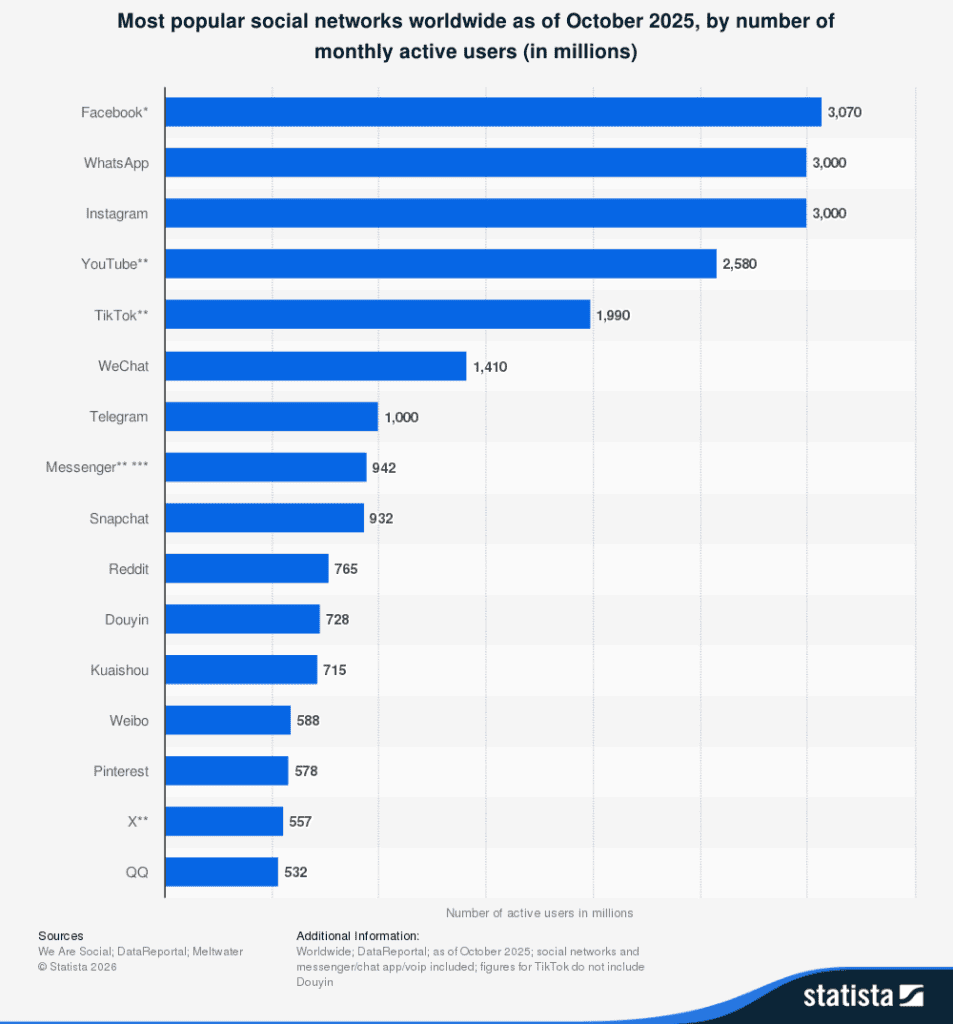
Statista data from October 2025 showed that Facebook had more than 3 billion monthly active users. Many of these users use the platform to discover businesses long before they visit a website.
People use Facebook in different ways. Some search for products. Others ask for recommendations or join niche communities. So, a solid Facebook presence helps your business reach customers where they hang out.
How people discover businesses on Facebook
People don’t always type a business name into Facebook Search and click the first result. Facebook has many ways for people to discover your content. Each path helps your content reach new audiences.
- Page tags and recommendations: Customers, partners, and other pages can tag or recommend your business. This helps more people discover your Facebook Page.
- Shared posts: When someone shares your content, it reaches people outside your current audience. Shares may also send referral traffic to your website.
- Reels recommendations: Facebook shows Reels to users who might like them, even if they don’t follow your Page.
- Suggested feed content: Facebook shows posts in users’ feeds based on their interests and past activity.
- Facebook Groups: Relevant Groups can link your business to people looking for advice or recommendations.
- Facebook Search: People use keywords to find businesses, products, services, events, and creators.
Each path supports a different type of discovery. That’s why improving visibility on Facebook involves much more than ranking in Facebook Search.
How Facebook SEO differs from traditional SEO
Facebook SEO and traditional SEO share the same goal: improving visibility. The difference lies in how content gets discovered and ranked.
| Facebook SEO | Traditional SEO |
| Engagement signals, such as comments, shares, reactions, and watch time, influence content sharing. | Rankings depend more heavily on relevance, authority, backlinks, and technical performance. |
| People can discover content through Facebook Search, Reels, recommendations, Groups, and their feeds. | Most discovery begins with a search engine query. |
| Fresh posts and recent audience activity can rapidly affect visibility. | Search visibility usually grows over time as pages build authority and relevance. |
| Results can vary based on a user’s interests, connections, location, and previous activity. | Results depend more on the search query, page quality, and the search engine’s ranking system. |
These differences matter because they shape your Facebook marketing strategy. Instead of relying on traditional SEO tactics, focus on creating engaging content that people can discover through the ways they already use Facebook.
How to optimize your Facebook Page for search visibility
Your Facebook Business Page should tell people who you are, what you offer, and how to contact you. It should also give Facebook clear clues about your business.
Start with the basic details. These fields help people find your Page and decide if it is worth a closer look.
Optimize your Page name, username, and About section
Your Facebook Page name should match your brand name. Keep it clear and easy to remember.
Do not pack the name with keywords. That can make your Page look spammy. Add a service, niche, or location only when it feels natural.
For example:
- Clear: Kedzie Dental Clinic
- Too much: Best Affordable Emergency Family Dentist
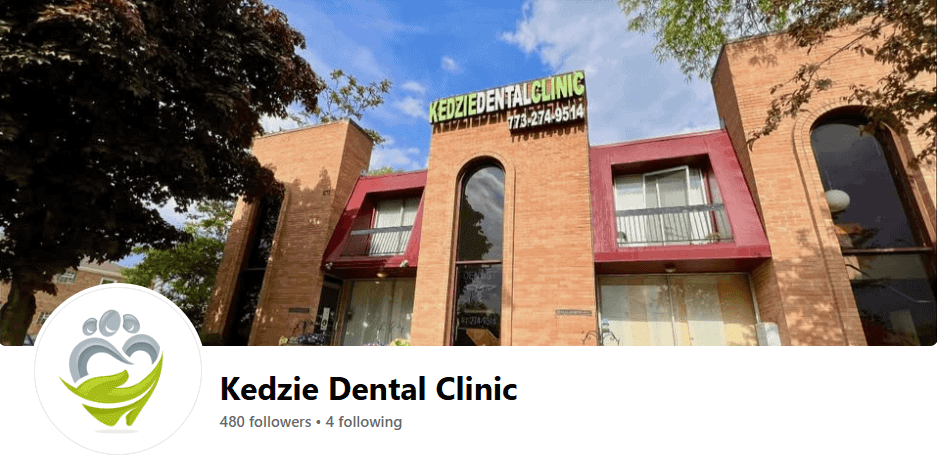
Your username should also stay close to your brand name. A short username is easier to search, tag, and share.
Next, review your About section. Explain what your business does in plain language. Add one or two relevant keywords that your audience may search for.
A useful business description should cover:
- What makes your service useful
- Where you work
- Who you serve
- What you offer
For example:
“Providing friendly, gentle, family and cosmetic dentistry to our community and surrounding areas.”
This description gives both users and Facebook useful context. It also includes the service and location without forcing extra keywords.
Complete your business profile
A complete Facebook Business Page makes your brand look more reliable. It also helps people find key details in one place. This is a simple but important part of Facebook Page optimization.
Fill in every field that applies to your business, including:
- Call-to-action button
- Business category
- Business hours
- Phone number
- Email address
- Services
- Location
- Website
Choose the most accurate business category. This helps Facebook understand what your company does. It can also improve your visibility on Facebook and help your Page appear in Facebook Search.
Make sure your website is optimized for search, loads quickly, and works well on mobile. Mobile devices made up 52.27% of global website traffic in the first quarter of 2026, according to Statista.
A slow or hard-to-use page may push visitors away. Test your website on your phone before adding the link.
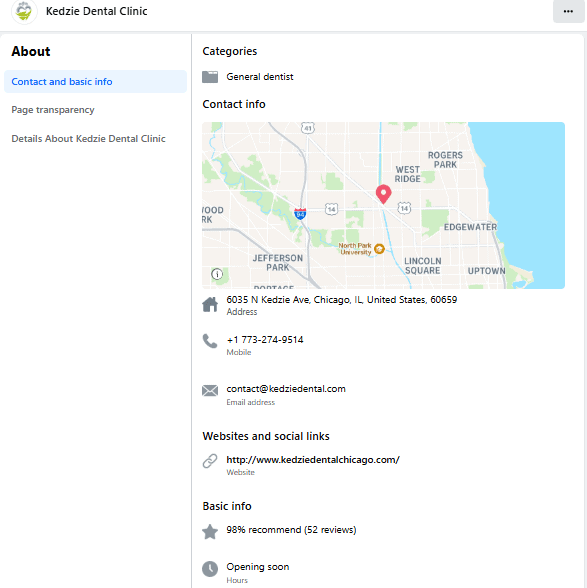
You should also choose a CTA button that matches your main goal. Options may include “Call now,” “Book now,” or “Learn more.”
Keep your hours and contact details up to date. Accurate information builds trust and supports your Facebook SEO efforts. Old details can confuse visitors and weaken trust.
Strengthen trust signals
People want to know that your business is real and active. A polished Page can help, but recent activity and social proof matter too.
Ask happy customers to leave honest reviews or recommendations. These comments can help new visitors feel more confident about your business.
Tags, reviews, and recommendations can create valuable brand mentions for SEO. They can help more people find your business and feel confident about it.
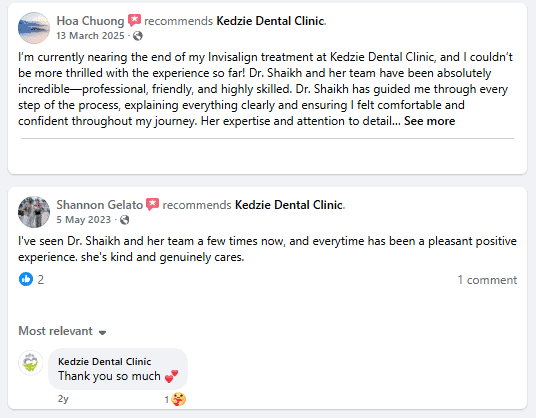
Use the same logo, colors, and tone across your Facebook Page and website. This makes your brand easier for people to recognize. A clear branding guide can help keep these elements consistent across every customer touchpoint.
Stay active as well. Reply to comments and messages within a reasonable time. Add fresh updates so visitors can see that someone still manages the Page.
Review your profile details every few months. Check your links, services, hours, and contact information. A well-kept Page creates a better first impression and gives Facebook clearer data about your business.
Create content that improves Facebook discoverability
Posting more content does not always lead to better results. The right content marketing tactics focus on topics people already want to discover and engage with. When your posts answer real questions, they have a better chance of reaching the right audience.
Build content around audience search intent
Start with the questions your customers ask every day. Those questions can become your next Facebook post.
Look at your comments, messages, customer reviews, and sales calls. You can also use Google Search, Reddit, or industry forums to spot common questions.
Create content that helps people solve a problem or learn something new.
For example, you can:
- Cover industry updates that matter to your audience.
- Explain how to use your product or service.
- Answer common customer questions.
- Share simple tips and best practices.
Hurom America does this well. The brand shared a Reel with a green juice recipe. The video explains each step and gives viewers a useful tip.
The product appears in the video, but the post still feels helpful. It answers a real need first. This can make the content more likely to earn views, saves, and shares while supporting your wider organic search visibility.
```Helpful content can keep working after you post it. People may still find it through Facebook Search, shares, or recommendations.
Use keywords naturally throughout your content
Keywords help Facebook understand what your content is about. You do not need to repeat the same phrase over and over. Add relevant keywords where they fit naturally.
Good places to include keywords include:
- Hashtags, when they make sense
- Alt text for your Facebook photos
- Facebook post captions
- Image descriptions
- Video titles
For example, if you own a bakery, write “fresh sourdough bread in Seattle” instead of “our newest product.” Clear wording gives people and Facebook more context.
Write for people first. If a keyword sounds forced, leave it out.
Keyword research can also support your Facebook lead generation strategy. Our guide to The Role of SEO and Keywords in Facebook Lead Generation explains how.
Encourage meaningful engagement
Facebook pays attention to how people interact with your content. A post that starts a conversation usually performs better than one that gets ignored.
Encourage people to share their views or personal stories. When someone comments, reply if you can. Even a short response shows your Page is active.
You can also encourage people to share a post if they found it useful. Just keep it natural. People are more likely to share content that teaches them something or solves a problem.
Measure what actually improves Facebook SEO
Creating content is only the first step. The next step is measuring what your audience responds to. This is where Facebook Insights can help.
Track the right organic metrics
Do not focus on likes alone. Look at the metrics that show how people interact with your Facebook content.
Pay attention to:
- Video watch time
- Engagement
- Profile visits
- Link clicks
- Shares
- Reach
- Saves
For example, a post with 200 likes may look successful. But another post with more shares, saves, and link clicks may deliver better results. These actions show that people found the content useful.
Review your Facebook Insights regularly. Over time, you will see what helps increase visibility and what your audience ignores.
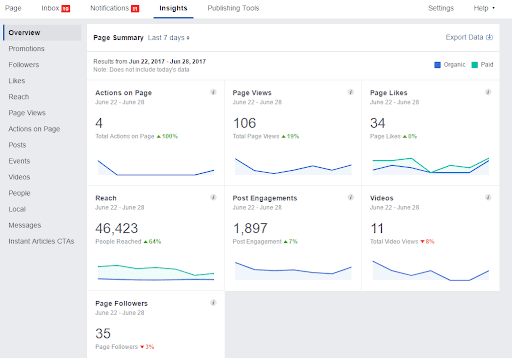
Look for patterns instead of one-off wins
One successful Facebook post does not tell you much. Look for trends across many posts.
Ask yourself:
- Which questions come up again and again?
- Which posts get the most shares or saves?
- Which topics get the most engagement?
- Which post formats perform best?
These patterns show what your audience wants. They also help you improve your Facebook marketing strategy.
These insights strengthen your Facebook SEO by showing which topics and formats people want to read, watch, and share. They also give you a clearer starting point for paid campaigns because posts that consistently earn shares, saves, and comments reveal which messages may be worth testing with ad spend.
Turn organic insights into better-performing Meta ads
Your best ad ideas may already be on your Facebook Page. Strong organic posts show you what your audience likes before you spend money on Facebook Ads.
Identify your winning messages before spending ad budget
Some posts get more attention than others for a reason. They tell you what your audience likes.
Look for posts with strong:
- Content formats
- Creative angles
- Calls to action
- Headlines
- Offers
- Hooks
Strong engagement on Facebook gives you useful feedback. Likes, comments, shares, and saves can show which ideas connect with your audience.
This makes organic content a low-cost test before you invest in paid advertising. It can also support your Facebook marketing strategy and reduce wasted ad spend by ensuring you only put budget behind messages that have already proven they resonate.
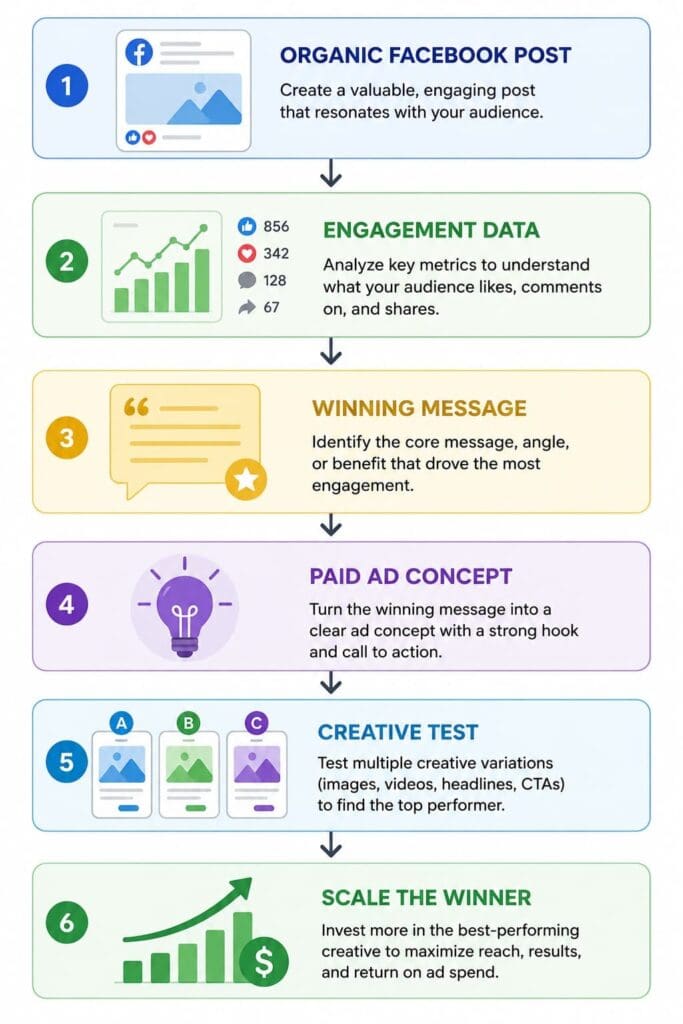
Image created by author
Use audience feedback as creative research
Your comments can give you valuable ad ideas. Read them before you write new Facebook content.
Look for:
- Words your customers use
- Customer objections
- Common questions
- Feature requests
- Pain points
Pay close attention to repeated phrases. Your audience may describe a problem in a clearer way than your marketing team.
You can use that language in future Facebook Ads. This can make your copy feel more natural and relevant.
Turn top-performing organic posts into paid creatives
A strong Facebook post can become more than one ad or another form of marketing content.
You can turn it into:
- Static image ads
- Carousel ads
- Video ads
- UGC ads
Keep the main message that worked. Then test it in a new format.
Once you find your strongest organic messages, test them clearly. A structured creative testing framework can help you out here. It tells you which hooks, visuals, formats, and offers actually improve campaign performance.
Build a repeatable performance creative testing process
Finding good ideas is only the first step. You also need a process to test them. A simple system helps you learn what works and repeat it.
Start with a simple testing plan
Every test should have one goal. Decide what you want to improve before you launch a campaign.
For example, you may want more clicks, more leads, or a lower cost per conversion.
Keep your plan simple:
- Set one straightforward goal.
- Decide how you will measure success.
- Test one audience.
- Set a realistic budget.
- Give the test enough time to collect data.
Avoid ending a test too early. Small data sets can lead to poor decisions.
A well-defined testing plan also makes your Facebook marketing strategy easier to improve over time.
Keep your tests consistent
A structured process helps you understand why an ad succeeds.
Keep as much as possible the same between tests. This includes your audience, budget, campaign objective, and schedule.
Then change just one element for each test. You might test a new headline, image, or call to action.
Record the results after every test. Over time, you will spot patterns that improve your Facebook Ads and support your Facebook SEO efforts.
Consistent testing can also lower costs. A 2026 NP Digital study found that brands with an ongoing testing process cut their average cost per acquisition from $86 to $74.
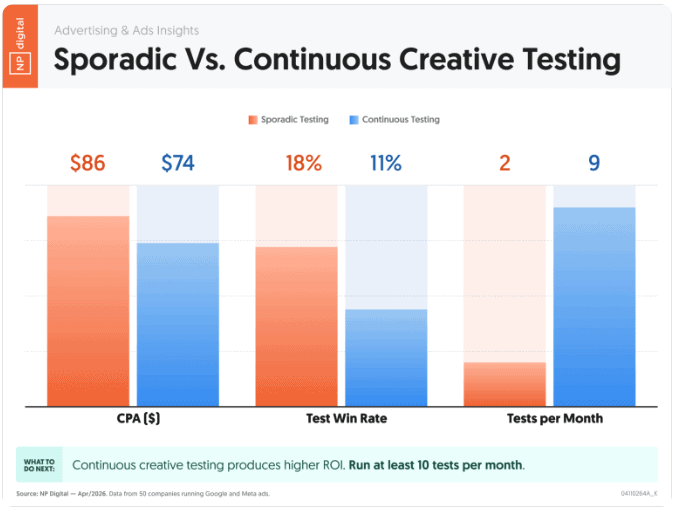
Build a creative testing library
Do not stop after finding one winning ad. Save it and learn from it.
Create a simple library that includes:
- Best-performing images and videos
- High-converting calls to action
- Top-performing headlines
- Strong offers
- Winning ads
Do not stop there. Write down why each ad worked.
You could record:
- The campaign goal
- The creative format
- The main message
- The audience
- The results
You can also group your ads by theme, audience, or offer. This makes it easier to find ideas for future campaigns.
Testing matters because very few ads become long-term winners. Motion’s 2026 analysis of around 550,000 Meta ads found that only 5% of creatives became winning ads. This is why a creative library is so valuable. You can build on proven ideas instead of starting from scratch every time.
As campaigns grow, managing dozens of creative tests becomes harder. Many teams reach a point where they need dedicated creative strategy, production, and analysis.
If you find yourself in this situation, teaming up with a skilled Meta Ads agency like Creative Milkshake can be beneficial. They help you build a repeatable testing process while keeping a steady flow of new creative ideas.
What are the main Facebook SEO ranking factors?
Meta does not publish an official list of Facebook SEO ranking factors. However, Facebook Search uses several signals to decide which Pages and posts to show.
The main factors include:
- The searcher’s interests, connections, and previous Facebook activity
- Relevant keywords in your Page name, About section, and posts
- What the searcher is allowed to see based on privacy settings
- The popularity of the content for that search
- A complete and accurate Facebook Page
- How recently the content was published
Remember, no single factor decides where your Page appears. The best results come from keeping your Page complete, publishing helpful content, and creating posts that people genuinely engage with.
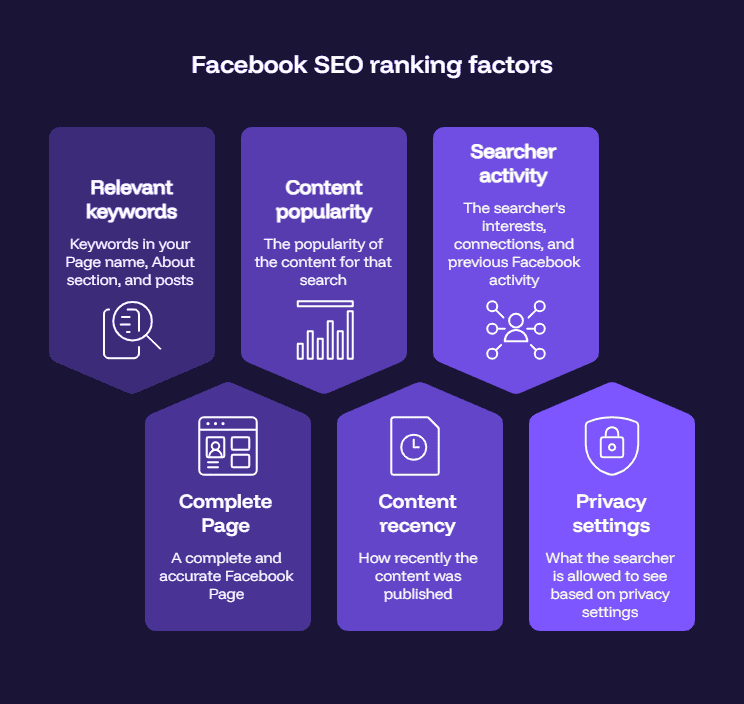
Image created by author
Want to improve visibility on Instagram too? Read our guide to Instagram SEO.
Facebook SEO checklist
Before you publish your next Facebook post or launch a campaign, make sure you can tick every box.
✅ Facebook Page optimization
☐ Choose a clear Facebook Page name and username.
☐ Complete every section of your Facebook Page profile.
☐ Add your website, phone number, business hours, and location.
☐ Keep your branding consistent across your Facebook Business Page and website.
☐ Check that every link works.
☐ Review your Page details regularly.
✅ Facebook content optimization
☐ Create Facebook content around customer questions.
☐ Add relevant keywords naturally to captions and video titles.
☐ Write descriptive alt text for your Facebook photos.
☐ Encourage comments, shares, and other engagement on Facebook.
☐ Review your best posts in Facebook Insights.
☐ Create more content around topics that perform well.
✅ Performance creative checklist
☐ Find your top-performing organic posts.
☐ Turn winning posts into new ad concepts.
☐ Write one clear testing hypothesis.
☐ Test only one change at a time.
☐ Track CTR, CPA, ROAS, and conversion rate.
☐ Save your winning creatives in a testing library.
☐ Create new versions of your best-performing ads.
Conclusion
Facebook SEO helps more people find your Page, posts, and videos. It also gives you a clearer view of what your audience cares about.
Use those insights to shape your Meta ads. Look at the topics, messages, and formats that perform well. Then turn the strongest ideas into paid creative and test them in a clear process.
As your campaigns grow, creative testing can become harder to manage. You may need more support with strategy, production, reporting, and campaign execution. A performance creative agency directory can help you compare suitable partners.
The goal is to connect what you learn from organic Facebook content with your broader growth strategy. These insights can sharpen your creative decisions, improve campaign efficiency, and help you get more value from your ad budget.
Ready to turn those insights into stronger organic growth? Book a call with uSERP to build an SEO strategy that improves your visibility, authority, and long-term performance.